Following the American Civil War Sesquicentennial with day by day writings of the time, currently 1863.

The American Civil War

Post image for A Diary of American Events – June 7, 1861

—The Engineer Corps of the Sixty-ninth Regiment of New York, with Company B, of the Second Cavalry, took five prisoners and a drove of cattle, fifty in number, which were on their way to the secession forces.—N. Y, World, June. 10.

—An express messenger arrived at New Orleans from Mr. Adolphe Ducros’s plantation, at the mouth of Bayou Bienvenu, which empties into Lake Borgne, with information to Maj.-Gen. Twiggs, that two fishermen had reported the arrival of two small war steamers in Lake Borgne, one carrying three guns, and the other a long pivot gun forward. The fishermen stated that the steamers lay off in the lake, and that night before last they sent two boats towards the mouth of the bayou, as was supposed, for taking soundings. Gen. Twiggs ordered Major Taylor, in command of the barracks, to proceed immediately to Martello Tower, at the mouth of Bayou Bienvenu, with a company of infantry, to garrison the tower, which contains several heavy mounted guns, for the protection of this avenue to the city. This point is but ten miles from New Orleans in a direct line, and a little over fifteen by the Mexican Gulf Railroad. It is celebrated for being the point at which the British landed their troops in the war of 1813-’14.—New Orleans Picayune, June 8.

—The Tenth Regiment, of New York, arrived at Fortress Monroe.—N. Y. Times, June 9.

—The tents at Camp McClure, Chambersburg, Pa., were struck at six o’clock A. M., and the line of march taken up soon afterwards for Brown’s Mill, near Green Castle, and eight miles distant from Camp McClure. The force in motion was Brig.-Gen. Thomas’ command, was headed by him, and included the U. S. Cavalry, (recently from Texas,) 4 companies, the Philadelphia City Troop, and the 2 companies of artillerists, commanded by Captains Doubleday and Seymour, McMullin’s Independent Rangers, the Twenty-third Regiment, Col. Dare, the Twenty-first Regiment, Col. Ballier, and the Sixth Regiment, Col. Nagle. The line was nearly 2 miles in length. The men all had their knapsacks closely slung to prevent jolting, and had evidently prepared themselves, so far as their knowledge taught them, for a long march.—Idem.

—The Indiana Regiment of Zouaves, Col. Wallace, fully armed and equipped, passed through Cincinnati, Ohio, en route for Cumberland, Md. They made a splendid appearance, and were enthusiastically received.—Ohio State Journal, June 8.

—Colonel Corcoran, of the Sixty-ninth N. Y. Regiment, with a detachment of one hundred men, proceeded to Ball’s Corner, 5 miles beyond the lines in Virginia, where he arrested a party of five secessionists, one wearing the uniform of a secession sergeant; one, named Richard Meitch, an employé at the capital as watchman, and one named Ball, a rich farmer, on whom was found a muster roll of a rebel company, and in whose house were found arms, bedding, and cooking utensils for a company of at least fifty men. Nine hundred dollars in gold were also found, but returned by the mistaken generosity of the sergeant, to Ball’s wife, without the Colonel’s knowledge until after their return to the camp—N. Y. Times, June 8.

—The New York Nineteenth Regiment, from Elmira, commanded by Col. Clark, and the Third Maine Regiment Volunteers, Col. Howard, arrived at Washington.—(Doc. 238.)

—A crew of 402 seamen, ordinary seamen, and landsmen, left the receiving-ship North Carolina at Brooklyn, for Portsmouth, N. H., where they will constitute a ship’s company for the United States frigate Santee, which, after lying in various positions at the Navy Yard for half a century, has been put in commission for blockade service. The Advance Brigade of Federal troops, under Col. Thomas, reached Greencastle, thirteen miles south of Chambersburg, Pa.—N. Y. World, and N. Y. Times, June 8.


Note: This letter—a document written in 1861—includes terms and topics that may be offensive to many today.  No attempt will be made to censor or edit 19th century material to today’s standards.

Cairo, June 9, 1861.

I have been over to Bird’s Point this morning for the first time. They have thrown up breastworks and dug a deep ditch outside of them, making a pretty strong camp. We don’t apprehend a shade of a fuss here but the officers are making as much preparation as if a Waterloo No. 2 were coming. I went to old Bird’s house this morning. It is just like the pictures we have seen in Harper’s of southern planters’ homes. A wide, railed porch extends around two sides of the house from the floor of each story. On the lower porch sat Bird and his family talking with a number of officers and their ladies. Looked very pleasant. Back of the house were the quarters filled with 46 of the ugliest, dirtiest niggers I ever saw, dressed in dirty white cotton. Awful nasty! The soldiers at the point have plenty of shade. We have but one tree on our grounds. The boys took a lot of ammunition from Bird the other day, and also another lot from a nest five miles back in Missouri. It was all given back, however, as private property. Our whole brigade of six regiments had a parade yesterday. We are all uniformed now and I think we made a respectable appearance. The general gave us a special notice. Are the Canton boys going or not? Do they drill? We have been sleeping on hay up to this week, but have thrown it away, and now have but the bare boards. The change has been so gradual from featherbed at home to plank here that I can’t think where it troubled me the least. I had a mattress in Peoria, straw in Springfield, and hay here. Our living is now very good. Fresh beef every day, potatoes, rice and beans.

Post image for “Oh, that I had many things that are locked up at home! so many relics—hair of the dead, little golden memorials, etc.—all valueless to others, but very dear to our hearts.”—Diary of a Southern Refugee.

June 6.—Still at Chantilly. Every thing quiet, nothing particularly exciting; yet we are so restless. Mrs. C. and myself rode to the camp at Fairfax Court-House a day or two ago to see many friends; but my particular object was to see my nephew, W. B. N., first lieutenant in the Hanover troop. He looks well and cheerful, full of enthusiasm and zeal; but he feels that we have a great work before ns, and that we have entered upon a more important revolution than our ancestors did in 1775. How my heart yearned over him, when I thought of his dear wife and children, and his sweet home, and how cheerfully he had left all for the sake of his country. His bright political prospects, his successful career at the bar, which for one so young was so remarkable, his future in every respect so full of hope and promise—all, all laid aside. But it is all right, and when he returns to enjoy his unfettered country, his hardships will be all forgotten, in joy for his country’s triumphs. The number in camp there has greatly increased since we came away. We came home, and made havelocks and haversacks for the men. The camp at Harper’s Ferry is said to be strong and strengthening.

Mrs. General Lee has been with us for several days. She is on her way to the lower country, and feels that she has left Arlington for an indefinite period. They removed their valuables, silver, etc., but the furniture is left behind. I never saw her more cheerful, and she seems to have no doubt of our success. We are looking to her husband as our leader with implicit confidence; for besides his great military abilities, he is a God-fearing man, and looks for help where alone it is to be found. Letters from Richmond are very cheering. It is one great barracks. Troops are assembling there from every part of the Confederacy, all determined to do their duty. Ladies assemble daily, by hundreds, at the various churches, for the purpose of sewing for the soldiers. They are fitting out company after company. The large stuccoed house at the corner of Clay and Twelfth streets, so long occupied by Dr. John Brockenbrough, has been purchased as a residence for the President. I am glad that it has been thus appropriated. We expect to leave this place in a day or two for Clarke County for the summer, and we part with this dear family with a sad feeling that they may too soon have to leave it too. Mrs. S. has already sent off her plate and paintings to a place of safety. Mrs. C. is here with her mother. She left home when the army approached our neighborhood; she could not stay alone with her little son. Like ourselves, she brought off in her carriage what valuables she could, but necessarily has left much, which she fears may be ruined. Oh, that I had many things that are locked up at home! so many relics—hair of the dead, little golden memorials, etc.—all valueless to others, but very dear to our hearts. Alas, alas! I could not go back for them, and thieves may break through and steal. I trust that the officers will not allow it to be done, and try to rest contented.

Post image for “I had never heard of Davin in my life until I heard he was to be hanged.”—Mary Chesnut’s Diary

June 6th.—Davin! Have had a talk concerning him to-day with two opposite extremes of people.

Mrs. Chesnut, my mother-in-law, praises everybody, good and bad. “Judge not,” she says. She is a philosopher; she would not give herself the pain to find fault. The Judge abuses everybody, and he does it so well— short, sharp, and incisive are his sentences, and he revels in condemning the world en bloc, as the French say. So nobody is the better for her good word, or the worse for his bad one.

In Camden I found myself in a flurry of women. “Traitors,” they cried. “Spies; they ought to be hanged; Davin is taken up, Dean and Davis are his accomplices.” “What has Davin done? ” “He’ll be hanged, never you mind.” “For what?” “They caught him walking on the trestle work in the swamp, after no good, you may be sure.” “They won’t hang him for that!” “Hanging is too good for him!” “You wait till Colonel Chesnut comes.” “He is a lawyer,” I said, gravely. “Ladies, he will disappoint you. There will be no lynching if he goes to that meeting to-day. He will not move a step except by habeas corpus and trial by jury, and a quantity of bench and bar to speak long speeches.”

Mr. Chesnut did come, and gave a more definite account of poor Davin’s precarious situation. They had intercepted treasonable letters of his at the Post Office. I believe it was not a very black treason after all. At any rate, Mr. Chesnut spoke for him with might and main at the meeting. It was composed (the meeting) of intelligent men with cool heads. And they banished Davin to Fort Sumter. The poor Music Master can’t do much harm in the casemates there. He may thank his stars that Mr. Chesnut gave him a helping hand. In the red hot state our public mind now is in there will be a short shrift for spies. Judge Withers said that Mr. Chesnut never made a more telling speech in his life than he did to save this poor Frenchman for whom Judge Lynch was ready. I had never heard of Davin in my life until I heard he was to be hanged.

Judge Stephen A. Douglas, the ” little giant,” is dead; one of those killed by the war, no doubt; trouble of mind.

Charleston people are thin-skinned. They shrink from Russell’s touches. I find his criticisms mild. He has a light touch. I expected so much worse. Those Englishmen come, somebody says, with three P’s—pen, paper, prejudices. I dread some of those after-dinner stories. As to that day in the harbor, he let us off easily. He says our men are so fine looking. Who denies it? Not one of us. Also that it is a silly impression which has gone abroad that men can not work in this climate. We live in the open air, and work like Trojans at all manly sports, riding hard, hunting, playing at being soldiers. These fine, manly specimens have been in the habit of leaving the coast when it became too hot there, and also of fighting a duel or two, if kept long sweltering under a Charleston sun. Handsome youths, whose size and muscle he admired so much as they prowled around the Mills House, would not relish hard work in the fields between May and December. Negroes stand a tropical or semitropical sun at noon-day better than white men. In fighting it is different. Men will not then mind sun, or rain, or wind.

Major Emory,¹ when he was ordered West, placed his resignation in the hands of his Maryland brothers. After the Baltimore row the brothers sent it in, but Maryland declined to secede. Mrs. Emory, who at least is two-thirds of that copartnership, being old Franklin’s granddaughter, and true to her blood, tried to get it back. The President refused point blank, though she went on her knees. That I do not believe. The Franklin race are stiff-necked and stiff-kneed; not much given to kneeling to God or man from all accounts.

If Major Emory comes to us won’t he have a good time? Mrs. Davis adores Mrs. Emory. No wonder I fell in love with her myself. I heard of her before I saw her in this wise. Little Banks told me the story. She was dancing at a ball when some bad accident maker for the Evening News rushed up and informed her that Major Emory had been massacred by ten Indians somewhere out West. She coolly answered him that she had later intelligence; it was not so. Turning a deaf ear then, she went on dancing. Next night the same officious fool met her with this congratulation: “Oh, Mrs. Emory, it was all a hoax! The Major is alive.” She cried: “You are always running about with your bad news,” and turned her back on him; or, I think it was, ”You delight in spiteful stories,” or, “You are a harbinger of evil.” Banks is a newspaper man and knows how to arrange an anecdote for effect.

______

¹William H. Emory had served in Charleston harbor during the Nullification troubles of 1831-1836. In 1846 he went to California, afterward served in the Mexican War, and later assisted in running the boundary line between Mexico and the United States under the Gadsden Treaty of 1853. In 1854 he was in Kansas and in 1858 in Utah. After resigning his commission, as related by the author, he was reappointed a Lieutenant-Colonel in the United States Army and took an active part in the war on the side of the North.

Post image for A Diary of American Events – June 6, 1861

—Gov. Pickens of South Carolina issued a proclamation saying:—“I have understood that many good people have been remitting funds to creditors in Northern States. In the existing relations of the country such conduct is in conflict with public law, and all citizens—are hereby warned against the consequences.”—N. Y. Tribune, June 14.

—This evening the Town Guard of Harrodsburg, Ky., were attracted to the Spring Grounds by a noise in that direction. When they came near the old shooting gallery they heard voices responding to one who seemed to be officiating as an officer. Surrounding the building, they pushed open the door, and lo! an assembly of Knights of the Golden Circle in masks! One of the Guard, on entering, knocked off the mask of one of the Knights; and a lawyer and secessionist stood forth. No examination of the arcana was made, a majority of the Guards being secessionists. Several Virginia gentlemen were in Harrodsburg that night.—Louisville Journal, June 14.

—The Nineteenth N. Y. Regiment, Colonel Clark commander, left Elmira for Washington, via Harrisburg. An immense concourse of people witnessed the departure. Great enthusiasm prevailed—N. Y: Herald, June 7.

—A meeting was held at the Cooper Institute, in New York, for the purpose of securing the cooperation of citizens in the endeavor to provide for the religious wants of volunteers. Wm. E. Dodge, Esq., presided, and addresses were made by Rev. Drs. Tyng and Hitchcock, after which the following resolutions were adopted:

Resolved, That in the opinion of this meeting the project of the Young Men’s Christian Association, to provide for the religious wants of the Volunteers, is worthy of public confidence and cooperation, and that we commend the same to the support of the churches and the community.

Resolved, That Messrs. William E. Dodge, Wilson G. Hunt, Benj. F. Maniere, Benj. W. Bonney, and Alexander W. Bradford, be appointed a committee to receive donations in furtherance of the proposed object, to be expended under the supervision of the army committee of the Young Men’s Christian Association.—N. Y: Commercial, June 7.

—A secession camp at Ellicott’s Mills, in Kentucky, ten miles distant from Cairo, Ill., was dispersed by two companies sent thither by General Prentiss. Colonel Wickliffe protested against the act as an invasion of the soil of Kentucky, to which Gen. Prentiss said, in reply, that the act had been prompted by a letter claiming protection for the Union men there. He declared his intention also to send troops any place needed for the protection of loyal citizens.—National Intelligencer, June 8.

—In the New York Chamber of Commerce it was Resolved, That the Executive Committee of this Chamber, after consultation with and subject to the approval of Col. Anderson, or his second is command, cause to be prepared a suitable medal for each of the soldiers and non-commissioned officers of the late garrison of Fort Sumter, and to have them presented at as early a day as possible, at the expense of this Chamber.

By amendment the resolution was made to include the garrison of Fort Pickens under Lieutenant Slemmer, and the officers of both garrisons.—N. Y. Tribune, June 7.

—Thirty-five of the prisoners captured at Alexandria, took the oath of allegiance with cheerful alacrity, and were discharged.— Washington Star, June 7.

Post image for William Howard Russell’s Diary: Negroes.—Sugar-cane plantations.—The negro and cheap labor.—Mortality of blacks and whites.—Irish labor in Louisiana.—A sugarhouse.—Negro children.—Want of education.—Negro diet.—Negro hospital.
Note: This particular diary entry—a document written in 1861—includes terms and topics that may be offensive to many today.  No attempt will be made to censor or edit 19th century material to today’s standards.

June 5th.—The smart negro who waited on me this morning spoke English. I asked him if he knew how to read and write.—”We must not do that, sir.” “Where were you born?”—” I were raised on the plantation, Massa, but I have been to New Orleens;” and then he added, with an air of pride, “I sp’ose, sir, Massa Burnside not take less than 1500 dollars for me.” Downstairs to breakfast, the luxuries of which are fish, prawns, and red meat which has been sent for to Donaldsonville by boat rowed by an old negro. Breakfast over, I walked down to the yard, where the horses were waiting, and proceeded to visit the saccharine principality. Mr. Seal, the overseer of this portion of the estate, was my guide, if not philosopher and friend. Our road lay through a lane formed by a cart-track, between fields of Indian corn just beginning to flower—as it is called technically, to “tassel”—and sugar-cane. There were stalks of the former twelve or fifteen feet in height, with three or four ears each, round which the pea twined in leafy masses. The maize affords food to the negro, and the husks are eaten by the horses and mules, which also fatten on the peas in rolling time.

The wealth of the land is inexhaustible: all the soil requires is an alternation of maize and cane; and the latter, when cut in the stalk, called “ratoons,” at the end of the year, produces a fresh crop, yielding excellent sugar. The cane is grown from stalks which are laid in pits during the winter till the ground has been ploughed, when each piece of cane is laid longitudinally on the ridge and covered with earth, and from each joint of the stalk springs forth a separate sprout when the crop begins to grow. At present the sugar-cane is waiting for its full development, but the negro labor around its stem has ceased. It is planted in long continuous furrows, and although the palm-like tops have not yet united in a uniform arch over the six feet which separates row from row, the stalks are higher than a man. The plantation is pierced with wagon roads, for the purpose of conveying the cane to the sugar-mills, and these again are intersected by and run parallel with drains and ditches, portions of the great system of irrigation and drainage, in connection with a canal to carry off the surplus water to a bayou. The extent of these works may be estimated by the fact that there are thirty miles of road and twenty miles of open deep drainage through the estate, and that the main canal is fifteen feet wide, and at present four feet deep; but in the midst of this waste of plenty and wealth, where are the human beings who produce both? One must go far to discover them; they are buried in sugar and in maize, or hidden in negro quarters. In truth, there is no trace of them, over all this expanse of land, unless one knows where to seek; no “ploughboy whistles o’er the lea;” no rustic stands to do his own work, but the gang is moved off in silence from point to point, like a corps d’armée of some despotic emperor manœuvring in the battle-field.

Admitting everything that can be said, I am the more persuaded, from what I see, that the real foundation of slavery in the Southern States lies in the power of obtaining labor at will at a rate which cannot be controlled by any combination of the laborers. Granting the heat and the malaria, it is not for a moment to be argued that planters could not find white men to do their work if they would pay them for the risk. A negro, it is true, bears heat well, and can toil under the blazing sun of Louisiana, in the stifling air between the thick-set sugar-canes, but the Irishman who is employed in the stoke-hole of a steamer is exposed to a higher temperature and physical exertion even more arduous. The Irish laborer can, however, set a value on his work; the African slave can only determine the amount of work to be got from him by the exhaustion of his powers. Again, the indigo planter in India, out from morn till night amidst his ryots, or the sportsman toiling under the midday sun through swamp and jungle, proves that the white man can endure the utmost power of the hottest sun in the world as well as the native. More than that, the white man seems to be exempt from the inflammatory disease, pneumonia, and attacks of the mucous membrane and respiratory organs to which the blacks are subject; and if the statistics of negro mortality were rigidly examined, I doubt that they would exhibit as large a proportion of mortality and sickness as would be found amongst gangs of white men under similar circumstances. But the slave is subjected to rigid control; he is deprived of stimulating drinks in which the free white laborer would indulge; and he is obliged to support life upon an antiphlogistic diet, which gives him, however, sufficient strength to execute his daily task.

It is in the supposed cheapness of slave labor and its profitable adaptation in the production of Southern crops, that the whole gist and essence of the question really lie. The planter can get from the labor of a slave for whom he has paid £200, a sum of money which will enable him to use up that slave in comparatively a few years of his life, whilst he would have to pay to the white laborer a sum that would be a great apparent diminution of his profits, for the same amount of work. It is calculated that each field-hand, as an able-bodied negro is called, yields seven hogsheads of sugar a year, which, at the rate of fourpence a pound, at an average of a hogshead an acre, would produce to the planter £140 for every slave. This is wonderful interest on the planter’s money; but he sometimes gets two hogheads an acre, and even as many as three hogsheads have been produced in good years on the best lands; in other words, two and a quarter tons of sugar and refuse stuff, called “bagasse” have been obtained from an acre of cane. Not one planter of the many I have asked has ever given an estimate of the annual cost of a slave’s maintenance; the idea of calculating it never comes into their heads.

Much depends upon the period at which frost sets in; and if the planters can escape till January without any cold to nip the juices and the cane, their crop is increased in value each day; but it is not till October they can begin to send cane to the mill, in average seasons; and if the frost does not come till December, they may count upon the fair average of a hogshead of 1200 pounds of sugar to every acre.

The labor of ditching, trenching, cleaning the waste lands, and hewing down the forests is generally done by Irish laborers, who travel about the country under contractors, or are engaged by resident gangsmen for the task. Mr. Seal lamented the high prices of this work; but then, as he said, “It was much better to have Irish to do it, who cost nothing to the planter if they died, than to use up good field-hands in such severe employment.” There is a wonderful mine of truth in this observation. Heaven knows how many poor Hibernians have been consumed and buried in these Louisianian swamps, leaving their earnings to the dramshop keeper and the contractor, and the results of their toil to the planter. This estate derives its name from an Indian tribe called Houmas; and when Mr. Burnside purchased it for £300,000 he received in the first year £63,000 as the clear value of the crops on his investment.

The first place I visited with the overseer was a new sugar-house, which negro carpenters and masons were engaged in erecting. It would have been amusing had not the subject been so grave, to hear the overseer’s praises of the intelligence and skill of these workmen, and his boast that they did all the work of skilled laborers on the estate, and then to listen to him, in a few minutes, expatiating on the utter helplessness and ignorance of the black race, their incapacity to do any good, or even to take care of themselves.

There are four sugar-houses on this portion of Mr. Burnside’s estate, consisting of grinding-mills, boiling-houses, and crystallizing sheds.

The sugar-house is the capital of the negro quarters, and to each of them is attached an enclosure, in which there is a double row of single-storied wooden cottages, divided into two or four rooms. An avenue of trees runs down the centre of the negro street, and behind each hut are rude poultry-hutches, which, with geese and turkeys and a few pigs, form the perquisites of the slaves, and the sole source from which they derive their acquaintance with currency. Their terms are strictly cash. An old negro brought up some ducks to Mr. Burnside last night, and offered the lot of six for three dollars. “Very well, Louis; if you come to-morrow, I’ll pay you.” “No, massa; me want de money now.” “But won’t you give me credit, Louis? Don’t you think I’ll pay the three dollars?” “Oh, pay some day, massa, sure enough. Massa good to pay de tree dollar; but this nigger want money now to buy food and things for him leetle famly. They will trust massa at Donaldsville, but they won’t trust this nigger.” I was told that a thrifty negro will sometimes make ten or twelve pounds a year from his corn and poultry; but he can have no inducement to hoard; for whatever is his, as well as himself, belongs to his master.

Mr. Seal conducted me to a kind of forcing-house, where the young negroes are kept in charge of certain old crones too old for work, whilst their parents are away in the cane and Indian corn. A host of children of both sexes were seated in the verandah of a large wooden shed, or playing around it, very happily and noisily. I was glad to see the boys and girls of nine, ten, and eleven years of age were at this season, at all events, exempted from the cruel fate which befalls poor children of their age in the mining and manufacturing districts of England. At the sight of the overseer the little ones came forward in tumultuous glee, babbling out, “Massa Seal,” and evidently pleased to see him.

As a jolly agriculturist looks at his yearlings or young beeves, the kindly overseer, lolling in his saddle, pointed with his whip to the glistening fat ribs and corpulent paunches of his woolly-headed flock. “There’s not a plantation in the State,” quoth he, “can show such a lot of young niggers. The way to get them right is not to work the mothers too hard when they are near their time; to give them plenty to eat, and not to send them to the fields too soon.” He told me the increase was about five per cent, per annum. The children were quite sufficiently clad, ran about round us, patted the horses, felt our legs, tried to climb up on the stirrup, and twinkled their black and ochrey eyes at Massa Seal. Some were exceedingly fair; and Mr. Seal, observing that my eye followed these, murmured something about the overseers before Mr. Burnside’s time being rather a bad lot. He talked about their color and complexion quite openly; nor did it seem to strike him that there was any particular turpitude in the white man who had left his offspring as slaves on the plantation.

A tall, well-built lad of some nine or ten years stood by me, looking curiously into my face. “What is your name?said I. “George,” he replied. “Do you know how to read or write?” He evidently did not understand the question. “Do you go to church or chapel?” A dubious shake of the head. “Did you ever hear of our Saviour?” At this point Mr. Seal interposed, and said, “I think we had better go on, as the sun is getting hot,” and so we rode gently through the little ones; and when we had got some distance he said, rather apologetically, “We don’t think it right to put these things into their heads so young, it only disturbs their minds, and leads them astray.”

Now, in this one quarter there were no less than eighty children, some twelve and some even fourteen years of age. No education—no God—their whole life—food and play, to strengthen their muscles and fit them for the work of a slave. “And when they die?” “Well,” said Mr. Seal, “they are buried in that field there by their own people, and some of them have a sort of prayers over them, I believe.” The overseer, it is certain, had no fastidious notions about slavery; it was to him the right thing in the right place, and his summum bonum was a high price for sugar, a good crop, and a healthy plantation. Nay, I am sure I would not wrong him if I said he could see no impropriety in running a good cargo of regular black slaves, who might clear the great backwood and swampy undergrowth, which was now exhausting the energies of his field-hands, in the absence of Irish navvies.

Each negro gets 5 lbs. of pork a week, and as much Indian corn bread as he can eat, with a portion of molasses, and occasionally they have fish for breakfast. All the carpenters and smiths’ work, the erection of sheds, repairing of carts and ploughs, and the baking of bricks for the farm buildings, are done on the estate by the slaves. The machinery comes from tho manufacturing cities of the North; but great effort are made to procure it from New Orleans, where factories have been already established. On the borders of the forest the negroes are allowed to plant corn for their own use, and sometimes they have an overplus, which they sell to their masters. Except when there is any harvest pressure on their hands, they have from noon on Saturday till dawn on Monday morning to do as they please, but they must not stir off the plantation on the road, unless with special permit, which is rarely granted.

There is an hospital on the estate, and even shrewd Mr. Seal did not perceive the conclusion that was to be drawn from his testimony to its excellent arrangements. “Once a nigger gets in there, he’d like to live there for the rest of his life.” But are they not the happiest, most contented people in the world—at any rate, when they are in hospital? I declare that to me the more orderly, methodical, and perfect the arrangements for economizing slave labor—regulating slaves—are, the more hateful and odious does slavery become. I would much rather be the animated human chattel of a Turk, Egyptian, Spaniard, or French creole, than the laboring beast of a Yankee or of a New England capitalist.

When I returned back to the house I found my friends enjoying a quiet siesta, and the rest of the afternoon was devoted to idleness, not at all disagreeable with a thermometer worthy of Agra. Even the mocking-birds were roasted into silence, and the bird which answers to our rook or crow sat on the under branches of the trees, gaping for air with his bill wide open. It must be hot indeed when the mocking-bird loses his activity. There is one, with its nest in a rose-bush trailed along the verandah under my window, which now sits over its young ones with outspread wings, as if to protect them from being baked; and it is so courageous and affectionate, that when I approach quite close, it merely turns round its head, dilates its beautiful dark eye, and opens its beak, within which the tiny sharp tongue is saying, I am sure, “Don’t for goodness sake disturb me, for if you force me to leave, the children will be burned to death.”

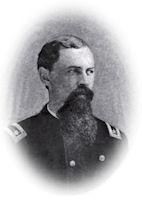
Post image for “In view of the danger before me, it is indeed gratifying to feel that I have the good-will of those I leave behind..,”–Letters from Elisha Franklin Paxton.

Harper’s Ferry, June 5, 1861.

I received your sweet letter of the 1st inst. on yesterday, and the return of Mr. McClure gives me the opportunity of sending you a line in return for it. When McClure came here to see his son, a member of our company, I offered him my hand, which he took, and thus I have made friends with the only man on earth with whom I was not on speaking terms. I bade a cordial good-bye to Wilson when I left home, which I think he returned in the same spirit of good-will. I now may say that there is no one on earth for whom I entertain anything but feelings of kindness, and I think I have the ill will of no one. In view of the danger before me, it is indeed gratifying to feel that I have the good-will of those I leave behind, and that I leave no one who has received a wrong from me which I have not regretted and which is not forgiven. If Mr. McClure calls on you, for my sake treat him with the utmost kindness. Send me the miniature. Good-bye, dearest.

Post image for A Diary of American Events – June 5, 1861

—A demand was served upon Messrs. Daniel J. Foley & Bros., Baltimore, by Mr. Bonifant, the United States Marshal, under instructions from Mr. Cameron, Secretary of War, calling for the immediate delivery into the possession of the Marshal of all the powder of the Hazard Powder Company, Connecticut, stored in the powder-house of the company at Lower Canton. The amount of the powder on hand was about 8,500 kegs, or 60,000 pounds, valued at $16,000. The agents turned the powder over to the Marshal, who took an inventory of the same. A similar demand, from the same source, was made upon Messrs. A. L Webb & Bro., Baltimore, agents for the Messrs. Dupont’s powder works, Delaware. The demand was complied with, and the powder on hand, a small amount, turned over into the possession of the United States. —Baltimore Sun, June 6.

—General Beauregard issued a proclamation from Manassas Junction, giving an extravagant picture of the deplorable consequences to be expected from an invasion of the Federal forces.—(Doc. 234.)

—At Williamsport a Baltimorean, named Dewitt C. Rench, swore he could whip the whole Union force, and that he had killed at least one man in the attack upon the Massachusetts Regiment in Baltimore. His friends tried to get him away and put him on a horse, when he drew a revolver and fired two shots at individuals and three into the crowd. Three shots were returned, all taking effect, killing him instantly.—Philadelphia Ledger, June 7.

—Throughout all the counties of Virginia, within forty or fifty miles of Harper’s Ferry, a levy of militia is being now made by draft. All the men between eighteen and fifty years of age, not physically incapable of doing military duty, are enlisted, and three-tenths of the whole are to be mustered into the field. The names are placed in one box, and as many numbers—from one to ten (repeated)—are placed in another box. When a name is drawn forth a number is also drawn; and if it be either No. 1, 2, or 3, the person is “elected” a soldier into the disunion army. Otherwise he escapes immediate service.—Washington Star, June 6.

—Ninth Regiment N. Y. V., Colonel Hawkins; left New York for Fortress Monroe. —(Doc. 235.)

—The Richmond (Va.) Whig of to-day announces that after to-day no passports will be issued to persons leaving the State, and no one will be admitted to the State except for reasons of peculiar force; also, that the Tennessee volunteers in Virginia are authorized to vote on the ordinance of the secession of Tennessee, although stationed in Virginia.

—A Bank Convention, held at Atlanta, Ga., recommended that all the Southern banks, railroads, and tax collectors, receive the Treasury notes of the Confederacy as currency, and both States, cities, and corporations having coupons payable at New York, to appoint the place of payment South.—N. Y. Herald, June 10.

—About eight o’clock this morning the steamer Harriet Lane, under the command of Capt. Faunce, United States Navy, proceeded up the James River, from Fortress Monroe, as far as the month of the Nasemond, for the purpose of reconnoitring and looking out for batteries. It was not long before she observed a large and heavy battery planted upon the point, which is nearly opposite Newport News Point, and about five miles distant. The steamer opened fire, which was briskly returned by the batteries, and for nearly a half hour the action continued. It was found that but one gun of the steamer could reach the battery, the guns of which being heavier easily reached the former, and several shot struck her. During the affair the most intense excitement prevailed, and hundreds of soldiers ascended the ramparts and roof of the Hygeia Hotel, for the purpose of looking at the scene. The Lane returned in an hour after the action, and made an official report to Com. Pendergrast of the squadron. Lieut. Duncan, of the Harriet Lane, states that the fight was pretty hot. The steamer threw several shells into the battery with much accuracy. The battery was well served, the damage to the cutter having been inflicted with a 84-pounder rifled cannon. It was at first thought that no battery existed at the place where the fight occurred, and the Harriet Lane was sent to ascertain if the report was true. Elbe found out that one did exist, and that seven guns were mounted upon it, and hence the attempt made to dislodge them.—National Intelligencer, June 8.

—A letter from Cassius M. Clay to the London Times, in relation to the civil war in America, is published in the United States. Mr. Clay says that the rebellion can be subdued, but that it is not the intention of the U. S. Government to subjugate the Southern States; that only rebels will be punished; that it is the interest of England to support the Government; and that it is unwise for England to venture to sow seeds of discord, for she is far from secure from home revolution or foreign attack in the future. In conclusion Mr. Clay claims that England is the natural ally of the United States.—(Doc. 236.)

—The people of Wheeling, Va., were greatly astounded upon learning that Major A. Loring had been arrested by United States officers. He was taken to the Baltimore and Ohio Railroad depot, where he remained until 7 o’clock, when the train left for Grafton. Major Loring’s arrest was occasioned by certain papers found upon the person of W. J. Willey, who was captured after the skirmish at Phillippa, and who charged with leading the party who destroyed the bridges on the Baltimore and Ohio Railroad, between Wheeling and Grafton.—(Doc. 237.)

—The U. S. Marshal took possession of the gun factory of Messrs. Merrill & Thomas, in Baltimore, and seized all the breech-loading muskets in the establishment. Intimation was given that ample employment would soon be given to the establishment in the manufacture, of arms for the Government.—N. Y. Express, June 5.

(June 4th – The following material is from the diary entry of June 3d, which actually appears to have covered two days. This blog entry covers the second day.)

At six A.M., Moise came to ask me if I should like a glass of absinthe, or anything stomachic. At breakfast was Doctor Laporte, formerly a member of the Legislative Assembly of France, who was exiled by Louis Napoleon; in other words, he was ordered to give in his adhesion to the new régime, or to take a passport for abroad. He preferred the latter course, and now, true Frenchman, finding the Emperor has aggrandized France and added to her military reputation, he admires the man on whom but a few years ago he lavished the bitterest hate.

The carriage is ready, and the word farewell is spoken at last. M. Alfred Roman, my companion, has travelled in Europe, and learned philosophy; is not so orthodox as many of the gentlemen I have met who indulge in ingenious hypotheses to comfort the consciences of the anthropo-proprietors. The negro skull won’t hold as many ounces of shot as the white man’s. Potent proof that the white man has a right to sell and to own the creature! He is plantigrade, and curved as to the tibia! Cogent demonstration that he was made expressly to work for the arch-footed, straight-tibiaed Caucasian. He has a rete mucosum and a coloured pigment! Surely he cannot have a soul of the same color as that of an Italian or a Spaniard, far less of a flaxen-haired Saxon! See these peculiarities in the frontal sinus —in sinciput or occiput! Can you doubt that the being with a head of that shape was made only to till, hoe, and dig for another race? Besides, the Bible says that he is a son of Ham, and prophecy must be carried out in the rice-swamps, sugar-canes, and maize-fields of the Southern Confederation. It is flat blasphemy to set yourself against it. Our Saviour sanctions slavery because he does not say a word against it, and it is very likely that St. Paul was a slave-owner. Had cotton and sugar been known, the apostle might have been a planter! Furthermore, the negro is civilized by being carried away from Africa and set to work, instead of idling in native inutility. What hope is there of Christianizing the African races, except by the agency of the apostles from New Orleans, Mobile, or Charleston, who sing the sweet songs of Zion with such vehemence, and clamor so fervently for baptism in the waters of the “Jawdam?”

If these high physical, metaphysical, moral and religious reasonings do not satisfy you, and you are bold enough to venture still to be unconvinced and to say so, then I advise you not to come within reach of a mass meeting of our citizens, who may be able to find a rope and a tree in the neighborhood.

As we jog along in an easy rolling carriage drawn by a pair of stout horses, a number of white people meet us coming from the Catholic chapel of the parish, where they had been attending the service for the repose of the soul of a lady much beloved in the neighborhood. The black people must be supposed to have very happy souls, or to be as utterly lost as Mr. Shandy’s homunculus was under certain circumstances, for I have failed to find that any such services are ever considered necessary in their case, although they may have been very good—or, where the service would be most desirable—very bad Catholics. The dead, leaden uniformity of the scenery forced one to converse, in order to escape profound melancholy: the levee on the right hand, above which nothing was visible but the sky; on the left plantations with cypress fences, whitewashed and pointed wooden gates leading to the planters’ houses, and rugged gardens surrounded with shrubs, through which could be seen the slave quarters. Men making eighty or ninety hogsheads of sugar in a year lived in most wretched tumble-down wooden houses not much larger than ox sheds.

As we drove on the storm gathered overhead, and the rain fell in torrents—the Mississippi flowed lifelessly by—not a boat on its broad surface.

At last we reached Governor Manning’s place, and went to the house of the overseer, a large heavy-eyed old man.

“This rain will do good to the corn,” said the overseer. “The niggers has had sceerce nothin’ to do leetly, as they ‘eve clearied out the fields pretty well.”

At the ferry-house I was attended by one stout young slave, who was to row me over. Two flat-bottomed skiffs lay on the bank. The negro groped under the shed, and pulled out a piece of wood like a large spatula, some four feet long, and a small round pole a little longer. “What are those?” quoth I. “Dem’s oars, Massa,” was my sable ferryman’s brisk reply. “I’m very sure they are not; if they were spliced they might make an oar between them.” “Golly, and dat’s the trute, Massa.” “Then go and get oars, will you ? ” While he was hunting about we entered the shed at the ferry for shelter from the rain. “We found “a solitary woman sitting” smoking a pipe by the ashes on the hearth, blear-eyed, low-browed and morose —young as she was. She never said a word nor moved as we came in, sat and smoked, and looked through her gummy eyes at chickens about the size of sparrows, and at a cat not larger than a rat which ran about on the dirty floor. A little girl, some four years of age, not overdressed—indeed, half-naked, “not to put too fine a point upon it”—crawled out from under the bed, where she had hid on our approach. As she seemed incapable of appreciating the use of a small piece of silver presented to her—having no precise ideas in coinage or toffy—her parent took the obolus in charge, with unmistakable decision; but still the lady would not stir a step to aid our guide, who now insisted on the “key ov de oar-house.” The little thing sidled off and hunted it out from the top of the bedstead, and when it was found, and the boat was ready, I was not sorry to quit the company of the silent woman in black. The boatman pushed his skiff, in shape a snuffer-dish, some ten feet long and a foot deep, into the water—there was a good deal of rain in it. I got in too, and the conscious waters immediately began vigorously spurting through the cotton wadding wherewith the craft was caulked. Had we gone out into the stream we should have had a swim for it, and they do say that the Mississippi is the most dangerous river in the known world, for that healthful exercise. “Why! deuce take you” (I said at least that, in my wrath), “don’t you see the boat is leaky?” “See it now for true, Massa. Nobody able to tell dat till Massa get in though.” Another skiff proved to be more staunch. I bade good-bye to my friend Roman, and sat down in my boat, which was forced by the negro against the stream close to the bank, in order to get a good start across to the other side. The view from my lonely position was curious, but not at all picturesque. The world was bounded on both sides by a high bank, which constricted the broad river, just as if one were sailing down an open sewer of enormous length and breadth. Above the bank rose the tops of tall trees and the chimneys of sugar-houses, and that was all to be seen save the sky.

A quarter of an hour brought us to the levee on the other side. I ascended the bank, and across the road, directly in front appeared a carriage gateway and wickets of wood, painted white, in a line of park palings of the same material, which extended up and down the road far as the eye could see, and guarded wide-spread fields of maize and sugar-cane. An avenue lined with trees, with branches close set, drooping and overarching a walk paved with red brick, led to the house, the porch of which was visible at the extremity of the lawn, with clustering flowers, rose, jasmine, and creepers clinging to the pillars supporting the verandah. The view from the belvedere on the roof was one of the most striking of its kind in the world.

If an English agriculturist could see six thousand acres of the finest land in one field, unbroken by hedge or boundary, and covered with the most magnificent crops of tasselling Indian corn and sprouting sugar-cane, as level as a billiard-table, he would surely doubt his senses. But here is literally such a sight—six thousand acres, better tilled than the finest patch in all the Lothians, green as Meath pastures, which can be turned up for a hundred years to come without requiring manure, of depth practically unlimited, and yielding an average profit on what is sold off it of at least £20 an acre, at the old prices and usual yield of sugar. Rising up in the midst of the verdure are the white lines of the negro cottages and the plantation offices and sugarhouses, which look like large public edifices in the distance. My host was not ostentatiously proud in telling me that, in the year 1857, he had purchased this estate for £300,000 and an adjacent property, of 8000 acres, for £150,000, and that he had left Belfast in early youth, poor and unfriended, to seek his fortune, and indeed scarcely knowing what fortune meant, in the New World. In fact, he had invested in these purchases the greater part, but not all, of the profits arising from the business in New Orleans, which he inherited from his master; of which there still remained a solid nucleus in the shape of a great woollen magazine and country house. He is not yet fifty years of age, and his confidence in the great future of sugar induced him to embark this enormous fortune in an estate which the blockade has stricken with paralysis.

I cannot doubt, however, that he regrets he did not invest his money in a certain great estate in the North of Ireland, which he had nearly decided on buying; and, had he done so, he would now be in the position to which his unaffected good sense, modesty, kindliness, and benevolence, always adding the rental, entitle him. Six thousand acres on this one estate all covered with sugar-cane, and 16,000 acres more of Indian corn, to feed the slaves;—these were great possessions, but not less than 18,000 acres still remained, covered with brake and forest and swampy, to be reclaimed and turned into gold. As easy to persuade the owner of such wealth that slavery is indefensible as to have convinced the Norman baron that the Saxon churl who tilled his lands ought to be his equal.

I found Mr. Ward and a few merchants from New Orleans in possession of the bachelor’s house. The service was performed by slaves, and the order and regularity of the attendants were worthy of a well-regulated English mansion. In Southern houses along the coast, as the Mississippi above New Orleans is termed, beef and mutton are rarely met with, and the more seldom the better. Fish, also, is scarce, but turkeys, geese, poultry, and preparations of pig, excellent vegetables, and wine of the best quality, render the absence of the accustomed dishes little to be regretted.

The silence which struck me at Governor Roman’s is not broken at Mr. Burnside’s; and when the last thrill of the mocking-bird’s song has died out through the grove, a stillness of Avernian profundity settles on hut, field, and river.

Post image for “I employed myself writing certain articles for the press.”—John B. Jones, A Rebel War Clerk’s Dairy.

JUNE 4TH.—The Secretary is still sick. Having nothing better to do, and seeing that eight-tenths of the letters received are merely applications for commissions in the regular army—an organization without men—and none being granted from civil life, I employed myself writing certain articles for the press, hoping by this means to relieve the Secretary of the useless and painful labor of dictating negative replies to numberless communications. This had the sanction of both the President and the Secretary, and produced, in some measure, the desired relief.