Following the American Civil War Sesquicentennial with day by day writings of the time, currently 1863.

The American Civil War

Eliza Woolsey Howland to Joseph Howland at Albany.

Sunday (between churches), May 26.

I am going over to the Dutch Church at the Corners more, I confess, to hear the news from Washington than for the sermon’s sake. The rumor by telegraph this morning was that Washington was on fire. I am restless and anxious. There must be important movements on one side or the other before long, now that we have advanced beyond the Potomac.

In yesterday’s papers the great camp preparing on Staten Island is described — 10,000 acres on the southeast slope of the island, with room for the tents and evolutions of an army of 60,000 men. Is it likely that you will be ordered there?

Mr. Masters told me this morning to tell you you were not forgotten in the village, for the boys have organized a company and are drilling under the name of the “Howland Guard.” Mother thinks it should be called Mrs. Howland’s Guard. . . . .

May 27. This morning I deposited Mother with the papers at the old chestnut tree seat and helped Thomson and Mechie get a good line for the turf on the carriage road. It is not right yet, but shall be made so. Thomson says: “We’ll na gie it up, ma’am, till you say it’s right.” The sodding round the door and kitchen end[1] is a great improvement and gives quite a finished look. We all took a turn in the wagon after dinner, stopping for me to get some cut-out work from the Women’s Army Association, which is fairly under way now, with Mrs. David Davis as President, Mrs. James Kent Secretary and Miss Rankin Treasurer. Five or six dozen shirts were given out today. . . . I have a note this morning from L. H. H. asking me to make them a visit at Newport and saying Mr. H. would come on for me and bring me back. It is very kind, but I shall stand by my post here this summer. . . .

Mr. Masters told us an anecdote of old R_______ who was in a tavern barroom the other day with a party of rough fellows discussing the war, when one of them declared that “any man who would refuse to go now that Mr. Howland had gone ought to be drummed out of the community.”


[1] Where the rhododendrons are now twelve to fifteen feet high.


MAY 26TH.—Was called on by the Episcopal minister to-day, Dr. Sawyer having informed him that I was a member of the church—the doctor being one also. He is an enthusiastic young man, and though a native of the North, seems to sympathize with us very heartily. He prays for the President of the Confederate States. The President himself attends very regularly, and some intimate that he intends to become a candidate for membership.

I have not learned whether he has been baptized. Gen. Cooper, the first on our list of generals in the regular army, is a member of the church. The general was, I think, adjutant-general at Washington. He is Northern born. Major Gorgas is likewise a native of the North. He is Chief of the Bureau of Ordnance. The Quartermaster-General, Major Myers, is said to be a Jew; while the Commissary-General is almost a Jesuit, so zealous is he in the advocacy of the Pope.

Mr. Mallory, the Secretary of the Navy, I have seen but once; but I have heard him soundly abused for not accepting some propositions and plans from Mobile and elsewhere, to build iron-clad steam rams to sink the enemy’s navy. Some say Mr. M. is an Irishman born. He was in the United States Senate, and embraced secession with the rest of the “conspirators” at Washington.

I saw the Vice-President to-day. I first saw Mr. Stephens at Washington in 1843. I was behind him as he sat in the House of Representatives, and thought him a boy, for he was sitting beside large members. But when I got in front of him, it was apparent he was a man—every inch a man.

There is some excitement in official circles here against Mr. Browne, the Assistant Secretary of State, on the ground that he interfered in behalf of a Mr. Hurlbut, a Northern man (probably arrested), a writer in the English Reviews against slavery in the South, and a correspondent for the New York Tribune. Mr. B. is an Englishman, who came from Washington on the invitation of Mr. Toombs, and through his influence was appointed Assistant Secretary of State, and the Southern gorge rises at it. I doubt whether he will be molested.

I saw Major Tochman to-day, also a foreigner. He is authorized to enlist a regiment or two of Polanders in New Orleans, where I am told there are none.

And there are several Northern men here wanting to be generals. This does not look much like Southern homogeneity. God save us, if we are not to save ourselves!

How hot it is! But I like hot weather better than cold, and would soon become accustomed to this climate. This morning Mr. Hunter really seemed distressed; but he has four inches on his ribs, and I not the eighth of an inch.

Since writing the foregoing, I have seen Mr. Hunter again, and although there is no diminution of heat, he is quite cheerful. Congress has again passed the resolution to remove the seat of government to Richmond, and it is said the President will not veto it this time. The President himself came into our office to-day and sat some time conversing with Secretary Walker. He did not appear vexed at the determination of Congress, which he must have been apprised of.

—A letter from Major Sprague, U. S. A., giving an account of affairs in Texas, since the arrest of the federal troops in that locality, was published in the Albany (N. Y.) Argus.— (Doc. 197.)

—The privateer Calhoun, Capt. Wilson, arrived at New Orleans, La., having in tow the following prizes: schooners John Adams and Mermaid, of Provincetown, Mass., and the brig Panama, of Boston, Mass.; all these are whalers, and have on board about 215 bbls. of sperm and black whale oil. They were taken about 10 miles from the passes; their crews number 63 men; and all of them told that these vessels had been whaling for some time and cruising in the Gulf —Natchez Courier, May 30.

—The Mobile Register of yesterday, after announcing the invasion of Virginia by the Federal troops, observes: “Servile insurrection is a part of their programme, but they expect no great amount of practical good to result therefrom—consequently, it is contended that it would be a far better course of policy for the Abolitionists to murder the slaves and thus exterminate slavery. A more monstrous proposition could not emanate from the most incarnate fiend among the damned. But infamous as it is it finds an advocate in the abolition press. The slaves are to be indiscriminately slaughtered, and when the last one is butchered, then it it is thought the institution will cease to exist. The soul recoils in horror at the idea of an unscrupulous war upon the innocent and defenseless slave. The Syrian massacre of the Christians and all the crimes of its bloody participants pale before the proposed atrocities of the Black Republicans. Their masters, however, in this, as all other instances, will be their protectors and saviors. With this much of their published programme, we must not be surprised at any act or threat as the campaign advances.”

—A correspondent writes from Montgomery to the New Orleans Delta:—”The startling intelligence of the invasion of the soil of Virginia, and the actual occupation of Alexandria by United States forces, was received here last evening. The Cabinet, I am informed, immediately went into a procrastinated session. No event since the initiation of this revolution has ever created a sensation so profound, and so sorrowful. The mere taking of a deserted and exposed village, is in itself nothing; but when regarded as indicative of the future policy of the old Government, it at once becomes a question pregnant with great importance. Mr. Lincoln has declared in his proclamation, and at various other times reiterated the expression, that the only object his Government had in view, was the retaking and the reoccupation of what he asserted to be Government property; but now, in the face of this promise, which has gone before the world, he converts his Abolition horde into an army of invasion, and now occupies a city within the boundaries of our Republic. This Government has no longer an election. Its duty is now manifest to all. The nation must rise as a man and drive the hireling miscreants from a soil polluted by the foulness of their tramp. Virginia alone could speedily perform the work of expurgation, but her cause is now our cause, her battles our battles, and let the Government at large pour a continuous stream of men into Virginia, and preserve from dishonor that patriotic mother of States.”

—The rebel Congress passed an act to prohibit the exportation of cotton, except through Southern seaports.—(Doc. 198.)

—This afternoon at about 4 o’clock, Gen. McClellan, commanding the military department of Ohio, received information that two bridges had been burned near Farmington, on the B. & O. R. R., and that arrangements had been made to burn the others between that point and Wheeling. The general had been making arrangements to move on Grafton in force, but this intelligence caused him to hasten his movements. He returned at once to Cincinnati and issued telegraphic orders for an advance. One column was directed to move from Wheeling and Bellaire, under command of Col. B. F. Kelly, 1st Virginia Volunteers; another from Marietta, on Parkersburg, under Col. Steedman, 14th Ohio Volunteers. These officers were directed to move with caution, and to occupy all the bridges, etc., as they advanced. A proclamation to Virginians, and address to the troops, were issued by Gen. McClellan simultaneously with the advance.—(Doc. 199.)

—The First Regiment of New Hampshire Volunteers, Colonel Tappan, passed through New York on their way to the seat of war. The regiment left Camp Union, at Concord, yesterday morning. Its progress through Massachusetts and Connecticut was an ovation, crowds assembling at all the stations to give them a greeting.—(Doc. 200.)

—Postmaster-General Blair issued the following order:—”All postal service in the States of Virginia, North Carolina, South Carolina, Georgia, Florida, Alabama, Mississippi, Louisiana, Arkansas, and Texas, will be suspended from and after the 31st inst. Letters for offices temporarily closed by this order, will be forwarded to the dead letter office, except those for Western Virginia, which will be sent to Wheeling.”—Boston Transcript, May 27.

May 25th.—Virginia has indeed been invaded by the Federals. Alexandria has been seized. It is impossible to describe the excitement and rage of the people; they take, however, some consolation in the fact that Colonel Ellsworth, in command of a regiment of New York Zouaves, was shot by J. T. Jackson, the landlord of an inn in the city, called the Marshal House. Ellsworth, on the arrival of his regiment in Alexandria, proceeded to take down the secession flag, which had been long seen from the President’s windows. He went out upon the roof, cut it from the staff, and was proceeding with it down stairs, when a man rushed out of a room, leveling a double-barreled gun, shot Colonel Ellsworth dead, and fired the other barrel at one of his men, who had struck at the piece, when the murderer presented it at the Colonel. Almost instantaneously, the Zouave shot Jackson in the head, and as he was falling dead thrust his sabre bayonet through his body. Strange to say, the people of New Orleans, consider Jackson was completely right, in shooting the Federal colonel, and maintain that the Zouave, who shot Jackson, was guilty of murder. Their theory is that Ellsworth had come over with a horde of ruffianly abolitionists or, as the Richmond Examiner has it “the band of thieves, robbers and assassins, in the pay of Abraham Lincoln, commonly known as the United States’ Army,” to violate the territory of a sovereign state, in order to execute their bloody and brutal purposes, and that he was in the act of committing a robbery, by taking a flag which did not belong to him, when he met his righteous fate.

It is curious to observe how passion blinds man’s reason, in this quarrel. More curious still to see, by the light of this event, how differently the same occurrence is viewed by Northerners and Southerners respectively. Jackson is depicted in the Northern papers as a fiend and an assassin; even his face in death is declared to have worn a revolting expression of rage and hate. The Confederate flag which was the cause of the fatal affray, is described by one writer, as having been purified of its baseness, by contact with Ellsworth’s blood. The invasion of Virginia is hailed on all sides of the North with the utmost enthusiasm. “Ellsworth is a martyr hero, whose name is to be held sacred for ever.”

On the other hand, the Southern papers declare that the invasion of Virginia, is “an act of the Washington tyrants, which indicates their bloody and brutal purpose to exterminate the Southern people. The Virginians will give the world another proof, like that of Moscow, that a free people, fighting on a free soil, are invincible when contending for all that is dear to man.” Again—”A band of execrable cut throats and jail birds, known as the Zouaves of New York, under that chief of all scoundrels, Ellsworth, broke open the door of a citizen, to tear down the flag of the house—the courageous owner met the favorite hero of the Yankees in his own hall, alone, against thousands, and shot him through the heart—he died a death which emperors might envy, and his memory will live through endless generations.” Desperate, indeed, must have been the passion and anger of the man who, in the fullest certainty that immediate death must be its penalty, committed such a deed. As it seems to me, Colonel Ellsworth, however injudicious he may have been, was actually in the performance of his duty when taking down the flag of an enemy.

In the evening I visited Mr. Slidell, whom I found at home, with his family, Mrs. Slidell and her sister Madame Beauregard, wife of the general, two very charming young ladies, daughters of the house, and a parlor full of fair companions, engaged, as hard as they could, in carding lint with their fair hands. Among the company was Mr. Slidell’s son, who had just travelled from school at the North, under a feigned name, in order to escape violence at the hands of the Union mobs which are said to be insulting and outraging every Southern man. The conversation, as is the case in most Creole domestic circles, was carried on in French. I rarely met a man whose features have a greater finesse and firmness of purpose than Mr. Slidell’s; his keen grey eye is full of life, his thin, firmly-set lips indicate resolution and passion. Mr. Slidell, though born in a Northern state, is perhaps one of the most determined disunionists in the Southern confederacy; he is not a speaker of note, nor a ready stump orator, nor an able writer; but he is an excellent judge of mankind, adroit, persevering, and subtle, full of device, and fond of intrigue; one of those men, who, unknown almost to the outer world, organizes and sustains a faction, and exalts it into the position of a party—what is called here a “wire-puller.” Mr. Slidell is to the South something greater than Mr. Thurlow Weed has been to his party in the North. He, like every one else, is convinced that recognition must come soon; but, under any circumstances, he is quite satisfied, the government and independence of the Southern confederacy are as completely established as those of any power in the world. Mr. Slidell and the members of his family possess naivete, good sense, and agreeable manners; and the regrets I heard expressed in Washington society, at their absence, had every justification.

I supped at the club, which I visited every day since I was made an honorary member, as all the journals are there, and a great number of planters and merchants, well acquainted with the state of affairs in the South. There were two Englishmen present, Mr. Lingam and another, the most determined secessionists and the most devoted advocates of slavery I have yet met in the course of my travels.
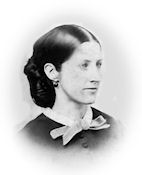
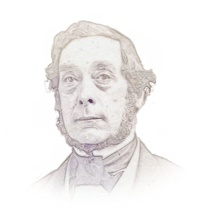
Fairfax C. H., May 25.—The day of suspense is at an end. Alexandria and its environs, including, I greatly fear, our home, are in the hands of the enemy. Yesterday morning, at an early hour, as I was in my pantry, putting up refreshments for the barracks preparatory to a ride to Alexandria, the door was suddenly thrown open by a servant, looking wild with excitement, exclaiming, “Oh, madam, do you know?” “Know what, Henry?” Alexandria is filled with Yankees.” “Are you sure, Henry?” said I, trembling in every limb. “Sure, madam! I saw them myself. Before I got up I heard soldiers rushing by the door; went out, and saw our men going to the cars.” “Did they get off?” I asked, afraid to hear the answer. “Oh, yes, the cars went off full of them, and some marched out; and then I went to King Street, and saw such crowds of Yankees coming in! They came down the turnpike, and some came down the river; and presently I heard such noise and confusion, and they said they were fighting, so I came home as fast as I could.” I lost no time in seeking Mr. _____, who hurried out to hear the truth of the story. He soon met Dr. _____, who was bearing off one of the editors in his buggy. He more than confirmed Henry’s report, and gave an account of the tragedy at the Marshall House. Poor Jackson (the proprietor) had always said that the Confederate flag which floated from the top of his house should never be taken down but over his dead body. It was known that he was a devoted patriot, but his friends had amused themselves at this rash speech. He was suddenly aroused by the noise of men rushing by his room-door, ran to the window, and seeing at once what was going on, he seized his gun, his wife trying in vain to stop him; as he reached the passage he saw Colonel Ellsworth coming from the third story, waving the flag. As he passed Jackson he said, “I have a trophy.” Jackson immediately raised his gun, and in an instant Ellsworth fell dead. One of the party immediately killed poor Jackson. The Federals then proceeded down the street, taking possession of public houses, etc. I am mortified to write that a party of our cavalry, thirty-five in number, was captured. It can scarcely be accounted for. It is said that the Federals notified the authorities in Alexandria that they would enter the city at eight, and the captain was so credulous as to believe them. Poor fellow, he is now a prisoner, but it will be a lesson to him and to our troops generally. Jackson leaves a wife and children. I know the country will take care of them. He is the first martyr. I shudder to think how many more there may be.

The question with us was, what was next to be done? Mr. _____ had voted for secession, and there were Union people enough around us to communicate every thing of the sort to the Federals; the few neighbours who were left were preparing to be off, and we thought it most prudent to come off too. Pickets were already thrown out beyond Shuter’s Hill, and they were threatening to arrest all secessionists. With a heavy heart I packed trunks and boxes, as many as our little carriage would hold; had packing boxes fixed in my room for the purpose of bringing off valuables of various sorts, when I go down on Monday; locked up every thing; gave the keys to the cook, enjoining upon the servants to take care of the cows, “Old Rock,” the garden, the flowers, and last, but not least, J ‘s splendid Newfoundland. Poor dog, as we got into the carriage how I did long to take him! When we took leave of the servants they looked sorrowful, and we felt so. I promised them to return to-day, but Mr. _____ was so sick this morning that I could not leave him, and have deferred it until day after to-morrow. Mr. _____ said, as he looked out upon the green lawn just before we set off, that he thought he had never seen the place so attractive; and as we drove off the bright flowers we had planted seemed in full glory; every flower-bed seemed to glow with the “Giant of Battles” and other brilliant roses. In bitterness of heart I exclaimed, “Why must we leave thee, Paradise !” and for the first time my tears streamed. As we drove by “The Seminary,” the few students who remained came out to say “Good-by.” One of them had just returned from Alexandria, where he had seen the bodies of Ellsworth and Jackson, and another, of which we had heard through one of our servants who went to town in the morning. When the Federal troops arrived, a man being ordered to take down the secession flag from above the markethouse, and run up the “stars and stripes,” got nearly to the flag, missed his foothold, fell, and broke his neck. This remarkable circumstance was told me by two persons who saw the body. Is it ominous? I trust and pray that it may be.

When we got to Bailey’s Cross Roads, Mr. _____ said to me that we were obliged to leave our home, and as far as we have a right to any other, it makes not the slightest difference which road we take—we might as well drive to the right hand as to the left—nothing remains to us but the barren, beaten track. It was a sorrowful thought; but we have kind relations and friends whose doors are open to us, and we hope to get home again before very long. The South did not bring on the war, and I believe that God will provide for the homeless.

About sunset we drove up to the door of this, the house of our relative, the Rev. Mr. B., and were received with the warmest welcome. As we drove through the village we saw the carriage of Commodore F. standing at the hotel door, and were soon followed by the C.’s of our neighbourhood and many others. They told us that the Union men of the town were pointing out the houses of the Secessionists, and that some of them had already been taken by Federal officers. When I think of all this my heart quails within me. Our future is so dark and shadowy, so much may, nay must, happen before we again become quiet, and get back, that I feel sad and dreary. I have no fear for the country—that must and will succeed; but our dear ones!—the representatives of every State, almost every family, from the Potomac to the Gulf of Mexico—how must they suffer, and how must we at home suffer in their behalf!

This little village has two or three companies quartered in it. It seems thoroughly aroused from the quiescent state which it was wont to indulge. Drums are beating, colours flying, and ever and anon we are startled by the sound of a gun. At Fairfax Station there are a good many troops, a South Carolina regiment at Centreville, and quite an army is collecting at Manassas Station. We shall be greatly outnumbered, I know, but numbers cannot make up for the zeal and patriotism of our Southern men fighting for home and liberty.

CHARLESTON, S. C, May 25, 1861.—We have come back to South Carolina from the Montgomery Congress, stopping over at Mulberry. We came with R. M. T. Hunter and Mr. Barnwell. Mr. Barnwell has excellent reasons for keeping cotton at home, but I forget what they are. Generally, people take what he says, also Mr. Hunter’s wisdom, as unanswerable. Not so Mr. Chesnut, who growls at both, much as he likes them. We also had Tom Lang and his wife, and Doctor Boykin. Surely there never was a more congenial party. The younger men had been in the South Carolina College while Mr. Barnwell was President. Their love and respect for him were immeasurable and he benignly received it, smiling behind those spectacles.

Met John Darby at Atlanta and told him he was Surgeon of the Hampton Legion, which delighted him. He had had adventures. With only a few moments on the platform to interchange confidences, he said he had remained a little too long in the Medical College in Philadelphia, where he was some kind of a professor, and they had been within an ace of hanging him as a Southern spy. “Rope was ready,” he sniggered. At Atlanta when he unguardedly said he was fresh from Philadelphia, he barely escaped lynching, being taken for a Northern spy. “Lively life I am having among you, on both sides,” he said, hurrying away. And I moaned, “Here was John Darby like to have been killed by both sides, and no time to tell me the curious coincidences.” What marvelous experiences a little war begins to produce.

—Colonel Duryea’s Zouaves arrived at Fortress Monroe, Va., this morning by the Alabama, and encamped near the Hampton Bridge, with the Vermont and Troy regiments. The Pembroke also arrived with two companies of Massachusetts troops. There are now about 6,000 men within or under the walls of the fortress. The Quaker City came up to the fortress with a rich prize this morning—the bark Winifred, of Richmond, from Rio Janeiro, laden with coffee. Gen. Butler, accompanied by acting Adjutant-Gen. Tallmadge, and his aids, made a dashing reconnoissance several miles between the James and York Rivers. A picket guard of rebels fled on their approach.

Three fugitives, the property of Col. Mallory, commander of the rebel forces near Hampton, were brought in to Fortress Monroe by the picket guard yesterday. They represent that they were about to be sent South, and hence sought protection. Major Cary came in with a flag of truce, and claimed their rendition under the Fugitive Slave law, but was informed by Gen. Butler that, under the peculiar circumstances, he considered the fugitives contraband of war, and had set them to work inside the fortress. Col. Mallory, however, was politely informed that so soon as he should visit the fortress and take a solemn oath to obey the laws of the United States, his property would promptly be restored.—N. Y. Tribune, May 27.

—The New Orleans Picayune of to-day says: “One week hence there will not be any available mode of letter or newspaper express or telegraphic communication between the Confederate and the United States. Our Postmaster-General has announced his determination to assume the discharge of the duties of his office on the 1st day of June. From that date all existing U. S. mail contracts, so far as we are concerned, will have been annulled. Meantime, the Washington Administration adopt the same policy, and to make non-intercourse thoroughly impossible, prohibit express companies from carrying express matter, inclusive of letters, across the Potomac River. By order of the commanding general U. S. A., at Washington, Adams’ Express was opened on the 16th inst., and all such matter was stopped. Without mail or express communication with the North, and the carrying of mail matter by individuals being considered in the light of treasonable communication with the enemy, in a few days we shall have but scant opportunity of enriching our columns with interesting intelligence from the other side of the border. We might get an occasional budget by the way of Havana, but we suppose it is intended by the despotic clique at Washington that the blockade shall prevent that. Won’t it be queer to read, hereafter, the latest news from way down east, via Paris and London?

“Well, we suppose we can stand it as well as they can on the other side of the line. Let us see who will first get tired of the embargo.”

—The First Regiment N. Y. Volunteers, Col. Allen, left New York for the seat of war. —(Doc. 196.)

—Funeral ceremonies over the body of Col. Ellsworth took place in Washington. The remains lay in state in the east room of the President’s house for several hours. Owing to the immense throng of anxious gazers on the remains of the deceased, the funeral cortege delayed moving from the Executive Mansion till near 1 o’clock. All along the line of Pennsylvania avenue flags were displayed at half-mast and draped in mourning. Every available point, including the windows, balconies, and house-tops, was thronged with anxious and sorrowful gazers. Various testimonials of respect were paid. All the bells of the city were tolled, and the heads of the soldiers and troops uncovered. Several companies of the City Corps, followed by the New York Seventy-first Regiment, Marines, and the local Cavalry Corps, formed the military escort, with their arms reversed and colors shrouded. The hearse was followed by a detachment of Zouaves, one of whom, the avenger of Col. Ellsworth, carried the identical secession flag torn down by the deceased. Then followed the President, accompanied by Secretaries Seward and Smith, and the rest of the procession was composed of carriages, containing the captains of the Zouave Regiment.—N. Y. Times, May 26

FRIDAY 24

This has been a day of excitement. 10,000 troops crossed the Potomac this morning early at different points near the City. Col Ellsworth with his Zuaves went to Alexandria on Steamers. . . He was shot dead at the “Marshall House” where he had taken down a “Secession” Flag, by a man named Jackson, who kept the House. There was no opposition in the town. Ellsworths death created intense excitement here. Our troops are throwing up entrenchments opposite. I saw them today with a Glass from top of Pat office.

______

The three diary manuscript volumes, Washington during the Civil War: The Diary of Horatio Nelson Taft, 1861-1865, are available online at The Library of  Congress.

MAY 24TH.—Congress passed, in secret session, a resolution to remove the seat of government to Richmond; but I learn it has been vetoed by the President. There is a strong feeling against going thither among some of the secessionists in the Cotton States. Those who do not think there will be a great deal of fighting, have apprehensions that the border States, so tardy in the secession movement, will strive to monopolize the best positions and patronage of the new government. Indeed, if it were quite certain that there is to be no war for existence—as if a nation could be free without itself striking the blow for freedom—I think there would be a party—among the politicians, not the people—opposed to confederating with the border slave States.

Some of his fellow-members tell many jokes on Mr. Hunter. They say every time he passes the marble-yards going up to the capitol, and surveys the tomb-stones, he groans in agony, and predicts that he will get sick and die here. If this be true, I predict that he will get the seat of government moved to Richmond, a more congenial climate. He has a way of moving large bodies, which has rarely failed him; and some of his friends at the hotels, already begin to hint that he is the proper man to be the first President of the permanent government. I think he will be President some day. He would be a safe one. But this whisper at the hotel has produced no little commotion. Some propose making him Secretary of War, as a sure means of killing him off. I know a better way than that, but I wouldn’t suggest it for the world. I like him very much.

To-day the Secretary placed in my hands for examination and report, a very long document, written by a deposed or resigned Roman priest. He urged a plan to avert the horrors of war. He had been to see Lincoln, Gov. Letcher, etc., and finally obtained an interview on “important business” with President Davis. The President, not having leisure even to listen to his exordium, requested him to make his communication briefly in writing. And this was it—about twenty pages of foolscap. It consisted chiefly of evidences of the exceeding wickedness of war, and suggestions that if both belligerents would only forbear to take up arms, the peace might be preserved, and God would mediate between them. Of course I could only indorse on the back “demented.” But the old man hung round the department for a week afterward, and then departed, I know not whither. I forget his name, but his paper is in the archives of the government. I have always differed with the preachers in politics and war, except the Southern preachers who are now in arms against the invader. I think war is one of the providences of God, and certainly no book chronicles so much fighting as the Bible. It may be to the human race what pruning is to vegetation, a necessary process for the general benefit.


Martinsburg, May 24,1861.

After mentioning it in your letter, you add in a postscript, “Don’t forget to tell me where your books are.” I told you in my last letter, but wish I had not. Really, Love, I do not wish you to be annoyed with my business. I wish you to be very happy, and this I know you cannot be if you undertake to harass yourself with my business. Go out home occasionally and see how matters are going on, but do not trouble yourself any further. So, Love, if any one calls on you about my matters, tell them my instructions to you were to have nothing to do with them. Write no more about business, but about my dear wife and little ones, if you wish to make your letters interesting. We have been kept moving since we came here. We have a hard time, but have gotten used to it. The men were discontented and unmanageable at first, but are now very well satisfied. This section now is in most complete condition for defense, abundantly able, I think, to resist any force which can be made against it. Troops have been lately arriving in large numbers. I have no idea when the battle will be fought. Many of us will fall in it, but I have no doubt of our success. And now, my darling, good-bye until I write again.