April 18th.—In spite of every precaution, it is currently whispered in the streets to-day that Virginia has seceded from the Union; and that the act is to be submitted to the people for ratification a month hence. This is perhaps a blunder. If the Southern States are to adhere to the old distinct sovereignty doctrine, God help them one and all to achieve their independence of the United States. Many are inclined to think the safest plan would be to obliterate State lines, and merge them all into an indivisible nation or empire, else there may be incessant conflicts between the different sovereignties themselves, and between them and the General Government. I doubt our ability to maintain the old cumbrous, complicated, and expensive form of government. A national executive and Congress will be sufficiently burdensome to the people without the additional expense of governors, lieutenant-governors, a dozen secretaries of State, as many legislatures, etc. etc. It is true, State rights gave the States the right to secede. But what is in a name? Secession by any other name would smell as sweet. For my part, I like the name of Revolution, or even Rebellion, better, for they are sanctified by the example of Washington and his compeers. And separations of communities are like the separations of bees when they cannot live in peace in the same hive. The time had come apparently for us to set up for ourselves, and we should have done it if there had been no such thing as State sovereignty. It is true, the Constitution adopted at Montgomery virtually acknowledges the right of any State to secede from the Confederacy; but that was necessary in vindication of the action of its fathers. That Constitution, and the permanent one to succeed it, will, perhaps, never do. They too much resemble the governmental organization of the Yankees, to whom we have bid adieu forever in disgust.
The American Civil War
April 17th.—This was a memorable day. When we assembled at Metropolitan Hall, it could be easily perceived that we were on the threshold of momentous events. All other subjects, except that of a new political organization of the State, seemed to be momentarily delayed, as if awaiting action elsewhere. And this plan of political organization filled me with alarm, for I apprehended it would result in a new conflict between the old parties —Whig and Democrat. The ingenious discussion of this subject was probably a device of the Unionists, two or three of them having obtained seats in the Revolutionary Convention. I knew the ineradicable instincts of Virginia politicians, and their inveterate habit of public speaking, and knew there were well-grounded fears that we should be launched and lost in an illimitable sea of argument, when the business was Revolution, and death to the coming invader. Besides, I saw no hope of unanimity if the old party distinctions and designations were not submerged forever.
These fears, however, were groundless. The Union had received its blessure mortelle, and no power this side of the Potomac could save it. During a pause in the proceedings, one of the leading members arose and announced that he had information that the vote was about being taken in the other Convention on the ordinance of secession. “Very well!” cried another member, “we will give them another chance to save themselves. But it is the last!” This was concurred in by a vast majority. Not long after, Lieut.Gov. Montague came in and announced the passage of the ordinance by the other Convention! This was succeeded by a moment too thrilling for utterance, but was followed by tears of gladness and rapturous applause. Soon after, President Tyler and Gov. Wise were conducted arm-in-arm, and bare-headed, down the center aisle amid a din of cheers, while every member rose to his feet. They were led to the platform, and called upon to address the Convention. The venerable ex-President of the United States first rose responsive to the call, but remarked that the exhaustion incident to his recent incessant labors, and the nature of his emotions at such a momentous crisis, superadded to the feebleness of age, rendered him physically unable to utter what he felt and thought on such an occasion. Nevertheless, he seemed to acquire supernatural strength as he proceeded, and he spoke most effectively for the space of fifteen minutes. He gave a brief history of all the struggles of our race for freedom, from Magna Charta to the present day; and he concluded with a solemn declaration that at no period of our history were we engaged in a more just and holy effort for the maintenance of liberty and independence than at the present moment. The career of the dominant party at the North was but a series of aggressions, which fully warranted the steps we were taking for resistance and eternal separation; and if we performed our whole duty as Christians and patriots, the same benign Providence which favored the cause of our forefathers in the Revolution of 1776, would again crown our efforts with similar success. He said he might not survive to witness the consummation of the work begun that day; but generations yet unborn would bless those who had the high privilege of being participators in it.
He was succeeded by Gov. Wise, who, for a quarter of an hour, electrified the assembly by a burst of eloquence, perhaps never surpassed by mortal orator. During his pauses a silence reigned, pending which the slightest breathing could be distinctly heard, while every eye was bathed in tears. At times the vast assembly rose involuntarily to their feet, and every emotion and expression of feature seemed responsive to his own. During his speech he alluded to the reports of the press that the oppressors of the North had probably seized one of his children sojourning in their midst. “But,” said he, “if they suppose hostages of my own heart’s blood will stay my hand in a contest for the maintenance of sacred rights, they are mistaken. Affection for kindred, property, and life itself sink into insignificance in comparison with the overwhelming importance of public duty in such a crisis as this.” He lamented the blindness which had prevented Virginia from seizing Washington before the Republican hordes got possession of it — but, said he, we must do our best under the circumstances. It was now Independence or Death — although he had preferred fighting in the Union — and when the mind was made up to die rather than fail, success was certain. For himself, he was eager to meet the ordeal, and he doubted not every Southern heart pulsated in unison with his own.
Hon. J. M. Mason, and many other of Virginia’s distinguished sons were called upon, and delivered patriotic speeches. And finally, Gov. Letcher appeared upon the stage. He was loudly cheered by the very men who, two days before, would gladly have witnessed his execution. The governor spoke very briefly, merely declaring his concurrence in the important step that had been taken, and his honest purpose, under the circumstances, to discharge his whole duty as Executive of the State, in conformity to the will of the people and the provisions of the Constitution.
Before the sine die adjournment, it was suggested that inasmuch as the ordinance had been passed in secret session, and it was desirable that the enemy should not know it before certain preparations could be made to avert sudden injury on the border, etc., that the fact should not be divulged at present.
April 17.–Arrived in New York.
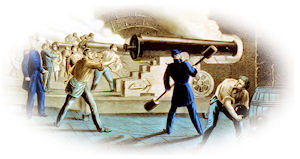
The following observations may be made upon the bombardment: The enemy’s fire on the second day, the 13th, was more rapid and more accurate than on the previous day. It seemed to be directed at the embrasures, and to set the quarters on fire. The latter object was fully attained, but not the former, for only two embrasures were struck–one at the right gorge angle by the rifled shot mentioned above, and the other at the left shoulder angle by a shot from the so-called floating battery, which struck the shutter, but without destroying it or entering the throat of the embrasure. The attempt to form a breach at the right gorge angle only succeeded in breaching around one embrasure to the depth of twenty-two inches, and in knocking off a large piece of one cheek, but without disabling the gun or rendering the embrasure inefficient. The barbette tier was not much injured by the second day’s firing, none of the guns being dismounted by it; and few of them struck. The fire, however, destroyed all the gun carriages and splinter-proof shelters on the gorge.
After the cessation of fire, about six hundred shot-marks on the face of the scarp wall were counted, but they were so scattered that no breached effect could have been expected from such fire, and probably none was attempted except at the right gorge angle. The only effect of the direct fire during the two days was to disable three barbette guns, knock off large portions of the chimneys and brick walls projecting above the parapet, and to set the quarters on fire with hot shot. The vertical fire produced more effect, as it prevented the working of the upper tier of guns, which were the only really effective guns in the fort, being columbiads, 8-inch sea-coast howitzers, and 42-pounders principally, and also prevented the use of the columbiads arranged in the parade to be used as mortars against Cummings Point. The shells that struck the stair towers nearly destroyed them, and filled the stairways with so much rubbish as to render them almost impassable. This, with the destruction of the stairs at the gorge by the explosion of the magazine of shells by the fire, made it almost impossible to get to the terre-plein.
The burning of the quarters and barracks produced a great effect on the defense while the fire lasted, inasmuch as the heat and smoke were almost stifling, and as the fire burned all around the magazines, obliging them to be closed, and thus preventing our getting powder to continue the firing. It also destroyed the main gates and the gun carriages on the parapet of the gorge. But we could have resumed the firing as soon as the walls cooled sufficiently to open the magazines, and then, having blown down the wall left projecting above the parapet, so as to get rid of flying bricks, and built up the main gates with stones and rubbish, the fort would actually have been in a more defensible condition than when the action commenced. In fact, it would have been better if the chimneys, roofs, and upper walls of the quarters and barracks had been removed before the firing begun, but the short notice and the small force did not permit anything of this kind to be done after the notice of the attack was received.
The weakness of the defense principally lay in the lack of cartridge bags, and of the materials to make them, by which the fire of our batteries was, all the time, rendered slow, and towards the last was nearly suspended. The lack of a sufficient number of men to man the barbette tier of guns at the risk of losing several by the heavy vertical fire of the enemy also prevented us making use of the only guns that had the power to smash his iron-clad batteries, or of throwing shells into his open batteries, so as to destroy his cannoneers.
The want of provisions would soon have caused the surrender of the fort, but with plenty of cartridges the men would have cheerfully fought five or six days, and if necessary much longer, on pork alone, of which we had a sufficient supply.
I do not think that a breach could have been effected in the gorge at the distance of the battery on Cummings Point, within a week or ten days; and even then, with the small garrison to defend it, and means for obstructing it, at our disposal, the operation of assaulting it, with even vastly superior numbers, would have been very doubtful in its results.
Respectfully submitted.
J. G. FOSTER,
Captain, Engineers.
—The steamship Star of the West was taken near Indianola, Texas, by the Galveston Volunteers, without resistance. She has on board eight to nine hundred barrels of provisions.
The steamer Habana has been purchased by the Southern Confederacy, and will be transformed into a war steamer. She will carry eight guns and one pivot gun.—Times, April 22.
—General Cass made a speech at Detroit, Michigan, on the occasion of the Board of Trade unfurling the national flag over their rooms. He is strongly in favor of supporting the Union, the Constitution, and the country’s flag, under all circumstances. He said that, in a crisis like the present, it was the duty of every citizen to stand by the Government.— Louisville Democrat.
—Piqua, Ohio, to-day raised a company, and tendered its services to the Government.
A large and enthusiastic meeting was held last night at Michigan City, Ind. Democrats and Republicans are a unit for the Constitution and Union. Strong anti-secession resolutions were adopted, denouncing all as traitors whose views are not to sustain the Government. Salutes were fired to the Stars and Stripes, which were displayed in all parts of the city. A volunteer company was immediately organized. The first man who signed the roll is a prominent clergyman.
The first company of volunteers left Lafayette, Ind., for Indianapolis, at 2 o’clock P. M. to-day. They were escorted to the depot by the Lafayette Artillery; and two companies are nearly full, who will follow in a few days. —Buffalo Courier.
—An excited secession meeting was held at Baltimore, Md. T. Parkin Scott occupied the chair, and speeches denunciatory of the Administration and the North were made by Wilson C. N. Carr, Wiliam Burns, president of the National Volunteer Association, and others.—Baltimore Clipper, April 19.
—The main entrance to the harbor of Norfolk, Va., was obstructed by the sinking of small boats by order of Governor Letcher.—Idem.
—Governor Letcher, of Virginia, issued a proclamation, in which the independence of the Confederate States is recognized, and all armed volunteers, regiments, or companies, are commanded to hold themselves in readiness for immediate orders, and to prepare for efficient service.—(Doc. 59.)
—A meeting, composed of all parties, was held at Middletown, Orange county, N. Y. Speeches were made, and great enthusiasm prevailed.—Tribune, April 20.
—The Virginia State Convention passed the “ordinance to repeal the ratification of the Constitution of the United States of America by the State of Virginia, and to resume all the rights and powers granted under said authorities.”—(Doc. 60.)
—Further precautions were taken at Washington to guard against a sudden raid of the rebels upon the city. The Long Bridge across the Potomac was patrolled by a party of dragoons, and at night a detachment of artillery, with guns posted to sweep the bridge, kept guard on the Washington side. Intense excitement prevailed.—Tribune
—Jefferson Davis issued a proclamation, offering to grant letters of marque and reprisal, to aid the Southern Confederacy “in resisting the wanton and wicked aggressions” of the Federal Government.—(Doc. 61.)
(April 16) Early next morning, soon after dawn, I crossed the Cape Fear River, on which Wilmington is situated, by a steam ferry-boat. On the quay lay quantities of shot and shell. “How came these here?” I inquired. “They’re anti-abolition pills,” said my neighbor; “they’ve been waiting here for two months back, but now that Sumter’s taken, I guess they won’t be wanted.” To my mind, the conclusion was by no means legitimate. From the small glance I had of Wilmington, with its fleet of schooners and brigs crowding the broad and rapid river, I should think it was a thriving place. Confederate flags waved over the public buildings, and I was informed that the Forts had been seized without opposition or difficulty. I can see no sign here of the “affection to the Union,” which, according to Mr. Seward, underlies all “secession proclivities.”
As we traversed the flat and uninteresting country, through which the rail passes, Confederate flags and sentiments greeted us everywhere; men and women repeated the national cry; at every station militia men and volunteers were waiting for the train, and the everlasting word “Sumter” ran through all the conversation in the cars.
The Carolinians are capable of turning out a fair force of cavalry. At each stopping-place I observed saddle-horses tethered under the trees, and light driving vehicles, drawn by wiry muscular animals, not remarkable for size, but strong-looking and active. Some farmers in blue jackets, and yellow braid and facings, handed round their swords to be admired by the company. A few blades had flashed in obscure Mexican skirmishes—one, however, had been borne against “the Britishers.” I inquired of a fine, tall, fair-haired young fellow whom they expected to fight. “That’s more than I can tell,” quoth he. “The Yankees ain’t such cussed fools as to think they can come here and whip us, let alone the British.” “Why, what have the British got to do with it?” “They are bound to take our part: if they don’t, we’ll just give them a hint about cotton, and that will set matters right.” This was said very much with the air of a man who knows what he is talking about, and who was quite satisfied “he had you there.” I found it was still displeasing to most people, particularly one or two of the fair sex, that more Yankees were not killed at Sumter. All the people who addressed me prefixed my name, which they soon found out, by “Major” or “Colonel”—”Captain” is very low, almost indicative of contempt. The conductor who took our tickets was called “Captain.”
At the Peedee river the rail is carried over marsh and stream on trestle work for two miles. “This is the kind of country we’ll catch the Yankees in, if they come to invade us. They’ll have some pretty tall swimming, and get knocked on the head, if ever they gets to land. I wish there was ten thousand of the cusses in it this minute.” At Nichol’s station on the frontiers of South Carolina, our baggage was regularly examined at the Custom House, but I did not see any one pay duties. As the train approached the level and marshy land near Charleston, the square block of Fort Sumter was seen rising above the water with the “stars and bars” flying over it, and the spectacle created great enthusiasm among the passengers. The smoke was still rising from an angle of the walls. Outside the village-like suburbs of the city a regiment was marching for old Virginny amid the cheers of the people—cavalry were picketed in the fields and gardens —tents and men were visible in the byways.
It was nearly dark when we reached the station. I was recommended to go to the Mills House, and on arriving there found Mr. Ward, whom I had already met in New York and Washington, and who gave me an account of the bombardment and surrender of the fort. The hotel was full of notabilities. I was introduced to ex-Governor Manning, Senator Chesnut, Hon. Porcher Miles, on the staff of General Beauregard, and to Colonel Lucas, aide-de-camp to Governor Pickens. I was taken after dinner and introduced to General Beauregard, who was engaged, late as it was, in his room at the Head Quarters writing despatches. The General is a small, compact man, about thirty-six years of age, with a quick, and intelligent eye and action, and a good deal of the Frenchman in his manner and look. He received me in the most cordial manner, and introduced me to his engineer officer, Major Whiting, whom he assigned to lead me over the works next day.
After some general conversation I took my leave; but before I went, the General said, “You shall go everywhere and see everything; we rely on your discretion, and knowledge of what is fair in dealing with what you see. Of course you don’t expect to find regular soldiers in our camps or very scientific works.” I answered the General, that he might rely on my making no improper use of what I saw in this country, but, “unless you tell me to the contrary, I shall write an account of all I see to the other side of the water, and if, when it comes back, there are things you would rather not have known, you must not blame me.” He smiled, and said, “I dare say we’ll have great changes by that time.”
That night I sat in the Charleston club with John Manning. Who that has ever met him can be indifferent to the charms of manner and of personal appearance, which render the ex-Governor of the State so attractive? There were others present, senators or congressmen, like Mr. Chesnut, and Mr. Porcher Miles. We talked long, and at last angrily, as might be between friends, of political affairs.
I own it was a little irritating to me to hear men indulge in extravagant broad menace and rhodomontade, such as came from their lips. “They would welcome the world in arms with hospitable hands to bloody graves.” “They never could be conquered.” “Creation could not do it,” and so on. I was obliged to handle the question quietly at first—to ask them “if they admitted the French were a brave and warlike people!” “Yes, certainly.” “Do you think you could better defend yourselves against invasion than the people of France?” “Well, no; but we’d make it a pretty hard business for the Yankees.” “Suppose the Yankees, as you call them, come with such preponderance of men and materiel, that they are three to your one, will you not be forced to submit?” “Never.” “Then either you are braver, better disciplined, more warlike than the people and soldiers of France, or you alone, of all the nations in the world, possess the means of resisting physical laws which prevail in war, as in other affairs of life.” “No. The Yankees are cowardly rascals. We have proved it by kicking and cuffing them till we are tired of it; besides, we know John Bull very well. He will make a great fuss about non-interference at first, but when he begins to want cotton he’ll come off his perch.” I found this was the fixed idea everywhere. The doctrine of “cotton is king,”—to us who have not much considered the question a grievous delusion or an unmeaning babble—to them is a lively all-powerful faith without distracting heresies or schisms. They have in it enunciated their full belief, and indeed there is some truth in it, in so far as we year after year by the stimulants of coal, capital, and machinery have been working up a manufacture on which four or five millions of our population depend for bread and life, which cannot be carried on without the assistance of a nation, that may at any time refuse us an adequate supply, or be cut off from giving it by war.
Political economy, we are well aware, is a fine science, but its followers are capable of tremendous absurdities in practice. The dependence of such a large proportion of the English people on this sole article of American cotton is fraught with the utmost danger to our honor and to our prosperity. Here were these Southern gentlemen exulting in their power to control the policy of Great Britain, and it was small consolation to me to assure them they were mistaken; in case we did not act as they anticipated, it could not be denied Great Britain would plunge an immense proportion of her people—a nation of manufacturers— into pauperism, which must leave them dependent on the national funds, or more properly on the property and accumulated capital of the district.
About 8-30 p.m. a deep bell began to toll. “What is that?” “It’s for all the colored people to clear out of the streets and go home The guards will arrest any who are found out without passes in half an hour.” There was much noise in the streets, drums beating, men cheering, and marching, and the hotel is crammed full with soldiers.
April 16th.—This day the Spontaneous People’s Convention met and organized in Metropolitan Hall. The door-keeper stood with a drawn sword in his hand. But the scene was orderly. The assembly was full, nearly every county being represented, and the members were the representatives of the most ancient and respectable families in the State.
David Chalmers, of Halifax County, I believe, was the President, and Willoughby Newton, a life-long Whig, among the Vice-Presidents. P. H. Aylett, a grandson of Patrick Henry, was the first speaker. And his eloquence indicated that the spirit of his ancestor survived in him. But he was for moderation and delay, still hoping that the other Convention would yield to the pressure of public sentiment, and place the State in the attitude now manifestly desired by an overwhelming majority of the people. He was answered by the gallant Capt. Wise, who thrilled every breast with his intrepid bearing and electric bursts of oratory. He advocated action, without reference to the other Convention, as the best means of bringing the Unionists to their senses. And the so-called Demosthenean Seddon, and G. W. Randolph (grandson of Thomas Jefferson), Lieut.-Gov. Montague, James Lyons, Judge Robertson, etc., were there. Never, never did I hear more exalted and effective bursts of oratory. And it was apparent that messages were constantly received from the other Convention. What they were, I did not learn at the moment; but it was evident that the Unionists were shaking in their shoes, and they certainly begged one — just one — day’s delay, which was accorded them. The People’s Convention agreed to adjourn till 10 o’clock A.M. the next day. But before we separated a commotion was observed on the stage, and the next moment a Mr. P., from Gov. Wise’s old district, rushed forward and announced that he had just arrived from Norfolk, where, under instructions, and with the acquiescence of Gov. Letcher, he had succeeded in blocking the channel of the river; and this would either secure to us, or render useless to the United States, certain ships of the navy, stores, armament, etc., of the value of millions of dollars. This announcement was received with the wildest shouts of joy. Young men threw up their hats, and old men buttoned their coats and clapped their hands most vigorously. It was next hinted by some one who seemed to know something of the matter, that before another day elapsed, Harper’s Ferry would fall into the hands of the secessionists.
At night the enthusiasm increases in intensity, and no further opposition is to be apprehended from the influence of Tim Rives, Baldwin, Clemens, etc. etc. It was quite apparent, indeed, that if an ordinance of secession were passed by the new Convention, its validity would be recognized and acted upon by the majority of the people. But this would be a complication of the civil war, now the decree of fate.
Perhaps the occurrence which has attracted most attention is the raising of the Southern flag on the capitol. It was hailed with the most deafening shouts of applause. But at a quiet hour of the night, the governor had it taken down, for the Convention had not yet passed the ordinance of secession. Yet the stars and stripes did not float in its stead; it was replaced by the flag of Virginia.
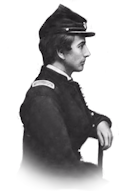
Tuesday, April 16th. To-morrow we are to meet at the armory, fall in, and march in a body to Develin’s clothing store, lower Broadway, there to be measured, each and all of us, for a uniform suit, to consist of dark blue jacket and sky-blue trousers. The jacket will have light blue shoulder-straps and cuffs, and will be made as quickly as possible, and forwarded to us wherever we may be. It is a thousand pities we cannot have them by Sunday, there will be such an enormous crowd to see us off, and in our every-day rig we shall look anything but soldierly.
April 15th.—Great demonstrations made throughout the day, and hundreds of secession flags are flying in all parts of the city. At night, while sitting with Captain O. Jennings Wise in the editorial room of the Enquirer, I learned from the Northern exchange papers, which still came to hand, that my office in Philadelphia, “The Southern Monitor,” had been sacked by the mob. It was said ten thousand had visited my office, displaying a rope with which to hang me. Finding their victim had escaped, they vented their fury in sacking the place. I have not ascertained the extent of the injury done; but if they injured the building, it belonged to H. B., a rich Republican. They tore down the signs (it was a corner house east of the Exchange), and split them up, putting the splinters in their hats, and wearing them as trophies. They next visited the mansion of Gen. P., who had made his fortune dealing in cotton, and had been a bold Northern champion of Southern rights. But the general flinched on this trying occasion. He displayed the stars and stripes, and pledged “the boys” to lead them in battle against the secessionists.
During the evening, a procession with banners and torch-lights came up the street and paused before the Enquirer office. They called for Captain Wise, and I accompanied him to the iron balcony, where he made them a soul-stirring speech. At its conclusion, he seized me by the arm and introduced me to the crowd. He informed them of the recent proceedings in Philadelphia, etc., and then ceased speaking, leaving me to tell my own story to the listening multitude. That was not my fault; I had never attempted to make a public speech in my life; and I felt that I was in a predicament. Wise knew it, and enjoyed my embarrassment. I contrived, however, to say to the people that the time for speaking had gone by, and there was no time left for listening. They proceeded up the street, growing like a snow-ball as they rolled onward. At every corner there were cheers uttered for Davis, and groans for Lincoln.
Upon returning to my boarding-house (the hotel being found too expensive), kept by Mrs. Samuels, and her sister, Miss Long, I found the ladies making secession flags. Indeed, the ladies everywhere seem imbued with the spirit of patriotism, and never fail to exert their influence in behalf of Southern independence.
To-day the secession fires assumed a whiter heat. In the Convention the Union men no longer utter denunciations against the disunionists. They merely resort to pretexts and quibbles to stave off the inevitable ordinance. They had sent a deputation to Washington to make a final appeal to Seward and Lincoln to vouchsafe them such guarantees as would enable them to keep Virginia to her moorings. But in vain. They could not obtain even a promise of concession. And now the Union members as they walk the streets, and even Gov. Letcher himself, hear the indignant mutterings of the impassioned storm which threatens every hour to sweep them from existence. Business is generally suspended, and men run together in great crowds to listen to the news from the North, where it is said many outrages are committed on Southern men and those who sympathize with them. Many arrests are made, and the victims thrown into Fort Lafayette. These crowds are addressed by the most inflamed members of the Convention, and never did I hear more hearty responses from the people.
(April 15, 1861)
I have actually joined the army and am going to the war as a high private in Company C of the Seventy-first New York Regiment, commanded by Captain Coles. The regiment has been accepted for three months’ service by the general government, and is to start for the front on Sunday next, April 21, 1861.
It was not so easy to join this regiment, as the armory was crowded with men, mostly fine young fellows, all crazy to be enrolled. Finding myself getting left, I went up to the Captain, who sat near by, and asked him if he would not make a point to squeeze me in. I told him I was very anxious to go, and gave him an account of my acquirements in the military line, which I urged might be of service to him. After some questions and agreeable chatting, he directed the clerk to take down my name, saying some one would be certain to back out at the last moment, and there would be room enough for all who really wanted to go.
I left the armory rejoiced to find myself a real soldier, and could hardly realize that in less than a week’s time I should be leaving home and marching to the front. I have always dreamed of a soldier’s life as an ideal one, and have been enthusiastic on all things military since I was old enough to read. Charles O’Malley, Tom Burke of Ours, and the Three Musketeers are mainly responsible for it, I think, but however that may be, I have learned to drill, to fence, to ride, and to shoot, and devour every kind of military history that comes in my way. During the Crimean War I was absorbed in the details of the siege of Sebastopol, and sought everywhere for anything published relating to it. I followed the British troops at the Alma Balaclava and Inkerman with breathless excitement, and at the storming of the great redan became satisfied that a soldier’s career was the only honorable and satisfactory one to follow. But alas, in our own country there were no wars, nor any likelihood of there being any, and the situation seemed hopeless from every point of view, but now most unexpectedly the opportunity presents itself, and I have done what I could to enter the service promptly. True, it is not much to be a private soldier, and I have always looked at war through the commissioned ranks, but in this particular case it will not make so much difference, as men in all conditions of life, rich men, scholars, professional men, and young fellows from college and school are all anxious to go as privates, so I shall trust to luck to gain promotion by attention to duty and by my knowledge of military affairs.
The Seventy-first is a swell city regiment, called the American Guard, none but native Americans ordinarily being enlisted, and in its ranks are many very rich men, several of them taking private servants along. The Colonel, Vosburg, is a distinguished military man, and no doubt the regiment will make itself an enviable reputation.
There is no necessity for me here to say anything about the cause of the war, as everybody knows the South desired to extend their pet institution, Slavery, into the new states and territories. This the people of the North will not consent to, as they are bitterly opposed to the institution, and determined to keep it within its present limits. In order to facilitate their plans, the South have jealously maintained the upper hand in the general government, and being thoroughly united, have up to this time succeeded in keeping the reins in their own hands, but at last they have lost control, as they judge by the election of Mr. Lincoln; and rather than submit to the will of the majority when it does not suit them, they propose to disrupt the Union, destroy the country, and set up for themselves with the few slave-holding states. Of course if these states are allowed to go, the remainder may be divided and subdivided again, which means an utter disintegration of the federal government.
These reckless Southerners commenced operations by bombarding Fort Sumter in Charleston harbor, on the 11th of April, and capturing it, and they are now busily at work throughout all their states raising, equipping, and drilling a military force, with the avowed object of restraining the federal authorities from any control of their affairs.
What an excitement we have all been in since these people fired on Fort Sumter! Every one is anxious to do his utmost and determined to raise a force strong enough to go down there and thrash the conceit out of the rascals. The feeling runs mountains high, and thousands of men are offering their services where hundreds only are required. These hot-headed rebels will surely find themselves more than accommodated in the matter of fighting, and will before long bitterly repent their foolish actions. We are more numerous and have more money, have command of the sea, and have besides just as much courage and pluck as they.
On the 15th of April President Lincoln called for 75,000 volunteers to serve for three months, and the militia regiments of the various Northern states are offering themselves, filled to the maximum by the enlistment of new members. As soon as they are properly armed and equipped they will rendezvous in Washington to protect the capital at first, and subsequently march into the rebellious states and give the rebels a sound thrashing. There is no reasonable doubt that a great battle will have to be fought, and therefore we shall have an opportunity to see what actual war really is. Nobody dreams of fear, but it is a great pity these Southern people do not appreciate the earnestness and power of the North; if they did, surely they would not court certain disaster; however, this is to be a diary, continued throughout the campaign, and therefore must not be too prolix.
—Major Anderson evacuated Fort Sumter, going out with the proper honors to his flag. While the salute of fifty guns was being fired, a gun exploded, and killed one man and wounded four others. Major Anderson and his command were conveyed on board the Baltic steam transport.—Times, April 16.
—The President of the United States called by proclamation for 75,000 volunteers to suppress insurrectionary combinations; and commanded “the persons composing the combinations aforesaid to disperse and retire peaceably to their respective abodes within twenty days.” In the same proclamation, an extra session of both houses of Congress was called for the 4th of July.—(Doc. 57.)—Times, April 15.
—At Alexandria, Va., the publication of President Lincoln’s proclamation has greatly increased the secession feeling. Business of all kinds is completely suspended. Merchants are engaged in discussing the probability of a prolonged sanguinary civil war. The impression is that the Virginia Convention will instantaneously pass the ordinance of secession, or call a Border State Convention.
—At Mobile, Ala., President Lincoln’s response to the Virginia Commissioners is regarded as a declaration of war.
—At Richmond, Va., the President’s proclamation is received with general execration.
The public mind is fearfully excited. The secessionists declare that nothing is more favorable to their cause, and that military men would sooner die than respond to such a call.
—At Wilmington, N. C., the proclamation is received with perfect contempt and indignation. The Union men openly denounce the Administration. The greatest possible unanimity prevails. There was great rejoicing there Saturday on the reception of the news of the reduction of Fort Sumter.—Tribune, April 16.
—Large Union meetings were held at Detroit, Mich., Westchester and Pittsburgh, Pa., Lawrence, Mass., and Dover, N. H. At Pittsburgh the meeting was opened by the Mayor, who introduced the venerable William Wilkinson. Mr. Wilkinson was made President of the meeting. About twenty-five Vice-Presidents were also appointed. Resolutions were adopted, declaring undying fealty to the Union, approving the course of the Legislative and Executive branches of the State Government in responding to the call of the President, disregarding all partisan feeling, and pledging their lives, fortunes, and sacred honor in the defence of the Union, and appointing a Committee of Public Safety.
A resolution approving the action of the Philadelphia banks in the prompt offer of money to the Government, was also passed.
The meeting was addressed by Judge Wilkins, Thomas M. Marshall, the Hon. P. C. Shannon, Dr. McCook, Ex-Governor Johnston, the Hon. A. W. Loomis, and other prominent citizens of all parties. The speeches elicited great applause.—Tribune, April 16.
—Governor Yates, of Illinois, issued a proclamation to convene the Legislature at Springfield, on the 23d of April, for the purpose of enacting such laws and adopting such measures as may be deemed necessary upon the following subject, to wit: The more perfect organization and equipment of the militia of the State, and placing the same upon the best footing, to render efficient assistance to the General Government in preserving the Union, enforcing the laws, protecting the property and rights of the people, and also the raising of such money, and other means, as may be required to carry on the foregoing objects.—Commercial Advertiser.
—A large meeting of citizens, irrespective of party, was held at Erie, Pa., this evening. Resolutions were adopted, pledging the hearts and hands of Erie city and county to maintain the integrity of the Government and honor of the flag.
The Wayne Guards, of Erie, and other companies, will offer their services to the Governor.—Evening Post, April 17.
—This afternoon, a coasting schooner was discovered lying in Newark Bay, with a palmetto flag flying at its masthead. A party of “glass-house boys” procured a boat, and proceeding to the vessel, ordered the captain to lower the flag and substitute in its place the Stars and Stripes. The captain, refused, when they threatened to pitch him overboard and sink the vessel. The American flag was soon spread out to the breeze, when it was heartily cheered, and the palmetto was stowed away below.—N. Y. Times.
—At Philadelphia the Union pledge is receiving the signature of all classes of citizens. It responds to the President’s proclamation, and declares an unalterable determination to sustain the Government, throwing aside all differences of political opinion.
An excited crowd assembled this morning before the printing office on the corner of Fourth and Chestnut streets, where The Palmetto Flag, a small advertising sheet, is published, and threatened to demolish it. The proprietor displayed the American flag, and threw the objectionable papers from the windows; also, The Stars and Stripes, another paper printed at the same office, restoring the crowd to good humor. The crowd moved down to The Argus office in Third street, opposite Dock street, ordering that the flag should be displayed.
After visiting the newspaper offices and Government property, they marched in a body up Market street, bearing a flag. At all points on the route, well-known Union men were obliged to make all haste to borrow, beg, or steal something red, white, and blue, to protect their property with. Searches were made for the publication rooms of The Southern Monitor; but as that paper has suspended, the mob were unable to carry out their intention of destroying the forms. They satisfied themselves with breaking the signs to pieces. The ring-leaders were furnished with ropes with which to hang the editor if caught.
During the afternoon, General Patterson’s mansion, corner of Thirteenth, and Locust streets, was mobbed and threatened with destruction. A servant answered their call, and unfortunately slammed the door in their faces. The crowd became uproarious and violent, and made an attempt to force open the door. General Patterson finally appeared at the window, bearing the colors of the regiment. The crowd then moved away. It is understood that General Patterson, who is charged with secessionism, intends throwing up his commission.
They then visited General Cadwallader, who made a Union speech and threw out a flag. Several prominent Southerners, with secession proclivities, including Robert Tyler, have received warnings from a so-called Vigilance Committee.
The following is the speech that was made by Mayor Henry to the excited mob which threatened The Palmetto Flag building:
“Fellow-Citizens: By the grace of Almighty God, treason shall never rear its head or have a foothold in Philadelphia. [Immense cheering.] I call upon you as American citizens to stand by your flag and protect it at all hazards—at the point of the bayonet, if necessary; but, in doing so, remember the rights due your fellow-citizens and their private property. [Immense cheering.] That flag is an emblem of the Government, and I call upon all good citizens who love their country and its flag, to testify their loyalty by going to their respective places of abode, leaving to the constituted authorities of the city the task of protecting the peace, and preventing every act which could be construed into treason to their country.”
The Mayor then hoisted the stars and stripes. —Tribune, April 16.
—Seventeen vessels were seized in the port of New York from ports in southern States, their clearances being improper, and not signed by United States officers. They were fined $100 each, and some were held subject to forfeiture.— World, April 18.
—Jefferson Davis replies to President Lincoln’s proclamation as follows:
“Fort Sumter is ours, and nobody is hurt. With mortar, Paixhan, and petard, we tender ‘Old Abe’ our Beau—regard.” — Charleston Mercury.
—At Albany, N. Y., popular sentiment grows stronger and stronger. Several prominent citizens, particularly among the young men, have sent in applications as volunteers, and some are already organizing companies among those who are friends at home. The capital has presented an unusual appearance all day, the whole building having been filled with citizens who have apparently left their business to gather at head-quarters, and watch eagerly the progress of events. The spirit of the masses is decidedly aroused, and from present indications Albany will be behind no city in the State or Union in evincing her patriotism and her determination, as the crisis has come, to stand firmly by the Government of the country, without pausing to charge upon any the responsibility of the present terrible events.— Tribune.
—Fernando Wood, Mayor of New York, issued a proclamation, calling upon the people of the city to avoid turbulence and excitement, and to rally to the restoration of the Constitution and Union.—(Doc. 58.)
—An enthusiastic Union meeting was held at Cleveland, Ohio. Speeches were made by Senator Wade and other prominent gentlemen. Resolutions were adopted to sustain the Government, approving of the President’s call for volunteers, recommending the Legislature to make appropriations of men and money, and appointing a committee to ascertain the efficiency of the Cleveland militia. The greatest unanimity of feeling prevailed, and the speakers were constantly interrupted by wild cheers and responses. A similar meeting was held at Norwalk, Ohio.—Buffalo Courier.
—The Directors of the Bank of Commerce, of Providence, R. I., advanced a loan of $30,000 to the State for aiding in the outfit of troops. Large offers from private citizens have also been made to Governor Sprague for a similar purpose. The Globe Bank tendered to the State a loan of $50,000.—Tribune.
—An immense Union meeting was held at Troy, N. Y. Resolutions were adopted, sustaining the Government, and pledging the city to raise a regiment of volunteers. Hon. John A. Griswold presided, and Isaac McConihee, Jonas C. Heartt, Henry Ingraham, Judge Gould, and Judge Robinson were made Vice-Presidents. Secretaries were also appointed. The meeting adjourned in a body to the residence of General Wool, where, on behalf of the citizens, an address was made by Martin J. Townsend, to which General Wool responded that his heart was rejoiced at this glorious demonstration of patriotism. Never, by any former compliment bestowed upon him, had he been thrilled by such a measure of joy. It is true that he had fought under the old flag, but he had done no more than his duty towards the best Government that ever existed. He had fought under the stars and stripes that were carried in triumph by Washington, and under which Jackson closed the second war for independence at New Orleans in a halo of glory. Will you permit that flag to be desecrated and trampled in the dust by traitors now? Will you permit our noble Government to be destroyed by rebels in order that they may advance their schemes of political ambition and extend the area of slavery? No, indeed, it cannot be done. The spirit of the age forbids it. Humanity and manhood forbid it, and the sentiments of the civilized world forbid it. My friends, that flag must be lifted up from the dust into which it has been trampled, placed in its proper position, and again set floating in triumph to the breeze. I pledge you my heart, my hand, all my energies to the cause. The Union shall be maintained. I am prepared to devote my life to the work, and to lead you in the struggle.—Times, April 17.
—The Governor of Kentucky, in reply to Secretary Cameron’s call for troops from that State, says: “Your despatch is received. In answer, I say emphatically, Kentucky will furnish no troops for the wicked purpose of subduing her sister southern States.
B. Magoffin.”
—Louisville Journal.
—At New York, Philadelphia, Trenton, and other places, journals were compelled to display the American flag. Happily no damage was done to persons or property.—Herald, Tribune, Times, World, April 16.
April 16.—The Ringgold Flying Artillery, of Reading, Pa., Captain James McKnight, 180 men, with four field-pieces, received a requisition from the Governor this morning to set out this evening, at 6 o’clock, for Harrisburgh, a place of rendezvous for the first Pennsylvanians in the field.
There was a large and enthusiastic Government meeting at Tyrone, Blair county, to-night. Speeches were enthusiastically received. Ex-Senator Bigler arrived after the adjournment, and expressed himself unequivocally for the Government, and he was determined to sustain it to the last. Two military companies from Tyrone, two from Altoona, and two from Hollidaysburgh, will leave to-morrow for Harrisburgh.—Times, April 17.
—The Mechanics’, Elm City, Fairfield County, Thames, and other banks of Connecticut, voted large sums of money to assist in equipping the troops, and the support of their families.—Idem.
—Governor Buckingham, of Connecticut, issued a proclamation calling for volunteers, to rendezvous at Hartford.—Idem.
—The session of the New York East Methodist Conference was opened by the following prayer:
“Grant, O God, that all the efforts now being made to overthrow rebellion in our distracted country, may be met with every success. Let the forces that have risen against our Government, and Thy law, be scattered to the winds, and may no enemies be allowed to prevail against us. Grant, O God, that those who have aimed at the very heart of the republic may be overthrown. We ask Thee to bring these men to destruction, and wipe them from the face of the country “—Tribune, April 17.
—New Hampshire responds to the President’s proclamation, and will furnish the troops required. The Concord Union Bank tendered a loan of $20,000 to the Governor, and all the Directors, with the Cashier, agree to contribute $100 each to the support of such families of the volunteers of Concord, as may fall in defending the flag of the country.—N. H. Statesman.
—A Union meeting was held at the Hudson House, Jersey City, N. J., for the purpose of taking action to raise volunteers, whose services are to be tendered to the Federal Government. J. W. Scudder, Esq., was chosen President; two Vice-Presidents from each ward were also chosen, and C. H. Dummer acted as Secretary.
Stirring speeches were made by Dr. H. D. Holt, Hon. N. C. Slaight, Benjamin Van Riper, and John H. Low.
During the speaking, cheers were given for the Stars and Stripes, the Federal Government, Major Anderson, &c.
Benjamin Van Riper advocated the striking down of every northern man who advocated secession, and all traitorous newspapers.
Mr. John Low proposed that at some future period they call upon the proprietors of the American Standard, in Jersey City, “the editor of which had so much maligned the Government, and make them hoist the American flag, or make them leave the town.” This proposition was received with tremendous cheering, and cries of “Let’s do it to-night.”—Times, April 17.
—Four regiments, ordered to report for service in Boston, Mass., commenced arriving there before 9 A. M. this morning, the companies first arriving not having received their orders until last night. Already about thirty companies have arrived, numbering over 1,700 men in uniform, and with these are several hundred who are importunate to be allowed to join the ranks.
The bark Manhattan, which arrived at Boston this forenoon from Savannah, had a secession flag hoisted. A crowd proceeded to the wharf, and compelled Captain Davis to take it down and hoist the stars and stripes.
The City Government of Lawrence, Mass., appropriated $5,000 for the benefit of the families of those who have volunteered to defend the country’s flag.—Boston Transcript.
—One of the largest meetings ever held in Delaware was held this evening at Wilmington, the Mayor presiding. The following resolution was adopted unanimously:
Resolved, That we censure and condemn the course of Senator Bayard, in the United States Senate, for not advocating a compromise between the North and South, and that we feel confident that his course has placed us in a false position before the world; that we repudiate his teachings, as having an Anti-Union tendency, and are unworthy of a patriot and Delawarian.—Times, April 17.
—Governor Letcher , of Virginia, in reply to the call of the President of the United States, refuses to furnish troops for the support of the Federal Government. In his letter to Secretary Cameron, he remarks:
“I have only to say that the militia of Virginia will not be furnished to the powers at Washington for any such use or purpose as they have in view. Your object is to subjugate the southern States, and a requisition made upon me for such an object—an object, in my judgment, not within the purview of the Constitution or the Act of 1795—will not be complied with. You have chosen to inaugurate civil war, and having done so, we will meet it in a spirit as determined as the Administration has exhibited towards the South.”—World, April 20.
—Governor Ellis, of North Carolina, telegraphed the President that he could not respond to the call for troops, as he had doubts of his authority and right to do so.
A war bill, with an appropriation of $3,000,000, was passed in the New York Legislature, and signed by the Governor.
The Government of the Southern Confederacy called for 32,000 men; 2,000 from Florida, and 5,000 from each of the other States.—Times, April 17.
—A large meeting of German workingmen was held at Newark, N. J., this evening. An attempt was made to disorganize the body, which was soon suppressed by earnest and loud repeated cries for the Constitution and the Union. Several speeches were made, and it was declared that the only hope for the workingmen was to be found in the preservation of the Government. The meeting broke up with cheers for the Union. This is a sample of the spirit which pervades the German population.
“The German Turners’ Society,” numbering about a hundred men, also met, and unanimously resolved to form a military corps of riflemen, and offer their services to the Government. They also resolved to send delegates to the various Turner associations in the State, and to recommend a plan of organization.— Evening Post.


