Following the American Civil War Sesquicentennial with day by day writings of the time, currently 1863.

The American Civil War

April 15th.—I did not know that one could live such days of excitement. Some one called: “Come out! There is a crowd coming.” A mob it was, indeed, but it was headed by Colonels Chesnut and Manning. The crowd was shouting and showing these two as messengers of good news. They were escorted to Beauregard’s headquarters. Fort Sumter had surrendered! Those upon the housetops shouted to us “The fort is on fire.” That had been the story once or twice before.

When we had calmed down, Colonel Chesnut, who had taken it all quietly enough, if anything more unruffled than usual in his serenity, told us how the surrender came about. Wigfall was with them on Morris Island when they saw the fire in the fort; he jumped in a little boat, and with his handkerchief as a white flag, rowed over. Wigfall went in through a porthole. When Colonel Chesnut arrived shortly after, and was received at the regular entrance, Colonel Anderson told him he had need to pick his way warily, for the place was all mined. As far as I can make out the fort surrendered to Wigfall. But it is all confusion. Our flag is flying there. Fire-engines have been sent for to put out the fire. Everybody tells you half of something and then rushes off to tell something else or to hear the last news.

In the afternoon, Mrs. Preston,¹ Mrs. Joe Heyward, and I drove around the Battery. We were in an open carriage. What a changed scene—the very liveliest crowd I think I ever saw, everybody talking at once. All glasses were still turned on the grim old fort.

Russell,² the correspondent of the London Times, was there. They took him everywhere. One man got out Thackeray to converse with him on equal terms. Poor Russell was awfully bored, they say. He only wanted to see the fort and to get news suitable to make up into an interesting article. Thackeray had become stale over the water.

Mrs.Frank Hampton³ and I went to see the camp of the Richland troops. South Carolina College had volunteered to a boy. Professor Venable (the mathematical), intends to raise a company from among them for the war, a permanent company. This is a grand frolic no more for the students, at least. Even the staid and severe of aspect, Clingman, is here. He says Virginia and North Carolina are arming to come to our rescue, for now the North will swoop down on us. Of that we may be sure. We have burned our ships. We are obliged to go on now. He calls us a poor, little, hot-blooded, headlong, rash, and troublesome sister State. General McQueen is in a rage because we are to send troops to Virginia.

Preston Hampton is in all the flush of his youth and beauty, six feet in stature; and after all only in his teens; he appeared in fine clothes and lemon-colored kid gloves to grace the scene. The camp in a fit of horse-play seized him and rubbed him in the mud. He fought manfully, but took it all naturally as a good joke.

Mrs. Frank Hampton knows already what civil war means. Her brother was in the New York Seventh Regiment, so roughly received in Baltimore. Frank will be in the opposite camp.

Good stories there may be and to spare for Russell, the man of the London Times, who has come over here to find out our weakness and our strength and to tell all the rest of the world about us.

____

¹ Caroline Hampton, a daughter of General Wade Hampton, of the Revolution, was the wife of John S. Preston, an ardent advocate of secession, who served on the staff of Beauregard at Bull Run and subsequently reached the rank of brigadier-general.

² William Howard Russell, a native of Dublin, who served as a correspondent of the London Times during the Crimean War, the Indian Mutiny, the War of Secession and the Franco-German War. He has been familiarly known as “Bull Run Russell.” In 1875 he was honorary Secretary to the Prince of Wales during the Prince’s visit to India.

³ The “Sally Baxter” of the recently published “Thackeray Letters to an American Family.”

Note: This particular diary entry—a document written in 1861—includes terms that are offensive to many today.  No attempt will be made to censor or edit 19th century material to today’s standards.

Sunday, April 14.—A night of disturbed sleep, owing to the ponderous thumping of the walking beam close to my head, the whizzing of steam, and the roaring of the steam-trumpet to warn vessels out of the way—mosquitoes, too, had a good deal to say to me in spite of my dirty gauze curtains. Soon after dawn the vessel ran alongside the jetty at Fortress Monroe, and I saw indistinctly the waterface of the work which is in some danger of being attacked, it is said, by the Virginians. There was no flag on the staff above the walls, and the place looked dreary and desolate. It has a fine bastioned profile, with moat and armed lunettes — the casemates were bricked up or occupied by glass windows, and all the guns I could make out were on the parapets. A few soldiers were lounging on the jetty, and after we had discharged a tipsy old officer, a few negroes, and some parcels, the steam-pipe brayed—it does not whistle—again, and we proceeded across the mouth of the channel and James’ River towards Elizabeth River, on which stand Portsmouth and Gosport.

Just as I was dressing, the door opened, and a all, neatly dressed negress came in and asked me for my ticket. She told me she was ticket-collector for the boat, and that she was a slave. The latter intelligence was given without any reluctance or hesitation. On my way to the upper deck I observed the bar was crowded by gentlemen engaged in consuming, or waiting for, cocktails or mint-juleps. The latter, however, could not be had just now in such perfection as usual, owing to the inferior condition of the mint. In the matter of drinks, how hospitable the Americans are! I was asked to take as many as would have rendered me incapable of drinking again; my excuse on the plea of inability to grapple with cocktails and the like before breakfast, was heard with surprise, and I was urgently entreated to abandon so bad a habit.

A clear, fine sun rose from the waters of the bay up into the purest of pure blue skies. On our right lay a low coast fringed with trees, and wooded densely with stunted forest, through which creeks could be seen glinting far through the foliage. Anxious-looking little wooden lighthouses, hard set to preserve their equilibrium in the muddy waters, and bent at various angles, marked the narrow channels to the towns and hamlets on the banks, the principal trade and occupation of which are oyster selling and oyster eating. We are sailing over wondrous deposits and submarine crops of the much-loved bivalve. Wooden houses painted white appear on the shores, and one large building with wings and a central portico surmounted by a belvedere, destined for the reception of the United States’ sailors in sickness, is a striking object in the landscape.

The steamer in a few minutes came alongside a dirty, broken down, wooden quay, lined with open booths, on which a small crowd, mostly of negroes, had gathered. Behind the shed there rose tiled and shingled roofs of mean dingy houses, and we could catch glimpses of the line of poor streets, narrow, crooked, ill-paved, surmounted by a few church-steeples, and the large sprawling advertisement-boards of the tobacco-stores and oyster-sellers, which was all we could see of Portsmouth or Gosport. Our vessel was in a narrow creek; at one side was the town—in the centre of the stream the old “Pennsylvania,” intended to be of 120 guns, but never commissioned, and used as receiving ship, was anchored—alongside the wall of the Navy Yard below us, lay the Merrimac,” apparently in ordinary. The only man-of-war fit for sea was a curiosity—a stumpy bluff-bowed, Dutch-built-looking sloop, called the “Cumberland.” Two or three smaller vessels, dismasted, were below the “Merrimac,” and we could just see the building-sheds in which were one or two others, I believe, on the stocks. A fleet of oyster-boats anchored, or in sailless observance of the Sunday, dotted the waters. There was an ancient and fishlike smell about the town worthy of its appearance and of its functions as a seaport. As the vessel came close alongside, there was the usual greeting between friends, and many a cry, “Well, you’ve heard the news? The Yankees out of Sumter! Isn’t it fine!” There were few who did not participate in that sentiment, but there were some who looked black as night and said nothing.

Whilst we were waiting for the steam ferry-boat, which plies to Norfolk at the other side of the creek to take us over, a man-of-war-boat pulled alongside, and the coxswain, a handsome, fine-looking sailor, came on deck, and, as I happened to be next him, asked me if Captain Blank had come down with us? I replied, that I did not know, but that the captain could tell him no doubt. “He?” said the sailor, pointing with great disgust to the skipper of the steamer, “Why he knows nothin’ of his passengers, except how many dollars they come to,” and started off to prosecute his inquiries among the other passengers. The boat alongside was clean, and was manned by six as stout fellows as ever handled an oar. Two I made sure of were Englishmen, and when the coxswain was retiring from his fruitless search, I asked him where he hailed from. “The Cove of Cork. I was in the navy nine years, but when I got on the West Ingy Station, I heerd how Uncle Sam treated his fellows, and so I joined him.” “Cut and run, I suppose?” “Well, not exactly. I got away, sir. Emigrated, you know!” “Are there any other Irishmen or Englishmen on board?“I should think there was. That man in the bow there is a mate of mine, from the sweet Cove of Cork; Driscoll by name, and there’s a Belfast man pulls number two ; and the stroke, and the chap that pulls next to him is Englishmen, and fine sailors they are, Bates and Bookey. They were in men-of-war too.” “What! five out of seven, British subjects!” “Oh, aye, that is—we onst was—most of us now are ‘Mericans, I think. There’s plenty more of us aboard the ship.”

The steam ferry was a ricketty affair, and combined with the tumble-down sheds and quays to give a poor idea of Norfolk. The infliction of tobacco-juice on board was remarkable. Although it was but seven o’clock every one had his quid in working order, and the air was filled with yellowish-brown rainbows and liquid parabolas, which tumbled in spray or in little flocks of the weed on the foul decks. As it was Sunday, some of the numerous flagstaff”s which adorn the houses in both cities displayed the United States’ bunting; but nothing could relieve the decayed air of Norfolk. The omnibus which was waiting to receive us must have been the earliest specimen of carriage building in that style on the Continent; and as it lunged and flopped over the prodigious bad pavement, the severe nature of which was aggravated by a street railway, it opened the seams as if it were going to fall into firewood. The shops were all closed, of course; but the houses, wooden and brick, were covered with signs and placards indicative of large trade in tobacco and oysters.

Poor G. P. R. James, who spent many years here, could have scarce caught a novel from such a place, spite of great oysters, famous wild fowl, and the lauded poultry and vegetables which are produced in the surrounding districts. There is not a hill for the traveler to ascend towards the close of a summer’s day, nor a moated castle for a thousand miles around. An execrable, tooth-cracking drive ended at last in front of the Atlantic Hotel, where I was doomed to take up my quarters. It is a dilapidated, uncleanly place, with tobacco-stained floor, full of flies and strong odors. The waiters were all slaves: untidy, slip-shod, and careless creatures. I was shut up in a small room, with the usual notice on the door, that the proprietor would not be responsible for anything, and that you were to lock your doors for fear of robbers, and that you must take your meals at certain hours, and other matters of the kind. My umbra went over to Gosport to take some sketches, he said; and after a poor meal, in a long room filled with “citizens,” all of them discussing Sumter, I went out into the street.

The people, I observe, are of a new and marked type, —very tall, loosely yet powerfully made, with dark complexions, strongly-marked features, prominent noses, large angular mouths in square jaws, deep-seated bright eyes, low, narrow foreheads,—and are all of them much given to ruminate tobacco. The bells of the churches were tolling, and I turned into one; but the heat, great enough outside, soon became nearly intolerable; nor was it rendered more bearable by my proximity to some blacks, who were, I presume, servants or slaves of the great people in the forward pews. The clergyman or minister had got to the Psalms, when a bustle arose near the door which attracted his attention, and caused all to turn round. Several persons were standing up and whispering, whilst others were stealing on tiptoe out of the church. The influence extended itself gradually and all the men near the doors were leaving rapidly. The minister, obviously interested, continued to read, raising his eyes towards the door. At last the persons near him rose up and walked boldly forth, and I at length followed the example, and getting into the street, saw men running towards the hotel. “What is it?” exclaimed I to one. “Come along, the telegraph’s in at the Day Book. The Yankees are whipped!” and so continued. I came at last to a crowd of men, struggling, with their faces toward the wall of a shabby house, increased by fresh arrivals, and diminished by those who, having satisfied their curiosity, came elbowing forth in a state of much excitement, exultation, and perspiration. “It’s all right enough!” “Didn’t I tell you so?” “Bully for Beauregard and the Palmetto State!” I shoved on, and read at last the programme of the cannonade and bombardment, and of the effects upon the fort, on a dirty piece of yellowish paper on the wall. It was a terrible writing. At all the street corners men were discussing the news with every symptom of joy and gratification. Now I confess I could not share in the excitement at all. The act seemed to me the prelude to certain war.

I walked up the main street, and turned up some of the alleys to have a look at the town, coming out on patches of water and bridges over the creeks, or sandy lanes shaded by trees, and lined here and there by pretty wooden villas, painted in bright colors. Everywhere negroes, male and female, gaudily dressed or in rags; the door-steps of the narrow lanes swarming with infant niggerdom — big-stomached, curve-legged, ruggedheaded, and happy—tumbling about dim-eyed toothless hags, or thick-lipped mothers. Not a word were they talking about Sumter. “Any news to-day?” said I to a respectable-looking negro in a blue coat and brass buttons, wonderful hat, and vest of amber silk, check trowsers, and very broken-down shoes. “Well, sare, I tink nothin’ much occur. Der hem a fire at Squire Nichol’s house last night; leastway so I hear, sare.” Squire, let me say parenthetically, is used to designate justices of the peace. Was it a very stupid poco-curante, or a very cunning, subtle Sambo?

In my walk I arrived at a small pier, covered with oyster shells, which projected into the sea. Around it, on both sides, were hosts of schooners and pungys, smaller half-decked boats, waiting for their load of the much-loved fish for Washington, Baltimore, and Richmond. Some brigs and large vessels lay alongside the wharves and large warehouses higher up the creek. Observing a small group at the end of the pier I walked on, and found that they consisted of fifteen or twenty well-dressed mechanical kind of men, busily engaged in “chaffing,” as Cockneys would call it, the crew of the man-of-war boat I had seen in the morning. The sailors were stretched on the thwarts, some rather amused, others sullen at the ordeal. “You better just pull down that cussed old rag of yours, and bring your old ship over to the Southern Confederacy. I guess we can take your ‘Cumberland’ whenever we like ! Why don’t you go, and touch off your guns at Charleston?” Presently the coxswain came down with a parcel under his arm, and stepped into the boat. “Give way, my lads;” and the oars dipped in the water. When the boat had gone a few yards from the shore, the crowd cried out: “Down with the Yankees! Hurrah for the Southern Confederacy!” and some among them threw oyster shells at the boat, one of which struck the coxswain on the head. “Back water! Back water all. Hard!” he shouted; and as the boat’s stern neared the land, he stood up and made a leap in among the crowd like a tiger. “You cowardly d—d set. Who threw the shells ?” No one answered at first, but a little wizened man at last squeaked out: “I guess you’ll have shells of another kind if you remain here much longer.” The sailor howled with rage: “Why, you poor devils, I’d whip any half dozen of you, —teeth, knives, and all—in five minutes; and my boys there in the boat would clear your whole town. What do you mean by barking at the Stars and Stripes? Do you see that ship?” he shouted, pointing towards the “Cumberland.” “Why the lads aboard of her would knock every darned seceder in your State into a cocked hat in a brace of shakes! And now who’s coming on?” The invitation was not accepted, and the sailor withdrew, with his angry eyes fixed on the people, who gave him a kind of groan; but there were no oyster shells this time. “In spite of his blowing, I tell yer,” said one of them, “there’s some good men from old Virginny abo’rd o’ that ship that will never fire a shot agin us.” “Oh, we’ll fix her right enough,” remarked another, “when the time comes.” I returned to my room, sat down, and wrote for some hours. The dinner in the Atlantic Hotel was of a description to make one wish the desire for food had never been invented. My neighbor said he was not “quite content about this Sumter business. There’s nary one killed nor wownded.”

Sunday is a very dull day in Norfolk—no mails, no post, no steamers; and, at the best, Norfolk must be dull exceedingly. The superintendent of the Seabord and Roanoke Railway, having heard that I was about proceeding to Charleston, called upon me to offer every facility in his power. Sent Moses with letters to post-office. At night the mosquitoes were very aggressive and successful. This is the first place in which the bedrooms are unprovided with gas. A mutton dip almost made me regret the fact.
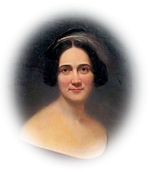
Abby Howland Woolsey to Eliza Woolsey Howland.

April 14, 1861.

What awful times we have fallen upon! The sound last night of the newsboys crying till after midnight with hoarse voice, “Bombardment of Fort Sumter,” was appalling. Cousin William Aspinwall was seen at a late hour going into the Brevoort House — no doubt to give what little comfort he could to Mrs. Anderson. This storm, which has been raging a day or two at the South, and has just reached us, has scattered the fleet sent to reinforce and provision Fort Sumter, and the vessels can neither rendezvous nor co-operate with Major Anderson who is there without food, without help, and without instructions. Is Providence against us too?

April 14.–The Isabel went over the bar and placed the whole command on board the steamer Baltic, which started for New York.

April 14. (13th1)—The Eutaw House is not a very good specimen of an American hotel, but the landlord does his best to make his guests comfortable, when he likes them. The American landlord is a despot who regulates his dominions by ukases affixed to the walls, by certain state departments called “offices” and “bars,” and who generally is represented, whilst he is away on some military, political, or commercial undertaking, by a lieutenant; the deputy being, if possible, a greater man than the chief. It requires so much capital to establish a large hotel, that there is little fear of external competition in the towns. And Americans are so gregarious that they will not patronize small establishments.

I was the more complimented by the landlord’s attention this morning when he came to the room, and in much excitement informed me the news of Port Sumter being bombarded by the Charleston batteries was confirmed, “And now,” said he, “there’s no saying where it will all end.”

After breakfast I was visited by some gentlemen of Baltimore, who were highly delighted with the news, and I learned from them there was a probability of their State joining those which had seceded. The whole feeling of the landed and respectable classes is with the South. The dislike to the Federal Government at Washington is largely spiced with personal ridicule and contempt of Mr. Lincoln. Your Marylander is very tenacious about being a gentleman, and what he does not consider gentlemanly is simply unfit for anything, far less for place and authority.

The young draftsman, of whom I spoke, turned up this morning, having pursued me from Washington. He asked me whether I would still let him accompany me. I observed that I had no objection, but that I could not permit such paragraphs in the papers again, and suggested there would be no difficulty in his travelling by himself, if he pleased. He replied that his former connection with a Black Republican paper might lead to his detention or molestation in the South, but that if he was allowed to come with me, no one would doubt that he was employed by an illustrated London paper. The young gentleman will certainly never lose anything for the want of asking.

At the black barber’s I was meekly interrogated by my attendant as to my belief in the story of the bombardment. He was astonished to find a stranger could think the event was probable. “De gen’lmen of Baltimore will be quite glad ov it. But maybe it’l come bad after all.” I discovered my barber had strong ideas that the days of slavery were drawing to an end. “And what will take place then, do you think?” “Wall, sare, ‘spose coloured men will be good as white men.” That is it. They do not understand what a vast gulf flows between them and the equality of position with the white race which most of those who have aspirations imagine to be meant by emancipation. He said the town slave-owners were very severe and harsh in demanding larger sums than the slaves could earn. The slaves are sent out to do jobs, to stand for hire, to work on the quays and docks. Their earnings go to the master, who punishes them if they do not bring home enough. Sometimes the master is content with a fixed sum, and all over that amount which the slave can get may be retained for his private purposes.

Baltimore looks more ancient and respectable than the towns I have passed through, and the site on which it stands is undulating, so that the houses have not that flatness and uniformity of height which make the streets of New York and Philadelphia resemble those of a toy city magnified. Why Baltimore should be called the “Monumental City” could not be divined by a stranger. He would never think that a great town of 250,000 inhabitants could derive its name from an obelisk cased in white marble to George Washington, even though it be more than 200 feet high, nor from the grotesque column called “Battle Monument,” erected to the memory of those who fell in the skirmish outside the city in which the British were repulsed in 1814. I could not procure any guide to the city worth reading, and strolled about at discretion, after a visit to the Maryland Club, of which I was made an honorary member. At dark I started for Norfolk, in the steamer “Georgianna.”

1Note – There are two entries for the 14th and, comparing them to the previous entry, this one appears to be for the 13th.

April 13.–At daybreak no material alteration was observed in the enemy’s batteries. The three U. S. men-of-war were still off the bar. The last of the rice was cooked this morning, and served with the pork–the only other article of food left in the engineer mess-room, where the whole command has messed since the opening of the fire. After this the fire was reopened, and continued very briskly as long as the increased supply of cartridges lasted. The enemy reopened fire at daylight, and continued it with rapidity. The aim of the enemy’s gunners was better than yesterday. One shot from the rifled gun in the battery on Cummings Point struck the cheek of an embrasure in the right gorge angle, and sent a large number of fragments inside, wounding a sergeant and three men. The spent ball also came in with the fragments. An engineer employee Mr. John Swearer, from Baltimore, Md. was severely wounded by pieces of a shell which burst inside the fort close to the casemates. One or two balls also penetrated the filling of the embrasure openings of the second tier, but fell entirely spent in-side–one of them setting a man’s bed on fire.

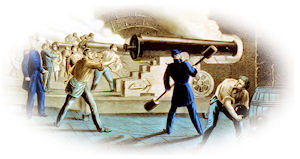
It soon became evident that they were firing hot shot from a large number of their guns, especially from those in Fort Moultrie, and at nine o’clock I saw volumes of smoke issuing from the roof of the officers’ quarters, where a shot had just penetrated. From the exposed position it was utterly impossible to extinguish the flames, and I therefore immediately notified the commanding officer of the fact, and obtained his permission to remove as much powder from the magazine as was possible before the flames, which were only one set of quarters distant, should encircle the magazine and make it necessary to close it. All the men and officers not engaged at the guns worked rapidly and zealously at this, but so rapid was the spread of the flames that only fifty barrels of powder could be taken out and distributed around in the casemates before the fire and heat made it necessary to close the magazine doors and pack earth against them. The men then withdrew to the casemates on the faces of the fort. As soon as the flames and smoke burst from the roof of the quarters the enemy’s batteries redoubled the rapidity of their fire, firing red-hot shot from most of their guns. The whole range of officers’ quarters was soon in flames. The wind being from the southward, communicated fire to the roof of the barracks, and this being aided by the hot shot constantly lodging there spread to the entire roofs of both barracks, so that by twelve o’clock all the woodwork of quarters and of-upper story of barracks was in flames. Although the floors of the barracks were fire-proof, the utmost exertions of the officers and men were often required to prevent the fire communicating down the stairways, and from the exterior, to the doors, window frames, and other woodwork of the east barrack, in which the officers and men had taken their quarters. All the woodwork in the west barrack was burned. The clouds of smoke and cinders which were sent into the casemates by the wind set on fire many boxes, beds, and other articles belonging to the men, and made it dangerous to retain the powder which had been saved from the magazine. The commanding officer accordingly gave orders to have all but five barrels thrown out of the embrasures into the water, which was done.

The small stock of cartridges now only allowed a gun to be fired at intervals of ten minutes. The flagstaff was struck by shot seven times during the day, and a fragment of shell cut the lanyard of the flag The part thus cut was so connected that the flag must have come down by the run had not the flag been, as it was, twisted around both parts of the lanyard. During the night I endeavored to remedy this by lowering the topmast so as to reeve a new halyard, but failed in consequence of the sticking of the mast, which was swollen by the rain. The most that could be done was to reeve the uncut part of the lanyard through a block attached to the topmast, as high up as a man could climb, so that if the flag untwisted and came down it could be immediately rehoisted as high as this block.

As the fire reached the magazines of grenades that were arranged in the stair towers and implement rooms on the gorge, they exploded completely destroying the stair towers at the west gorge angle, and nearly destroying the other.

At 1 o’clock the flagstaff having been struck twice before this morning, fell. The flag was immediately secured by Lieutenant Hall, and as soon as it could be attached to a temporary staff, hoisted again upon the parapet at the middle of the right face by Lieutenant Snyder, Corps of Engineers, assisted by Hart, and Davey, a laborer.

About this time information was brought to the commanding officer that Mr. Wigfall, bearing a white flag, was on the outside, and wished to see him. He accordingly went out to meet Mr. Wigfall, passing through the blazing gateway, accompanied by Lieutenant Snyder. In the mean time however, Mr. Wigfall had passed to an embrasure on the left flank, where, upon showing the white flag upon his sword, he was permitted to enter, and Lieutenant Snyder entering immediately after, accompanied him down the batteries to where some other officers were posted, to whom Mr. Wigfall commenced to address himself, to the effect that he came from General Beauregard to desire that, inasmuch as the flag of the fort was shot down, a fire raging in the quarters, and the garrison in a great strait, hostilities be suspended, and the white flag raised for this object. He was replied to that our flag was again hoisted on the parapet, that the white flag would not be hoisted except by order of the commanding officer, and that his own batteries should set the example of suspending fire. He then referred to the fact of the batteries on Cummings Point, from which he came, having stopped firing, and asked that his own white flag might be waved to indicate to the batteries on Sullivan’s Island to cease also. This was refused; but he was permitted to wave the white flag himself, getting into an embrasure for this purpose. Having done this for a few moments, Lieutenant Davis, First Artillery, permitted a corporal to relieve him. Very soon, however a shot striking very near to the embrasure, the corporal jumped inside, and declared to Mr. Wigfall that “he would not hold his flag, for it was not respected.”

At this moment the commanding officer, having re-entered through an embrasure, came up. To him Mr. Wigfall addressed nearly the same remarks that he had used on entering, adding some complimentary things about the manner in which the defense had been made, and ending by renewing the request to suspend hostilities in order to arrange terms of evacuation. The commanding officer desiring to know what terms he came to offer, Mr. Wigfall replied, “Any terms that you may desire–your own terms–the precise nature of which General Beauregard will arrange with you.”

The commanding officer then accepted the conditions, saying that the terms he accepted were those proposed by General Beauregard on the 11th, namely: To evacuate the fort with his command, taking arms and all private and company property, saluting the United States flag as it was lowered, and being conveyed, if he desired it, to any northern port. With this understanding Mr. Wigfall left, and the white flag was raised and the United States flag lowered by order of the commanding officer.

Very soon after a boat arrived from the city, containing three aides of General Beauregard, with a message to the effect that, observing the white flag hoisted, General B. sent to inquire what aid he could lend in extinguishing the flames, &c. Being made acquainted with the condition of affairs and Mr. Wigfall’s visit, they stated that the latter, although an aid of General Beauregard, had not seen him for two days.

The commanding officer then stated that the United States flag would be raised again, but yielded to the request of the aides for time to report to their chief and obtain his instructions. They soon returned, with the approval of all the conditions desired except the saluting of the flag as it was lowered, and this exception was subsequently removed after correspondence. In the morning communication was had with the fleet, and Captain Gillis paid a visit to the fort.

The evacuation was completed after saluting the flag, in doing which one man was instantly killed, one mortally and four severely wounded, by the premature discharge of a gun and explosion of a pile of cartridges. The whole command went on board a steamer which placed them on board the Isabel, where they remained all night.

April 13th.—Nobody has been hurt after all. How gay we were last night. Reaction after the dread of all the slaughter we thought those dreadful cannon were making. Not even a battery the worse for wear. Fort Sumter has been on fire. Anderson has not yet silenced any of our guns. So the aides, still with swords and red sashes by way of uniform, tell us. But the sound of those guns makes regular meals impossible. None of us go to table. Tea-trays pervade the corridors going everywhere. Some of the anxious hearts lie on their beds and moan in solitary misery. Mrs. Wigfall and I solace ourselves with tea in my room. These women have all a satisfying faith. “God is on our side,” they say. When we are shut in Mrs. Wigfall and I ask “Why?” “Of course, He hates the Yankees, we are told. You’ll think that well of Him.”

Not by one word or look can we detect any change in the demeanor of these negro servants. Lawrence sits at our door, sleepy and respectful, and profoundly indifferent. So are they all, but they carry it too far. You could not tell that they even heard the awful roar going on in the bay, though it has been dinning in their ears night and day. People talk before them as if they were chairs and tables. They make no sign. Are they stolidly stupid? or wiser than we are; silent and strong, biding their time ?

So tea and toast came; also came Colonel Manning, red sash and sword, to announce that he had been under fire, and didn’t mind it. He said gaily: “It is one of those things a fellow never knows how he will come out until he has been tried. Now I know I am a worthy descendant of my old Irish hero of an ancestor, who held the British officer before him as a shield in the Revolution, and backed out of danger gracefully.” We talked of St. Valentine’s eve, or the maid of Perth, and the drop of the white doe’s blood that sometimes spoiled all.

The war-steamers are still there, outside the bar. And there are people who thought the Charleston bar “no good” to Charleston. The bar is the silent partner, or sleeping partner, and in this fray it is doing us yeoman service.

—Fire from the enemy’s batteries was resumed at daylight, and from Fort Sumter at 7 A. M. At about 8 the officers’ quarters in Sumter took fire from a shell, and the work at the guns was necessarily somewhat slackened, as nearly all the men were taken away to extinguish the flames. Shells from Moultrie and Morris’ Island fell now faster than ever. Dense volumes of smoke still poured out of the barracks at 9, when the men were again sent to the guns. At 10 o’clock the halliards on the flag-staff were cut by a shell, and the flag ran down a little and stuck, so that it appeared to be displayed at half-mast. Several ships, one a large steamer, were in the offing at 10.30, and shots were fired at them from Morris’ Island and Fort Moultrie. About 11 o’clock the fire in the barracks again burst forth fiercely. Three piles of hand-grenades and shells, placed ready for use, became heated by it and exploded at intervals. The day was oppressively warm, and the heat of the fire added, made the atmosphere of the fort almost insufferable. At 12 the whole roof of the barracks was in flames, and soon after men were set to work to take the powder out of the magazine, lest the heat should reach and explode it there. Ninety barrels were rolled out and the doors closed. The fire of Fort Sumter was now almost entirely relinquished, though from the other forts it was rather increased. Cartridges were nearly all gone, and owing to the flying sparks no more could be made. Smoke from the fire was blown into the fort so thickly that the men could not see one another. As the fire in the barracks spread from the officers’ to the men’s quarters, it became necessary to throw overboard the powder that had been taken from the magazines. All was thrown over but three barrels, which were wrapped around with wet cloths and left. From these the garrison was soon separated by the fire, and now only the cartridges in the guns were left. These were fired now and then to indicate that the fort was not silenced. Thus in truth the work was held while there was a cartridge to fire or powder enough accessible to make one. The flagstaff, which had been hit nine times, was cut at about 1, and the flag was then nailed to the cut piece, and so raised upon the ramparts. At this time both officers and men were compelled to lie flat upon their faces in the casemates, and hold wet cloths to their months to escape suffocation. Soon after Ex-Senator Wigfall came to the fort with a flag of truce, which he wished held up while he spoke; but the batteries did not respect it. He, however, represented himself as an aid of General Beauregard, and agreed for the evacuation of Fort Sumter. It was afterward learned that he had spoken falsely, and had no authority whatever from General Beauregard.

At 12.55 P. M. the flag of Fort Sumter was drawn down, and the fort was surrendered soon after upon honorable terms; the garrison to carry away the flag of the fort, and all company arms and property, and all private property; and all proper facilities to be afforded for their removal to any post in the United States the commander might elect.

No men were hurt in Sumter by the fire of the enemy. It is reported by the secessionists that no men were either killed or wounded upon their side.

A boat from the United States squadron outside, with a flag of trace, arrived at Morris’ Island, with a request to be allowed to come and take Major Anderson and his forces.—(Doc. 52.)—Tribune, Times, Herald, and World.

—A despatch from Montgomery, Ala., says that Fort Pickens was reinforced last night.—(Doc. 53.)

—To-day the President expelled from the Federal army, for refusing to act on a particular service, Captain William B. St. Johns, of the Third Infantry, and First Lieutenant Abner Smead, of the First Artillery.

—The Legislature of Pennsylvania passed the war bill without amendment last evening. Previous to its passage, the news of the bombardment of Fort Sumter was announced, and produced a profound sensation. The bill appropriates five hundred thousand dollars for the purpose of arming and equipping the militia; authorizes a temporary loan; provides for the appointment of an Adjutant-General, Commissary-General, and Quartermaster-General, who, with the Governor, are to have power to carry the act into effect.—Phila. Enquirer.

—To-day the Virginia Commissioners were formally received by the President at Washington, when they presented the resolutions under which they were appointed.—(Doc. 54.)

—The attack upon Fort Sumter, and its surrender, instead of depressing, fires and animates all patriotic hearts. One deep, strong, overpowering sentiment now sweeps over the whole community—a sentiment of determined, devoted, active loyalty. The day for the toleration of treason—treason to the Constitution, defiance to the laws that we have made!—has gone by. The people have discovered that what they deemed almost impossible has actually come to pass, and that the rebels are determined to break up this Government, if they can do it. With all such purposes they are determined to make an end as speedily as may be.—(Doc. 55.)— Times, April 16.

—Bishop Lynch, Roman Catholic, at Charleston, S. C., celebrated the bloodless victory of Fort Sumter with a Te Deum and congratulatory address. In all the churches allusions were made to the subject.

The Episcopal Bishop, wholly blind and feeble, said it was his strong persuasion, strengthened by travel through every section of South Carolina, that the movement in which the people were engaged was began by them in the deepest conviction of duty to God; and God had signally blessed their dependence on him. If there is a war, it will be purely a war of self-defence.—Tribune, April 16.

—General Beauregard, in general orders to-day, congratulates “the troops under his command on the brilliant success which has crowned their gallantry, by the reduction of the stronghold in the harbor of Charleston.”— (Doc. 56.)

April 12th.—

To-day I beheld the first secession flag that had met my vision. It was at Polecat Station, Caroline County, and it was greeted with enthusiasm by all but the two or three Yankees in the train. One of these, named Tupps, had been questioned so closely, and his presence and nativity had become so well known, that he became alarmed for his safety, although no one menaced him. He could not sit still a moment, nor keep silence. He had been speculating in North Carolina the year before, and left some property there, which, of course, he must save, if needs be, at the risk of his life. But he cared nothing for slavery, and would never bear arms against the South, if she saw fit to “set up Government business for herself.” He rather guessed war was a speculation that wouldn’t pay. His volubility increased with his perturbation, and then he drank excessively and sang Dixie. When we reached Richmond, he was beastly drunk.

Arrived at the Exchange Hotel, Richmond. A storm rages above, and below in the minds of men; but the commotion of the elements above attracts less attention than the tempest of excitement agitating the human breast. The news-boys are rushing in all directions with extras announcing the bombardment of Fort Sumter! This is the irrevocable blow! Every reflecting mind here should know that the only alternatives now are successful revolution or abject subjugation. But they do not lack for the want of information of the state of public sentiment in the North. It is in vain that the laggards are assured by persons just from the North, that the Republican leaders now composing the cabinet at Washington were prepared to hail the event at Charleston as the most auspicious that could have happened for the accomplishment of their designs; and that their purpose is the extinction of slavery, at least in the border States; the confiscation of the estates of rebels to reimburse the Federal Government for the expenses of the war which had been deliberately resolved on; and to gratify the cupidity of the “Wide-Awakes,” and to give employment to foreign mercenaries.

But it is not doubtful which course the current of feeling is rapidly taking. Even in this hitherto Union city, secession demonstrations are prevalent; and the very men who two days ago upheld Gov. Letcher in his conservatism, are now stricken dumb amid the popular clamor for immediate action. I am now resolved to remain in Richmond for a season.

After tea I called upon Gov. Wise, who occupied lodgings at the same hotel. He was worn out, and prostrated by a distressing cough which threatened pneumonia. But ever and anon his eagle eye assumed its wonted brilliancy. He was surrounded by a number of his devoted friends, who listened with rapt attention to his surpassing eloquence. A test question, indicative of the purpose of the Convention to adjourn without action, had that day been carried by a decided majority. The governor once rose from his recumbent position on the sofa and said, whatever the majority of Union men in the Convention might do, or leave undone, Virginia must array herself on one side or the other. She must fight either Lincoln or Davis. If the latter, he would renounce her, and tender his sword and his life to the Southern Confederacy. And although it was apparent that his physique was reduced, as he said, to a mere “bag of bones,” yet it was evident that his spirit yet struggled with all its native fire and animation.

Soon after President Tyler came in. I had not seen him for several years, and was surprised to find him, under the weight of so many years, unchanged in activity and energy of body and mind. He was quite as ardent in his advocacy of prompt State action as Wise. Having recently abandoned the presidency of the Peace Congress at Washington, in despair of obtaining concessions or guarantees of safety from the rampant powers then in the ascendency, he nevertheless believed, as did a majority of the statesmen of the South, that, even then, in the event of the secession of all the Southern States, presenting thus a united front, no war of great magnitude would ensue. I know better, from my residence in the North, and from the confessions of the Republicans with whom I have been thrown in contact; but I will not dissent voluntarily from the opinions of such statesmen. I can only, when my opinion is desired, intimate my conviction that a great war of the sections might have been averted, if the South had made an adequate coup d’etat before the inauguration of Lincoln, and while the Democratic party everywhere was yet writhing under the sting and mortification of defeat. Then the arm of the Republican party would have been paralyzed, for the attitude of the Democratic party would at least have been a menacing one; but now, the Government has been suffered to fall into the possession of the enemy, the sword and the purse have been seized, and it is too late to dream of peace — in or out of the Union. Submission will be dishonor. Secession can only be death, which is preferable.

Gov. Wise, smiling, rose again and walked to a corner of the room where I had noticed a bright musǩet with a sword-bayonet attached. He took it up and criticised the sword as inferior to the knife. Our men would require long drilling to become expert with the former, like the French Zouaves; but they instinctively knew how to wield the bowie-knife. The conversation turning upon the probable deficiency of a supply of improved arms in the South, if a great war should ensue, the governor said, with one of his inevitable expressions of feeling, that it was not the improved arm, but the improved man, which would win the day. Let brave men advance with flint locks and old-fashioned bayonets, on the popinjays of the Northern cities — advance on, and on, under the fire, reckless of the slain, and he would answer for it with his life, that the Yankees would break and run. But, in the event of the Convention adjourning without decisive action, he apprehended the first conflict would be with Virginians — the Union men of Virginia. He evidently despaired, under repeated defeats, of seeing an ordinance of secession passed immediately, and would have preferred ” resistance” to “secession.”

April 12th.—Anderson will not capitulate. Yesterday’s was the merriest, maddest dinner we have had yet. Men were audaciously wise and witty. We had an unspoken foreboding that it was to be our last pleasant meeting. Mr. Miles dined with us to-day. Mrs. Henry King rushed in saying, “The news, I come for the latest news. All the men of the King family are on the Island,” of which fact she seemed proud.

While she was here our peace negotiator, or envoy, came in—that is, Mr. Chesnut returned. His interview with Colonel Anderson had been deeply interesting, but Mr. Chesnut was not inclined to be communicative. He wanted his dinner. He felt for Anderson and had telegraphed to President Davis for instructions—what answer to give Anderson, etc. He has now gone back to Fort Sumter with additional instructions. When they were about to leave the wharf A. H. Boykin sprang into the boat in great excitement. He thought himself ill-used, with a likelihood of fighting and he to be left behind!

I do not pretend to go to sleep. How can I? If Anderson does not accept terms at four, the orders are, he shall be fired upon. I count four, St. Michael’s bells chime out and I begin to hope. At half-past four the heavy booming of a cannon. I sprang out of bed, and on my knees prostrate I prayed as I never prayed before.

There was a sound of stir all over the house, pattering of feet in the corridors. All seemed hurrying one way. I put on my double-gown and a shawl and went, too. It was to the housetop. The shells were bursting. In the dark I heard a man say, “Waste of ammunition.” I knew my husband was rowing about in a boat somewhere in that dark bay, and that the shells were roofing it over, bursting toward the fort. If Anderson was obstinate, Colonel Chesnut was to order the fort on one side to open fire. Certainly fire had begun. The regular roar of the cannon, there it was. And who could tell what each volley accomplished of death and destruction ?

The women were wild there on the housetop. Prayers came from the women and imprecations from the men. And then a shell would light up the scene. To-night they say the forces are to attempt to land. We watched up there, and everybody wondered that Fort Sumter did not fire a shot.

To-day Miles and Manning, colonels now, aides to Beauregard, dined with us. The latter hoped I would keep the peace. I gave him only good words, for he was to be under fire all day and night, down in the bay carrying orders, etc.

Last night, or this morning truly, up on the housetop I was so weak and weary I sat down on something that looked like a black stool. “Get up, you foolish woman. Your dress is on fire,” cried a man. And he put me out. I was on a chimney and the sparks had caught my clothes. Susan Preston and Mr. Venable then came up. But my fire had been extinguished before it burst out into a regular blaze.

Do you know, after all that noise and our tears and prayers, nobody has been hurt; sound and fury signifying nothing—a delusion and a snare.

Louisa Hamilton came here now. This is a sort of news center. Jack Hamilton, her handsome young husband, has all the credit of a famous battery, which is made of railroad iron. Mr. Petigru calls it the boomerang, because it throws the balls back the way they came; so Lou Hamilton tells us. During her first marriage, she had no children; hence the value of this lately achieved baby. To divert Louisa from the glories of “the Battery,” of which she raves, we asked if the baby could talk yet. “No, not exactly, but he imitates the big gun when he hears that. He claps his hands and cries ‘Boom, boom.'” Her mind is distinctly occupied by three things: Lieutenant Hamilton, whom she calls “Randolph,” the baby, and the big gun, and it refuses to hold more.

Pryor, of Virginia, spoke from the piazza of the Charleston hotel. I asked what he said. An irreverent woman replied: “Oh, they all say the same thing, but he made great play with that long hair of his, which he is always tossing aside!”

Somebody came in just now and reported Colonel Chesnut asleep on the sofa in General Beauregard’s room. After two such nights he must be so tired as to be able to sleep anywhere.

Just bade farewell to Langdon Cheves. He is forced to go home and leave this interesting place. Says he feels like the man that was not killed at Thermopylae. I think he said that unfortunate had to hang himself when he got home for very shame. Maybe he fell on his sword, which was the strictly classic way of ending matters.

I do not wonder at Louisa Hamilton’s baby; we hear nothing, can listen to nothing; boom, boom goes the cannon all the time. The nervous strain is awful, alone in this darkened room. “Richmond and Washington ablaze,” say the papers—blazing with excitement. Why not? To us these last days’ events seem frightfully great. We were all women on that iron balcony. Men are only seen at a distance now. Stark Means, marching under the piazza at the head of his regiment, held his cap in his hand all the time he was in sight. Mrs. Means was leaning over and looking with tearful eyes, when an unknown creature asked, “Why did he take his hat off?” Mrs. Means stood straight up and said: “He did that in honor of his mother; he saw me.” She is a proud mother, and at the same time most unhappy. Her lovely daughter Emma is dying in there, before her eyes, of consumption. At that moment I am sure Mrs. Means had a spasm of the heart; at least, she looked as I feel sometimes. She took my arm and we came in.