SUNDAY, FEBRUARY 24, 1861.
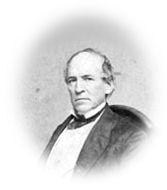
A very windy day and rather cool but not freezing. The mud is drying up in the streets. The Lincolns are all here and it is understood that satisfactory terms have been agreed upon for a settlement of the difficulties as far as the North and the border Slave states are concerned. There is a week (at least) of excitement in prospect in view of the Inauguration on the 4th. No Trouble is now apprehended then. Mr Lincoln did not stand upon his dignity yesterday but called upon the Prest, Genl Cass, and the Cabinet who returned his in evening at Willards. There is a full moon and it is very pleasant out tonight.

______
The three diary manuscript volumes, Washington during the Civil War: The Diary of Horatio Nelson Taft, 1861-1865, are available online at The Library of Congress.
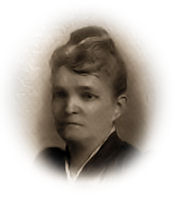
Feb. 24, 1861.—The toil of the week has ended. Nearly a month has passed since I wrote here. Events have crowded upon one another. A lowering sky closes in upon the gloomy evening, and a moaning wind is sobbing in every key. They seem in keeping with the national sorrow, and in lieu of other sympathy I am glad to have that of Nature to-night. On the 4th the cannon boomed in honor of Jefferson Davis’s election, and day before yesterday Washington’s Birthday was made the occasion of another grand display and illumination, in honor of the birth of a new nation and the breaking of that Union which he labored to cement. We drove to the race-course to see the review of troops. A flag was presented to the Washington Artillery by ladies. Senator Judah Benjamin made an impassioned speech. The banner was orange satin on one side, crimson silk on the other, the pelican and brood embroidered in pale green and gold. Silver crossed cannon surmounted it, orange-colored fringe surrounded it, and crimson tassels drooped from it. It was a brilliant, unreal scene; with military bands clashing triumphant music, elegant vehicles, high-stepping horses, and lovely women richly appareled.
Wedding cards have been pouring in till the contagion has reached us; Edith will be married next Thursday. The wedding dress is being fashioned, and the bridesmaids and groomsmen have arrived. Edith has requested me to be special mistress of ceremonies on Thursday evening, and I have told this terrible little rebel, who talks nothing but blood and thunder, yet faints at the sight of a worm, that if I fill that office no one shall mention war or politics during the whole evening, on pain of expulsion. The clock points to ten. I must lay the pen aside.

______
Note: To protect Mrs. Miller’s job as a teacher in New Orleans, the diary was published anonymously, edited by G. W. Cable, names were changed and initials were often used instead of full names — and even the initials differed from the real person’s initials.
Feb. 23.—President-elect Abraham Lincoln arrived in Washington. The published programme of his journey had been abandoned at Harrisburg, which city he left secretly last night.—(Doc. 38.)—Commercial, Feb. 28.
—United States property, to a great amount, together with the various army posts in Texas, were betrayed to that State by General Twiggs. —(Doc. 39.)—Times, Feb. 26.
MONTGOMERY, ALA.,
February 23, 1861.
Maj. W. H. C. WHITING:
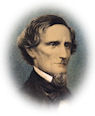
MY DEAR SIR: You will proceed to Charleston and deliver the note addressed to Governor Pickens, which you will find herewith inclosed. After conferring with him as to the time and mode of visiting the different posts in Charleston Bay, you will enter upon a reconnoissance of the harbor of Charleston and its approaches. You will inspect the various works in our possession and gain such knowledge as circumstances will permit of Fort Sumter. In inspecting the works of the Confederate States you will bear in mind the double relation they may have as works of offense and of defense. You will make an inventory of the armament and of the munitions at the forts and in store, noting particularly the different qualities of cannon powder, as indicated by grain. Generally, I desire you to perform all the duties which devolve upon an engineer charged with the examination of works, and the preparation for active operations under circumstances such as those of Charleston, in this emergency.
Very respectfully, truly, yours,
JEFF’N DAVIS.
—The people of Charleston, S. C., celebrated Washington’s birthday with great enthusiasm. The Pickens cadets paraded for the first time, and were presented to Governor Pickens by Lieutenant Magrath. The Governor made the company a brief address, urging upon its members the bright and shining example of Washington as deserving imitation. Subsequently a banner was presented to the Washington Light Infantry, and in the evening the company reassembled in Hibernian Hall, where it was addressed by Colonel Edward Carroll, in an oration of a rather sanguinary hue. Other companies also celebrated the day in their own w ay.—Louisville Journal.
—The Collector of Charleston gives official notice that all vessels from foreign States, except Texas, will be treated as “foreign vessels,” and subjected to the port dues and other charges established by the laws of the Confederated States.—Charleston Courier.
CONGRESS, February 22, 1861.
Mr. Bartow, from the Committee on Military Affairs, reported the following resolution, which was adopted, viz:
Resolved, That the President of the Confederate States be requested to communicate, in such manner as he may deem expedient, to the governors of South Carolina and Florida the resolution of Congress concerning Forts Sumter and Pickens.

[Copy of the resolution above referred to.]
RESOLUTION in relation to the occupation of Forts Sumter and Pickens.
Resolved by the Confederate States of America in Congress assembled, That it is the sense of this Congress that immediate steps should be taken to obtain possession of Forts Sumter and Pickens, by the authority of this Government, either by negotiations or force, as early as practicable, and that the President is hereby authorized to make all necessary military preparations for carrying this resolution into effect.
Passed February 15, 1861.
—The President of the Southern Confederacy nominated the following members of his Cabinet:
Secretary of State—Mr. Toombs.
Secretary of the Treasury—Mr. Memminger.
Secretary of War—Mr. L. Pope Walker.
They were confirmed.—Tribune, Feb. 22.
—Governor Brown, at Savannah, Ga., seized the ship Martha J. Ward, bark Adjuster, and brig Harold, all belonging to citizens of New York. They will be detained until the arms are delivered up by the State of New York.
—The Congress at Montgomery passed an act declaring the establishment of the free navigation of the Mississippi.—Philadelphia Press, Feb. 23.
HEADQUARTERS OF THE ARMY,
Washington, D.C., February 20, 1861.
Lieut. Col. HENRY L. SCOTT, A. D. C.; &c., New York:
See Captain Ward, commanding the North Carolina, receiving ship, and ask him to get his squadron ready as soon as he can, and let you know how many recruits he will want in addition to his marines ; learn, also, what subsistence stores he will want, including a good quantity of desiccated vegetables; also coals, &c. See that he is supplied with everything for Anderson. I shall write to-morrow. No time now. Afraid of the wires.
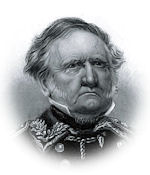
WINFIELD SCOTT.
—Old Fort Kearney, Kansas Territory, was taken possession of by the secessionists, and a secession flag raised. It was soon after retaken by a party of Unionists.—Times, Feb. 21.
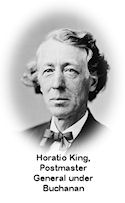
From Horatio King’s diary:
February 19.—In Cabinet to-day the principal matter presented was an inquiry from Major Anderson, in charge of Fort Sumter, at Charleston, what he should do in the event of the floating battery understood to have been constructed at Charleston being towed toward the fort with the evident purpose of attack. The President wished time to consider. Mr. Holt asked what he would do, or rather what Major Anderson ought to do, in case he were in charge of a fort and the enemy should commence undermining it. The President answered that he should ‘crack away at them.’ The President, however, is very reluctant to fire the first gun. The Peace Convention, he said, was now in session in this city, and its president, ex-President Tyler, had this morning assured him that no attack would be made on the fort. The President expressed the opinion that the fort would eventually be taken.