Following the American Civil War Sesquicentennial with day by day writings of the time, currently 1863.

The American Civil War

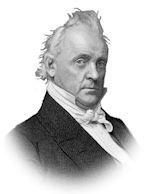
The Presidents reply to Senator Slidell’s query on Major Beauregard being relieved of command at West Point.

Washington, January 29, 1861.

My Dear Sir,—With every sentiment of personal friendship and regard, I am obliged to say, in answer to your note of Sunday, that I have full confidence in the Secretary of War, and his acts, in the line of his duty, are my own acts, for which I am responsible.

Yours very respectfully,

James Buchanan.

Fort SUMTER, S.C., January 29, 1861.
(Received A. G. O., February 1.)

Col. S. COOPER,
Adjutant-General U.S. Army:

COLONEL: The South Carolinians are at work in large force on Cummings Point, apparently framing heavy timbers, for what purpose I am unable yet to state. They succeeded this morning, favored by a very high tide, in getting the Columbia off. I send herewith two slips cut from yesterday’s Mercury, which show unmistakably the animus of these people. They are determined to bring on a collision with the General Government. Everything around us shows this to be their determination and their aim. I had a contract made yesterday for the transportation of the women attached to this command. The number is much greater than the legal allowance, but under the present excited state of feeling toward our command it would not do to send to the city or to Sullivan’s Island any of the relatives of our soldiers’ wives who have been living with them. The number who will be sent (twenty) embraces those attached to the companies and the wives of the members of the band, and also the wives of the non-commissioned staff. Inclosed you will also receive the muster and pay rolls of this command, which have been signed by the husbands of the women. I will thank you to have them sent by the Pay Department to the paymaster in New York, with instructions to hand the pay to the women. I will thank you also to have the necessary instructions sent to New York for the rations, &c., for these women and children.

Very respectfully, your obedient servant,

ROBERT ANDERSON,

Major, First Artillery, Commanding.

[Inclosure No. 1.]

OBITUARY.–Died, on Saturday night, at the Marine. Hospital, Thaddeus S. Strawinski, aged 18 years and 7 days, from an accidental wound from a revolver. This promising young man was on duty in the Columbia Artillery at Fort Moultrie when the sad accident occurred. He was a noble fellow, and, just a week after entering the freshman class of the South Carolina College, with his spirited father joined the ranks at the call of the State. While on the litter being carried to the hospital he said to those who were conveying him: “Friends, O how sorry I am you are to attack Fort Sumter without me!” During his sufferings he mourned that he could not be at the taking of the fort. He was calm and resigned, and met his end prayerfully, with the Lord’s Prayer on his lips. A mother’s gentle influence soothed his  dying hour, and a soldier’s spirit nerved a fathers heart to resign his son to his Creator. The sympathy of the whole community is with them in their bereavement.

[Inclosure No. 2.]

Mr. Yeadon, from the committee of conference on the disagreeing votes of the two houses on that clause of the appropriation bill which appropriates $30,000 for dredging Maffitt’s Channel, submitted a report recommending the adoption of the following: “For deepening or otherwise improving Maffitt’s Channel, $30,000, to be drawn by and expended under the direction of a commission, as follows: Messrs. George A. Trenholm, Henry Gourdin, George N. Reynolds, W. G. De Saussure, F. I. Porcher, Hugh E. Vincent, and the mayor of Charleston ex officio: Provided, The work shall not be resumed until Fort Sumter passes into the possession of the authorities of the State, and all the troops of the United States shall be removed from the harbor of Charleston.

The report was agreed to.

Mr. Buist offered the following resolution:

Resolved, That it is the opinion of the general assembly that no sessions of courts of law or equity in this Stale should be holden so long as the Government at Washington has control of the fortress known as Fort Sumter?

Ten members objecting, the resolution was ordered for consideration on Monday.

Jan. 28, Monday.—Sunday has now got to be a day of special excitement. The gentlemen save all the sensational papers to regale us with at the late Sunday breakfast. Rob opened the battle yesterday morning by saying to me in his most aggressive manner, “G., I believe these are your sentiments”; and then he read aloud an article from the “Journal des Debats” expressing in rather contemptuous terms the fact that France will follow the policy of non-intervention. When I answered: “Well, what do you expect? This is not their quarrel,” he raved at me, ending by a declaration that he would willingly pay my passage to foreign parts if I would like to go. “Rob,” said his father, “keep cool; don’t let that threat excite you. Cotton is king. Just wait till they feel the pinch a little; their tone will change.” I went to Trinity Church. Some Union people who are not Episcopalians go there now because the pastor has not so much chance to rail at the Lord when things are not going to suit: but yesterday was a marked Sunday. The usual prayer for the President and Congress was changed to the “governor and people of this commonwealth and their representatives in convention assembled.”

The city was very lively and noisy this evening with rockets and lights in honor of secession. Mrs. F., in common with the neighbors, illuminated. We walked out to see the houses of others gleaming amid the dark shrubbery like a fairy scene. The perfect stillness added to the effect, while the moon rose slowly with calm splendor. We hastened home to dress for a soirée, but on the stairs Edith said, “G., first come and help me dress Phoebe and Chloe [the negro servants]. There is a ball to-night in aristocratic colored society. This is Chloe’s first introduction to New Orleans circles, and Henry Judson, Phoebe’s husband, gave five dollars for a ticket for her.” Chloe is a recent purchase from Georgia. We superintended their very stylish toilets, and Edith said, “G., run into your room, please, and write a pass for Henry. Put Mr. D.’s name to it.” “Why, Henry is free,” I said.— “That makes no difference; all colored people must have a pass if out late. They choose a master for protection and always carry his pass. Henry chose Mr. D., but he’s lost the pass he had.” When the pass was ready, a carriage dashed up to the back-gate and the party drove off in fine style.

At the soirée we had secession talk sandwiched everywhere; between the supper, and the music, and the dance; but midnight has come, and silence, and a few too brief hours of oblivion.

______

Note: To protect Mrs. Miller’s job as a teacher in New Orleans, the diary was published anonymously, edited by G. W. Cable, names were changed and initials were often used instead of full names — and even the initials differed from the real person’s initials.

Post-office Department, January 28,1861.

Sir,—In answer to your letter of the 24th instant, asking if you have the right, “under existing relations,” to frank and distribute certain public documents, I have the honor to state that the theory of the administration is that the relations of South Carolina to the general Government have been in nothing changed by her recent act of secession; and this being so, you are of course entitled to the franking privilege until the first Monday in December next. If, however, as I learn is the case, you sincerely and decidedly entertain the conviction that by that act South Carolina ceased to be a member of the confederacy, and is now a foreign State, it will be for you to determine how far you can conscientiously avail yourself of a privilege the exercise of which assumes that your own conviction is erroneous, and plainly declares that South Carolina is still in the Union, and that you are still a member of the Congress of the United States.

I am, very respectfully,

your obedient servant,

Horatio King,

Acting P. M.-General.

Hon. John D. Ashmore,

Anderson, S. C.


see Franking Question

EXECUTIVE DEPARTMENT,
Montgomery, Ala., January 28, 1861.

Hon. WM. M. BROOKS, President State Convention:

SIR: The following resolution has been handed me by the secretary of the Convention:

Resolved, That his excellency the governor be requested to communicate to this Convention forthwith any information he may have in reference to the propriety of withdrawing or continuing in service the troops now at Pensacola.

In answer to the foregoing resolution, I submit the following facts: On the 19th January the following dispatch was received by Colonel Chase at Pensacola, to wit:

WASHINGTON, January 18, 1861.

Col. W. H. CHASE:

Yours received. We think no assault should be made. The possession of the fort is not worth one drop of blood to us. Measures pending unite us in this opinion. Bloodshed may be fatal to our cause.

Signed by Senators Mallory, Yulee, Slidell, Benjamin, Iverson, Hemphill, Wigfall, Clay, Fitzpatrick, and Davis.

Since the receipt of this dispatch, I have had a conference with Senator Mallory, of Florida, and Senator Fitzpatrick, of Alabama, in reference to the reasons upon which it was predicated, in which they informed me that they and Senator Slidell had a personal interview with the President and Secretary of the Navy, and were assured by them that no attack would be made upon Fort Sumter and Fort Pickens, or any excuse given for the shedding of blood, during the present administration, and that they deemed it of great importance that no attack should be made by South Carolina upon Fort Sumter, or by the troops of the seceding States upon Fort Pickens, in the present aspect of affairs. I was also informed by them that it was the policy of the Republican party to force a conflict between the Federal Government and the seceding States before the inauguration of Mr. Lincoln, so that the responsibility of commencing a war should not be cast upon him. It was further stated by Mr. Mallory that a special messenger had been sent by the Secretary of the Navy to the officer in command at Fort Pickens, directing that officer to prevent the ships which had been ordered to Pensacola from entering the bay. The officer sent was Captain Barron, of Virginia, in company with Mr. Mallory.

This is all the information now in my possession in reference to the attitude of the Federal Government and the seceding States.

In reference to the forces at Pensacola, I am informed by Colonel Chase that some companies from Mississippi, now at Pensacola, are desirous of returning home, being planters, business men, &c. He has asked me what must be done in regard to this matter. I have answered him by telegraph that the troops are under the orders of the governor of Florida, and that the governor of Alabama cannot specially interfere with the Mississippi troops.

I have also received a dispatch from his excellency J. J. Pettus, governor of Mississippi, inquiring how long the Mississippi troops were desired to remain at Pensacola. I have telegraphed him that the governors of Florida and Mississippi have alone the right to control the troops of Mississippi.

Notwithstanding it now appears from the authority above given that no attack is to be made upon the forts at Pensacola now in the possession of our forces at that point, I deem it inexpedient that all the troops should be withdrawn. It is important that we should be provided for any emergency that may occur, and that a sufficient number of troops should be drilled and ready to meet it. If the troops should all be withdrawn from Pensacola, it may have a demoralizing effect upon them and upon volunteers generally, unless kept under orders at some other point. It would be more expensive to the State to transport them to some other position and keep them under arms than to permit them to remain at Pensacola.

The withdrawal of the troops from Pensacola might induce the belief among the Black Republicans that resistance was not intended if coercion were attempted on their part, and thus give encouragement to them.

I have now briefly given the information in my possession, and also my opinion with regard to the withdrawal of the troops from Pensacola.

Very respectfully,

A. B. MOORE.

—The Grand Jury at Washington made three presentments of Ex-Secretary Floyd, first, for maladministration in office; second, for complicity in the abstraction of the bonds; and third, for conspiracy against the Government.—N. Y. Tribune.

Washington, January 27,1861.

MY Dear Sir,—I have seen in the Star, and heard from other parties, that Major Beauregard, who had been ordered to West Point as Superintendent of the Military Academy, and had entered on the discharge of his duties there, had been relieved from his command. May I take the liberty of asking you if this has been done with your approbation ?

Very respectfully yours,

John Slidell.

The President replies on January 29th.

FORT SUMTER, S.C., January 27, 1861.
(Received A. G. O. January 30.)

Col. S. COOPER, Adjutant-General:

COLONEL: I have the honor to state, in reply to your letter of the 24th instant, that our letters, &c., are sent by boat, daily, at 12 m., to Fort Johnson in a sealed package, addressed to the postmaster in Charleston, and that the return boat brings our mail in a package bearing the post-office seal. I am satisfied with the existing arrangement. The governor told Lieutenant Talbot, when he saw him on his return from Washington, that I might, if I chose; send up to the city for my mails, but that he thought it would not be judicious for me to do so. I do not apprehend that there would be the slightest danger of any of my men deserting if thus employed, but think they might be insulted or maltreated. The report to which you refer, about the attempt of the men who were sent to the city to attend a murder trial to desert, is absolutely and entirely false. Lieutenant Davis (who refused to take them, though offered arms by several persons and urged to accept them) says that the men conducted themselves with the greatest propriety, and that, although handsomely entertained, they returned perfectly sober. I have not deemed it advisable to notice in any way the false reports which have originated in Charleston and elsewhere about us. I send herewith a slip containing two such reports. Lieutenant Meade states, and I have no doubt with entire truthfulness, that he made no statement whilst absent to any person about my preferences or my opinions, either military or political, and that the inferences given in the article in the Petersburg paper were not deducible from any facts stated by him. The other article, in the Baltimore paper, stating that a boat containing three of my men was fired into from Sullivan’s Island, is also entirely untrue. I cannot see the object to be attained by the circulation of such untruths. The object of one, which has been repeated more than once, that we are getting fresh provisions from the Charleston market, is apparent enough, viz, to show they are treating us courteously.  But even that is not a fact. I send herewith a copy of a letter written to our former beef contractor about furnishing us with meat, &c., to which no reply has yet been received–why, I am unable to ascertain; so that, up to this moment, we have not derived the least advantage from the Charleston markets; and I can confidently say that none of my command desire to receive anything from the city for which we are not to pay. Under the daily expectation of the return of Lieutenant Hall, I have deferred sending in a memorandum of the commissary stores on hand. There are now here 38 barrels pork, 37 barrels flour, 13 barrels hard bread, 2 barrels beans, 1 barrel coffee,½ barrel sugar, 3 barrels vinegar, 10 pounds candles, 40 pounds soap, and 3/4 barrel salt. You will see from this that for my present command (especially after the departure of our women and children) we shall have an ample supply of pork and bread. It is a pity that my instructions had not been complied with, which would have given us the small stores which are now deficient, and which we shall not object to receiving as soon as the safety of our country will admit of our getting them. Nothing of importance to report. The Columbia is still aground in the Maffitt’s Channel.

I am, colonel, your obedient servant,

ROBERT ANDERSON,

Major, First Artillery, Commanding.

[Inclosure No. 1.]

FORT SUMTER, January 24, 1861.

Mr. DANIEL McSWEENEY:

SIR: I am directed by Major Anderson, commanding this post, to ascertain whether you will furnish such fresh beef and vegetables as may be required here; the beef upon the terms of the contract under which you supplied Fort Moultrie; the vegetables to be purchased by you for us at fair market prices; the whole to be delivered as hitherto, four times in ten days, at some wharf in Charleston, for transportation to Fort Johnson, where it will be received by this garrison. This arrangement, which has been approved by the governor of South Carolina, it is desired shall go into effect immediately, and if you consent to it, you can send 184 pounds of flesh beef at a time, at such hour and wherever Quartermaster-General Hatch (120 Meeting street) may advise you. Of the vegetables you will be further directed. Please acknowledge the receipt of this as soon as possible, in order, if necessary, that other arrangements may be made.

Respectfully, your obedient servant,

T. SEYMOUR,

Captain, U. S. Army.


Copy of extracts from Baltimore Sun and Petersburg Daily Express

[By telegraph for the Baltimore Sun.]

THE LATEST FROM THE SOUTH.

FROM SOUTH CAROLINA–A BOAT FROM FORT SUMTER FIRED AT BY THE SOUTH CAROLINIANS—HON. JEFF. DAVIS SPOKEN OF FOR PRESIDENT OF THE SOUTHERN CONFEDERACY.

CHARLESTON, JANUARY 23.–The battery on the beach at Sullivan’s Island fired into a boat from Fort Sumter on Monday. There were three men in it, who approached the beach with muffled oars. The sentry at the battery hailed them and warned them on. Failing to obey the summons, the sentry fired musketry into the boat, when it turned round and went away. Soon after those at the battery heard a noise like the hauling up of a boat at Fort Sumter. One of the men in the boat is said to have been wounded badly. Their object is supposed have been desertion, but some say it was a desperate effort to run the gauntlet of the sentries and spike the guns of the battery.

[The Daily Express, Petersburg, Va., Tuesday morning, January 22, 1861.]

COMING TO THE POINT–A PRACTICAL MOVEMENT.

THE POSITIONS OF MAJOR ANDERSON.–Lieut. R. K. Meade, of the Engineer Corps, at Fort Sumter, has been in our city, on a visit home, for several day’s past. Several gentlemen with whom he has conversed inform us that he speaks in the highest terms of Major Anderson, not only as a brave and fearless soldier, but as a strong and true Southern man, his position in the present state of affairs, however, rendering it impossible for him to take any other position before the people of the South and of the Union. He does not feel in the slightest complimented by the fanatical cannon firing in his honor at the North, and it is with pain, not fear nor even embarrassment, that he realizes the present attitude of the South towards him. That he loves the South, that he prefers it, every social tie gives ample testimony. He is bound by the holy ties of wedlock to one of the fairest of the fair of Georgia, a daughter of General Clinch. He has four devoted brothers, every one of whom, it is said, is a strong secessionist. Add to this that he is a Southerner by birth, and a descendant of Revolutionary sires, we need hardly more to give us assurance that he not only loves his native south, but will at the proper time, and in an honorable manner, draw the sword in her defense. These are simple references from facts as known. Not a syllable has fallen from the lips of Lieutenant Meade to lead to the remotest deduction that Major Anderson will not perform his whole duty to the Government of the United States. But that he will be hand in hand with the South as soon as he may be, with honor, relieved from his portion, we have little to doubt.

MAJOR ANDERSON.–“A Comrade” writes to the Columbus (Ga.) Enquirer concerning the late removal of Major Anderson to Fort Sumter, and in defense of his action and character. The conclusion is: “Major Anderson is a Southern man–born and raised in the noble old ‘Dark and Bloody Ground.’ He will be found on the side of the South when this government is dismembered, and, when his critical position has been properly understood, his name will be fully exonerated from the grave charges which have been made against it by those who have been deplorably misinformed upon all the points of military honor which have governed this truly gallant and meritorious officer.”

—The Louisiana State Convention passed the ordinance of secession to-day, by a vote of one hundred and thirteen to seventeen. A delay ordinance was proposed yesterday, but was voted down by a large majority. A gold pen was given each member, with which to sign the ordinance of secession.—(Doc. 27.)— Buffalo Courier.

Jan. 26, 1861.—The solemn boom of cannon today announced that the convention have passed the ordinance of secession. We must take a reef in our patriotism and narrow it down to State limits. Mine still sticks out all around the borders of the State. It will be bad if New Orleans should secede from Louisiana and set up for herself. Then indeed I would be “cabined, cribbed, confined.” The faces in the house are jubilant to-day. Why is it so easy for them and not for me to “ring out the old, ring in the new”? I am out of place.

______

Note: To protect Mrs. Miller’s job as a teacher in New Orleans, the diary was published anonymously, edited by G. W. Cable, names were changed and initials were often used instead of full names — and even the initials differed from the real person’s initials.