[JANUARY 26, 1861.] Saturday–8 o’clock a.m.
Hon. JOHN ROBERTSON,
Commissioner from Virginia, Charleston:
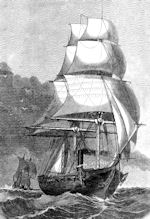
President’s reply: “Brooklyn not for South Carolina. On errand of mercy and relief.”
JOHN TYLER.
[JANUARY 26, 1861.] Saturday–8 o’clock a.m.
Hon. JOHN ROBERTSON,
Commissioner from Virginia, Charleston:
President’s reply: “Brooklyn not for South Carolina. On errand of mercy and relief.”
JOHN TYLER.
—A large Union mass meeting was held at Portland, Me., this evening; Chief Justice Shepley presided, and the meeting was addressed by many of the ablest speakers of all parties. Union resolutions were passed.
—A correspondence between Senator Toombs, of Georgia, and Fernando Wood, mayor of New York, relative to the seizure of arms by the police of that city, creates comment and surprise.—(Doc. 26.)
HEADQUARTERS FORT MONROE, VA.,
January 25, 1861.
Lieut. Col. L. THOMAS, Assistant Adjutant-General,
Headquarters of the Army, New York City:
COLONEL: I have the honor to report that in compliance with instructions from the General-in-Chief, Captain Vogdes’ company (A, First Artillery) left this post yesterday between 4 and 5 o’clock p.m. to embark on board the U. S. sloop-of-war Brooklyn. A return of Captain Vogdes’ command is herewith transmitted. I also inclose copies of orders issued by me relative to Captain Vogdes’ movement.
I am, sir, very respectfully, your obedient servant,
J. DIMICK,
Lieut. Col., Second Artillery, and Bvt. Col, Comdg. Post.

[Inclosure]

 ORDERS NO. 13,
Extract.
HEADQUARTERS FORT MONROE,
January 23, 1861.
In compliance with instructions from the General-in-Chief, Capt. L Vogdes, First Artillery, will embark with his company (A, First Artillery), filled to the maximum by attached men from the other companies of this post, on board the sloop-of-war Brooklyn, as soon as the commanding officer of that ship reports himself in readiness to receive him. The following number of privates will be detailed from the companies at the post, to be attached to Captain Vogdes’ company, viz: From Company C, First Artillery, 5; from Company B, Second Artillery, from Company L, Second Artillery, 6; from Company F, Third Artillery, 6; from Company K, Third Artillery, 5; from Company D, Fourth artillery, 6; from Company L, Fourth Artillery, 6.
**********************************
The assistant commissary will furnish this command with three months’ provisions, it being all that can be transported on the Brooklyn. Fifteen thousand rounds of musket-ball cartridges will be issued. Four mountain howitzers and two 12-pounder field howitzers will be taken, with such a supply of ammunition, not to exceed one hundred rounds for each gun, as can be supplied from this post and arsenal.
Bvt. Second Lieutenant Whittemore, Second Artillery, will proceed with the command.
Sealed orders received from the General-in-Chief have been furnished Captain Vogdes, to be opened when at sea.
By order of Colonel Dimick:
T. J. HAINES, Adjutant.
—The Charleston Mercury continues the publication of anonymous incendiary appeals, intended to stir up the people to an attack on Fort Sumter. One, headed “Fort Sumter, the Bastion of the Federal Union,” concludes with these words:
“No longer hoping for concessions, let us be ready for war, and when we have driven every foreign soldier from our shores, then let us take our place in the glorious Republic the future promises us. Border southern States will never join us until we have indicated our power to free ourselves—until we have proven that a garrison of seventy men cannot hold the portal of our commerce. The fate of the Southern Confederacy hangs by the ensign halliards of Fort Sumter.”
—The Toronto Leader, the Government paper of Canada, this morning says it is in a position to announce in the most positive terms that it is the intention of the English Government to acknowledge the independence of the Southern Confederacy as soon as it is formed.
—The London Times, in an article on the disunion movement in America, asserts that the United States cannot “for many years be to the world what they have been.”—(Doc. 25.)
—An effort was made by the New York police to seize a quantity of fire-arms which were known to be shipped on board the steamer Montgomery. While the officers were searching on board for the arms, the captain ordered the vessel’s fasts to be cut, and she steamed away from the pier, scarcely giving the policemen time to jump ashore. The five hundred muskets found on board the schooner Caspian were returned to the captain, the authorities being satisfied that the vessel was bound to Carthagena.—Chicago Tribune.
—The United States arsenal at Augusta, Ga., was surrendered to the State authorities, upon the demand of Governor Brown.—Baltimore Sun, Jan. 25.
—The Catawba Indians of South Carolina offered their services to Governor Pickens, and were accepted.—Times, Jan. 25.
Honorable John D. Ashmore, Member of Congress from South Carolina, asks if he has the Right to the Franking Privilege, now that South Carolina has passed an Ordinance of Secession.
Anderson, S. C., Jan. 24, 1861.
My Dear Sir,—I have in my possession some one thousand to twelve hundred volumes of ” public documents,” being my proportion of the same as a member of the thirtysixth Congress. They were forwarded me in mail-sacks and are now lying in my library. Since the date of the ordinance of secession (December 20,1860) of South Carolina I have not used the franking privilege, nor will I attempt to do so without the special permission of the Department To pay the postage on these books, etc., would cost me a large sum, and one I am not prepared to expend. The books are of no use to me, but might be to my constituents, for whom they were intended, if distributed among them. Have I the right to frank and distribute them under existing relations? If so, please inform me. Having said that I have not used the franking privilege since the 20th December, I need hardly add that I shall not do so, even on a “public document,” unless you authorize it.
I am, with great respect,
Truly and sincerely yours,
J. D. Ashmore.
Hon. Horatio King,
Acting Postmaster-General.

(Answered on January 28th.)
WEDNESDAY 23
United States troops are quietly being brought here and are now quartered in different parts of the City. The President is undoubtedly informed of all the movements of the Traitors, and preparations are being made for the reception of any such visitors. The conspiracy has its ramifications through all the departments without a doubt. Men receiving pay from the Govt (as Clerks &c) but ready to turn against it at a moments warning. I can hardly hope that that [sic] all will be well six weeks hence. Heaven grant that it may be. Was at Willards an hour tonight.

______
The three diary manuscript volumes, Washington during the Civil War: The Diary of Horatio Nelson Taft, 1861-1865, are available online at The Library of Congress.
HEADQUARTERS FORT JEFFERSON, TORTUGAS,
January 23, 1861.
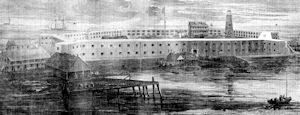
SIR: I have the honor to report for the information of the General-in-Chief that I found on my arrival here, notwithstanding the energetic, well-directed, and highly-commendable efforts of Captain Meigs, the Engineer in charge, that Fort Jefferson could not be successfully defended from a judiciously-planned and concerted attack with a formidable force without having each front of the work and each bastion armed with artillery.
By the advice of Captain Meigs I dispatched the steamer Joseph Whitney, with Captain Meigs, Engineers, and Lieutenant Benson, Second Artillery, to Key West, where there is an abundance of guns and munitions, with a letter to Captain Brannan, commanding Fort Taylor, directing him to confer with Captain Meigs, and to send me such guns, &c., as Captain Meigs might deem necessary for the immediate defense of Fort Jefferson, in order that the honor of the Government and the defense of both forts might be maintained.
I am happy to report that Captain Meigs has returned from Key West in the steamer Joseph Whitney with six 8-inch columbiads and four field pieces and an ample supply of ammunition, which, with the two field pieces I brought from Fort Independence, will enable me as soon as they are in position to make a strong defense, most probably to hold this important position–the key of the Gulf–against any force that is likely to be brought against it.
I herewith inclose a copy of Captain Meigs’ report, and I will here take occasion to express my high sense of the services of Captain Meigs to render this fort defensible.
I am, very respectfully, your most obedient servant,
L. G. ARNOLD,
Brevet Major, U. S. Army, Commanding.
Lieut. Col. L. THOMAS,
Asst. Adj. Gen., U.S. Army, Headquarters Army, New York City.
[Inclosure.]
ENGINEER OFFICE, FORT JEFFERSON,
Harbor of Tortugas, U.S., January 23, 1861.
SIR: I have to report that I returned this morning on board the steamer Joseph Whitney, towing the Horace Beale, loaded with guns and ammunition, which I obtained from Fort Taylor. Lieutenant Benson, in whose charge you had placed the steamer, rendered me valuable assistance in embarking the heavy materials. Captain Maffit, of the U.S. steamer Crusader, to guard against every possible contingency, kindly convoyed us from Key West.
I recommend that one 8-inch columbiad be placed in the first right-curtain casemate on the right and left of bastions A, C, and E; one flanking gun in the casemate next the curtains in each bastion.
The artillerymen will be able to disembark and transport the guns and ammunition, and from the laborers of the Engineer Department all needful manual aid will be afforded. Two mules belonging to the Engineer Department are also at your service, if useful. A casemate gun and sling cart are on board the brigantine. A truck and wheelbarrow are in the Engineers’ park. The guns, I believe, can all be in place by to-night.
The Mohawk, which at my request came here on our arrival at Key West, will, I doubt not, if you desire it, remain here until the guns are in place; after which it would hardly be necessary to detain her, so far as the safety of this work is concerned, if she has other duties of importance to look after. Her presence, however, would, if she is not urgently needed elsewhere, be only a prudent and proper precaution.
I am, very respectfully and truly, your obedient servant,
M. C. MEIGS,
Captain, Engineers, Eng. in charge of Fort Jefferson.
Maj. L. G. ARNOLD,
Commanding Fort Jefferson.
FORT SUMTER, S.C., January 23, 1861.
(Received A. G. O., January 27.)
Col. S. COOPER Adjutant-General:
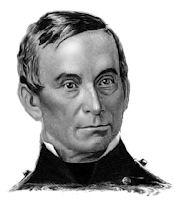
COLONEL: I have the honor to send herewith a copy of the reply of the Hon. D. F. Jamison to my letter to him about supplies for this garrison and the removal of our women and children, and also a copy of my acknowledgment of the Same. I am highly gratified at the courtesy and proper tone of this reply.
The storm which was raging yesterday has continued with unabated severity up to the present moment, and has put a stop to all outdoor work, both with the South Carolinians and ourselves. It is now raining and blowing so heavily and the bay is so rough that I shall not venture to send our boat to Fort Johnson for the mail. Should the storm abate so that I can send our letters off in time for the evening mail I shall send them over. I see by the Coast Survey map that Maffitt’s and the Swash Channel are not the same. I was led into that mistake by an old pilot, who told me that Maffitt’s Channel was formerly called the Swash. I will thank you to be pleased, therefore, to erase the words “Swash or” in my letter to the honorable Secretary of War dated the 21st instant, and also to change the word “enfilade” into “defilade,” where in the same letter I am describing the work which has been recently executed at Fort Moultrie. [Corrections were made in the text.]
I am, colonel, very respectfully, &c.,
ROBERT ANDERSON,
Major, First Artillery, Commanding.

[Inclosure No. 1.]

EXECUTIVE OFFICE, DEPARTMENT OF WAR,
Charleston, January 21, 1861.
Maj. ROBERT ANDERSON:
SIR. In offering to permit you to purchase in this city, through the instrumentality of an officer of the State, such fresh supplies of provisions as you might need, his excellency the governor was influenced solely by considerations of courtesy; and if he had no other motive for refusing to any of your garrison free access to the city to procure such supplies, he would have been moved by prudential reasons for the safety of your people, in preventing a collision between them and our own citizens. As to the manner of procuring your supplies, his excellency is indifferent whether it is done by the officer referred to, or whether your market supplies are delivered to you at Fort Johnson by the butcher whom you say you have before employed. It is only insisted on that the supplies, if sent, shall be carried over in a boat under an officer of the State who takes to Fort Johnson your daily mails. His excellency desires me to say that he willingly accedes to your request as to the women and children in Fort Sumter, and that he will afford every facility in his power to enable you to remove them from the fort at any time and in any manner that will be most agreeable to them.
I am, sir, respectfully, yours,
D. F. JAMISON.
[Inclosure No. 2.]
FORT SUMTER, S. C., January 22, 1861.
Hon. D. F. JAMISON,
Executive Office, Department of War, Charleston:
SIR: I have the honor to acknowledge the receipt of your favor of the 21st instant, and to express my gratification at its tenor. I shall direct my staff officer to write to the contractor in reference to his supplying us with beef, and will communicate with you as soon as the necessary preliminaries are arranged, in order that you may then, if you please, give the requisite instructions for carrying them into effect. Be pleased to express to his excellency the governor my thanks for the kind and prompt manner in which he gave his consent to the proposed transfer of the women and children of this garrison. As there are on Sullivan’s Island the families of two of our non-commissioned officers, with their furniture, &c., and also a quantity of private property (including some musical instruments–not public property) belonging to this command, which the first commander of Fort Moultrie, Colonel De Saussure, sent me word he had collected and placed under lock and key, it will be necessary to permit the two non-commissioned officers to go to the island to assist in moving their families, &c. The lighter, it occurs to me, which will be needed to take the families to the steamer, had better go to the island for the property there before coming for the women and children here. As we are all very desirous of guarding against causing any unnecessary excitement, it will afford me great pleasure to have everything done in the most quiet way possible. I shall, consequently, cheerfully govern myself, as far as possible, by the views and wishes of his excellency in reference to this matter, and will be pleased to hear from you what they are. It is my wish, if the weather prove favorable, to ship the families in the Saturday steamer, or the first one after that day.
I am, very respectfully, your obedient servant,
ROBERT ANDERSON,
Major, First Artillery, Commanding.
TUESDAY, JANUARY 22, 1861.
The fact there exists an extensive conspiracy to break up the Government, one of long standing, is growing more apparent every day. The Secession of Virginia and Maryland is a part of the program and the securing of this City accomplishes the desired end. Nothing but concessions on the part of the north will prevent the secession of those States. If no compromise is made, then nothing but a large force will ensure the Inauguration of Mr Lincoln on the 4th March. The next month must settle a great question for this country.
______
The three diary manuscript volumes, Washington during the Civil War: The Diary of Horatio Nelson Taft, 1861-1865, are available online at The Library of Congress.
WAR DEPARTMENT Washington, January 22, 1861.
Hon. BENJAMIN FITZPATRICK,GENTLEMEN: The President has received your communication of the 19th instant, with the copy of a correspondence between yourselves and others, “representing States which have already seceded from the United States, or will have done so before 1st of February next,” and Col. Isaac W. Hayne, of South Carolina, in behalf of the government of that State, in relation to Fort Sumter, and you ask the President “to take into consideration the subject of the correspondence.” With this request he has complied, and has directed me to communicate his answer.
In your letter to Colonel Hayne of the 15th instant, you propose to him to defer the delivery of a message from the governor of South Carolina to the President, with which he has been intrusted, for a few days, until the President and Colonel Hayne shall have considered the suggestions which you submit. It is unnecessary to refer specially to these suggestions, because the letter addressed to you by Colonel Hayne, of the 17th instant, presents clear and specific answer to them. In this he says: “I am not clothed with power to make the arrangement you suggest, but provided you can get assurances with which you are entirely satisfied that no re-enforcements will be sent to Fort Sumter in the interval, and that the public peace will not be disturbed by any act of hostility toward South Carolina, I will refer your communication to the authorities of South Carolina, and withholding the communication with which I am at present charged, will await further instructions.”
From the beginning of the present unhappy troubles, the President has endeavored to perform his executive duties in such a manner as to preserve the peace of the country and prevent bloodshed. This is still his fixed purpose. You, therefore, do him no more than justice in stating that you have assurances (from his public messages, I presume) that, “notwithstanding the circumstances under which Major Anderson left Fort Moultrie and entered Fort Sumter with the forces under his command, it was not taken, and is not held, with any hostile or unfriendly purpose towards your State, but merely as property of the United States, which the President deems it his duty to protect and preserve.” You have correctly stated what the President deems to be his duty. His sole object now is, and has been, to act strictly on the defensive, and to authorize no movement against the people of South Carolina unless clearly justified by a hostile movement on their part. He could not have given a better proof of his desire to prevent the effusion of blood than by forbearing to resort to the use of force under the strong provocation of an attack (happily without a fatal result) on an unarmed vessel bearing the flag of the United States.
I am happy to observe that in your letter to Colonel Hayne you express the opinion that it is “especially due from South Carolina to our States, to say nothing of other slaveholding States, that she should, as far as she can consistently with her honor, avoid initiating hostilities between her and the United States, or any other power.” To initiate such hostilities against Fort Sumter would, beyond question, be an act of war against the United States.
In regard to the preposition of Colonel Hayne, “that no re-enforcements will be sent to Fort Sumter in the interval, and that the public peace will not be disturbed by any act of hostility towards South Carolina,” it is impossible for me to give you any such assurances. The President has no authority to enter into such an agreement or understanding. As an executive officer he is simply bound to protect the public property go far as this may be practicable, and it would be a manifest violation of his duty to place himself under engagements that he would not perform this duty either for an indefinite a limited period. At the present moment it is not deemed necessary to re-enforce Major Anderson, because he makes no such request, and feels quite secure in his position. Should his safety, however, require re-enforcements, every effort will be made to supply them.
In regard to an assurance from the President “that the public peace will not be disturbed by any act of hostility toward South Carolina,” the answer will readily occur to yourselves. To Congress, and to Congress alone, belongs the power to make war, and it would be an act of usurpation for the Executive to give any assurance that Congress would not exercise this power, however strongly he may be convinced that no such intention exists.
I am glad to be assured from the letter of Colonel Hayne that “Major Anderson and his command do now obtain all necessary supplies, including fresh meat and vegetables, and, I believe, fuel and water, from the city of Charleston, and do now enjoy communication by post and special messenger with the President, and will continue to do so, certainly until the door to negotiation has been closed? I trust that these facilities may still be afforded to Major Anderson. This is as it should be. Major Anderson is not menacing Charleston, and I am convinced that the happiest result which can be attained is that both he and the authorities of South Carolina shall remain on their present amicable footing, neither party being bound by any obligation whatever, except the high Christian and moral duty to keep the peace, and to avoid all causes of mutual irritation.
Very respectfully, your obedient servant,
J. HOLT,
Secretary of War.
 Follow on facebook
 RSS
RSS email
email