Following the American Civil War Sesquicentennial with day by day writings of the time, currently 1863.

The American Civil War

.

FORT SUMTER,
S.C., December 28, 1860.
(Received A. G. O., January 1, 1861.)

Col. S. COOPER, Adjutant-General:

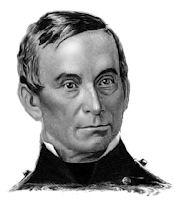
COLONEL: I have the honor to send herewith a copy of a memorandum received to-day from the governor of South Carolina, in reply to a message from me, which shows that for the present we are treated as enemies. I sent my post-adjutant this morning with a message to the commanding officer of Fort Moultrie asking by what authority he held possession of that work, and desiring to know whether he would make any opposition to my sending for some property, public and private, left there. He replied to my first question that he held that post by authority of the sovereign State of South Carolina, and in obedience to the orders of the governor. To the second, that his orders were not to permit public property of any kind to be removed on any pretext whatever; that he was directed to take an inventory of the same, and to send it to the governor; that he would with pleasure assist in recovering and restoring all private property that was left. This decision about the public property shows that South Carolina is acting in this matter also toward us as if we were her enemy. The amount of public property thus left is not great, as I merely retained enough to prevent my movement from being suspected. He requested Lieutenant Hall to say that at a general meeting of the officers, the military move I made was unanimously pronounced to have been one of consummate wisdom; that it was the best one that could have been made, and that if I had not effected it things would have been very different. Speaking of his own position, he remarked that the guns of Fort Sumter looked into his guns, and said that he ought not to have been ordered to fire upon me, because if I returned his fire he would be compelled to retire to the sand hills. There were yesterday two regiments to guard the island. The remark about his orders looks like an intention to attack me here. I must confess that I feel highly complimented by the expression of such an opinion (from those most deeply affected by it) of the change of position I felt bound to take to save my command and to prevent the shedding of blood. In a few days I hope, God willing, that I shall be so strong here that they will hardly be foolish enough to attack me. I must confess that we have yet something to do before, with my small force, I shall feel quite independent, as this work is not impregnable, as I have heard it spoken of.

Trusting that something may occur which will lead to a peaceful solution of the questions between the General Government and South Carolina,

I am, colonel, very respectfully, your obedient servant,

ROBERT ANDERSON,

Major, First Artillery, Commanding.

P. S.–I do not feel authorized to reply to the memorandum of the governor, but shall regret very deeply his persistence in the course he has taken. He knows not how entirely the city of Charleston is in my power. I can cut his communication off from the sea, and thereby prevent the reception of supplies, and close the harbor, even at night, by destroying the light-houses. These things, of course, I would never do, unless compelled to do so in self-defense.

[Inclosure.–Copy of memorandum from Governor Pickens.]

HEADQUARTERS, December 28, 1860.

In reply to Major Anderson’s request, made this morning verbally through First Lieutenant Snyder, from Fort Sumter, I hereby order and direct that free permission shall be given to him to send the ladies and camp women from Fort Sumter, with their private effects, to any portion of Sullivan’s Island, and that entire protection shall be extended to them. It is also agreed that the mails may be sent over to the officers at Fort Sumter by their boats, and that all the ladies of Captain Foster’s finally shall be allowed to pass, with their effects and the effects of any kind belonging to Captain Foster, from the Mills House to Fort Sumter, and the kindest regard shall be paid to them. Of course, Lieutenant Meade’s private effects can be taken possession of; but for the present there shall be no communications of any other kind allowed from the city to the fort, or any transportation of arms or ammunition, or any supplies, to the fort; and this is done with a view to prevent irregular collisions, and to spare the unnecessary effusion of blood.

F. W. PICKENS.

—A meeting of the citizens of Pittsburgh, Pa., was held, to give expression to the public indignation created by the removal of ordnance to the Southern forts. General William Robinson presided. Resolutions were adopted, declaring loyalty to the Union, deprecating any interference with the shipment of arms under government orders, however inopportune or impolitic the order might appear; deploring the existing state of things in connection with the administration of important deportments of the public service, so as to have shaken confidence in the people of the free Slates; that, while Pennsylvania is on guard at the Federal capital, it is her special duty to look to the fidelity of her sons, and in that view call on the President as a citizen of this Commonwealth, to see that the public receive no detriment at his hands. It behooves the President to purge his cabinet of every man known to give aid and comfort to, or in any way countenancing the revolt of any State against the authority of the constitution and the laws of the Union.—Evening Post, Dec. 28.

—“Captain N. L. Coste, U. S. R. Service, in command of the cutter William Aiken, betrayed his vessel into the hands of the State authorities of South Carolina.

“The crew, on being notified of the position of Captain Coste, under the State ordinance concerning the customs, promptly volunteered to remain under his command as an officer of South Carolina under that ordinance.”

(See Statement of Lieutenant Underwood, N. Y. Times, Jan. 9, 1861.)

—A meeting was held this evening at Richmond, Va., to give expression of opinion on the present crisis. Several speeches were made, favoring prompt secession measures, and others advocating a resort to negotiation.—Herald, Dec. 29.

—The Governor of South Carolina is tendered the services of troops from Georgia, Alabama, and different portions of Carolina.

December 27th.—Mrs. Gidiere came in quietly from her marketing to-day, and in her neat, incisive manner exploded this bombshell: “Major Anderson¹ has moved into Fort Sumter, while Governor Pickens slept serenely.” The row is fast and furious now. State after State is taking its forts and fortresses. They say if we had been left out in the cold alone, we might have sulked a while, but back we would have had to go, and would merely have fretted and fumed and quarreled among ourselves. We needed a little wholesome neglect. Anderson has blocked that game, but now our sister States have joined us, and we are strong. I give the condensed essence of the table-talk: “Anderson has united the cotton States. Now for Virginia!” “Anderson has opened the ball.” Those who want a row are in high glee. Those who dread it are glum and thoughtful enough.

A letter from Susan Rutledge: “Captain Humphrey folded the United States Army flag just before dinnertime. Ours was run up in its place. You know the Arsenal is in sight. What is the next move? I pray God to guide us. We stand in need of wise counsel; something more  than courage. The talk is: ‘Fort Sumter must be taken; and it is one of the strongest forts.’ How in the name of sense are they to manage? I shudder to think of rash moves.”

¹ Robert Anderson, Major of the First Artillery, United States Army, who, on November 20,1860, was placed in command of the troops in Charleston harbor. On the night of December 26th, fearing an attack, he had moved his command to Fort Sumter. Anderson was a graduate of West Point and a veteran of the Black Hawk, Florida, and Mexican Wars.

—Fort Moultrie was evacuated tonight. Previous to the evacuation, the guns were spiked and the carriages destroyed by fire. The troops have all been conveyed to Fort Sumter. Major Anderson states that he evacuated the fort in order to allay the discussion about that post, and at the same time strengthen his own position.—(Doc. 7.) The evacuation of the fort commenced a little after sundown. The men were ordered to hold themselves in readiness, with knapsacks packed, at a moment’s notice; but up to the moment of their leaving had no idea of abandoning the post. They were reviewed on parade, and were then ordered to two schooners lying in the vicinity, where they embarked, taking with them all the necessaries, stores, &c., requisite in their evacuation.

Several trips were made during the night, and a great part of the provisions and camp furniture were transported under cover of night. The brightness of the moon, however, afforded but slight concealment to their movements, and in one of the trips, Lieutenant Davis in command, a schooner full of soldiers and baggage passed directly under the bow of the guard-boat Nina. The officer who made the statement expressed himself to be ignorant whether the watch on board the Nina discovered the movement or not; at all events, he said, they did not signify any cognizance of the fact.—(Doc. 8.)—Charleston Mercury, Dec. 28.

—Messrs. Barnwell, Orr, and Adams, the Commissioners appointed by South Carolina to treat with the Federal Government, arrived in Washington to-day. This evening they have held a consultation with a few friends, among whom was Senator Wigfall, of Texas.—Boston Post, Dec. 27.

—In the Convention at Charleston, Mr. Rhett offered the following ordinance;

First.—That the Conventions of the seceding slaveholding States of the United States unite with South Carolina, and hold a Convention at Montgomery, Ala., for the purpose of forming a Southern Confederacy.

Second.—That the said seceding States appoint, by their respective Conventions or Legislatures, as many delegates as they have representatives in the present Congress of the United States, to the said Convention to be held at Montgomery; and that on the adoption of the Constitution of the Southern Confederacy, the vote shall be by States.

Third.—That whenever the terms of the Constitution shall be agreed upon by the said Convention, the same shall be submitted at as early a day as practicable to the Convention and Legislature of each State, respectively, so as to enable them to ratify or reject the said Constitution.

Fourth.—That in the opinion of South Carolina, the Constitution of the United States will form a suitable basis for the Confederacy of the Southern States withdrawing.

Fifth.—That the South Carolina Convention appoint by ballot eight delegates to represent South Carolina in the Convention for the formation of a Southern Confederacy.

Lastly.—That one Commissioner in each State be elected to call the attention of the people to this ordinance.

FORT SUMTER S. C.,
December
26, 1860—8 p.m.
(Received A. G. O., December 29.)

COLONEL: I have the honor to report that I have just completed, by the blessing of God, the removal to this fort of all of my garrison, except the surgeon, four non-commissioned officers, and seven men. We have one year’s supply of hospital stores and about four months’ supply of provisions for my command. I left orders to have all the guns at Fort Moultrie spiked, and the carriages of the 32-pounders, which are old, destroyed. I have sent orders to Captain Foster, who remains at Fort Moultrie, to destroy all the ammunition which he cannot send over. The step which I have taken was, in my opinion, necessary to prevent the effusion of blood.

Respectfully, your obedient servant,

ROBERT ANDERSON,
Major, First Artillery, Commanding.

Col. S. COOPER,
Adjutant-General.

[Telegram. ]

WAR DEPARTMENT,
Adjutant-General’s Office, December 27, 1860.

Major ANDERSON, Fort Moultrie:

Intelligence has reached here this morning that you have abandoned Fort Moultrie, spiked your guns, burned the carriages, and gone to Fort Sumter. It is not believed, because there is no order for any such movement. Explain the meaning of this report.

J. B. FLOYD,
Secretary of War.

[ Telegram. ]


CHARLESTON, December 27, 1860.

Hon. J. B. FLOYD, Secretary of War:

The telegram is correct. I abandoned Fort Moultrie because I was certain that if attacked my men must have been sacrificed, and the command of the harbor lost. I spiked the guns and destroyed the carriages to keep the guns from being used against us.

If attacked, the garrison would never have surrendered without a fight.

ROBERT ANDERSON,
Major, First Artillery.

—The dispatches from Pittsburgh, that the arms in the arsenal there would not be allowed to be shipped, made a great sensation at Washington. The story was greatly enlarged. Northern men, including members of Congress, have telegraphed to the people to stand firm, and not allow the arsenals to be stripped of all arms.

Click here to follow on facebook and see all the posts.

1860. December 25. — Christmas. Fahrenheit stood this morning eighteen degrees below freezing point. A rare degree of cold in England, exceeding any we have felt during our residence in London.

Mr. Cobb resigned the Treasury on the 10th instant. He will greatly strengthen the secession movement in Georgia. A dissolution of the Union seems imminent, and, should it occur, will attest and perhaps permanently establish the supremacy of abolitionism; for it will be seen that by the withdrawal of South Carolina, Georgia, Alabama, Mississippi, and Louisiana, let alone the other slave-holding States, Lincoln and the Republican party will at once be placed in an overwhelming Congressional majority, and have a clear field to push their principles to extreme practice. Markoe and Hutchinson, writing on the same day, agree in drawing a most melancholy picture of the condition of the country, politically and financially.

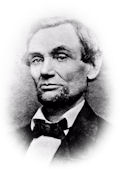
To Lyman Trumbull

SPRINGFIELD, ILLS. Dec. 24, 1860

Hon. Lyman Trumbull—

My dear Sir. I expect to be able to offer Mr. Blair a place in the cabinet; but I can not, as yet, be committed on the matter, to any extent whatever.

Despatches have come here two days in succession, that the Forts in South Carolina will be surrendered by the order, or consent at least, of the President.

I can scarcely believe this; but if it prove true, I will, if our friends at Washington concur, announce publicly at once that they are to be retaken after the inauguration. This will give the Union Men a rallying cry, and preparation will proceed somewhat on their side, as well as on the other.

Yours as ever

A. LINCOLN.