
January 1st, 1861.—A New Year has come to us now. This is dear Grandmother’s birthday and, though she went to Heaven years ago, her children still meet on her anniversary and talk of her and of the days of their childhood. I like it and I never will forget when Father’s and Mother’s birthdays come. As we sat around the long table today the conversation turned on the convention, so soon to meet in Tallahassee. Father said he considered this the most momentous year in the history of the South. He is for Secession and he does not think that war will necessarily follow. Brother Junius is a strong Union man and he thinks we will certainly have war; he says we will have war in any event. If the South secedes the North will fight to keep us, and if we do not secede all our property rights will be taken from us and we will be obliged to fight to hold our own. He says he is in for the fight but he wants to fight in the Union not out of it. Father thinks it is more honorable to take an open and decided stand and let all the world know what we are doing. Everyone at table who expressed an opinion was firmly set against the Republican party. Mother says she wants the negroes freed but she wants the United States Government to make laws which will free them gradually. All agree on one point, if the negroes are freed our lands will be worthless. I wonder how it would feel to be poor and work like the people Hannah Moore writes about?
The American Civil War

The evidences of a purpose on the part of the secessionists to seize upon the public property and usurp the Government at its capital, have become so clear that energetic measures are taking to defeat their plans, and repress the treason. Now that the Administration begins to appreciate the necessity of preserving the Government, and manifests the purpose to repudiate the treasonable influences which have hitherto paralyzed its arm, the people are beginning to report facts exposing the violent plots concocting in the District and its neighborhood.
It is now well known that military companies have been organized and drilled for months past in Maryland and Virginia—some of them under the eye of an officer of the regular army —and that the distinct object of their organization is to aid in the seizure of Washington city in the interest of the disunionists, or the prevention by force of Lincoln’s inauguration, Some of the less prudent of their leaders boast in private circles that they have five thousand well-armed and organized men ready to strike the blow instantly upon the concerted signal being given.—Times, Jan. 2.
—At Charleston, the attitude of the Administration is regarded as warlike.
A censorship is exercised over the telegraph, and the city is nightly patrolled by the military. It is proposed to starve out the troops at Fort Sumter, and then attack them on rafts with the aid of batteries already erected. There is a battery of earthwork, logs, and sand, on the end of Sullivan’s Island, and also one on Morris’ Island.
Commander Pettigru, of Castle Pinckney, orders that no boat shall be allowed to approach the wharf-head without permission, under penalty of serious consequences in case of violation. The city river-front is carefully guarded. The Palmetto Guards, 100 strong, have charge of the arsenal under the palmetto flag, instead of the Federal flag.
Collector Colcock notifies ship-masters that all vessels from and for ports outside of South Carolina must enter and clear at Charleston.
The Columbia Artillery, numbering 50 men, arrived at 1 o’clock to-day, and proceeded to the harbor. They will use cannon belonging to Charleston.—Boston Transcript, Jan. 2.
In South Carolina Convention passed an ordinance to define and punish treason. It declares that in addition to that already declared treason by the General Assembly, treason against the State shall consist only in levying war against the State, adhering to its enemies, and giving them aid and comfort. The penalty is death without the benefit of the clergy.— Evening Post, Jan. 2.
—Strong fortifications have been ordered by the South Carolina Convention in and around Charleston harbor, to resist any reinforcements that may be sent to Major Anderson.
Governor Pickens is in daily receipt of dispatches from the South, tendering men to defend South Carolina from invasion.
—The scene in the Senate at Washington to-day was intensely exciting. Senator Benjamin, of Louisiana, who, it had been reported, would make a conciliatory speech, gave out that he would make a parting secession speech —an announcement which drew an immense audience. Senator Benjamin spoke calmly throughout, but the character of his speech at the close opened up to every one the new era in national affairs. His closing declaration, that the South could never be subjugated, was greeted by the galleries with disgraceful applause, screams, and uproar. It was evidently the act of persons who had purposely packed the galleries. For this demonstration the galleries were promptly cleared; but as the people passed out, remarks were current among the mob such as, “That’s the talk “—”Now we will have war”—”Benjamin’s a brick”— “ D—n the abolitionists”—” Abe Lincoln will never come here.”—Times, Jan. 1.
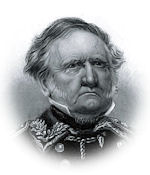
—General Wool takes strong ground in favor of the Union, of sustaining Anderson in his position at Fort Sumter, and earnestly urges that a firm ground be adopted to put down rebellion.
He declares that if Fort Sumter be surrendered to the secessionists, in twenty days two hundred thousand men will be in readiness to take vengeance on all who would betray the Union into the hands of its enemies.—(Doc. 11.) —Troy Times, Dec. 31.
HEADQUARTERS OF THE ARMY,
Washington, December 31, 1860.
Colonel DIMICK, or commanding officer, Fort Monroe:
SIR: Prepare and put on board of the sloop-of-war Brooklyn, as soon as the latter can receive them, four companies, making at least two hundred men, destined to re-enforce Fort Sumter. Embark with said companies twenty-five spare stands of arms, complete, and subsistence for the entire detachment for ninety days, or as near that amount as your supplies may furnish. Communicate at once with the commander of the war steamer, learn the earliest moment at which he can receive the troops on board, and do not fail to have them there by that time.
W. SCOTT.
Manage everything as secretly and confidentially as possible. Look to this.

______
HEADQUARTERS OF THE ARMY,
Washington, December 31, 1860.
To the PRESIDENT:
Lieutenant-General Scott again begs leave to trespass for a moment on the indulgence of the President of the United States, particularly as he learns by rumor that there is no head to the War Department. Such are the necessities of the service that it is hoped the vacancy in question may be speedily filled, and, incidentally, that the new Secretary, if ad interim, may not be a junior officer of the Army, as it would wound the pride of any senior to serve under such Secretary.
Lieutenant-General Scott deems it to be his duty to lay the accompanying letter [not found] before the President. The writer is a distinguished graduate of the Military Academy, and an eminent lawyer of the New York bar. Major-General Sandford, mentioned by him, is an officer and citizen of great merit and discretion, commanding the City Division of Volunteers.
General Scott does not recommend the acceptance of Mr. Hamilton’s proposition, as we have disposable regulars enough for that single purpose; but that we already require many and large detachments for the protection of our coast defenses farther south is becoming daily more and more evident.
In reference to General Scott’s note of yesterday to the President, he respectfully adds: Of course, the War Department and General Scott cannot communicate anything to Major Anderson, or receive by mail or telegraphic wires, anything from him (who must be regarded as in a state of siege), except by permission of the authorities in Charleston; and it is just possible in his state of isolation a system of forged telegrams from this place may be played off so successfully as to betray him into some false movement.
Most respectfully submitted to the President of the United States.
WINFIELD SCOTT.
P. S.–As a sequence to the foregoing, it is respectfully suggested that there seems to be no other way of freely communicating with Major Anderson than by water, say by a revenue cutter running regularly between Wilmington, N. C., and Fort Sumter.

______
FORT SUMTER, S.C., December 31, 1860.
(Received A. G. O., January 5, 1861.)
Col. S. COOPER, Adjutant General:
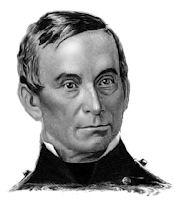 COLONEL: I have the honor to report that the South Carolinians show great activity in the harbor to-day. Several steamers have been running to and fro, and this afternoon about 80 soldiers, with wheelbarrows, barrels, &c., and some draught horses, were landed on Morris Island. They are evidently constructing a battery or batteries there. The lights in the harbor were put out last night, and ours is the only light-house of this harbor which exhibits light to-night. I am at a loss what this means, unless it be that some armed vessel is expected here. The more I reflect upon the matter the stronger are my convictions that I was right in coming here. Whilst we were at Fort Moultrie our safety depended on their forbearance. A false telegram might, any night, have been seized upon as an excuse for taking this place, and then we would have been in their power, And even if there had been an understanding between the two Governments that I was not to be interfered with until the termination of the mission to Washington, the fact of the governor’s having ordered armed steamers to keep watch over me would have absolved our Government firm the obligation to remain quiescent. It is certain, too, that the moment a telegram was received announcing the failure of the mission, attack would have been made and my command sacrificed, for there can be no surrender with these men, if attacked, without a serious fight. Thank God, we are now where the Government may send us additional troops at its leisure. To be sure, the uncivil and uncourteous action of the governor in preventing us from purchasing anything in the city will annoy and inconvenience us somewhat; still, we are safe. I find that in consequence of a failure (accidental) to comply with my instructions, there is only a small supply of soap and candles, and also of coal. Still, we can cheerfully put up with the inconvenience of doing without them, for the satisfaction we feel in the knowledge that we can command this harbor as long as our Government wishes to keep it.
I am, colonel, respectfully, your obedient servant,
ROBERT ANDERSON,
Major, First Artillery, Commanding.
—It is generally considered that Mr. Floyd has not resigned because of Major Anderson’s patriotic course, but merely used it as a pretext to conceal the real cause. The whole country knows that his position, under the “trying circumstances,” has not been a very agreeable one, especially during the last two weeks. The alleged cause of his leaving Mr. Buchanan is, that the latter refuses to recall or order back to Fort Moultrie the gallant Anderson. Floyd asserts that he, some time ago, promised the South Carolina seceders to leave things in the harbor of Charleston undisturbed —in statu quo ante bellum—and that the President gave the same promise. This agreement having been broken by Major Anderson, he insisted upon his returning to Fort Moultrie; and, because the President was unwilling to give that order, he sent in his resignation.—Phila. Press, Dec. 31.
—The South Carolina troops took possession of the arsenal at Charleston. The arsenal contains many thousand arms and military stores. Military preparations are actively and zealously progressing.—Evening Post, Dec. 31.
WASHINGTON, December 30, 1860.
The PRESIDENT OF THE UNITED STATES:
Lieutenant-General Scott begs the President of the United States to pardon the irregularity of this communication.
It is Sunday; the weather is bad, and General Scott is not well enough to go to church. But matters of the highest national importance seem to forbid a moment’s delay, and if misled by zeal, he hopes for the President’s forgiveness.
Will the President permit General Scott, without reference to the War Department and otherwise, as secretly as possible, to send two hundred and fifty recruits from New York Harbor to re-enforce Fort Sumter, together with some extra muskets or rifles, ammunition, and subsistence stores?
It is hoped that a sloop of war and cutter may be ordered for the same purpose as early as to-morrow.
General Scott will wait upon the President at any moment he may be called for.
The President’s most obedient servant,
WINFIELD SCOTT.
—Major Anderson is denounced by the Charleston papers. The Courier says:
“Major Robert Anderson, United States Army, has achieved the unenviable distinction of opening civil war between American citizens by an act of gross breach of faith. He has, under counsels of a panic, deserted his post at Fort Moultrie, and, under false pretexts, has transferred his garrison and military stores and supplies to Fort Sumter.”
The Mercury, more temperately, says:
“Major Anderson alleges that the movement was made without orders and upon his own responsibility, and that he was not aware of such an understanding. He is a gentleman, and we will not impugn his word or his motives. But it is due to South Carolina and to good faith that the act of this officer should be repudiated by the Government, and that the troops be removed forthwith from Fort Sumter.”—(Doc. 9.)
—John B. Floyd resigned his position as Secretary of War, owing to the refusal of the President to withdraw the Federal troops from the forts at Charleston.—(Doc. 10.)—Baltimore Sun, Jan. 1.

.
CHARLESTON ARSENAL, S. C.,
December 29, 1860.
Capt. WM. MAYNADIER,
In charge of Ordnance Bureau, Washington, D.C.:
SIR: I reported by telegraph on the 28th instant that this arsenal was surrounded by a body of South Carolina militia, and that myself and the command are not allowed to pass in or out without a countersign. Those in authority disclaim any intention of occupying the post, nor do they molest the flag. I asked for instructions, but have received none.
I protest (the disclaimer notwithstanding) that this post is to all intents and purposes in the possession of the South Carolina troops, and also against the indignity offered me as an officer of the United States Army, to say nothing of the annoyance the entire command is subjected to by this measure.
I shall, therefore, unless otherwise instructed from the War Department, make a formal protest against the posting of sentinels around this arsenal, and request that they be removed, which, if denied, I shall consider an occupancy of it by the State, and shall haul down my flag and surrender.
I respectfully submit that such a course is proper, and due to myself and the position I occupy as commanding officer.
Very respectfully, I am, sir, your most obedient servant,
F. C. HUMPHREYS,
Military Storekeeper Ordnance, Commanding.
[Indorsement.]
ORDNANCE OFFICE,
January 17, 1861.
Respectfully submitted to the Secretary of War.
WM. MAYNADIER,
Captain of Ordnance.
[Inclosure.]
Abstract from muster-roll of F. C. Humphreys, military storekeeper of ordnance, dated to include the 30th day of December, 1860.Present: Brevet Col. Benjamin Huger, who assumed command November 20, by order of the Secretary of War, and who was absent under orders from the Adjutant-General’s Office, dated December 1, 1860, and assumed his former duty at Pikesville, Arsenal, by instructions of the Secretary of War, dated December 15, 1860.
F. C. Humphreys, military storekeeper, who resumed command of post December 7, 1860. Fourteen enlisted men.
F. C. HUMPHREYS,
Military Storekeeper, U. S. Army.

My dear Cousin: I hasten to answer your letter, for, as events march, mail facilities may soon be interrupted between North and South. When the great separation is a recognized fact postal treaties, along with others, may be arranged. Meantime, it is one of the curious features of your anomalous position that you are making use of a “foreign government” to carry your mails for you, on the score of economy. Congress may cut off the Southern service and occasion some inconvenience and delay, but I am told it will save the government about $26,000 weekly, that being the weekly excess of postal expenditure over revenue in the six seceding states.
I thank you very sincerely for your letter. It was very kind in you to write so promptly and fully and in so sedate a tone. But what a sober, disheartening letter it was! We have been slow to believe that the conservative men of the cotton states have been swept into this revolution. I could not believe it now but for your assurance as regards yourself and your state. “Not a hundred Union men” as we understand it, in Alabama! We had supposed there were many hundreds who would stand by the Union, unconditionally if need be, and uphold the Constitution, not according to any party construction, but as our fathers framed it, as the Supreme Court expounds it, and as it will be Mr. Lincoln’s wisest policy to administer it. Not a hundred Union men in your state! Truly not, if Mr. Yancey speaks for you and Alabama when he avows himself as “utterly, unalterably opposed to any and all plans of reconstructing a Union with the Black Republican states of the North. No new guarantees, no amendments of the Constitution, no repeal of obnoxious laws can offer any the least inducement to reconstruct our relations.” Then compromisers in Congress, in convention, everywhere, may as well cease their useless efforts. Not a hundred Union men in Alabama! Who then burned Mr. Yancey himself in effigy? Have those delegates who refused to sign the secession ordinance yet done so? and what constituencies do they represent? Why was it refused to refer the action of convention to the people?
Whatever the Border states may have suffered, and, as in the case of the John Brown raid, have swiftly and terribly avenged, you of the Gulf states can hardly think that your wrongs have been so intolerable as to make revolution necessary. True, you describe us as standing with a loaded pistol at your breast, but the heaviest charge we have ever put in is non-extension of slavery in the territories. If slavery cannot stand that; if, surrounded by a cordon of free states, like a girdled tree it dies, then it cannot have that inherent force of truth and justice—that divine vitality which has been claimed for it. This is as favorable a time as we could have to meet the issue and settle it peacefully, I trust, forever. And here comes up the subject of compromises, the Crittenden measures particularly. How does it happen that the Southern demands have increased so enormously since last year? Then the Senate declared by a vote of 43 to 5 that it was not necessary to pass a law to protect slavery in the territories. Now, you “secede” because you cannot get what Fitzpatrick, Clay, Benjamin, Iverson, and others declared you did not need. Then you asked the Democratic convention at Charleston to put a slavery code into the party platform, and you split your party about it. Now you come to the opponents who fairly outvoted you and your platform and ask them to put the same protective clause, —where? — into the Constitution! We can never eat our principles in that way, though all fifteen of the states secede. The right of eminent domain, by which South Carolina claims Fort Sumter, inapplicable as it is, is a respectable demand compared with what has been practiced further south — the right of seizure. If you attack Sumter you may precipitate a collision. Meantime, never was a people calmer than ours here, in the face of great events. We have scarcely lifted a finger, while the South has been arming in such hot haste and hurrying out of the Union, in the hope of accomplishing it all under Floyd’s guilty protectorate. We all hope much from the new administration. We think well of a man who for so long has managed to hold his tongue. We shall try to help him and hold up his hands, not as our partisan candidate but as the President of the Nation. If we become two confederacies we shall not shrink from this race with your Republic, which in the heart of christian America and in the middle of the Nineteenth Century lays down slavery as its corner stone, and finds its allies in Spain, Dahomey, and Mohammedan Turkey.
December 28th, 1860.—We had a fine Christmas. I cannot see that our black folks ever think of John Brown’s raid and if they do it evidently does not interest them much. We are trying to forget it and perhaps the clouds may pass away.
There is trouble at Live Oak. Miss Lottie Church, from somewhere in New England, came in October to teach Lucy and Horton Branch and Uncle William and Aunt Mary liked her very much, the children did, too. She said it was the easiest work she ever had to do, for the children are small and must not be closely confined and Miss Church had a carriage and horses and a good driver to take them out riding every plesant day. She could take them riding in the country or she could go in town and she laughed and said it was the first time she had ever had a carriage at her commnd. She was pretty and vivacious and she was often asked out in the evenings and there was a way provided for her to go when she wished, for it is in the country and she must have an escort, though she thought that entirely superfluous. Yesterday Mr. R. Barnwell Rhett, the editor of the Charleston Mercury, and Mr. Colcock, both of them from South Carolina and both aunt Mary’s brothers-in-law came on a flying visit to Live Oak. At the dinner table politics naturally was the sole topic of conversation and these gentlemen expressed their views as plainly as the King’s English would allow. Miss Church was furious. She forgot that these gentlemen knew nothing of her political faith nor of the land of her nativity and she burst forth in such a wild tirade of invective and abuse that everybody was astonished—to say the least of it. The carriage in which she had taken so many pleasant rides was ordered to be at the door in time to catch the first train out of Tallahassee and that was the last we knew of Miss Lottie Church. I am so glad we have Southern teachers in this neighborhood. Hattie Lester came home on a visit for Christmas; I am going to miss her dreadfully when she goes.


