Following the American Civil War Sesquicentennial with day by day writings of the time, currently 1863.

The American Civil War

August 14.—The Grenada (Miss.) Appeal of this day published the following: “In another column, this evening, will be found the order of the Adjutant-General of Rhode Island, calling for a regiment of ‘colored persons,’ who will ‘constitute a part of the quota’ from that State. The ‘gentleman of color’ has at last turned up ‘by authority,’ to the eternal disgrace of the twenty millions of whites who thus acknowledge their inability to conquer seven millions. Whenever this regiment appears on the field let the black flag be raised.”

— D. A. Mahoney, editor of the Dubuque (Iowa) Herald, was arrested by the United States Marshal. Mr. Mahoney was charged with discouraging enlistments.

—The Thirty-third regiment of Massachusetts volunteers, commanded by Colonel Albert G. Maggi, left Lynnfield for Washington.—A slight skirmish took place near Helena, Arkansas, between a scouting-party of National troops, who were looking after cotton, and a body of rebel guerrillas, resulting in the defeat and retreat of the guerrillas.

—General Pope, commanding the army of Virginia, issued an order from his headquarters near Cedar Mountain, Va., enjoining on the officers and soldiers of his army to abstain from entering the houses, molesting the persons, or disturbing the property of citizens, under pain of speedy and severe punishment. Whatever provisions, forage, or other articles might be required for the subsistence or use of the troops would be taken possession of, but only under an officer with authority for that purpose.

—President Lincoln gave an audience to a committee of colored men at the Executive Mansion, Washington. They were introduced by Rev. J. Mitchell, Commissioner of Emigration. E. M. Thomas, the chairman of the committee, remarked that they were there by invitation to hear what the Executive had to say to them. The President, after a few preliminary observations, informed them that a sum of money had been appropriated by Congress, and placed at his disposition, for the purpose of aiding colonization of the people, or a portion of the people of African descent, thereby making it his duty, as it had for a long time been his inclination, to favor that cause.

—The rebel General Breckinridge addressed a note to Colonel H. E. Paine, commanding United States forces at Baton Rouge, La., complaining that the Union troops in that vicinity had wantonly burned many private houses; had taken or destroyed much private property without compensation; had seized and carried away into imprisonment, upon false and frivolous pretexts, many unarmed citizens, and that negro slaves were being armed and organized to be employed against them. He informed him that such acts were regarded as in violation of the usages of civilized warfare; and that, in future, upon any departure from those usages “he would raise the black flag, and neither give nor ask quarter.”—See Supplement.
August 13.—A collision occurred off Ragged Point, on the Potomac River, Va., between the steamers Peabody and West-Point, by which seventy-three lives were lost. The West-Point was en route for Washington with convalescents from the army of General Burnside.—Colonel Guitar overtook Poindexter’s guerrillas again at Yellow Creek, Clinton County, Mo., routed and scattered them in utter confusion, taking sixty prisoners.—The French bark Harriet Ralli was released by the government authorities of the United States.

—The One Hundred and Tenth regiment of New-York Volunteers left their encampment near Elmira, for Washington.—A battle was fought this day near Clarendon, Ark., between the division of Gen. Hovey, consisting of six regiments of infantry and eight regiments of cavalry, and a part of Hindman’s force, which had been sent forward from Little Rock to check the advance of the Union army. The battle raged some time with destructive results. The Eleventh Indiana regiment lost seven men killed. The contest ended by the defeat and rout of Hindman’s men, and the capture of seven hundred prisoners.— N. Y. Tribune.

—As expedition consisting of the Twenty-fourth Massachusetts, and a marine battery, under the command of General Stevenson, embarked on board the gun-boats Wilson and Ellis, at Newbern, N. C, and proceeded to Swansboro’, where they destroyed, on the sixteenth instant, the rebel saltworks. The expedition then returned to camp at Newbern.—(Doc. 181.)

—This morning at half-past seven A.M., Gen. Pope telegraphed from Cedar Mountain, Va., to Gen. Halleck, at Washington, as follows:—”The enemy has retreated under cover of the night. His rear is now crossing the Rapidan, towards Orange Court-House. Our cavalry and artillery are in pursuit.”

August 12.—General Burnside, commanding the Ninth army corps of the Army of the Potomac, issued an order from his headquarters near Fredericksburgh, Va., informing his army that the seizure of private property belonging to rebels, except when made by officers authorized and detailed for the purpose, was not allowed, and would be followed by severe and speedy punishment.

—The prize steamer Ladona, captured while endeavoring to run up the Ogeechee River, Ga., arrived at Philadelphia, Pa.—A large war meeting was held at Alexandria, Va., this evening. Jefferson Tracy presided, and speeches were made by Senator Pomeroy, of Kansas; Senator Harlan, of Iowa; Senator Chandler, of Michigan, and others. The meeting was the most enthusiastic and largest ever held in that city.

—Gallatin, Tenn., including a force of Union troops under Colonel Boone, a large quantity of Government stores, a railway train laden with grain, a number of Government horses, etc., was captured by a force of rebel guerrillas under Colonel John H. Morgan. In the evening, Col. Miller, having arrived from Nashville with a force of Union troops, attacked and drove out Morgan’s rear-guard (the main body of whose force left during the day) killing six and wounding a number.

—The rebel Congress voted their thanks to General Robert E. Lee, and the officers and men under his command, “for their late brilliant victory, culminating in the signal defeat of the combined forces of the enemy, in the two great battles of Manassas.”

August 11.—It being a fact that a number of the inhabitants of Baton Rouge, La., who had been allowed by the United States authorities to retain their private arms, were found dead and wounded on the battle-field at that place, General Butler, at New-Orleans, ordered, to prevent a repetition of such a breach of trust, that all arms in that city, of whatever description, be delivered to the military authorities.—Gen. Order No. 21.

— General Grant, commanding Department of West-Tennessee, issued an order from his headquarters at Corinth, Miss., directing that fugitive slaves coming within the lines of the army under his command, should be employed in the quartermaster’s, subsistence, and engineer’s departments. Also, when by such employment a soldier might be saved to the ranks of the army, as teamsters, cooks, hospital attendants, and nurses.

— Bayou Sara, La., was this day taken possession of by the National forces. They seized all the sugar and molasses in the place, and quartered a garrison there.

—A fight took place in the vicinity of Independence, Mo., between a body of Union troops under the command of Colonel Buell, Seventh Missouri cavalry, and a superior force of rebel guerrillas under Colonel Hughes, resulting in the defeat of the Unionists and the capture of the town by the rebels.—(Doc. 178.)

—A party of Jeff. Thompson’s rebel cavalry surprised a company of the Third Wisconsin regiment, at a point eleven miles east of Helena, Ark., but were compelled to retire after a short but destructive battle. Several rebels were captured. —Memphis Bulletin, August 14.

—A detachment of the Eleventh Illinois cavalry, sent from Bolivar, Tenn., attacked some guerrillas at Salisbury, five miles east of Grand Junction, capturing a rebel captain and twenty-seven horses and mules, and dispersing the guerrillas.

—Samuel H. Elbert, Acting Governor of Colorado Territory, issued a proclamation urging the assessors of the several counties, in view of the probability of the Colorado regiments being ordered by the United States Government for service out of the territory, to complete the enrolment of the militia in accordance with an act passed at the last session of the Territorial Legislature.

—A series of skirmishes occurred near Williamsport, Tenn., between a small body of Union troops under the command of Major Kennedy, and a superior force of rebel guerrillas, resulting in the defeat of the latter on each occasion, with considerable loss.—Gen. Negley’s Despatch.

—A fight took place near Compton’s Ferry, on the Grand River, Mo., between a force of Union cavalry under the command of Colonel Guitar, and a body of rebel guerrillas under Colonel Poindexter, resulting in the defeat of the latter, who lost one hundred men killed and wounded, two hundred prisoners, six wagons, about one hundred horses and saddles, one hundred and fifty guns, a quantity of ammunition and provisions.—(Doc. 179.)

—A skirmish took place near Reelsvillc, Callaway County, Mo., between a body of Missouri State cavalry under the command of Col. Smart, and Capt. Cobb’s rebel guerrillas, in which the latter were routed with some loss.—All the property of John Slidell, an officer of the rebel government, was confiscated by order of General Butler, at New Orleans, La.

—A skirmish took place near Kinderhook, Tenn., between a body of Union troops under the command of Colonel McGowan, and a force of rebel guerrillas under Major Anderson, resulting in the defeat of the latter, who lost seven men killed, a large number wounded, and twenty-seven prisoners.—(Doc. 180.)

August 10.—Edwin M. Stanton, Secretary of War, issued the following order at Washington, D. C.: “The temporary restrictions upon travelling, deemed necessary to prevent evasions of liability to be drafted into the militia, were not intended to apply to couriers with despatches to and from the legations of friendly Powers in the United States. All authorities, civil and military, are consequently required to allow such couriers to pass freely, without let or investigation.”

— The national steamer Freeborn arrived at Washington, D. C, bringing twenty-five prisoners, five sail-boats, a number of canoes, and a lot of merchandise, which were captured on Friday and Saturday nights last near Blackiston Islands. The prisoners had been engaged in regular commerce between Maryland and Virginia, taking over salt, etc., and bringing back wheat. — Commander Richard Wainwright, U.S.N., died at New Orleans, La.

— A Rebel steamer was this day captured at the mouth of the Savannah River, Ga., by a Union tug-boat, and towed under the guns of Fort Pulaski.— The town of Donaldsonville, La., was this day partially destroyed by a party of men from the United States sloop-of-war Brooklyn.— (Doc. 177.)

August 9.—At Macon City, Mo., twenty-six rebel prisoners were shot for breaking their parole. — Hundreds of citizens of the West and other portions of the loyal States fled into “Canada like cravens, to escape the draft.” The exodus through Detroit was very large.—Detroit Free Press, August 9.

—Colonel McNeill overtook Porter’s guerrillas at Stockton, in the western part of Macon County, Mo., and after a sharp fight, routed them, killing and wounding a large number, and capturing many horses. The rebels were scattered in all directions. Some of the prisoners captured had taken the oath and given bonds.— Gen. Schofields Report.

—This day the battle of Cedar Mountain was fought, about eight miles from Culpeper Court-House, Va., between the National forces under General Banks, and the rebel army under General Jackson. The battle lasted about two hours, resulting in the retreat of the rebels with great loss. The Union army lost one thousand five hundred men in killed, wounded, and missing, of whom twenty-nine were taken prisoners.—(Docs. 93 and 104.)

— The Secretary of War issued an order directing the Governors of the loyal States to proceed forthwith to furnish their respective quotas of the three hundred thousand men called for by order of President Lincoln. Also to cause an enrolment to be made of all able-bodied male citizens, between the ages of eighteen and forty-five within the respective counties of each State, giving the name, age, and occupation of each.

—The United States steam-frigate Lackawanna, was launched at Brooklyn, L. I. — Jeff. Thompson, the rebel commander, sent a flag of truce to General Hovey, who occupied Oldtown, thirty miles below Helena, Ark., demanding the surrender of all negroes within his lines, or prepare to fight. Hovey dismissed the flag, and started in pursuit, with ten days’ rations.—Memphis Bulletin, August 14.

— General McClellan issued an order from the headquarters of the Army of the Potomac at Harrison’s Landing, Va., for the purpose of carrying into effect the views and directions of President Lincoln, as contained in his executive order of the twenty-second July, relative to the seizure of property real or personal, in any of the nine rebellious States, which might be necessary or convenient for the use of the armies of the United States.

—Recruiting for the Union army was, about this time, promoted with great zeal in all the loyal States. In New-York, Boston, Philadelphia, and other large cities, volunteers came forward in great numbers.

— At New-Fairfield, Conn., five individuals mutilated themselves to evade the draft, some by cutting off the forefinger and others by having all their teeth extracted.—(Doc. 176.)

August 8.—At Huntsville, Ala., Gen. Rousseau issued the following special order:

“Almost every day murders are committed by lawless bands of robbers and murderers firing into the railroad trains.

“To prevent this, or to let the guilty suffer with the innocent, it is ordered that the preachers and leading men of the churches, (not exceeding twelve in number,) in and about Huntsville, who have been active secessionists, be arrested and kept in custody, and that one of them be detailed each day and placed on board the train on the road running by way of Athens, and taken to Elk River and back, and that a like detail be made and taken to Stevenson and back. Each detail shall be in charge of a trusty soldier, who shall be armed, and not allow him to communicate with any person.

“When not on duty these gentlemen shall be comfortably quartered in Huntsville, but not allowed to communicate with any one without leave from these headquarters. The soldiers detailed for guard of this character will report to these headquarters for further instructions upon the day preceding their tour of duty at three o’clock P.M.”—Special Order No. 54.

— “Certain Non-conscripts” of Richmond, Va., through their counsel, John H. Gilmer, respectfully presented to the confederate States Congress a remonstrance against the conscription law of the rebel government.

— At a banquet given by the Mayor of Sheffield, England, to the corporation of that town, several distinguished guests were present, and among them were Lord Palmerston and Mr. Roebuck, M.P. for the borough.

Lord Palmerston, in his after-dinner speech, took occasion to refer to the American war. He said: The Government had thought it their duty to advise their Sovereign to preserve a strict and rigid neutrality in that most unhappy conflict now raging in North-America. It was painful to witness the loss of life, the wasting of treasure, and other sad concomitants of the unfortunate contest; but, greatly as they might lament to see their brethren on the other side of the Atlantic suffering such wretchedness, greatly as they might themselves feel the evils consequent upon it, he was convinced that the course which the British government had pursued was the only course which became that country, and that it had received, and would continue to receive, the approval and sanction of the British people.

Mr. Roebuck afterward addressed the assembly, and, after referring to the distress in Lancashire, he touched upon the civil war in America, and said he had at first looked at the disruption of the Union with grief, but his present feeling was one of rejoicing. An irresponsible people, possessed of irresponsible and almost omnipotent power, was a people that could not be trusted; and he regarded the attempt of the North in endeavoring to restore the Union by force as an immoral proceeding totally incapable of success. Slavery was a mere pretence. In the North the feeling against the black man was stronger than in the South, and if North and South were reunited to-morrow, slavery would be more firmly fixed than ever. He looked to Lancashire, and would entreat Lord Palmerston to weigh well the consequences of what he called “perfect neutrality.” There had not yet been perfect neutrality. Great Britain was at that moment supporting the North with every means of offence and injury to the South. He, therefore, begged the noble lord deeply to consider whether the time had not come for him to be the first in Europe to ask the Great Powers to recognize the Southern Confederacy. Six months would not pass over before that was done. The Northerners would never be our friends. Of the Southerners we could make friends. They were not the scum and refuse of Europe, but Englishmen. A hand held out from Europe would stop the effusion of blood, and would make the homes of our workingmen happy again. He had not made these remarks lightly or in haste, and he submitted them to his fellow-countrymen, believing that, if acted upon, they would redound to their prosperity and their honor.

— Orders were issued from the War Department at Washington, to prevent the evasion of military duty, and for the suppression of disloyal practices; also authorizing the arrest of persons discouraging enlistments.—(Doc. 175.)

—At Baltimore, Md., several persons were arrested while endeavoring to escape from that city, in order to evade the draft ordered by the Secretary of War. —Portland, Calloway County, Mo., was captured by a party of rebel guerrillas under the command of Capt Cobb. After robbing the stores and residences, the guerrillas left the place. —General Blunt and staff left Leavenworth, Kansas, to take the field in command of the Indian expedition.—Leavenworth Conservative.

August 7. — At Blackburn, England, a large public meeting was held to consider the advantages of recognizing the “Southern States of America,” with a view to bring about an early termination of hostilities. Mr. R. R. Jackson, after declaring that “it was impossible for the North to vanquish the South,” submitted the following resolution:

“That a petition to the Queen be adopted by this meeting, and signed by the Mayor, praying her Most Gracious Majesty to take immediate measures in coalescing with France and such other Powers as may be willing to give their cooperation to recognize the independence of the confederate States of America.”

The resolution was not received with unqualified approval, there being a strong expression of opinion against it; and an amendment was moved by Mr. J. C. Fielden, disapproving the policy of intervention. This amendment was supported by Mr. W. Crossley, but finally withdrawn, and the following amendment, moved by Mr. F. Johnston, was agreed to:

“That this meeting, recognizing the desirability of referring all national disputes to impartial arbitration for settlement, respectfully urges the government of this country to immediately cooperate with other European Powers in recommending to the contending parties in America the above plan as the simplest and most satisfactory method of reestablishing peace, and in their negotiations strongly recommend the abolition of slavery.”

—The rebel expedition to New-Mexico, under Colonel Sibley, was met near Fort Fillmore, by a body of California troops under the command of Colonel Canby. A battle ensued, in which the rebels were routed. Colonel Sibley was assassinated by his own men, who charged him with drunkenness and inefficiency.

— Captain Faulkner, with a body of rebel cavalry, encamped in a swamp near Trenton, Tenn., was surprised by a detachment of the Second Illinois cavalry, losing thirty killed and twenty wounded. — Col. McNeill with a force of one thousand National troops defeated the rebel guerrilla Porter at Kirksville, Mo.—A fight took place in the northern part of Dodd County, Mo., between a party of National troops, under the command of Major Montgomery, and Coffin’s rebel guerrillas, in which the latter were defeated, with a loss of eleven killed, four wounded, and seventeen prisoners.

—A shirmish took place between a small force of Union troops and a body of rebel cavalry at Wolftown, a few miles from Madison Court-House, Va., resulting in the defeat of the rebels, who were driven beyond the Rapidan River, with a loss of two men killed and a number wounded.

—Malvern Hill, Va., was abandoned by the National forces under Gen. Hooker, information having been received that an overwhelming force of rebels, under the command of Gen. A. P. Hill, were advancing upon that place.

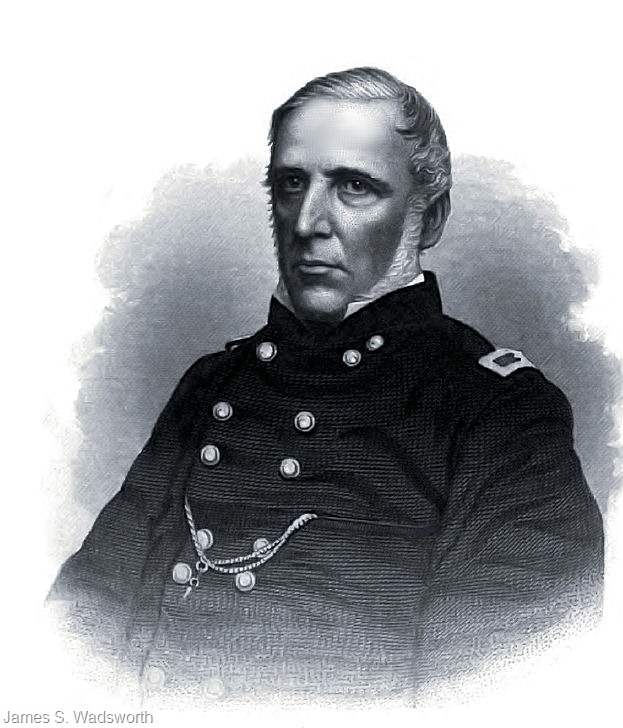
wadsworth_j.s


August 6.—Col. Thomas C. Johnson, aid to the rebel Gen. Price, at Quitman, Miss., issued the following call to the people of that State:

“I am in your midst for the purpose of procuring shoes and yarn-socks for Gen. Price’s army. Some of his veterans—men who have been in six or eight pitched battles and twenty skirmishes— are to-day destitute of these two articles, necessary even in camp, but indispensable when the army takes the field. As this army now guards the gates to the entrance of the Mississippi, preliminary to driving the enemy northward, Gen. Price desires that the patriotic men of this State should furnish the shoes, and her glorious women the yarn-socks. If possible, he would like every white woman in the State to knit at least one pair of socks for his army. While I make this appeal, I think it is proper to add, that I do not ask a donation, but am prepared to pay a liberal price for both shoes and yarn-socks. I shall be pleased to contract with tanners and shoe-manufacturers for shoes now on hand, or to be made hereafter; and will be obliged to any person who will let me know where I can make contracts.

“For socks, all yarn, white or colored, of good size and length in the leg and foot, I will pay seventy-five cents per pair. They may be sent to me or Dr. France at this place, where they will be paid for, or may be left with the station-agent of the nearest depot of any of the three railroads now in our possession, and some time soon I will call or send an agent to get them and pay for them.”

—At Point Pleasant, Mo., a skirmish occurred between the citizens of that place and the State troops, on account of a difficulty growing out of the enrolment act.—A large war meeting was held at Scranton, Pa., at which speeches were made by Galusha A. Grow and W. W. Ketchum.—A skirmish took place near Montevallo, Mo., between a force of Union troops under the command of Major Montgomery, and a small party of rebel guerrillas, resulting in the rout of the latter with great loss.—Springfield (Mo.) Journal, Aug. 11.

—W. D. Porter, commanding a division of the Mississippi gunboat flotilla, with the gunboat Essex, attacked the rebel iron-clad Arkansas, at a point about four miles above Baton Rouge, La., and after a short engagement succeeded in destroying her.—(Doc. 91.)

—Charles A. Carroll, a rebel colonel commanding North-west Arkansas, at Fort Smith, issued general orders compelling all persons in the counties of Benton, Washington, Madison, Carroll, and Newton, between the ages of eighteen and thirty-five to attach themselves at once to the companies raised by him, and declaring “that the oaths administered by the Federals were without legal authority, having no binding efficacy with any civilized people; and a citizen who would think of regarding such iniquitous oaths would be as infamous as those who administered them; and any such would be dealt with as they deserve, understanding at the same time, that the confederate officers everywhere would protect citizens in this their first duty to their country by every means of retaliation necessary to the end in view.” —General Order*.

—At Harrisburgh, Pa., Gen. Wadsworth, by direction of the War Department, arrested the editors and publishers of the Patriot and Union, charged with issuing treasonable posters, calculated to retard and embarrass recruiting throughout Pennsylvania.

—Brigadier-general Robert L. McCook, died from wounds received from a party of guerrillas, who attacked him while proceeding in an ambulance from Athens, Ala., to the National camp near Dechard, Tenn.—(Doc. 172.)

—A Reconnoissance was made from General Burnside’s army by two forces, one under command of Gen. Gibbon, and the other under Acting Brig.-Gen. Cutler, for the purpose of breaking the railroad communication with Richmond, Va. The first advanced as far as the Mattapony River, where they were met by a force of Gen. Stuart’s rebel cavalry, when a skirmish ensued, resulting in the retreat of the rebels. Gen. Hatch having joined Gen. Gibbon, the two forces crossed the river and advanced seven miles, but learning that a large rebel force was on his right, and fearing lest he should be cut off, Gen. Gibbon retraced his steps and returned to camp without having accomplished the object for which he was sent The column under Gen. Cutler was more successful. It advanced to Frederickshall Station, and tore up a section of the railroad, destroyed the water-tanks, five thousand bushels of grain and a quantity of whisky; cut the telegraph-wires and blew up the road-bed. One detachment was sent above and another below the station, both doing great damage. On returning to camp, a large bridge on the Pamunky River was burned to prevent the rebels from following. The expedition was considered satisfactory, and returned to camp with a loss of one killed and seventy-two taken prisoners.

—Yesterday and to-day a series of sharp skirmishes occurred near Tazewell, Tenn., between a body of Union troops under the command of Col. De Courccy, and a superior force of rebels, resulting on each occasion, in a repulse of the latter with considerable loss.—(Doc. 173.)

—An enthusiastic war meeting was held at Washington, D. C, at which patriotic resolutions were adopted and speeches made by President Lincoln, Gen. Shields, and others.—(Doc. 174.)


James Samuel Wadsworth (October 30, 1807 – May 8, 1864) was a philanthropist, politician, and a Union general in the American Civil War. He was killed in battle during the Battle of the Wilderness of 1864. (Wikipedia)

August 5.—Recruiting for the old and new regiments under the call of President Lincoln for three hundred thousand men was carried on with the greatest success throughout the North, the citizens of every loyal State vieing with each other in their endeavor to support the Government—The War Department ordered, that the use of the telegraph-lines being required for military purposes, all persons actually employed in constructing and operating telegraph-lines at the date of the order calling for three hundred thousand men, be exempt from military duty so long as they remain in such service.

—The battle of Baton Rouge, La., was fought this day between a large force of rebels under the command of Gen. John C. Breckinridge and the Union forces under Brig.-Gen. Thomas Williams. The rebels made the attack at daylight, when a severe engagement ensued, and the National troops were driven from their position; soon after, however, they rallied and compelled the rebels to retreat, leaving their dead and wounded on the field.—(Doc. 91.)

—A fight took place at Malvern Hill, Va., between a reconnoitring force of Union troops under the command of Gen. Hooker, and a body of rebels stationed on the hill. The fight lasted for nearly two hours, when the rebels retired, taking with them their field-pieces, and leaving the Nationals in possession of the position.—(Doc. 171.)