Following the American Civil War Sesquicentennial with day by day writings of the time, currently 1863.

The American Civil War

5th.—The deed is done. The blood-hounds tracked out at least a part of their game. The following will tell its own tale :

Headquarters ______ Reg’t _____Vols,”

Camp Griffin, Virginia, March 5th, 1862.

Regimental Order,
No. 72.

Privates _____, _____, _____, _____, _____, _____, _____[1] are detailed for extra duty in the Regimental Hospital. They will report to the Surgeon at the hospital forthwith, taking with them their knapsacks, arms, accoutrements, but no ammunition.

Privates _____, _____, _____, _____, _____, _____, _____, _____, _____, _____[2] are relieved from extra duty at the Regimental Hospital, and will report for duty forthwith, to their company commanders.

The above changes in the attaches of the hospital is deemed necessary, on account of the late complimentary presentation, made by the attendants now relieved to the Surgeon in charge of the hospital. This was in violation of the spirit of the army regulations, and of the usage of the service.[3] Yet it is believed that in so doing the men were guilty of no intentional wrong, and were actuated by the better impulses of human nature; and there is, too, much reason to believe that they have been misled by the precedents which have been but too many in the volunteer service. While it is not intended to disgrace the soldiers above named, it is considered that by making this present to their superior in the Medical Department, they have so embarrassed their relationship to that officer as to render the continuance of that relationship subversive of military discipline.

The relationship of officers and soldiers is that of instruction and command on the one part, and of respect and obedience on the other. All discipline is based upon this theory, and while the officer will receive in his own consciousness of duty discharged, and the disinterested approval of his superiors and peers, his sufficient reward, the soldier, by doing his duty in the defence of his country, will continually pay a greater compliment, and make a more acceptable presentation to his officer than handiwork can fashion or money buy.

By order of the Colonel Commanding,

_____ _____ _____, Adjutant.”

Copy, Official.
_____ _____ _____, Adjutant

Well, there is a good deal of rhetorical high-fa-lu-tin in all that; but after it shall have been laughed at, hooted and ridiculed by all who see it, I wonder how much comfort the poor soldier who has had his hip shattered or his spine dislocated by a shell, will derive from the recollection of this rhetorical sophistry, whilst he is being handled on the battle field as a bear would handle him, instead of by those hands which had for months been trained to a knowledge of the business, and now withheld for the gratification of a cowardly vindictiveness.

But take it all in all, the above is a remarkable document. Nothing recognized but order and obedience. Affection for the commander is entirely ignored. It has been my boast and pride, that for months, not one of the ten men taken from me has been ordered. Their affection for me has anticipated my every wish as well as every necessity of the sick, and there has been a constant emulation amongst them as to who could best please me by contributing to the comforts of the sick. This, it seems, is not consistent with the good of the service, and they are all this day returned to the ranks ! Well, if military discipline ignores the impulses of affection, and of obedience from kindness, God deliver me from all such drill.


[1] Names of seven privates.

[2] Names of the ten of the hunted out.

[3] Everybody knows that statement to be false. ‘Twas perfectly in accordance with the uaage at that time and is yet.
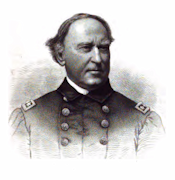
You will prepare your ship for service in the Mississippi River in the following manner:

Send down the top-gallant masts. Rig in the flying jib-boom, and land all the spars and rigging, except what are necessary for the three topsails, foresail, jib, and spanker. Trice up to the topmast stays or land the whiskers, and bring all the rigging into the bowsprit, so that there shall be nothing in the range of the direct fire ahead.

Make arrangements, if possible, to mount one or two guns on the poop and top-gallant forecastle; in other words, be prepared to use as many guns as possible ahead and astern, to protect yourself against the enemy’s gunboats and batteries, bearing in mind that you will always have to ride head to the current, and can only avail yourself of the sheer of the helm to point a broadside gun more than three points forward of the beam.

Have a kedge in the mizzen chains (or any convenient place) on the quarter, with a hawser bent and leading through in the stern chock, ready for any emergency; also grapnels in the boats, ready to hook on to, and to tow off, fire-ships. Trim your vessel a few inches by the head, so that if she touches the bottom she will not swing head down the river. Put your boat howitzers in the fore-maintops, on the boat carriages, and secure them for firing abeam, etc. Should any injury occur to the machinery of the ship, making it necessary to drop down the river, you will back and fill down under sail, or you can drop your anchor and drift down, but in no case attempt to turn the ship’s head down stream. You will have a spare hawser ready, and when ordered to take in tow your next astern do so, keeping the hawser slack so long as the ship can maintain her own position, having a care not to foul the propeller.

No vessel must withdraw from battle, under any circumstances, without the consent of the flag-officer. You will see that force and other pumps and engine hose are in good order, and men stationed by them, and your men will be drilled to the extinguishing of fire.

Have light Jacob-ladders made to throw over the side for the use of the carpenters in stopping shot-holes, who are to be supplied with pieces of inch board lined with felt and ordinary nails, and see that the ports are marked in accordance with the ‘ordnance instructions’ on the berth deck, to show the locality of the shot-hole.

Have many tubs of water about the decks, both for the purpose of extinguishing fire and for drinking. Have a heavy kedge in the port main-chains, and a whip on the main yard, ready to run it up and let fall on the deck of any vessel you may run alongside of, in order to secure her for boarding.

You will be careful to have lanyards on the lever of the screw so as to secure the gun at the proper elevation, and prevent it from running down at each fire. I wish you to understand that the day is at hand when you will be called upon to meet the enemy in the worst form for our profession. You must be prepared to execute all those duties to which you have been so long trained in the Navy without having the opportunity of practicing. I expect every vessel’s crew to be well exercised at their guns, because it is required by the regulations of the service, and it is usually the first object of our attention; but they must be equally well trained for stopping shot-holes and extinguishing fire. Hot and cold shot will, no doubt, be freely dealt to us, and there must be stout hearts and quick hands to extinguish the one and stop the holes of the other.

I shall expect the most prompt attention to signals and verbal orders, either from myself or the Captain of the fleet, who, it will be understood, in all cases acts by my authority.

D. G. Farragut.

March.

Dear Girls: May is busy concocting things for a fair she and Bertha hold to-day, for the benefit of our “brave volunteers.” Papa and mamma and aunties are to buy the things, and May is to spend the money in little books, the first day she is well enough to come over. Robert asked me to say that he sent a box of books to Eliza’s address, Ebbitt House, for some hospital library. They were chiefly English reviews, which were too good reading to give to any of the recruiting camps here, and he thought in a general hospital there would always be somebody who could appreciate them. I was glad to get Charley’s second letter and wish he could hear from us. .. .

Perhaps these winds will dry the roads and enable you to go comfortably at least to Joe’s camp. It is too bad to have Mother leave Washington just as March winds prepare the way for McClellan’s advance. I am ready, mind you, Georgy, to wait for McClellan just as long as he desires. Only I think unless he threatens the enemy in some way, and thus keeps them cooped up, he may wake up some morning and find them all flown southward and he left, stuck in the mud. I don’t see why he couldn’t have done on the Potomac last December what Halleck has just done on the Tennessee.

. . . I shall take great interest in the working of the educational and industrial movements among the blacks at Port Royal. A large party of teachers, with supplies of various kinds, seeds and sewing machines, etc., went out in the Atlantic. Some of the lady teachers are known to us through friends, and though the whole arrangement has been matured very rapidly, it seems to be under judicious oversight. Jane has a venture in it. She went into the office to collect information and to offer help, and was levied on for eight neat bed-spreads, which she purchased at Paton’s. We can imagine the lady teachers reposing on their camp cots, in those distant islands, under Jane’s quilts. . . .

I wish I could feel that the end of the war will see, (as Prof. Hitchcock said on Sunday), in all this wide country “not a master, not a slave, only all Christ’s Freemen.” . . .

Jane and I get along famously, as independent as two old maids. We are not even troubled with evening callers, but sit each in our armchair with a foot-stool, a cup o’ tea and a newspaper, and shall be very much “put out of the way” if Mother comes home from Washington. We write begging her not to think of it again. Her duty and pleasure are both to be with you, and I don’t want her to have a moment’s uneasiness about the thought of separation, even if she stays months.

March 5.—An order, dated at Jackson, Tenn., was issued by Gen. P. G. T. Beauregard, of the confederate army, assuming command of the rebel army of the Mississippi. The order declares that the Northern “invaders” must be “made to atone” for the reverses experienced by Southern arms, and terminates by calling the rebel cause as “just and sacred” as any that ever animated a nation.—(Doc. 77.)

—In the Confederate Congress, Mr. Smith offered a resolution that the Committee on Post Offices and Post-Roads be instructed to inquire into the expediency of reporting a bill to prevent the appointment, as postmasters, of persons between eighteen and forty-five years of age, where the compensation is under seventy-five dollars per annum; but such appointment shall be made with reference to those persons who, by bodily infirmity, age, or sickness, are exempt from military duty.

The object of the mover of the bill was mainly set forth in the bill as it read. He wished to cut off from the benefit of the exemption law many persons, able-bodied and active young men, who sought these offices, some of which paid but ten dollars a year, only for the purpose of escaping military duty. In these offices, where so little exertion was required, persons could be placed who were unfit for the field, or, if necessary, some of the noble women of our country could be looked to to perform these duties.—Richmond Examiner, March 7.

—This day the United States steamer Water Witch captured, off St Andrew’s Bay, west coast of Florida, the rebel schooner William Mallory, of Mobile, from Havana February twenty-eighth, and bound wherever she could make a port. She is a schooner of one hundred and eight tons burden, and is a remarkably fast sailer, having been chased five hours and fired at several times before she would heave to.—National Intelligencer, March 20.

—A Proclamation was issued by F. W. Pickens, rebel Governor of South-Carolina, calling for five volunteer regiments, to serve during the war, in response to a requisition for that number made upon the State by the President of the Confederate States. He urges upon the people the necessity of the call, in consequence of reverses to the Southern arms, and threatens to meet the demand by conscription, if the regiments are not formed by volunteers within fifteen days.— (Doc. 78.)

—Tue public mind of the entire South is fast recovering from its causeless panic occasioned by the unfortunate affairs at Roanoke Island and Fort Donelson. Considerate men see that much ultimate good may come of them by inuring us to defeats that must often occur in a war with a power possessed of superior numbers and superior resources of all kinds, by curing us of that rashness which our continued successes had begotten, and, most of all, by stimulating enlistments, and thus increasing the number and efficiency of our armies. It is now almost certain that by the last of April we shall have a larger disposable force in the field than that of our enemies; for they must retain two hundred thousand men in Maryland to guard and retain that State and the city of Washington, one hundred thousand in Kentucky and Missouri to hold those States, some twenty thousand in their various forts, and probably eighty thousand in their fleets. Thus their stationary force being four hundred thousand, even if their armies number seven hundred thousand, they will have a disposable force of only three hundred thousand with which to invade our interior; and, in long incursions, this will be diminished at least one third by the forces detailed to keep up communication with their base of operations. Besides, by deferring their invasion of the South until the warm season, they will soon decimate their ranks by the malarious diseases of our climate.

Heretofore we have had to fight against superior numbers, but so soon as they quit their vessels, march into the country and meet us in the open field, we shall out-number them, if we please, in every conflict.

They cannot probably hold Nashville longer than the rainy season keeps the Cumberland River flooded. We know not how large an army they have there, but believe it cannot be very large. Should we be mistaken, and they attempt to hold it permanently, we ought, in a few weeks, to make prisoners of their whole army. Their present occupation of that city, of Fort Donelson, and of Clarksville so divide their land and naval forces as to disable them from attacking and taking Columbus, and proceeding down the Mississippi to Memphis and the cotton region.

If, with their whole land and naval force, and their eager appetite for cotton, they durst not attempt to descend that river, they will surely not now venture to do so with a crippled and divided navy and army. It may yet turn out that the fall of Fort Donelson and of Nashville will be a great gain to us, and a great misfortune to them.

The whole country, from the Ohio to Nashville, is inhabited by brave men and zealous secessionists. They cannot make that city a base of operations from which to invade the cotton States, for in a few weeks, probably days, the Cumberland River will become unnavigable for the smallest gunboats, and they would be cut off from their Northern supplies and resources. If they attempt it, even with a force of a hundred thousand men, we should at once surround them with a force of a hundred and fifty thousand, and capture their whole army. This would end the war; and we should not be surprised that it should end somewhat in this way. The North, under a weight of debt and want of cotton, is become desperate, and will rashly quit its woven walls ere long and march far into our interior. Then we will make prisoners of their armies, and gloriously and triumphantly wind up the war. Let faint-hearted people recollect that we never yet met them with equal numbers, in the open field, without defeating them; and that under the levy en masse which is going on in the South, if they invade us by land after the first of April, we will meet them with superior numbers. Our bad roads will prevent their invading us sooner.—Richmond Dispatch, March 5.

—Bunker Hill, Va., was occupied by the National forces.—Reverdy Johnson was to-day elected United States Senator by the Maryland Legislature for six years from March, 1863.

—A Reconnoitring party of the Sixty-third regiment of Pennsylvania, Heintzelman’s division, was ambushed this morning beyond the Occoquan, Va., two or three miles in advance of the Union pickets, and received the fire of a party of concealed rebels, who instantly fled through the woods. Capt. Chapman and Lieut. Lyle were killed, and two privates were wounded, one of them mortally.

—The National pickets at Columbus, Ky., were this day driven in by the rebel cavalry, who fled upon being shelled by the gunboats.

—An order was issued, dated at Jackson, Tennessee, by Major-Gen. Bragg, of the confederate army, designating different rendezvous for troops coming within his division, assuming authority of the railroads in the limits of his command, and declaring martial law in the city of Memphis, Tennessee. All prisoners of war at Memphis were ordered to be transferred to Mobile and thence to Tuscaloosa, Alabama, for confinement.

4th.—In statu quo as far as our armies are concerned. The Nashville, a Confederate steamer, that has been watched by eight Federal war vessels, came into port the other day, at Beaufort, North Carolina, after many hairbreadth escapes, bringing a rich burden.

Tuesday, 4. — Bright, cold, snow on ground. Ride with Dr. Joe, A. M. Webby doesn’t like the bit; it brings the blood. A good horse, I think.

Today a German soldier, Hegelman, asks to marry a girl living near here. She comes in to see me on the same subject; a good-looking girl, French on her father’s side, name, Elizabeth Ann de Quasie. A neighbor tells me she is a queer girl; has belonged to the Christian, Baptist, and Methodist church, that she now prefers the Big Church. She has a doubtful reputation. When Charles Hegelman came in to get permission to go to Gauley to get married by the chaplain of the Twenty-eighth, I asked him why he was in a hurry to marry; if he knew much about her; and what was her name. He replied, “I like her looks”; and after confessing that he didn’t know her name, that he thought it was Eliza Watson(!), he admitted that the thing was this: Eight hundred dollars had been left to him payable on his marriage, and he wanted the money out at interest!

A jolly evening with Drs. Webb and McCurdy and Lieutenants Avery and Bottsford at my room. Bottsford giving his California experience — gambling, fiddling, spreeing, washing clothes, driving mules, keeping tavern, grocery, digging, clerking, etc., etc., rich and poor, in debt and working it out; all in two or three years.

News on the wires that the Rebels have Murfreesboro; that Pope takes four or six guns from Jeff Thompson; that there is appearance of a move at Centreville and also of a move on Charleston, Virginia, and the capture of six hundred barrels of flour.

4th.—I returned from Washington to-day, and was met by Colonel _____, who told me that the Brigade Commander had ordered him to have every hospital nurse who had taken any part in the purchase or presentation of the sword to me, dismissed from hospital and returned to the ranks. Well, now, who is to do that? I shall not; and I am glad that our Commander of Brigade has had pride enough to rise to this trick to find out who they are, rather, than (pencil in hand) to go sneaking around, asking “Who did it?” But he will miss fire; I shall dismiss nobody. I would rather he would catch himself in the little act of nosing around for information. I doubt not he will do it, or even dirtier work, rather than let slip any opportunity to gratify his vindictiveness.

After I received this verbal order, I sat down and wrote a defiant letter to the General, giving him my estimate of such doings, but then, feeling that it might redound to the injury of my friends, who were sharing his displeasure with me, I suppressed it, and sent a request to the General to be permitted to see him on the subject. I received the manly reply: “When the order is carried out!” If we never meet till I carry out that order, these eyes will for a long time be relieved of performing a most disagreeable duty. He may perform the duty; I shall not. In the hope, however, of relieving my friends from his further vindictiveness, I determined on another attempt to mollify, and here record the attempt, with its result:

Headquarters Medical Department,”
_____ Reg’t. _____ Vols,

Colonel:—

Permit me, through you, to lay before Brigadier General _____, the following statement of facts: During the autumn and early part of the winter, the sickness in our regiment was unusually severe. Often, one half of our nurses were sick, and the rest worn down by fatigue. Rather than draw more strength from the regiment to our aid, I, after my official duties of the day were over, did, for weeks together, spend the greater part of every night in the unofficial, and, perhaps, undignified capacity of nurse, sending the exhausted nurses to their beds, and ministering to the wants of the sick. I rarely retired before two o’clock in the morning. During this time I was so fortunate as to gain the affection and gratitude of those for whom I labored, whilst many of them were still feeble, scarcely able to leave their beds, they decided to express their gratitude for my personal efforts, by a new year’s gift to me. They forgot that in becoming soldiers they ceased to be men, and gave vent to their feelings by presenting me a sword. If, in this presentation, there were “deliberations or discussions having the object of conveying praise or censure” for me, officially, as stated by the General, I have not been able to discover it. The circumstances attending—the spirit of the address—the inscription on the scabbard, all point to a different feeling and another object. With feelings of the deepest regret, I learn that this act of theirs meets the disapproval of the Brigade Commander, and that these men are to become the objects of censure and punishment.

For six months, these soldiers, by the direction of the Medical Director of the Army, have been thoroughly trained to the performance of those duties which are expected of hospital attendants on the field of battle, and I venture nothing in saying that the hospital under their care will show that they are second to no corps on the Potomac.

Under this state of facts, I respectfully appeal to the Brigade Commander, and beg that he will revoke the order dismissing these nurses and filling the hospital with inexperienced ones, at the moment when we are expecting to enter the battle field, and to need all the experience in our reach.

I waive all considerations of my own mortification, and will even cheerfully bear a public reprimand for myself. I put aside the consideration of the inconvenience which theer dismissal will bring on me; I put aside even their mortification and disappointment; but, in behalf of the sick, the wounded, the dying of my regiment, I appeal for the revocation of this order.

I beg, Sir, to remain,

Respectfully, your ob’t serv’t,

______ _______
Surgeon _____ Volunteers.

To Colonel _______, Commanding _______ Vols.

With this last appeal I close the labors of this day.

March 4.—An intelligent gentleman, arrived in Richmond, Va., from the South, states that the whole country is in a blaze of patriotic enthusiasm. The late reverses have awakened a military spirit which throws into the shade the glorious demonstrations at the beginning of the war. The whole population is offering itself en masse for the defence of the county. It is said that nothing like the universal and fervid awakening of the people to the exigencies of the times has occurred before from the beginning of the war. Men of all ages are eager to unite in the holy work of driving back the foul invader from our Southern homes, and even the women, if they could procure arms, would buckle them on and hasten to the field. As it is, the prayers of mothers, wives and daughters, were sent up unceasingly to Heaven in behalf of ” the case, the cause, the course,” that is giving strength even to the arm of old age, converting boys into veterans, and even the weak and timid into heroes.

Let the government keep up with the energy of the people, and we have every reason to believe it will; let the government emulate the splendid boldness of the soldier, and the tide of battle will soon be in our favor. Let all be prepared for sacrifices, to make bonfires of cotton and tobacco, and convert every Southern town to ashes, rather than to submit to a base and inhuman foe. In such a spirit, and with humble reliance on Heaven, our independence is as sure as the rising of to-morrow’s sun.—Richmond Dispatch, March 5.

—A General order was issued by Gen. McClellan, dismissing Col. James E. Kerrigan, of the Twenty-fifth regiment N. Y. S. V., from the service. The court-martial found him guilty of habitual neglect of duty; conduct prejudicial to good order and military discipline; violation of the forty-fourth article of war in failing to attend a meeting of officers ordered by his brigadier general; a violation of the ninth article of war; and sleeping outside the camp without leave.— N. Y. Commercial, March 5.

—The Senate of the United States confirmed the nomination of Senator Andrew Johnson, of Tennessee, as Brigadier-General, at the nomination of the President, and the Senator at once proceeded- to organize a provisional government for Tennessee, over which he is to preside as Military Governor until a regular civil government is organized.—National Intelligencer.

—Gen. Shields passed through Charlestown, Va., this day, on his way to take command of the late Gen. Lander’s brigade.—Mrs. William H. Norris was arrested at her residence in Baltimore, Md., by orders from Washington, and conveyed to that city, on the charge of transmitting clothing to persons in the rebel army in Virginia.— Baltimore American, March 5.

—Gen. Hitchcock has been compelled, on account of impaired health, which will not permit him to perform the responsible duties of the position in the field, to decline the appointment of Major-General lately tendered by the President with the approval of the Senate. His letter to this effect utters strong Union sentiments, his fervent desire that the rebellion may be speedily overthrown, and his confident belief that this will soon take place, and the authority of the Federal Government everywhere be reestablished. He expresses great admiration of the recent brilliant achievements in the West, and of the military genius which they manifest.—National Intelligencer, March 5.

Halls Hill, Va., March 3, 1862.

Dear Father, — I infer from your last letter, in which you say that I have not written you how I was received by General Porter, that you have not received all my letters. In letters written to Hannah and others of the family, I have mentioned several times that I liked General P. very much, and that he received me very kindly, etc. You know that when I came here first the general was not here, and he did not return for some days. When he did come I was introduced to him by Captain Locke, and was warmly welcomed by him. I gave him your letter, which he read. He asked how you were, and has since told me that he had been meaning to send you a photograph of his. He also wished me to remember him to you. He advised me to drill with my regiment whenever it was practicable, and to go out with General Martindale on his brigade drills. My regiment have had no battalion drills since I have been out here, on account of the mud. They have had bayonet drills under sergeants, and target practice, at neither of which I could attend as an officer. I have been over there some five or six times, and when I go, always stop and see my captain and lieutenant and some other officers. My captain’s name is Thomas, a regular Yankee, with the nasal twang, sharp and smart, and a very pleasant man, although not remarkably well educated. He is from Roxbury, and used to be connected with the iron foundry in R. just by the tannery, and where our old man Michael used to work. My first lieutenant is named Howes, and is from New Bedford, where he was a boat-builder. I should say that he and Captain Thomas were about 45 years old. Lieutenant Howes is a smart officer and an agreeable man. I don’t know any of my privates, but hope to soon. My company is D, and is one of the best in the regiment. It has the right of the line. . . .

I see Tom Sherwin two or three times a week, and often ride with him. I can’t ride as often as I would like, as my horse has the scratches and the mud increases them and makes them worse. You ask about one other person, beginning with C., but I can’t make out the rest of the name. I see Colonel Griswold quite often, and am quite intimate with him and Tom Sherwin. I also know Lieutenant Martindale quite well, a son of the general’s and one of his aides.

I have hardly made up my mind about the horse yet. I have had no chance to try him fairly. I think, however, he has good powers of endurance and will stand hardships well. I believe I can stick on him as long as he can run. I took him out yesterday to go with the general to the different camps to inspection. He had not been out for some days, and so thought he could have it all his own way. He raced round the field through bogs and ditches, and brambles, etc., kicking and rearing, etc., but all to no purpose. I clung on and ran him round until he got tired of the business. To-day I went to Washington with the general, and rode him (horse, not general) very fast all the way. When I got in there we went to General McClellan’s headquarters and I left him out in the rain and mud for three or four hours, not knowing the general would stay so long, or else I should have put him in a stable. I then galloped him almost all the way out here through mud-holes and mud-ponds, etc., and on arriving here found that he was not tired or blowing at all. I think it is a pretty good test for him.

Look out for news soon. All the division commanders of the Army of the Potomac were at headquarters to-day, and it was to meet them that General Porter came in town. There were some twelve generals there. General McClellan was not there, being, I think, with Banks’s column. I should judge that we were going to advance down from Harper’s Ferry from some such indications. I hear that the Regulars are all under marching orders. I left General Porter in Washington, he saying that this meeting would keep him till midnight. The generals had a large quantity of maps, etc., spread out on a table, and were all figuring over them. I got the general some of his photographs, drew a check for him, and then started for camp.

Yesterday I went with the general to see Stockton’s Michigan regiment reviewed, and from there went down to the cavalry camps, where we lunched, and then went over Forts Woodbury and De Kalb, both of them small earthworks. It began to snow just as we started for home, and by the time we reached here the snow was some two inches deep. A heavy rain has set in to-day, however, and I hope soon to find it all gone and the roads in good condition. Our orders to be ready at any minute to march were countermanded a day or two ago, probably because Banks had no opposition offered him. . . .

We are to have a son of Colonel Barnes here as volunteer aide with rank of captain. He is a good-looking gentlemanly fellow, a lawyer by profession in New York, and will be quite an acquisition to the staff.

I received an invitation to Miss Chase’s[1] reception tomorrow from 1 till 4, through General Butterfield, who was kind enough to send it to me. I think I shall make my “debut” in Washington society, as General Porter is going and kindly offered to have me go with him.

Tell the girls I have cut off my magnificent moustache and beard because they did not grow fast enough. How do you like my last photographs?

I forgot to mention that General Martindale’s headquarters are within 30 feet of General Porter’s, so that I should see as much as ever of my present staff. General M. is one of P.’s brigadier generals. . . .


[1] Miss Kate Chase, daughter of Chief Justice Salmon P. Chase; afterwards famous as the wife of Senator William Sprague of Rhode Island.

Monday March 3d 1862

It has rained all day. Snow all gone and mud again much to the disappointment of all. We heard this morning of the death of the gallant Genl Lander. He was one of the bravest of the Brave and we could have spared almost any of our Brigadiers better than him. He died of wounds rcd at the fight at “Edwards Ferry,” up the river, last fall. The Evacuation of Collumbus K.Y. is officialy anounced. It was the last rebel Strong Hold in K.Y. The papers say nothing about army movements, they are not allowed to. I have been at home all the evening and the boys have staid in the house all day studying their lessons some and amusing themselves drawing &c. “Bud” shows quite a talent for drawing & painting in water colors, but his practice is confined to Houses, Steamboats, Soldiers &c.

______

The three diary manuscript volumes, Washington during the Civil War: The Diary of Horatio Nelson Taft, 1861-1865, are available online at The Library of Congress.