Following the American Civil War Sesquicentennial with day by day writings of the time, currently 1863.

The American Civil War

ON the 25th of January Major Potter reported to pay us for the first time, and we were all greatly delighted. So far, none of us had ever received a cent for his services, and most of us were penniless; we made it very pleasant for the major at headquarters and he proved himself a jolly good fellow. It was now possible to square up all our accounts, settle our indebtedness, and lay in a stock of necessaries for the approaching campaign. The winter, up to this time, has been cold and disagreeable, with considerable snow, and very much rain; as a result we have a good deal of typhoid malaria and measles. I have been down with a serious quinsy throat and pulled through with difficulty, Doctors McKim and Grant, our brigade surgeons, doing their utmost to bring me along. I am all over it now, and as strong as ever. We have got rid of the lieutenant colonel of the Fifty-seventh, who never served with us for some reason unknown. He resigned on the First of February and Major Parisen has succeeded to his rank, Captain Chapman, of company A, becomes major.

The road between the camp and Alexandria, over which come all the supplies, takes the cake for pure unadulterated badness. It frequently requires twelve mules to pull a wagon through some of the bad places, and I have really felt sometimes that horse and rider were about to end their career in an inglorious sea of mud. Alexandria is the Mecca for all officers and men who can possibly obtain a pass. It is a dilapidated old town, but now the streets are thronged with soldiers and army wagons, and almost every house with prostitutes. The shops are kept by Jews and almost everything for sale is for officers’ use. Here are immense magazines of stores of every description, and the traffic between the troops is incessant. To me it is a most forlorn looking spot, and I am always glad to get away from it.

Since the weather has improved somewhat, the scenes about us have become more exhilarating; the air is full of martial music, troops are constantly in motion, cavalry regiments coming in, or going out to the front, batteries at drill, and the ubiquitous infantryman everywhere, while the endless villages of little canvas houses cover the country in all directions, as far as the eye can reach. The panorama is, in fact, one to warm a soldier’s heart, and make a civilian die of envy. Almost every afternoon we take long rides, and have become acquainted with officers in all directions; frequently we go out to the debatable ground, and enjoy the freedom of the open country, tinged with the slightest danger to sharpen our wits. On one of these occasions a very funny incident occurred. Major Parisen, myself, and half a dozen other mounted officers were having a gallop which ended in a race; as we flew over the ground, the road suddenly turned down quite a steep hill, but our speed was such that it was impossible to check it; at the foot of the hill were a dozen or more cavalrymen, their horses backed up together, facing outwards, and every man with his revolver cocked and leveled at us; as we rushed down the hillside we were making a great noise and laughter, or I expect they would have fired at us, thinking we were charging them; we were agreeably surprised to find we all belonged to the same army; if it had been otherwise our frolic might have ended disastrously.

On one of these excursions we stopped at a large, deserted mansion, dismounted and went over the house. In one of the rooms I read, written on a pane of glass with a diamond, “Left dear old home June 25, 1861, to be occupied by soldiers. Jennie” Poor Jennie; I am afraid she will be a stranger to her ancestral halls for many weary months.

The general has got a new aide-de-camp, Plume, from one of the New Jersey regiments, and Willie, the general’s son, has been commissioned second lieutenant in my regiment, and appointed aide-de-camp and now sports a uniform. On the Sixteenth of February we received an order to detail a lot of men for service on the western gunboats; twenty-eight men responded to the circular for able-bodied boatmen, and the following day they were shipped to their new field of duty. Lately we have been drilling every afternoon by brigade, marching out into some large fields, a mile or two in advance of the camp. The general is superb on the drill ground, and handles the brigade with consummate skill. He keeps his staff flying over the ground in all directions, and to see us go one would think the welfare of the army depended upon us getting there. Occasionally he goes himself like a whirlwind across the field, followed by all his retinue, and looks like a true son of Mars. We think these drills superb; the men get pretty well tired out, but all of us have learned much, and now it is easy to perform the most intricate movements. Since Willie’s appointment he has quartered with me, and I like to have him in the tent. He is a singular genius, thin, tall, pale-faced, almost wholly without education; having been born and brought up on the plains, he knows nothing of books, but is perfectly at home in everything belonging to a horse, and can ride anything with or without a saddle, and can do many difficult feats that we have never seen before; he aquired this skill in riding Indian horses and mustangs on the plains when a small boy.

_______

Note: This part of the “diary” is more of a recollection than a day by day diary.  I am splitting it up for posting on Daily Observations from the Civil War at what appear to be appropriate points; these may differ somewhat from actual historical records.

Friday Feb 28th 1862

This has been a cool, windy, drying day and a few such are much needed to dry up the roads. In the absence of War news from the Army, all sorts of stories are afloat. But little apprehension is felt as to the result of the conflict which will probably take place over the River. I think McClellan will make a sure thing of it if he attacks them at Mannasses or Elsewhere.

______

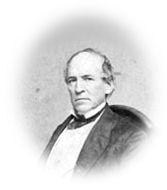
The three diary manuscript volumes, Washington during the Civil War: The Diary of Horatio Nelson Taft, 1861-1865, are available online at The Library of Congress.

FEBRUARY 28TH.—These calamities may be a wholesome chastening for us. We shall now go to work and raise troops enough to defend the country. Congress will certainly pass the Conscription Act recommended by the President.

Beaufort, S.C., February 28, 1862

My life here is very charming and pleasant, but is growing monotonous. I dread the idea of being here much longer, though any change is almost certain to be for the worse and the sameness of stable-duty, drill and camp life is telling on all of us. A prettier place than Beaufort would be hard to find, and a finer climate I do not want to see; but nothing marks the days as they pass, and few know less of the progress of the war than we, in the heart of South Carolina and in sight of the enemy’s pickets. How long this will last we can’t tell, but I fear for a good while; for there are no signs of real activity here, and now we all feel a desire to soon leave this Capua for the free, changing life of Tennessee, Missouri or even Texas. Nothing, I fear, but foreign intervention will get us out of this, however, and I imagine our destiny is either to fight at home against England and France or to march into Charleston.


Meanwhile I am very well and very comfortable, save in some respects of position with which I will not trouble you and which will cure themselves. To us it is now more of a picnic than war, and I live in as much luxury almost in my tent as I ever did at home. We are all very well and as brown and dirty as nuts, and I have never enjoyed life more than in the army. In fact, my college days seem to have come back to me, but bereft of most of their cares. I have been doing a good deal of detailed duty and have pretty thoroughly explored this island and last week they made me Judge Advocate to a Court of Inquiry, and these give quite a variety to life and took me away effectually from certain annoyances of my camp life; but they’ve found me out now and I’m steadily kept here, while my pleasant rides and expectations have come to an end. Socially also things are extremely agreeable here. Colonel Sargent is in immediate command and recent experiences have made me feel as if walled in with friends. My tentmate, Davis, is the very man I need and it is generally supposed in camp that he is a sort of nurse and guardian for me and that without his fostering care I should be a tentless wanderer. In fact my family will be pleased to know that my announcement that at home I had always been considered rather an old Betty was received with shouts of derision, and in camp here, in all matters of comfort, I enjoy the reputation of being the most careless, shiftless and slipshod devil in the whole battalion. Still I get on well enough, but I do not grow here, or, rather, should not long. The life and experience will have its uses for me and they will be great, but it is not the life for me for a permanency. The mind is perfectly fallow. . . .

Winchester, February 28, 1862.

I reached here day before yesterday, and expected to devote yesterday evening to a letter home; but so soon as I got pen and paper ready to commence we had an order to change our camp. My ride here was as pleasant as I could expect. The first night I stayed at Mr. Sproul’s, the next at Dr. Crawford’s, the next at Mr. Williamson’s, and the last at Strasburg, reaching Winchester about twelve o ‘clock. Self and horse both in good condition.

I doubt not you will hear any quantity of news before this reaches you: that Winchester has been evacuated, the enemy approaching in countless numbers from all directions, and Jackson’s army flying before him. All I can say is, do not be alarmed, and make up your mind to bear in patience whatever of good or evil the future may have in store for us. Try, so far as possible, to divert your mind from the troubles of the country. The future is not so bright as it was before our late disasters, but we have yet many strong arms and brave hearts in the field, and should not despair.

As to our situation here, place no confidence in the rumors which you may hear. The enemy yesterday entered Charlestown—in what force I do not know, or for what purpose. It may be to take possession of the Baltimore & Ohio R. R. and rebuild it, or it may be a part of a force intended to advance on this place. All I can say is: I think, unless his force largely outnumbers ours, we shall fight him, and if it is overpowering we shall evacuate the place.

I write, darling, in the open air and a freezing wind, and will bid you good-bye until my next. I will write regularly, so that my letters may reach you Sunday morning when you go to church. Should anything happen me, I will have a letter written to your father, who will send it to you. Kiss the children for me, and for yourself, dearest, accept all that a fond husband can offer.

February 28.—The British ship Labuan, of Hull, England, arrived at New York, in charge of a prize-crew from the United States sloop-of-war Portsmouth. She was captured by the Portsmouth a few miles to the northward of Brecca Chica, a small village near the Rio Grande, and it is supposed that she intended to run the blockade. The vessel is worth £33,000. Her cargo consists of a large quantity of blankets, etc.

—Counterfeit five-dollar Treasury notes made their appearance in New-York. They were excellent imitations of the genuine. The letters “U.S.,” one within the other, on the shield in the goddess of liberty, being left out.

—This day was observed throughout the Confederate States, in accordance with a proclamation issued by Jefferson Davis, as a day of “fasting, humiliation and prayer.” The rebel President appointed the day as a fitting occasion on which to make a grateful acknowledgment of the watchful care of Providence during the existence of the provisional government.

—The rebel steamer Nashville, from Southampton, England, commanded by R. P. Pegram, of the confederate navy, ran the blockade of Beaufort, North-Carolina, and reached the town this morning in safety.—(Doc. 68.)

—The United States transport steamer Mississippi, having on board Major-General B. F. Butler and fourteen hundred troops, ran aground on Frying-pan Shoals, off Wilmington, N. C, while on her way from Boston, Mass., to Ship Island, in the Gulf of Mexico. Her situation being discovered by Commander O. S. Glisson, U.S.N., he immediately went to her assistance with the steamer Mount Vernon; and after laboring in vain for many hours, during which about three hundred troops were transported to the Mount Vernon, the Mississippi was finally got off at about seven o’clock in the evening. The troops were then transferred back to the Mississippi, and every man saved.—(Doc. 69.)

—Charlestown, Va., situated on the line of the Winchester and Potomac Railroad, eight miles southwest of Harper’s Ferry, was this day occupied by the National troops.

—Capt. Nolen, of the Seventh Illinois cavalry, with sixty-four men, while making a reconnoissance of the country west of Charleston, Mo., came across ninety rebel cavalry, commanded by Jeff. Thompson, and after pursuing them a long distance, forced them to make a stand about five miles below Sikeston.

Thompson’s artillery was planted in the road in such a manner as to command all approaches, and the National forces were compelled to charge in the face of his battery. This they did with great gallantry, and succeeded in capturing four guns and putting the confederates to flight, with a loss of one man, who straggled from the command and was taken prisoner. The rebel loss was not ascertained.—Cincinnati Gazette, March 4.

FEBRUARY 27TH.—Columbus is to be evacuated. Beauregard sees that it is untenable with Forts Henry and Donelson in possession of the enemy. He will not be caught in such a trap as that. But he is erecting a battery at Island No. 10 that will give the Yankees trouble. I hope it may stay the catalogue of disasters.

Camp of the Penn. Mudturtles,

Hall’s Hill, Va., Feb. 27, 1862.

Dear Cousin L. :—

Your letter came last night and with it rain and marching orders. I had just read it and the rain had just commenced drumming on our cotton houses, when a drum of another sort called the orderlies to headquarters and they soon returned with orders to pack up every thing and be ready to march at a moment’s notice. This was welcome news, though the style the weather put on was not so welcome. We packed up everything and lay down on the bare poles to wait the moment’s notice. The rain continued through the night and we were not called out. This morning two days’ rations were issued and the orders repeated to be ready to move at any moment. I improve the time while we are waiting to answer your letter. You will excuse my writing with a pencil, as my portfolio and writing materials with your letter are in my knapsack under a pile that I dare not undertake to repack at a “moment’s notice.” I stepped out into the street this morning and one of the boys who stood there said to me: “Norton, there’s something on my back; brush it off.” I looked, and what do you think it was? “Couldn’t imagine.” He had his knapsack packed and on the outside two woolen blankets, one rubber ditto, one picket tent, pole and ropes, overcoat, pair of boots, haversack with two days’ provisions (Hardees and tiger), canteen with two quarts of coffee, cartridge box with forty rounds and a thirteen-pound rifle. I can only say I didn’t attempt to brush it off, but went back to my tent and found the same thing ready for my back with a bugle for a balance weight. All the regiments in the vicinity have the same orders, and last night the cook-fires on all the hills in sight were spluttering in the rain all night, cooking the rations.

There are many speculations as to where we are going. Some say a general advance is to be made on Centreville and Manassas, some that nothing more is contemplated than moving the camps a few miles further to better situations, others that the division is to go via Washington and Baltimore to Harper’s Ferry. My own opinion is different from all these. I think we are going to—stay here. Cotton has abdicated, corn never was much of an absolute monarch, but “King Mud” is king yet. We have had two days this week of drying weather. One, Monday, I think, we had a gale, a very severe one, that dried up the mud considerably. It was the strongest wind we’ve had in Virginia since I’ve been here. It blew down a great many tents in all the regiments. Ours are so large and well staked down that only six or eight blew down, but in the Michigan and the Ellsworth regiments some companies had not a tent left standing. I was over in the Forty-fourth New York when the gale commenced and tents began to fly about. I saw one whisked off the foundation and blown into the next street, carrying with it three guns, coats, caps, bottles, etc., and as it struck a watch bounded out and dropped in the mud. The jewelry had a perilous voyage, but wasn’t injured. In another tent the boys had dug a basement and fixed it up very nicely. They were busy at a game of cards when the wind unroofed their cave. Nothing disconcerted, they kept on, saying, “Let her go, we won’t stop for a little wind—it’s nothing to the lakes.”

I see L. must have told you of her expected marriage. I can tell you but little of her intended. He is a farmer, and, from what I have seen of him, I think him a fine young man and I think you would like him, at least in one respect, he don’t use tobacco. He tried a cigar with me once, smoked an inch of it, and, wise young man, his sensations requested a discontinuance of the operation. I’m sorry you feel so bad about my smoking. I think, after you had spent a night or two on picket and saw the comfort the soldiers draw from a pipe or cigar as they sit round the fire, you would say, “I forgive you—smoke, at least while you are in the army.”

I received the Atlantics you sent. I was very much interested in reading them. I like the character of that magazine better than any other I am acquainted with. My friends in the tent unite with me in thanking you, for everything of the kind has to go the rounds, you know. There hasn’t been an hour in the day since they came but some one has been reading them.

You inquire what delicacies I am most in need of and speak of sending me a box. I hardly know what to say. I have become so used to a soldier’s fare that I do not need any delicacies. We have a nuisance in every regiment called a sutler, who generally has a supply of knick-knacks ready for us for a consideration, and when we tire of hog, hominy and hardees, we get a little something of him to make our rations relish. A good many of our boys have received boxes from home, but they generally came from farmers and contained butter, cheese, dried fruits, pickles, etc., that cost them little and were very welcome in camp. In New York every such thing must be bought and at high prices, too. I have done very well so far without them, and I should not like to have you go to much trouble or expense on my account. If you do have a few things that you want to send, I suppose if sent by express to the same address as my letters, they would come to me all right, as boxes are brought up almost every day by our teams from that office.

2 P. M.—We haven’t marched yet, and are still expecting orders at a “moment’s notice.”

If there are any questions I have not answered please excuse me, as I have your letter packed up.

27th.—Nothing new or important in our army. We were relieved to hear that the number who surrendered at Donelson was not so great as at first reported; the true number is 7,000, which is too many for us to lose! I trust they may be kindly treated. I know that we have friends at the North, but will they dare to be friendly openly? Oh, I hope they may have mercy on our prisoners! We have had some hope of recognition by France and England, but they still look on with folded arms.

February 27.—John Gold and Elias Paulding were arraigned in the Mayor’s Court, at Richmond, Va., for avowing themselves subjects of the Lincoln Government, and expressing sentiments disloyal to the Southern Confederacy. John Gold is an Irishman; Elias Paulding, the other prisoner, is a man about fifty years of age, and apparently an American. William Hammond, a McCulloch Ranger, and another member of the same company, were sworn as witnesses.

Hammond deposed: I was taking supper last night at Ford’s, and the conversation at the table turned on the late affair at Roanoke Island, and the subsequent treatment of our men by the Yankees. I said we had been treated about as well as prisoners of war could expect Gold spoke up, and asked if any one ever had been maltreated under the Stars and Stripes. He said he himself was a soldier, and a member of the Polish Brigade. That he had been dragged to the recruiting office in New-Orleans with a halter about his neck, and forced to enlist. He said he was a citizen of Philadelphiathat the Star Spangled Banner had once waved over this city, and would soon do it again. This man Paulding, at this, spoke up and said: “That’s so.” I then left the table and went into the front-room, and when Gold and Paulding came out, I arrested Gold, and told my comrade to arrest Paulding, and we carried them to the watch-house.

At the watch-house Gold repeated that he was a citizen of Philadelphia, and had a wife and four children there, and said he claimed the protection of the United States, and that he did not recognise the Confederate Government. He showed a medical discharge from the Polish Brigade, and a recommendation from some of the authorities here to the authorities at the Portsmouth Navy-Yard to give him employment. If he had said all this to me anywhere in the neighborhood of Greenbriar River, I should not have troubled your Honor with him—I should have shot him on the spot.

Gold made no denial of having used the language imputed to him. Mr. Paulding said: “Whatever I said last night was but idle talk. I was drunk.”

Mayor—Idle talk may induce idle fools to believe and act. You wish to establish a new banner in this city. If ever the Stars and Stripes, of which you speak, again wave over this building, it will be after the best blood of this city has been shed. If you do not keep liquor out of your mouth, it may cause you to be hung for treason.

Both prisoners were turned over to the confederate authorities.—Richmond Examiner, February 28.

—Mr. Ericsson’s iron-clad steamer the Monitor, went to sea from New-York, to-day, for some unknown destination. Mr. Ericsson is on board, and desires to test the invulnerability of his ship by engaging the strongest battery of the enemy which can be got at. The Monitor carries only two eleven-inch columbiads. Lieut. Worden, who commands the battery, is an officer of great experience and tried courage, and the sailors and gunners are picked men.

—In the rebel Senate, at Richmond, Va., A. B. Hill and J. J. Pettigrew, were confirmed as Brigadier-Generals. A resolution was unanimously passed to entertain no peace propositions excluding any portion of the soil of any of the Confederate States, and declaring that the war be continued until the enemy be expelled entirely from the Confederacy.

—In the United States Senate, Mr. Davis, of Kentucky, introduced a Confiscation bill as a substitute for that introduced by Mr. Trumbull. It confiscates the property, of all kinds, of those who have levied war against the United States or adhered to its enemies, during the natural life of the owners for the benefit of loyal citizens who have suffered losses by the rebellion.

—The Evacuation of the city of Columbus, Ky., was commenced by the rebels this day.

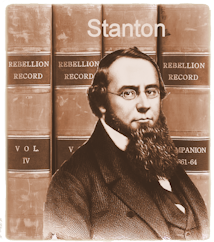
—The Secretary of War appointed Major-General Dix and Edwards Pierrepont, of New York, Special Commissioners to examine into the cases of the political prisoners still remaining in military custody, and to determine whether, in view of the public safety and the existing rebellion, they should be discharged, remain in military custody, or bo remitted to the civil tribunals for trial. The examination to be ex parte and summary, and at such times and places as the Commissioners should direct.

—Martial law was, by a proclamation of Jefferson Davis, declared to be extended over the cities of Norfolk and Portsmouth, Va., and the surrounding country to the distance of ten miles from said cities. The writ of habeas corpus was also declared suspended within these limits.— (Doc. 67.)