Following the American Civil War Sesquicentennial with day by day writings of the time, currently 1863.

The American Civil War

Jan. 26. Quite a number of boats have been hauled off, and are now lying in the sound. They are still at work on the Eastern Queen, which seems to be as firmly imbedded in the sand as were her timbers in the soil in which they grew. The steamer Louisiana, with the 6th New Hampshire aboard, lies high and dry on the shoal, and it will be a job to get her off, but I reckon she will have to come, or come to pieces. When half a dozen big steamers get hold they make a pretty strong team, and something has got to come or break. I learn she is hogged, whatever that is. I shouldn’t be surprised if she was, if she has been well supplied with this gull bait they call pork.

We had religious services this morning and afternoon, the first we have had since leaving Annapolis. We had excellent singing, and the chaplain’s remarks were well timed and to the point. He recounted the dangers and troubles, which under the blessing of God, we have been brought through, and spoke words of cheer and comfort for the future.

Sunday, [January] 26.— A lovely winter day, frozen in the morning, warm and thawing before noon. Inspected with Adjutant Avery the quarters; creditably clean. Feel happy today; fine weather, good health, the probable victory over Zollicoffer, the prospect — this chiefly — by next Sunday of seeing my darling Lucy and the boys — “all the boys.”

A pleasant trip with Lieutenants Avery and Ellen and two riflemen of Company B to Long Point, with its romantic views of New River. The only dash to this pleasure is the report that my friend Bob McCook is seriously wounded. Later, not seriously only gloriously wounded. Good! He and I were friends before the war and more intimately since. His regiment and ours also fraternized very cordially — Yankees and Germans. Sperry went to Raleigh last night with Company B.

Winchester, January 26, 1862.

We left Romney on Thursday, and after three days we reached, on yesterday evening, our present encampment, two miles from Winchester. To-day I received your grumbling letter of 21st, in which you were bitter over my bad usage in being refused a furlough. The only matter of surprise with me is that I ever lost my temper about it, as I came to the conclusion long ago that there was no use in grumbling about anything in the army, and it was always best to bear in patience whatever happens us, with a becoming sense of gratitude that it is no worse. I think we shall remain at rest here until spring, no one being more thoroughly disgusted with a winter campaign than Jackson himself from the fruits of our expedition to Romney. Echols’ furlough expires nine days hence, and then, I think, I may safely promise myself the happiness of a visit home to enjoy for a while the loved society of wife and little ones, from whom I have been so long separated. For a while only, Love, as my duty will require me to leave you soon again. I wish to pursue such a course as will give me hereafter a good opinion of myself and the good opinion of my neighbors, and neither is to be won by shrinking from the dangers and hardships of a soldier’s life when the safety of his country requires him to endure them. But for this, the titles and applause to be won by gallantry upon the field could never tempt me from home. Would you have me return there the subject of such conversation as has been freely lavished upon those who remained behind and others who turned their backs on country and comrades? I think not.

I don’t think, Love, you would know me if you could see me just now. I think I am dirtier than I ever was before, and may be lousy besides. I have not changed clothes for two weeks, and my pants have a hole in each leg nearly big enough for a dog to creep through. I have been promising myself the luxury of soap and water all over and a change of clothes to-day, but the wind blows so hard and cold I really think I should freeze in the operation. I am afraid the dirt is striking in, as I am somewhat afflicted with the baby’s complaint—a pain under the apron. I am not much afraid of it, however, as I succeeded in getting down a good dinner, which with me is generally a sign of pretty fair health. Now, Love, I will bid you good-bye, as it is very cold and uncomfortable writing, leaving the last side of my sheet unwritten.

January 26.—A force consisting of Willich’s Indiana regiment, Colonel Starkweather’s Wisconsin regiment and a company of Indiana cavalry, Captain Gaddis, made a rcconnoissance from Camp George Wood, near Munfordville, Ky., in the direction of the enemy. Willich’s regiment and the cavalry penetrated to Horse Cave, on the Louisville and Nashville Railroad, eight miles beyond Green River. Colonel Starkweather’s regiment was placed in reserve about four miles out. Willich learned that Hindman had recently advanced with his brigade and had encamped only three miles beyond Horse Cave. The railroad track was destroyed in places up to and within five miles of the national camp, and the turnpike was blocked up by trees which the rebels had felled across the road for a distance of four miles this side of Horse Cave. Several reservoirs of water, which they passed, filled the air for some distance around with stench arising from the decaying cattle and hogs the rebels had thrown into them.— Cincinnati Gazette, January 31.

—This day was celebrated at New-Orleans as the anniversary of the secession of Louisiana from the United States. A parade of about fifteen thousand men took place, after which the Governor and principal officers partook of a collation at the St. Charles’ Hotel; the great sentiment of the occasion being the Independence of Louisiana.— New-Orleans Picayune, January 27.

—At St Louis, Mo., General Halleck issued a special order directing the President, and other officers of the St Louis Mercantile Association and the Chamber of Commerce, to take the oath of allegiance prescribed by law. In case of failure to do so for the space of ten days, the officer so failing shall be deemed to have resigned; and if he attempts to exercise the functions of his office, he shall be arrested for contempt and punished according to the laws of war.—(Doc. 20.)

—The Southern expedition left Port Royal, S. C, and consisted of all the light-draft steamers, light gunboats, and eight thousand troops. The object supposed to be an attack on Savannah, commencing with Fort Pulaski.

—Official despatches received at St. Louis, Mo., from the expedition sent from Cape Girardeau to Benton and Bloomfield. It captured Lieutenant-Colonel Farmer and eleven other officers and sixty-eight privates, with a quantity of arms, horses, saddles, etc. Most of the rebel officers were surprised and captured in a ballroom.—General Halleck’s Despatch.

Saturday, January 25. — Snow thawing into the deepest mud and slush imaginable. Thawed into water; sky cleared off; a drying wind and a pleasant evening. Examined the eighteen prisoners; generally gave me truthful answers; a queer lot of people.

Yesterday had pictures taken — Avery, Sperry, Adjutant Bottsford, Thomas (our colored man), and Gray, the Scotch veteran orderly, at dinner table and fencing. Great news of a victory at Cumberland Gap. I hope it is true.

Satturday Jan’y 25/62

Weather more favorable today, a cool fine air, but plenty of mud in the streets. No news worth mentioning. The news papers are dull for want of some new sensation. Got set of chairs, one bedstead, mattress & Rocker today. Cane seats are the best I can afford for my parlor. Went to market and to Adamss for groceries & staid at home the rest of the evening.

______

The three diary manuscript volumes, Washington during the Civil War: The Diary of Horatio Nelson Taft, 1861-1865, are available online at The Library of Congress.

Jan. 25. The storm is at last over, for to-day at least. It has cleared off warm and pleasant, and is the first bright day since we came here. Business is brisk to-day; all is bustle and hurry. There is quite a change of scene, the boats’ decks are covered with soldiers, shouting and cheering each other; the bands are all out playing, and altogether it is quite a contrast to the miserable life we have been living. Our attention is taken up watching the operations going on in the harbor, among the shipping. Steamers are being towed across the swash into the sound, and steamers and tugs are at work straining every nerve to pull off the boats that are ashore. It makes fun for the boys watching them pull. Five or six steamers and tugs are at work trying to pull off the Eastern Queen, on which are the 4th Rhode Island boys, and when they all pull together it seems as though they would pull her in two. Sometimes she seems to start a little, and then stick again; the boats will give a steady pull for an hour before she will start again. Occasionally a big cable will break, and it is fun to watch the agility of the boys, dodging the recoil of the cable ends.

The big steamer Northerner attempted to cross the sound at flood tide this morning, and stuck in the middle. She carries the 21st Massachusetts, and I think they will have to be taken off before she can get across. A number of boats and tugs are at work, trying to pull her across. If the Northerner sticks, going across at high water, how we are to cross is a problem yet to be solved, as the New York draws six inches more water than the Northerner.

Sick Horses.

The horses do not appear to stand hardships and privations as well as the men. On short feed, condensed sea water, with no exercise, they grow sick and debilitated. A schooner is lying but a short distance from us, with a deck-load of horses, belonging to a Rhode Island battery, and they are jumping them overboard, and swimming them ashore. It is curious to observe the horses as they are led up to the gangway; to see them brace themselves back and shudder to take the fearful leap. But a little encouragement from half a dozen men in their rear pushing them, over they go, and as they come up out of the water, they shake their heads and snort, and put for the nearest land, where they are rubbed dry, blanketed and led off up the island.

Across the Swash.

The Northerner has crossed into the sound, and anchored. As she got off and moved into the sound, cheer after cheer went up from all the fleet, the bands playing and all having a big time generally.

January 25. — William H. Seward, Secretary of State, issued an order to the Marshal of the District of Columbia, directing him “not to receive into custody any persons claimed to be held to service or labor within the District, or elsewhere, and not charged with any crime or misdemeanor, unless upon arrest or commitment, pursuant to law, as fugitives from such service or labor:” and “not to retain any such fugitives in custody beyond a period of thirty days from their arrest and commitment, unless by special order of competent civil authority.” The order was to be enforced ten days after its publication, and had no relation to arrests made by military authority.—(Doc. 19.)

—The Twentieth regiment of Kentucky Volunteers, under the command of Colonel Sanders D. Bruce, left Camp Wallace, for the seat of war. —Louisville Journal, January 25.

— The Eighth regiment of New-Hampshire Volunteers, under the command of Colonel Fearing, left Manchester for the seat of war.

— Governor Pierpont declared all the civil offices, on the Eastern shore of Virginia, vacant, and the Commanding General of the Federal forces, stationed on the Peninsula, issued a proclamation requesting the people to elect others.— National Intelligencer, January 25.

—The Wisconsin First Battery, Captain J. F. Foster, and the Wisconsin Third Battery, Captain Drury, arrived at Louisville, Ky. The batteries number three hundred men and twelve guns, and are splendidly equipped. The guns are six pounders, and twelve-pounder howitzers. Some of the members were armed with rifled yagers — saber bayonets.—Louisville Journal, Jan. 27.

—The Petersburgh, Express, of this date, contains the following: “An order, signed by John Withers, Assistant Adjutant General, has issued from the Inspector General’s office, at Richmond, Va. The two hundred and fifty Confederate States troops, ten officers, and two hundred and forty non-commissioned officers and privates, who were captured by the United States troops at Hatteras, N. C, subsequently released from Fort Warren, Boston harbor, and released on parole by General Wool, United States Army, are hereby released from said parole, and will immediately report for duty with their respective companies, General Wool having acknowledged, in exchange, the receipt of a like number of United States prisoners, sent to Fortress Monroe, Va., by the Confederate Government.

—The Fifty-fifth regiment of Illinois volunteers, under the command of Colonel M. M. Baine, arrived at Cairo, Ill., en route for the seat of war. — Cincinnati Gazette, January 27.
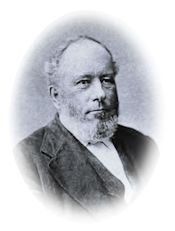
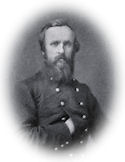
London, January 24, 1862

The Trent case has not blown hard enough to carry me away from my post of duty here. But it is not quite calm for all that. The rebel emissaries and their sympathisers are continually at work puffing up grievances and straining out falsehoods, and they find multitudes of not unwilling ears. One day it is the barbarism of savage blockade by filling up harbors; the next, it is the wretched pretence of paper blockade, respected by nobody. All this shows the eagerness to clutch at some pretext for interference. The expedition to Mexico is taking extraordinary proportions just now, which may not be without its significance under possible contingencies. Political matters being a little dull on this side, it would seem as if people would like to take a hand in the quarrel in America. I do not wish harm to any body, but if the Austrians and the Italians should fall to belaboring each other a bit just at this moment, so as to turn the public attention from our continent, I do not know that I should regard it as wholly a misfortune. . . .

Friday, Jan. 24, 1862. (On steamboat W., Mississippi River.)—With a changed name I open you once more, my journal. It was a sad time to wed, when one knew not how long the expected conscription would spare the bridegroom. The women-folk knew how to sympathize with a girl expected to prepare for her wedding in three days, in a blockaded city, and about to go far from any base of supplies. They all rallied round me with tokens of love and consideration, and sewed, shopped, mended, and packed, as if sewing soldier clothes. They decked the whole house and the church with flowers. Music breathed, wine sparkled, friends came and went. It seemed a dream, and comes up now and again out of the afternoon sunshine where I sit on deck. The steamboat slowly plows its way through lumps of floating ice,—a novel sight to me,—and I look forward wondering whether the new people I shall meet will be as fierce about the war as those in New Orleans. That past is to be all forgiven and forgotten; I understood thus the kindly acts that sought to brighten the threshold of a new life.

______

Note: To protect Mrs. Miller’s job as a teacher in New Orleans, the diary was published anonymously, edited by G. W. Cable, names were changed and initials were often used instead of full names — and even the initials differed from the real person’s initials.