
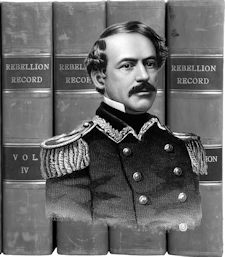
JANUARY 24TH.-Beauregard has been ordered to the West. I knew the doom was upon him! But he will make his mark even at Columbus, though the place seems to me to be altogether untenable and of no practicable importance, since the enemy may attack both in front and rear. It would seem that some of the jealous functionaries would submit to any misfortune which would destroy Beauregard’s popularity. But these are exceptions: they are few and far between, thank Heaven!
The American Civil War
January 24.—A large meeting was held at the St. Charles’ Hotel, in New Orleans, La., for the purpose of expressing regret at the death of General Zollicoffer. Colonel Andrew Erwin was called to the chair, and Mr. H. L. Goodrich requested to act as Secretary. On motion, the Chairman appointed the following Committee, to draft resolutions: Colonel J. G. Pickett, Major-General Lovell, Brigadier-General Ruggles, Commodore Hollins, W. A. Johnson, A. L. Davis, W. J. Barry, Alexander Fall, D. M. Hildreth, M. Hilcher, and J. C. Goodrich; which reported the following resolutions:
Resolved, That we have received the intelligence of the death of General Felix K. Zollicoffer, with feelings of the profoundest sorrow, and lament his untimely end as an irreparable loss to the cause for which he heroically gave his life. In private life, or in discharging public duties, we always found him an incorruptible patriot. Cool and collected amidst troubles, he was unfaltering in the execution of his purposes. No man, since General Andrew Jackson, enjoyed, so completely, the confidence and undivided esteem of the people of Tennessee.
Resolved, That we mourn his death as a great public loss, which is only relieved by the recollection that he fell fighting bravely at the head of his column, against the invaders of his country.
—The Second Maryland regiment, under the command of Colonel John Sommer, who have been encamped some time at Pikesville, Baltimore county, arrived at Annapolis, about four o’clock yesterday afternoon, in the steamer Columbia, and marched immediately to the Naval School, where they took up their quarters. The regiment presented quite a fine appearance as they marched through the streets, and looked as if they were glad of the prospect of more active duties. — The Forty-seventh Pennsylvania regiment, Colonel T. C. Goode, also arrived about ten o’clock last evening, from Washington, in a special train, and took quarters in the Naval School.
—The Union light-boat, stationed near the Middle Ground, at the mouth of the Chesapeake, went ashore at the Pleasure House beach, near Cape Henry, and, with its crew, consisting of seven men, was captured by the rebels.
—Two rebel vessels, with valuable cargoes of cotton, attempted to run the blockade, off Pass à l’Outre, at the mouth of the Mississippi, this morning, but having got aground, were set on fire, and burned to the water’s edge.
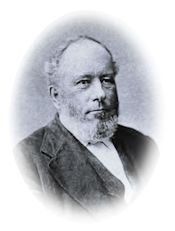
Jan. 23. Another great storm. The wind is blowing a gale and the sea is dashing, foaming and threatening everything with destruction. The camps on shore are flooded, the soldiers driven into the fort or up the island; more vessels ashore and the fleet going to the devil. A great many of the men are beginning to despond, and in fact the success of the expedition begins to look gloomy enough. Nothing but hardship and disaster has attended us since we left Fortress Monroe, and God only knows when it will end. Almost any other man but Gen. Burnside would be ready to give it up as a failure; but he is everywhere to be seen, looking cheerful and confident, and encouraging his men. He is a man of indomitable energy, perseverance and courage. He knows no such word as fail, and is bound to overcome all obstacles and dangers.
If the general, by the blessing of God, gets the expedition out of this scrape, and is successful where he strikes, it will give him great prestige, and he will be thought competent for any command. Our engine is slowly working, helping the anchor cable, and Mr. Mulligan says if the other boats will stick to their mudhooks and keep clear of us we shall ride it out all safe. I really hope they will for I am tired of these cathead drills. I have always had rather of a desire for a sea voyage, but I am willing to confess that that wish is fully gratified. This being “rocked in the cradle of the deep” sounds all very pretty in song and romance, but the romance is played out with me, and I think the person who wrote the song, “A Life on the Ocean Wave,” must have been a proper subject for a lunatic asylum.
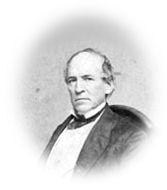
Thursday 23d 1862
In the office as usual. No rain today and a little cooler, but does not freeze. Geo W Prentice was an hour in our room today, quite sociable. Thinks Schoepf did the fighting at “Somerset” whether he gets the credit of it or not, and I think so too. I must call upon Mis Schoepf tomorrow. A Senatorial Committee visited the rooms of the Land office today, in company with the Comr. I have spent the evening at home. Put a stove in Julias room, fixed a lock for Buds Box, and put a lock on a cupboard door for the better preservation of the barrel of apples. They will undoubtedly keep better under lock and key with three boys about the house. Troops are moveing about in the mud and Expeditions are now on the move in all directions and “Secesh” is getting into a “tight place.” A great deal is expected of the force now in the field the month to come, and I think that a great deal will be done towards quelling this infernal rebellion.
______
The three diary manuscript volumes, Washington during the Civil War: The Diary of Horatio Nelson Taft, 1861-1865, are available online at The Library of Congress.
JANUARY 23D.—Again the Northern papers give the most extravagant numbers to our army in Kentucky. Some estimates are as high as 150,000. I know, and Mr. Benjamin knows, that Gen. Johnston has not exceeding 29,000 effective men. And the Secretary knows that Gen. J. has given him timely notice of the inadequacy of his force to hold the position at Bowling Green. The Yankees are well aware of our weakness, but they intend to claim the astounding feat of routing 150,000 men with 100,000! And they suppose that by giving us credit for such a vast army, we shall not deem it necessary to send reinforcements. Well, reinforcements are not sent.
January 23.—The rebel steamer Calhoun was captured off the Southwest Pass of the Mississippi River. Previous to leaving her the rebels set her on fire, which was with difficulty extinguished.—Philadelphia Ledger.
—A force of one hundred rebel cavalry entered Blandville, Ky., and carried off the books and records of the county. The captain of the band made a speech to the inhabitants, in which he said that the rebel citizens who shall or have suffered from the incursions of a Union army, shall be reimbursed by levies upon Union men.
—Several of the Secessionists of St. Louis, Mo., who were assessed for the benefit of the southwestern fugitives, by order of Major-General Halleck, having failed to pay their assessments, their property has been seized under an execution to satisfy the assessment, with twenty-five per cent additional, according to General Order No. 24.
To-day Samuel Engler, a prominent merchant, and one of these assessed, had a writ of replevin served on the Provost-Marshal, for the property seized from him, whereupon he and his attorney, Nathaniel Cox, were arrested and lodged in the military prison.
General Halleck issued a special order, directing the Provost-Marshal General to send Mr. Engler beyond the lines of the Department of Missouri, and to notify him not to return without permission from the commanding General, under the penalty of being punished according to the laws of war.
General Halleck adds: Martial law having been declared in this city by authority of the President of the United States, all the civil authorities, of whatever name or office, are hereby notified that any attempt on their part to interfere with the execution of any order from these headquarters, or impede, molest, or trouble any officer duly appointed to carry such order into effect, will be regarded as a military offence and punished accordingly.
The Provost-Marshal General will arrest each and every person, of whatever rank or office, who attempts in any way to prevent or interfere with the execution of any order issued from these headquarters. He will call upon the commanding officer of the Department of St Louis for any military assistance he may require.
—The second stone-fleet was sunk in Maffit’s Channel, Charleston, S. C, harbor.
Hunting a Channel.
Jan. 22. The light-draught boats are engaged in finding and making a channel across the bar, or swash as it is called, of sufficient depth of water to enable the large steamers to cross into the sound. One great trouble about that is if they find one today it will all be filled up tomorrow We shall have to wait till calmer weather before we can cross.
Rations.
A schooner came alongside today and left us rations of steamed pork, hardtack and condensed sea water. This was a very timely arrival as we have been very short of water for two or three days and pretty much everything else. Rattlesnake pork will taste pretty good again after a few days’ fast. Condensed sea water is rather a disagreeable beverage, but still is a little ahead of no water at all. I think, however, it might be made palatable by adding about nine parts whiskey to one of water. This water and pork is all manufactured here on the spot. They have a sort of rendering establishment where they make it, but I cannot believe that the pork would take a premium in any fair in the country unless it was for meanness.
A Ripple of Excitement.
Another rebel steamer came down the sound to-day to take a look at us and see how we are getting along. One of our boats gave chase and I reckon got a shot at her, as we heard reports of artillery. Those fellows are just smart enough to keep out of our way; I hope they will always be so. I have no great desire to shoot the cusses, but still if they get in my way, and I think they ought to be shot, I suppose I shall do it.
The theatre up in the saloon is a great success. They have just got out a new play, a kind of burlesque, entitled the Rasper Brothers, and large posters are sent over the boat announcing the unprecedented success of the Rasper Brothers; playing nightly to crowded houses and hundreds turned away; none should fail of witnessing this highly moral drama.
Old Dan.
Old Dan is having a terrible fit of the blues. He cannot understand why we were sent to this God-forsaken place. I tell him that God has not forsaken it but has sent us here to save it; and Dan, with a big oath, swore that it was not worth saving. I said to him: “You are seeing it at its worst. This is a famous watering-place; a great summer resort.” He thinks it might do first rate for a watering place; but cannot conceive of anyone who would want to resort here. He thinks the greatest mistake he has made in this whole business was in not running away as I advised him to, while at Annapolis.
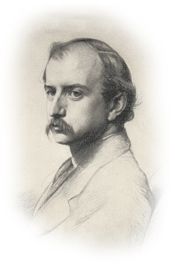
London, January 22, 1862
For life here is by no means what it is cracked up to be. The Trent business coming first destroyed all our country visits, for people have given up inviting us, on the just supposition that we would n’t care to go into society now. The small list of friends that we have are not always so American as one would like. So we generally dodge “exposure” as much as possible. But I am personally flabbergasted by the explosion of my Manchester bomb, or more properly, the return of the boomerang which has made me too notorious to be pleasant. The Times gently skinned me and the Examiner scalped me with considerable savageness. For myself I care about as much for the Times or the Examiner as I do for the Pekin Gazette; but, unfortunately, the American Minister in London is at this time an object of considerable prominence; an eyesore to an influential and somewhat unscrupulous portion of the community. Accordingly I form a convenient head to punch when people feel vicious and pugnacious. I have, therefore, to change the metaphor, found it necessary to take in every spare inch of canvas and to run (on a lee-shore) under double-close-reefed mizzen to’ gallant skysails, before a tremendous gale. In other words I have made myself as little an object of attack as possible. This reduces my means of usefulness to almost nothing and I might just as well be anywhere as here, except that I can’t leave the parent birds thus afloat on the raging tide.
We are sometimes anxious still and are likely to be more so. The truth is, we are now in a corner. There is but one way out of it and that is by a decisive victory. If there’s not a great success, and a success followed up, within six weeks, we may better give up the game than blunder any more over it. These nations, France probably first, will raise the blockade.
Such is the fact of our position. I am ready for it anyway, but I do say now that McClellan must do something within six weeks or we are done. This war has lasted long enough, to my mind.
There is precious little to tell you about here. France has again renewed her proposal to raise the blockade and there has been a discussion, or a battle about it. Prince Albert was strongly for peace with us, and now that he is dead it is understood that the Queen continues to favor his policy. Besides her, the King of Belgium has come over and is pressing earnestly for peace. His great object always is to counteract French influence when it points to war. We have a majority (probably) in the Cabinet of neutrality men, nor do I know whom to call the leader of the war-party in the Ministry. You must not misunderstand Palmerston. He means disunion, but not war unless under special influences.
We gave a dinner last week to Bishop Mcllvaine, and I went with mamma another day to breakfast with Mr. Senior. Met there the chief man of the Times, Lowe. He never speaks to any of us, and I certainly should n’t care to seem to make up to him. . . .

January, ‘62.
To-day we are going out to look up some nurses for Will Winthrop’s regiment, and then to the Senate. I forgot to tell you a pretty story we heard the other day from Mrs. Gibbons, our Quaker lady friend. She is a very sweet, kind old lady, and she and her daughter have been out at Fall’s Church getting the hospital there into working order, and showing them how to nurse and cook for the sick, and, thanks to them, one poor fellow who was dying was nursed back into the right road and is now nearly well enough to go home with his father, who, meantime, had been sent for. He, a plain well-to-do farmer from Western New York, was so overcome with gratitude to Mrs. G. and her daughter, that he entreated the young girl to go home with him and be his daughter! “He would do all in the world for her and she should be an equal sharer with his son in the farm of 300 acres,” and it was said (Mrs. Gibbons told us) in the most delicate, genuine way, without any allusion to the young Lieutenant and probably without the least idea of “making a match.” Of course the young girl declined, and then he went to the mother to ask if she hadn’t other daughters like herself for whom he could do something to show his gratitude. Isn’t it like some old ballad? . . .
The management of the jail was before the Senate yesterday and we heard the discussion, and left just before the bill was passed, requiring the release of all persons not committed for crime, which means, principally, the contrabands. Mr. Grimes, the chairman of the Committee on District affairs, abused Marshal Lamon roundly for his bad management and his insolent exclusion of congressmen from one of the institutions which it is their duty to supervise. Georgeanna sent Senator Dixon a note asking if, while the subject is before Congress, something can’t be done about separating children committed for petty crimes, from hardened criminals. . . . There ought to be a reformatory school attached to every jail.
January 22. — The Memphis Argus of this date holds the following language: “We are every day called upon to record the farcical freaks of Federal legislation, that transpire in the Lincoln Congress, as a part of the extraordinary history of the times. The bills proposing the indiscriminate confiscation of Southern property, and the disfranchisement of Southern citizens, have been already alluded to by us as measures of atrocity such as no truly civilized and Christian nation could endorse. We notice from the late Northern papers, that this pretended right of legislation for the Confederate States is still claimed by the Washington Parliament, and that we are to have a happy exemplification of it in a bill which one Mr. Hutchins, of Ohio, has announced that he will soon introduce into the lower house of that august body.
“This measure very humanely proposes that the enlightened and Christian North shall assume complete control over the ignorant and barbarous South, reducing all her States to the condition of a territorial or provincial government, and then immediately abolish slavery within their limits. This is another specimen of that wild and ferocious fanaticism which has seized on the Northern mind since the war began—a fanaticism which neither thinks, nor hears, nor sees, but feels, and raves, and burns. If Congress passes the measure, which is a more violent form of the bill introduced by Senator Baker, last fall, in the upper house of that body, the world may well regard it as an imitation of the vile and unmitigated iron despotism which Russia once maintained over Poland, and Austria over Hungary. But, happily for the South, the issue is not now one of legislation, but of the sword—not one of the ballot, but of the bayonet The more violent and ultra the measures introduced into the Lincoln Congress, the deeper the gulf between the Northern and Southern people for all future time.”
—The Ninth German regiment, Wisconsin Volunteers, commanded by Colonel Solomon, who so greatly distinguished himself under General Sigel at Springfield, Mo., left Milwaukee to-day for Fort Leavenworth, well armed and equipped.
—A Proclamation was issued to-day at Hatteras, N. C, by Marble Nash Taylor, loyal Provisional Governor of North-Carolina, congratulating the people of his State upon their deliverance from rebel thraldom by the “invincible arms of the Republic,” He calls upon all well-disposed persons to cooperate with this friendly army in restoring to their commonwealth the “ancient and inalienable rights” so recently lost. For this purpose, he announces the establishment of a Provisional Government for North Carolina, and appoints the 22d of February, an anniversary so sacred, as the day on which the ordinances of the Convention of November 18, 1861, will be submitted to the people for ratification or rejection. In order, also, that the State may resume her participation in the councils of the Union, he directs that, “upon the same day aforesaid, the polls be opened for the election of representatives in the Congress of the United States to fill existing vacancies.”—(Doc. 18.)


