Following the American Civil War Sesquicentennial with day by day writings of the time, currently 1863.

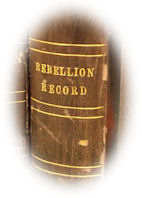
The Rebellion Record—A Diary of American Events; by Frank Moore

—The Virginia Convention passed an ordinance to provide against the sacrifice of property, and to suspend proceedings in certain cases. It is to apply only to debts due non-residents, and not to those due the State. The ordinance is to remain in force until repealed or changed by the Convention or the General Assembly; and if not so repealed or changed, is to expire at the end of thirty days after the first day of the General Assembly.— National Intelligencer, May 7.

—The school-teachers of Boston, Mass., relinquished the following proportion of their salaries during the continuance of the national troubles:

Superintendent of Schools and Masters of Latin, English High and Girls’ High and Nora—25 per cent.

Masters of Grammar Schools and Sub-masters of Latin and English High Schools—15 per cent.

Sub-masters of Grammar Schools and Ushers of Latin and English High Schools—12½ per cent. Ushers of the Grammar Schools—10 per cent.

The aggregate of the percentage on the salaries will amount to between $12,000 and $13,000.—N. Y. World, May 8.

—The first cannon was cast in Nashville, Tenn, last Saturday, April 27.—Charleston Mercury, May 8.

—The members of the New York Yacht Club met, and resolved to offer, through the Commodore, the services of all their yachts to the Government of the United States for any duty compatible with the qualities and dimensions of the vessels.—N. Y. Tribune, May 2.

—A. H. Stephens, Vice-President of the seceding States, arrived at Atlanta, Georgia, on his return from Virginia. He was received by a crowd of citizens, to whom he made a speech.—(Doc. 120.)

—The New Jersey Legislature met, and Gov. Olden delivered his Message, recommending a loan of $2,000,000 for war purposes, and a State tax of $100,000 per annum; the thorough arming of the State, and the raising of four regiments additional to those called for, to be held subject to the call of the Government. He also recommended that provision be made for the defence of the Southern part of the State, either by fortified posts or by an intrenched camp.—N. Y. Tribune, May 1.

—Daniel Fish, charged with selling guns to the South, was examined before the U. S. Commissioner and discharged.—N. Y. Herald, May 1.

—The First Battalion of the Third Alabama Regiment left Montgomery this morning for Virginia .—Col. Kershaw and staff, with Captains Richardson, Hasles, and McMannus’ companies of South Carolina troops arrived at Richmond, Va., this evening at 5 o’clock.—Charleston Mercury, May 1.

—General Harney is released by Governor Weber of Virginia.

The Washington City Councils passed a series of resolutions, expressing the strongest devotion to the Union, and thanking the citizen soldiery of the North now there, for coming forward so promptly at the call of the Government.—N. Y. Times, May 1.

—The Toronto (Canada) Globe of to-day, in a long article on American affairs, says that the North, by their impatience with reference to President Lincoln’s policy, ignore the stupendous and delicate task he has before him, and will drive the country to anarchy and chaos.

It advocates strengthening Mr. Lincoln’s hands, and to abstain from perplexing his councils.

The Leader, the Government organ, fears that Canada may become involved, and advocates an armed neutrality, and suggests that the Canadian Government represent to the imperial authorities the expediency of sending six or eight regiments of the line for the protection of the frontier.

—The Palmetto Guard, Marion Artillery, and German Artillery returned from Morris’ Island to Charleston, S. C. “Their brave and noble actions during the bombardment of Fort Sumter are not forgotten, we can assure them, but will ever live in grateful remembrance.”—(Doc. 121.)— Charleston News, May 1.

—A United States Armory is to be established at Rock Island, Ill., in the place of the one destroyed at Harper’s Ferry.—N. Y. Tribune, April 30.

The Twenty-Eighth Regiment N. Y. S. M., composed of the best class of Germans, and commanded by Colonel Bennett, left Brooklyn, N. Y., for the seat of war. At 11 o’clock the last farewell was said; the Regiment formed, about 800 men, and headed by Meyers’ Band and a corps of drummers and fifers, they marched through Myrtle avenue and Fulton street to Fulton Ferry, where they embarked on board the ferry-boat Nassau, and were taken direct to the steamer Star of the South, then lying at Pier No. 36 North River. The streets through which they marched were lined with enthusiastic citizens to bid the troops God speed, and from nearly every house waved the Stars and Stripes and those other inspiring signals—white handkerchiefs. The troops were everywhere cordially received. At the foot of Fulton street a few brief farewells were said, and amid the booming of cannon and the cheers of the populace, the troops took their departure.

Fifty-seven recruits for Company G, Capt. Thorne, and a number for Capt. Sprague’s Company of the Thirteenth Regiment, went with the Twenty-eighth to join their Regiment at Annapolis.—(Doc. 122.)

—A meeting of the Harvard Medical School was held in Cambridge, Mass., at which the following resolution was adopted:

Resolved, That we, the members of the Harvard Medical School, do here and now resolve ourselves into a volunteer medical corps, and as such do hereby tender our services to the Governor of this Commonwealth, to act in behalf of this State or country, in whatever capacity we may be needed.—Boston Transcript, May 1.

—Citizens of Philadelphia, representing all parties, addressed a congratulatory letter to Lieut.-General Scott.—(Doc. 123.)

—Yesterday the Louisiana Guards, and to-day the Montgomery Guards, left New Orleans for the seat of war in Virginia. The former company, previous to their departure, were presented with a beautiful flag by Mrs. A. H. Seaman at her residence.—N. O. .Delta, April 30.

—A meeting of the Bar of Suffolk scanty was held at Boston, Mass., to consider the present situation of the country, and the measures necessary, when a blow is aimed at the existance of the Government, and the supremacy of law in the country. The meeting was numerously attended. Resolutions sustaining the Federal Government were adopted, and speeches were made by Judge Thomas, B. F. Hallet, J. C. Park, and others—Boston Transcript, April 30. —William C. Rives, Senator Hunter, Judge Brockenbrough, and Messrs. Preston and Camden, have been appointed by the Richmond Convention as delegates to the Montgomery Congress from Virginia.—Montgomery (Ala.) Post, May 1.

—By order of Governor Harris of Tennessee, seventy-five thousand dollars’ worth of Tennessee bonds and five thousand dollars in cash, belonging to the United States, which were in possession of the Collector at Nashville, were seized by the State authorities. The seizure was conditional, the property to be held in trust until the Government restores the property of the State and its citizens, involved in the seizure of the steamer Hillman by troops of the Federal Government.

The steamer Hillman was seized at Cairo, by the Illinois troops, on the 26th of April, because she was laden with munitions and other articles contraband of war.—National Intelligencer, May 7.

—The Charleston Mercury of to-day contains the following:—”To His Excellency Governor Pickens.—Will you oblige the mothers, wives, and sisters of the Carolina troops, and appoint next Thursday as a day of Thanksgiving to Almighty God for the late bloodless victory.—ONE OF MANY.”

—Several companies of the Third and Fourth Regiments of Georgia passed through Augusta for the expected scene of warfare—Virginia. Sixteen well-drilled companies of volunteers and one negro company, from Nashville, Tennessee, offered their services to the Confederate States.—Charleston Mercury, April 30.

—At New Orleans, La., the steamships Texas, Tennessee, and the G. W. Hewes, the property of Charles Morgan, Esq., were taken possession of by order of Gov. Moore. Captain Warren of the steam-tug Tuscarora, who was arrested on the charge of having furnished information to the captain of the Daniel Webster, which caused him to leave this port, was released on giving bonds of two thousand dollars for his future loyal conduct. It is ascertained that the blame rests less upon him than upon the owners of the above-named steamers. —N. O. Delta, April 30.

—A military review took place at New Orleans, La. The city was one long military camp. Where the main body of troops appeared was not the only place to find the soldiers. They were in every section of the city, on the river and in the suburbs; in fact, New Orleans was completely under the control of military arms, within and around. It was one of those days that brought to memory the period of 1814. The streets, the house-tops, the windows, and balconies of every building were thronged with ladies, and at least thirty thousand persons witnessed a military pagent not equalled in this section of the South. The enthusiasm was immense, and beyond description.—(Doc. 115.)

—At Roxbury, Mass., a beautiful silk flag was presented, by the ladies of that city, to the volunteer company of Capt. Chamberlain. Hon. J. S. Sleeper presided, and the presentation address was made by Rev. Dr. George Putnam. The flag was placed in the hands of Capt. Chamberlain by a sweet little girl tastefully dressed in white, relieved by red and blue. Capt. Chamberlain knelt as he received the flag, and responded briefly in a voice choked with emotion. Capt. C.’s company stood before the platform in a hollow square, and responded with loud cheers to the patriotic sentiments which the occasion called forth.—Boston Transcript, April 30.

—Secession in Maryland was defeated by a direct vote in the House of Delegates of the State, of fifty-three against secession and thirteen for it. The State Senate published an address, signed by all its members, denying the intention of passing an ordinance of secession. —N. Y. Times, April 30.

—Ellsworth’s Fire Zouaves left New York for Annapolis, Md. They were escorted to the boat by an immense body of brother firemen and citizens.—(Doc. 116.)

—Jefferson Davis sent a message to the Congress at Montgomery to-day. While reading in Congress, the allusion to Virginia was loudly cheered. A quotation from President Lincoln’s proclamation advising the people of the South to retire to their homes within twenty days, was met with derisive laughter from the crowd in the galleries. Nearly all the members of Congress were present.— Charleston Mercury, April 30.—(Doc. 117.)

—Citizens of Weverton, Frederick Co., Maryland, in a letter to Governor Hicks, protest against the entrance of Virginia troops from Harper’s Ferry into their State.—(Doc. 118.)

—There was an interesting display of patriotism by the young ladies of Brooklyn (N. Y.) Heights Seminary. They unfurled a beautiful flag at their chapel, in Montague street, where speeches were made by Dr. West, the principal; Professor Washburne of Harvard Law School, and Rev. Dr. Storrs.

A preliminary meeting, to make arrangements for providing for the families of volunteers, was held at the Brooklyn Institute, Mayor Hall presiding. $2,500 was subscribed on the spot. Committees, composed of the most wealthy and active citizens were appointed to further the objects of the meeting.—New York Times, May 1.

—Virginia Ladies, resident in Washington, are constantly warned by their friends at home to leave that city before its inevitable destruction by the Southern arrny.—N. Y. Herald, May 1.

—A spontaneous Union meeting was held in East Baltimore, Md. 1,500 to 2,000 persons were present, and great enthusiasm was manifested. Strong Union resolutions were adopted, and the national banner was unfurled.

Regular daily communication between Baltimore and Philadelphia was fully reestablished. —N. Y. Herald, April 30.

—Up to this day seventy-one thousand volunteers offered their services to Governor Dennison, of Ohio, to fill the thirteen regiments required by the Proclamation of President Lincoln.—N: Y: Courier and Enquirer, April 30.

—The American flag was raised upon the steeple of North Dutch church at New York. Nearly every church edifice and public building in the city is decorated in the same manner.—(Doc.119.)—Commercial Advertiser, April 30.

Extract of a letter from a sergeant in the Seventy-first New York regiment to his wife.

Washington Navy-Yard,
Sunday, April 28th.

We arrived here yesterday, after a week of terrible labor and privation, but, I am happy to say, in the enjoyment of good health. Not a single case of sickness has yet come to my knowledge. We embarked on the R. R. Cuyler, with over nine hundred men; and, after a voyage of three days, without rest, without food — except in small quantity and poor quality — without good water, and with seven hundred and fifty men afflicted with the most distressing sea-sickness-we arrived at Annapolis on Wednesday, about noon.

Here I partook of the first real food I had tasted, consisting of oysters and crackers. We stayed at Annapolis, getting what rest we could, (I did not get any, as I was sergeant of the guard, and had to march on the relief every hour all night,) until two o’clock Thursday morning, when we were ordered to march for Annapolis Junction, about thirty miles distant. We got off about 4 A. M., and marched for eight hours, when we halted for two hours and were served with rations, consisting of two hard crackers only. We started again about 2 P. M., and marched six hours more till about 8 P. M., when we again halted and partook of corned beef, very little of it, and that little very tough, and a hard cracker.

The entire march was made with our muskets and heavily-laden knapsacks, through sand six or eight inches deep, and the thermometer from 75 to 80. At this spot we had an alarm, and were drawn up in hollow square with muskets loaded; but the alarm proved false. We started again at 10 P. M., and arrived at the Junction at 3 A. M., of Friday, the 26th, having marched thirty miles in about twenty-four hours, our only food being three hard crackers and a piece of tough meat. Here we were stowed away like sardines in a miserable, rickety old wooden building, which had evidently been used as a bowling-alley. We remained here (and without any food, except one pig, which was bought by our company and roasted in the woods and distributed, as far as it would go, among the men) till about 7 P. M., when we got on board the cars for Washington.

After getting comfortably seated, and, as we thought, about to start, dispatches were received that five thousand Baltimoreans, with a corps of four hundred and fifty artillerymen, were on their way to attack us. “Attention, battalion-disembark,” was the order given, and promptly obeyed by the regiment, which was drawn up in a line of battle in a field close by, and we were ordered to sleep on our arms. We remained here about three hours, when we again took the cars, (this alarm also having proved false,) and between two and three o’clock on the morning of Saturday, the 27th, we started for Wasllington, where we arrived at seven o’clock. We were marched to the City Hall, and took up our quarters in the large wooden building erected for the Inauguration ball last month.

Here we stayed till 3 P. M., when we marched to the Navy-Yard; we are quartered till to-morrow on a steamboat lying near; we then go into barracks in the Navy-Yard, and remain during our stay. Yesterday, in Washington, we had a bath and a good dinner of beefsteak and potatoes, which, after our sufferings from hunger, you will suppose was very acceptable. If I could have foreseen what I had to endure, I certainly should have made arrangements to be relieved at least from the want of food and from the knapsack. Keep up your spirits and have no apprehensions for us. We make our sacrifices cheerfully, as we know that our cause is the cause of our country, a holy cause; and that Providence smiles upon it.

Navy-Yard, Sunday, April 28, 10 1/2 A. M.

At half-past 3 o’clock yesterday afternoon we were ordered to the Navy-Yard. It is considered here a post of honor, and it is said Gen. Scott sent us here because he considered us a very hardy regiment. Our company is now quartered on a steamboat lying off the yard, till our barracks are cleaned and fixed; we shall probably get into them to-morrow.

On all our march from Annapolis we saw only forty or fifty houses, and those most miserable. We met with one Secessionist, who we asked for a pail of water for the thirsting soldiers; he replied, “I won’t give you any water, if I die for it.” We saw no more of that kind; all others whom we saw on that route seemed to be very friendly, waved their handkerchiefs, and did what they could for us; they were all destitute of provisions, the Seventh Regiment having preceded us the day before.

I have just received the most interesting intelligence—we are to have roast beef for dinner.

If my letter is perfectly wandering and disconnected, excuse it, as I am writing in a very inconvenient place, in the midst of such a noise that I can scarcely hear myself speak; small darkies crying out “Shine your boots for half a dime with the Union polish;” and soon others, “Here’s the latest news from New York—New York Herald, twenty-five cents.”

But we are all well, notwithstanding our sufferings, and we are sustained by the conviction that we are actuated by the spirit of a pure and a holy patriotism, and that our course is approved by all the good on earth, and by our Father in Heaven.

C. P. Kirkland, Jr.

—The Daylight, the first steamer direct from New York, via Potomac, reached Washington at 10 A. M. She found many lights out on the Virginia coast; and up the Chesapeake and Potomac, two light ships and many buoys destroyed by the rebels. The Daylight came without convoy; had no guns, except one howitzer, which Capt. Veile obtained from the Pocahontas, at the month of the Potomac. Capt. Veile and the 172 recruits for the New York Seventh Regiment, have the honor of the first passage up the Potomac.

—The United States frigate Constitution arrived at New York from Annapolis, Md., having had a narrow escape from seizure by the rebels.

After the secession of Virginia, the demonstrations of the rebels became so apparent that it was deemed of the greatest importance to get her out over the bar. Her crew of twenty-five men and officers had been at their quarters with shotted guns night and day for four days. Troops were drilling on the shore; signals between them were constantly made out; large parties were around the ship to find her assailable point. She had four anchors and seven chains out, when the order came to get her over the bar.

The steamer Maryland, in General Butler’s charge, came alongside; one anchor was hove up, for use, all the other chains were slipped, and the ship started at 9 A. M. drawing 20½ feet. There was then but 19 feet on the bar, and for some time it was doubtful if she would go, but by great exertion, by lighting and careening her, she was forced over. The captain, pilot, and engineers of the Maryland, which had been seized by General Butler, were very averse to do their duty, and it was only by putting them under a guard with revolvers, that they would proceed with the vessel.

After dragging her over the bar, the vessel grounded on the outer spit. About 10 P. M., information having been brought off that the channel outside the ship would be obstructed, kedges were laid out, and it was endeavored to warp the ship over the spit, part of the men being at the guns. The Maryland having been ran aground by her officers during the warping, a squall came up and drove the ship ashore again. At daylight a steam tug from Havre de Grace came in sight, and was taken to tow the ship out. She was then taken in tow by the R. R. Cuyler, and brought to New York.—N. Y. Commercial, April 29.

—The Fifth Regiment of New York State militia left New York on board the British steam transport Kedar, for Annapolis. This regiment is composed almost entirely of Germans, and is commanded by Colonel Schwartzwaelder. For some days past they have occupied 162 neat tents, precisely of the pattern furnished to the Hudson’s Bay Indians, on the bare grounds of the Battery, where thousands of people visited them, and admired the excellent order and homelike appearance of their quarters.—(Doc. 113.)—N. Y. Tribune, April 29.

Washington, April 27.

We have just arrived at Washington after a week of very hard work and quite a scarcity of provisions on the way. I am writing in our quarters in the building erected for the Inauguration ball. On Sunday, the day of our departure, we stood in Bond street with our knapsacks about five hours; the march down Broadway was therefore excessively tiresome.

Our ship, R. R. Cuyler, was a sight to behold; she was very filthy, redolent of decayed meat, bilge-water, &c. The men in two or three hours became clamorous for their rations, which, when furnished, were found to consist of two sea-biscuits and a chunk of salt pork, and the rations continued so for the remainder of the voyage. Our beds were wooden bunks in the back part of the ship. I patronized my bunk the first night, but on Monday and Tuesday nights I took to the deck. On Wednesday morning we disembarked at Annapolis, and remained there till about half-past 4 o’clock on Thursday morning, (having been roused at three,) when we started on our march for the junction, without any breakfast, and marched till eleven o’clock, making eight or nine miles.

We then had our dinner, consisting of two sea-biscuits and as much water as one could get. We started again in two hours, marching all the time with our muskets and knapsacks, and went nine or ten miles, and stopped in a large open lot, the whole regiment, about one thousand men. At one end of the lot was a large woody marsh. Just as we were about to resume our march at 7 o’clock in the evening, we heard two or three Indian whoops coming from different parts of this march. It had before been reported that we were to be attacked if we continued our march that (Thursday) evening, and this of course strengthened our suspicions. It was now beginning to grow dark, and we were formed in hollow square to resist any attack that might be made.

About nine o’clock skirmishers were sent forward, and a short time afterwards the main body again started. We had eight or nine miles to go before reaching the railroad for Washington. I forgot to say that the reason we were obliged to walk was, that the railroad track had been torn up. (It is now clear all the way through, and in possession of the Government.) My feelings were none of the pleasantest as we defiled past the thick bushes and trees on each side of the road, and in the dark; the men were silent, all expecting at any moment to hear the muskets of lurking enemies on either side of us, but there was no flinching. In this way we marched three or four miles, stopping every few minutes to listen for the bugle of our skirmishers; it took about four hours for those miles. We then came upon the camp of the Rhode Island regiment, under the lead of Gov. Sprague, and a fine noble set of men they are, generous as possible.

On hearing from us that we were lacking in rations, every man of them opened his ration-bag and gave us as much as we could carry. We left their encampment and kept on our way on the railroad track, and arrived at the Junction at four o’clock on the morning of Friday, after having marched continually for twenty-four hours, and walked twenty-eight miles. That’s what I call a forced march for one thousand men. When we left the camp of the Rhode Islanders, where they begged us to stay all night, and furnished us coffee and bread, we were induced to march on the rest of the way to the Junction by the expectation that we should there receive coffee and biscuit, and have a nice shelter for the night. When we reached there nothing of the kind was to be found; there was not a particle of any thing to be had in the place until about nine o’clock in the morning, and then it was as much as a man’s life was worth to attempt to get what there was. Imagine a thousand men in such a place, with no certainty when they could get off, there being only one engine on the road — you can conceive the state of things! We were all indignant that no better provision had been made for us by the Government, but there are many apologies for the neglect, and those who come after us will have no such suffering.

About seven o’clock Friday evening the cars from Washington came for us; the whole regiment had entered them, and were patiently waiting to be off, when we were all ordered out again and marched back to the field we came from, an eighth of a mile from the cars. There we were drawn up in martial order with two other regiments that had arrived, and we expected to camp in the field all night, but at about half-past 10 we were ordered back to the cars, and there waited until early this morning, (Saturday,) when we finally started, and arrived at Washington without accident. An expected attack from five thousand men from Baltimore, reported to be coming down with four field-pieces, was the cause of our being ordered out of the cars at the Junction.

I should have said that on the Cuyler the eating was perfectly disgusting — the junk was served out to the men from the hands of the cook. I could not touch it for two days; the third day I became reconciled to it, and now I believe myself capable of eating any thing. The scramble for water was of course terrific, after the salt junk; the water was of the dirtiest kind imaginable, filled with all sorts of specks — but I became accustomed to this also. I do not think that hereafter I shall complain about dirty water, molasses, or any thing else, that may have a few hairs, croton bugs, or any such thing in it.

At the Junction, where there was so little to eat, I determined to find something; accordingly I walked a mile to a little cottage, where I found a negro and his wife supplying some other members of my regiment with bacon, milk, hoecake, &c. I took my seat at the table with the rest, and took a dirty plate, a quarter full of fragments, left by one who had just eaten from it. I asked the negro to clean it; he evidently not understanding the meaning of the word “clean,” filled up the plate just as it was, and I, though not liking to eat what had been left by my predecessor, was too hungry to hesitate long about it.

I am going this afternoon to get cleaned up, having brushed my hair but once and washed my face but three times, and not having had my boots off night or day, since I left New York last Sunday.

—Several new military departments were created by the subdivision of the military department of Washington.—(Doc. 105.)

—The Virginia Sentinel of to-day, says, “Our people must rest quiet upon the fact that the military preparations for our defence are under the direction of shrewd, skilful, indefatigable, experienced and patriotic officers. Our commanding general, Robert E. Lee, has long been the pride of the service, and he is supported by subordinates of acknowledged capacity and large experience.

“The plans of our Government are, of course, not suitable matter of public proclamation. Our military boards keep their own counsels, as it is obviously proper they should do. The people should patriotically abstain from even the attempt to unriddle them, for the wisest plans are often baffled by disclosure, however made. Let us trust with a generous confidence those to whose hands we have committed the conduct of affairs, and prepare ourselves to sustain them with all the power of a united and courageous people.”

—Five men were arrested at the Navy-yard, at Washington, where they were employed, having been discovered filling bomb-shells with sand and sawdust., instead of the proper detonating material. They were confined in the Capitol, under guard of the Seventh Regiment. —N. Y. Times, May 1.

—The Fifth and Eighth Massachusetts Regiments arrived at Washington yesterday morning, followed immediately by the Rhode Island forces.

This morning, about six o’clock, the Seventy-first New-York marched in from Annapolis Junction. It made a magnificent appearance as it swept down the Avenue, with its full bands playing. The men looked less fatigued than those of either of the other regiments, and were warmly commended by the citizens as they passed, and by the officers and men of the other regiments who were out to witness their entrance into the city. Next to the Massachusetts men they showed the greatest capacity to endure fatigue.—(Doc.106.)—The World, May 1.

—Southerners employed in the departments at Washington resigned and left for the South, refusing to take the prescribed oath of fealty to the Constitution of the United States.—(Doc. 107.)

Winslow, Lanier & Co., of New York, offered Governor Morton of Indiana the sum of twenty-five thousand dollars for the purpose of arming and equipping the quota of volunteers from Indiana.—N. Y. Com. Advertiser, April 27.

—A number of residents of Virginia passed through Chambersburg, Pa., en route for the North. Many of them have left every thing behind, and are obliged to depend upon the charities of the people to continue their journey. All who come from as far south as Richmond, could get out of the State only by a special permit from Governor Letcher. Their statements show that a reign of terror exists in the interior of Virginia. The mob everywhere appropriate to their own use whatever they may fancy; farmers are stopped on the road, their horses taken from them under the plea that they are for the defence of the South; granaries are searched, and every thing convertible for food for either man or beast carried oft This has been practiced to such an extent that along the northern border of Virginia a reaction is taking place, and instructions are being sent from Western Maryland, to the Delegates at Annapolis, that if they vote for secession the people will hang them on their return home. The news of the unanimous sentiment of the North, the prompt and decisive action on the part of the State Governments in enlisting men, has strengthened the Union men of Western Maryland and the border counties of Virginia.—N. Y. Tribune, April 28.

—A sudden and wonderful change takes place in the sentiment of Maryland. The American flag was raised at Hagerstown, and extensive preparations are being made for further Union demonstrations.

Allegheny county has instructed its representatives that if they vote for secession, they will be hung on their return home. The Stars and Stripes are waving over Frederick City. The Home Guard refuse to parade unless its folds are displayed, and the tune of Yankee Doodle played. At the Clear Spring House the Stars and Stripes are waving, and the miners have sworn to resist secession to the death.— N. Y. Courier & Enquirer, April 28.

—The steamer O. E. Hillman, from St. Louis, bound for Nashville, was abandoned by her officers previous to reaching Cairo, Illinois. The deserted steamer was found to contain one thousand kegs of powder, and other contraband articles.

At the same place, the steamer J. D. Perry, from St. Louis to Memphis, was brought to. Nothing of a contraband character being found on board, she was allowed to proceed on her trip.—N. O. Picayune, April 30.

—A southern Rights meeting was held in Warsaw, Mo. Resolutions were unanimously adopted favoring immediate secession; requesting the Governor to repel any attempt of the Administration to march troops through Missouri for the purpose of making war on the Southern States, or to reinforce the forts and arsenals in Missouri; and complimenting the Governor for refusing to send Lincoln the quota of troops called for.—N. O. Picayune, April 30.

—S. H. Needham, a private in the Sixth Massachusetts regiment died this morning at Baltimore. He was struck on the back of the head with paving stones at the riot, having his skull fractured. He had spoken but a single word since then, which was in answer to a question whether he had a family, when he said “No.”—Boston Transcript, April 29.

—A meeting was held around the Washington Elm, at Cambridge, Mass., to give expression of the sentiments of the citizens of that vicinity upon the present troubles. John Sargent occupied the chair, and opened the meeting with a brief speech, in which he declared it to be the duty of every American to support the Government.—Boston Sat. Express, April 27.

—The “New York Ladies’ Relief Union” issued a circular suggesting “the importance of systematizing the earnest efforts now making by the women of New York for the supply of extra medical aid to the federal army, through the present campaign.”—(Doc. 108.)

—There is one strong, deep-rooted determination in Massachusetts, which seems to pervade all classes, old and young; and that is—if the country needs their services, they will stand ready to answer to the order—” Forward—march !” The young men are all desirous of going to the war, any how; and the old men are equally desirous to march, IF NECESSARY —Boston Saturday Express, April 27.

—Governor Hicks delivered a message to the Maryland Legislature. It briefly details the startling events which induced him to assemble that body.—(Doc. 109.)

—The rebel army stationed at Richmond, numbers three thousand and seventy-two men, of which about six hundred are South Carolina troops under the command of Brig.-Gen. M. L. Bonham.—Richmond Enquirer, April 27, and N. Y. Herald, April 30.

—A number of French residents of New York held a meeting this afternoon for the purpose of taking measures with reference to the present state of the country. Messrs. Fremont, Quesne, and Faidu were appointed a Committee to conduct the proceedings. M. Victor Faidu stated the object of the meeting, and proposed that it be made preliminary to a general meeting of French citizens for their proper organization to participate in the present conflict—it was their duty to support the Government of the United States in this strife between human liberty and freedom against slavery and feudal oppression. M. Fremont offered resolutions tendering the support of French citizens, to the United States, but he hoped that the government, if the contest was carried to the extreme, would guarantee the total abolition of slavery. —N. Y. Daily News, April 29.

—President Lincoln decided that the ports of Virginia and North Carolina should be included in the blockade of the Southern harbors and issued a proclamation to that effect.—(Doc. 110.)

—Edward Everett delivered an eloquent Union speech, at a flag raising in Chester Square, Boston, Mass.—(Doc. 111.)

—The Harbor Police of New York seized six sloops in the harbor, laden with powder, which, it was supposed, was intended for the use of Secessionists. On the same day, Capt. Squires, of the Fifteenth Ward Police, seized several pairs of military pantaloons at the shop of a tailor in Ridge-street, who was recently in the employ of Newbeck & Co., No. 4 Dey-street, where 1,000 uniforms intended for the South, were recently seized.—N. Y. Times, April 29.

—The reinforcement of Fort Pickens, is authoritatively announced to-day. It was accomplished on the night of Friday, April 12th, “without the firing of a gun or the spilling of one drop of blood.”—(Doc. 112.)

—Governor Brown of Georgia issued a proclamation prohibiting the payment of all debts to Northern creditors till the end of hostilities, and directing the payment of money into the State Treasury, to be refunded to depositors with interest at the end of the war.—Montgomery Weekly Post, May 1.

—The enthusiasm of the people at the West in rallying for the defence of the Union, far exceeds the expectations of the most sanguine Republicans. Throughout the entire Northwest there is a perfect unanimity of sentiment. Ten days ago, men who now cry, down with the rebels, were apologizing for the South—justifying its action, and wishing it success. Every town in Illinois is mustering soldiers, and many of the towns of five or six thousand inhabitants have two and three companies ready for action. Companies are also formed for drill, so that, in case of need, they will be prepared to march at any moment. Money is poured out freely as water, and ladies unite in making shirts, blankets, and even coats and pants for the soldiers. Arrangements have been made to take care of the families of the soldiers during their absence. All say, none shall fight the battles of their country at their own expense.— Cor. Boston Transcript, May 1.

—The steamer Daniel Webster from New York, arrived at the bar at the month of the Mississippi, and received orders to return immediately for fear of seizure. The tug boat Tuscarora came alongside, and took four passengers off. The Webster left before the others could get ashore.—N. Y. Commercial, May 1.

—A meeting of the citizens of the Seventeenth Ward, N. Y., was held, to take action in behalf of the families of volunteers from that district.

B. R. Winthrop occupied the chair. Resolutions were adopted, and speeches were made by F. A. Conkling, Chauncey Schaeffer, John Cochrane and others.—N. Y. Tribune, April 27.

—A Union meeting at Bedford, Westchester county, N. Y., this afternoon, on the occasion of raising the flag, was addressed by Senator Hall, John Jay, Rev. M. Bogg, of the Episcopal Church, Rev. Mr. Ferris, Dr. Woodcock, Dr. Shores, Mr. Hart, Captain of the Bedford company, Mr. Brown, of the Croton Falls Company, and others.—N. Y. Times, April 27.

—John W. Ellis, governor of North Carolina, issued a proclamation calling an extra session of the General Assembly of the State, and deprecating the proclamation of President Lincoln asking for troops.—(Doc. 108.)

—The bridges over Gunpowder River on the Philadelphia, Wilmington and Baltimore Railroad were burned by the rebels of Baltimore. The bridge over Bush River, on the same route, was destroyed last evening about sundown.—N. Y. Herald, April 28.

—The Baltimore Sun of to-day, has a leader which seems to indicate that the conservative influence is gaining ground in that city. It emphatically declares that it is not a secession paper. It says that the passage of an ordinance of secession by the Legislature would be an arrogation of power not vested in it. It favors calling a State Convention, the delegates to be elected directly from the people. It denies the stories of violence to Union men at Baltimore. There is a great feeling among business men of the city for the re-establishment of trade, and silent conservatism is changing gradually to open Unionism—N. Y. Times, April 27.

—A large meeting of the ladies of Syracuse, N. Y., was held, to organize for providing supplies for the volunteers. Mrs. E. W. Leavenworth was made president, Mrs. H. W. Chittenden, vice-president, and Mrs. J. B. Burnet, treasurer.

The Common Council of Buffalo, N. Y., yesterday appropriated $85,000 to equip the Sixty-fifth and Seventy-fourth Regiments.—N. Y. Times, April 27.

—The Seventh Regiment of New York took the oath to support the Constitution of the United States, at the War Department, in Washington; not a man flinched; the scene was most impressive.

—Moses Herrick of the Beverly Company, Eighth Massachusetts Regiment, met with an accident by the discharge of a gun.—N. Y. Tribune, April 29.

—The Federal Government is taking most energetic measures to carry out the blockade of the ports of the seceded States. All the available war vessels are put into service. Mercantile steamers are also taken up, and such as are not used for purposes of transportation are being fitted out as gunboats, to cruise off the coast and run up shallow waters.—N. Y. Herald, April 27.

—William Burton, governor of Delaware, issued a proclamation calling out volunteers to defend the Union.—(Doc. 104.)

—A meeting of the ladies of the congregation of Trinity church, and of St. Paul’s, St. John’s, and Trinity chapels, in New York, to the number of about one hundred and fifty, took place in the Sunday-school room, of St. John’s chapel, for the purpose of providing articles for the hospitals and the use of the United States Army. —N. Y. Courier & Enquirer, April 27.

—The steam-tug Yankee, armed with two heavy guns, left New York to join the blockade of the Southern ports.—N. Y. Commercial Advertiser, April 27.

—Colonel Van Dorn of the State troops of Texas captured four hundred and fifty United States troops at Saluria.—(Doc. 98.)

—Fort Smith, Arkansas, taken possession of by the State troops. About 12 o’clock at night a volunteer force of nearly three hundred men, under the command of Col. Solon Borland, landed at the wharf, when the post was formally surrendered by Capt. A. Montgomery to Gen. E Burgvein, Adjutant-General of the State, who placed Col. Borland in charge. About an hoar before their arrival Capt. Sturgis left with his command, consisting of two cavalry companies. He took away the horses belonging to his command, and such supplies as he could transport. He is falling back on Fort Washita.

Capt. Montgomery and Major Gatlin were taken prisoners, and afterward released on parole. The Confederate flag was raised on the fort at 12 o’clock, amid the firing of cannon and the cheers of the people. After the review three cheers were given for the Arkansas citizen soldiery, three cheers for Jeff. Davis, and three cheers for Gov. H. M. Rector. The stock and property taken possession of is estimated to be of the value of $300,000.—N. Y. Tribune, April 26.

—The Steam Transport Empire City, from Texas, arrived at New York, having on board the Third Regiment of Infantry and the Second Regiment of Cavalry, U. S. A., numbering six hundred men.—N. Y. Herald, April 26.

—An enthusiastic meeting of the British residents of the city was held at New York. Speeches were made by S. M. Saunders, (the President,) Colonel Shepherd, Rev. H. N. Hudson, C. C. Leigh, and others.—Idem.

—A deputation of twenty Indians, headed by White Cloud, in behalf of the Sioux and Chippeways, arrived in New York. They tender to the United States, in behalf of themselves and 800 other warriors, their services against rebellion. Having heard that the Cherokees had sided with the rebels, they could not remain neutral, and, with a promptness worthy of imitation in high quarters, have come to offer their services in defense of the Government. They ask to be armed and led.

White Cloud is the interpreter of the Sioux, and is a man of intelligence and true patriotic ardor. He visited the Quartermaster’s Department to-day, and addressed the soldiers being inspected there. He says, the men on the way are all good warriors, ranging from 18 to 40 years of age.—N. Y. Tribune, April 26.

—George Law addressed a letter to the President of the United States, demanding of Government the opening of lines of communication between Washington and the North.—(Doc. 99.)

—Governor Yates, in a special message to the Legislature of that State, gives the reasons that induced the armed occupation of Cairo city. He says, “That the transfer of part of the volunteer forces of this State to the city of Cairo was made in compliance with an order of the War Department, directing a force to be stationed at Cairo. Simultaneously with the receipt of the order, reliable information reached me of the existence of a conspiracy by disaffected persons in other states to seize upon Cairo and the southern portion of the Illinois Central Railroad, and cut off communication with the interior of the State. It was my desire that the honor of this service should have been given to the patriotic citizens of the counties in the immediate vicinity. But as these were not at that time organized and armed for patriotic duty, and the necessity for speedy action was imperative, the requisition was filled from companies previously tendered from other portions of the State.”—N. Y. Evening Post, April 29.

—The Gulf City Guards, of Mobile, Ala., Capt. Hartwell, left that place for Virginia. The Register says:—This is a fine and gallant company, of the flower of Mobile. Verily has Mobile contributed 400 of her best and most chivalrous youth in the four companies that have gone North, and yet the demand for marching orders has not abated in the least. Companies are offering their services and others are forming. Mobile has 4,500 fighting men. We have about 1,000 in the field, and the balance are ready to march. About 5 o’clock, the Guards moved from the armory, and marched up Royal to Dauphin, and down Dauphin to the steamer Selma, on board of which boat they took passage to Montgomery. —N. O. Picayune, April 28.

—General Harney, on his way to Washington, was arrested by the Virginia authorities at Harper’s Ferry. He left Wheeling, Va., for the purpose of reporting himself at headquarters at Washington. Before the train reached Harper’s Ferry it was stopped, and a number of troops mounted the platforms; whilst the train was moving slowly on, the troops passed through the cars, and the General being pointed out, he was immediately taken into custody.—N. Y. Times, April, 28.

—The Illinois troops struck a great blow at the secessionists of Missouri. Acting under orders from the President of the United States, an expedition of Illinois volunteers visited St. Loris, advanced upon the Federal Arsenal at that place, and brought away immense stores of artillery, ammunition, and small arms, which had been stored at that post by the Government.

The amount of Federal property thus secured from the hands of the Secessionists of Missouri is of great value. Among the articles recovered were 21,000 stand of small arms and a park of artillery. There was no fighting. The Illinois boys declare, in true Western style, that the “Secessionists are euchred.”—(Doc. 100.)

—At New Orleans, the steamship Cahawba was seized by Capt. Shivers, of the Caddo Rifles. Arranging his plans, selecting four of his men, and taking them armed in cabs, he proceeded to the foot of St. Joseph street, where the Cahawba was lying. Arriving there, the men jumped out of the cabs, formed in line, and Capt. Shivers, accompanied by Judge Price, boarded the steamer. The deck watch asked what was wanted. Captain Shivers replied he wanted to see the officer in command of the Cahawba. The watchman proceeded to the first mate’s room and announced the presence of a gentleman on board, who wanted to see him.

The mate came on deck, and Capt. Shivers politely told him to surrender the ship. The mate stated that the captain of the Cahawba was not on board, and therefore he had nothing to say. Capt. Shivers then ordered his men on board, put a guard fore and aft, and elsewhere, thus taking possession.—N. O. Delta, April 25.

The Cahawba was released soon after her seizure, by order of Gov. Moore, who had received orders from the Confederate Government prohibiting any obstruction to commerce in Southern ports—N. Y. Herald, April 27.

—The second detachment of Rhode Island troops passed through New York on their way to Annapolis, Md. The officers of the detachment are:—Lieutenant-Colonel commanding, J. T. Pitman; Major, Joe. W. Bolsch; Lieutenants, Carl C. Harris, Eddy, Luther; Lieutenant Colonel, Charles C. H. Day; Surgeon, M. McKnight.

The troops are subdivided as follows:—First Light Infantry, Mechanics’ Rifles, Westerly Rifles, Newport Artillery; Wesley Rifles; Providence Artillery, Cadets of Providence, East Greenwich detachment, and Pawtucket detachment. The troops are well armed, each company having eight of Burnside’s self-breech-loading rules. Their countenances are expressive of strong determination, and a glance at the texture of their hands will show plainly that they have come from the mechanical and hard working classes of Rhode Island. The women of Rhode Island are not behindhand in offering their services for their country. The volunteers bring along with them two very prepossessing young women, named Martha Francis and Katey Brownell, both of Providence, who propose to act as “daughters of the regiment,” after the French plan.

As a proof of the patriotic spirit which animates the citizens of Rhode Island, it may be mentioned that a man named William Dean, who lost one arm in the Mexican war, is now a volunteer in this corps, being willing to lose another limb in defence of the honor of his country. The noble fellow carries his musket slung behind his back, but it is said when the hour comes for bloodier action he can use it with as good effect and expertness as if in possession of his natural appendages. The regiment also carries a flag which was borne through all the terrors of the Revolution. The uniform of the Regiment is light and comfortable; it consists of a blue flannel blouse, gray pants, aid the army regulation hat.—N. Y. Herald.

—At Annapolis, Md., the grounds of the Naval Academy are now a military camp. Gen. Butler in command. The railroad between Annapolis and Washington is guarded with his troops. The track, which was destroyed by the rebels, has been relaid, and communication between the two cities is open. Gen. Butler has taken possession of the heights opposite Annapolis, and commanding that city.

The Maryland Legislature met to-day at Frederick. Gen. Butler says that if it passes an ordinance of secession, he will arrest the entire body!N. Y. Times, April 27.

—The New York Seventh Regiment arrived at Washington, marched up Pennsylvania avenue to the President’s house, and thence to the War Department. They were warmly applauded and hailed with great joy.—(Doc. 101).

—Governor Letcher of Virginia issued a proclamation, with accompanying documents, announcing the transfer of that State to the government of the Southern Confederacy, in advance of any expression of opinion by the People on the ordinance of secession passed on the 17th of April.—(Doc. 102.)

—A great Union meeting was held at Castleton, Vt. Over ten thousand persons were present. Speeches were made by P. W. Hyde, O. M. Willard, Willard Child, and others. Great enthusiasm prevailed. Forty-one men enrolled themselves as members of a volunteer company. The officers of the company are as follows: Captain, James Hope; First Lieutenant, John Howe; Second Lieutenant, Henry D. Noble.—N. Y. Times, April 27.

—Senator Douglas was publicly received by the Illinois Legislature, and made a patriotic speech, urging immediate action in support of the Government.—Chicago Tribune, April 26.

—A remarkable feature in the present war excitement is the alacrity with which citizens of foreign birth or origin, and even those who are not naturalized at all, are hastening to the defence of the Government and the national flag. There is hardly a foreign country represented in the North, the children whereof are not organizing regiments and tendering their services to the Government. —N. Y. Herald, April 27.

—Rumors of an attack on Fort Pickens continue to receive credence in some quarters.

—The Portsmouth (Va.) Transcript of the 23d April says:—”Despatches received last night give important and glorious news. Fort Pickens was taken by the South. The loss on our side is said to be heavy. One despatch states the loss on the side of the South at 2,500 men; but the victory is ours.”

Immediately after the above, the Baltimore Sun says that it is enabled to state “on the authority of a private despatch, received in this city last night, that the report of the battle is incorrect.”

—The Twenty-fifth Regiment of N. Y. State Militia, from Albany, with a party of regulars and one hundred and seventy-five men of the Seventh New York Regiment left New York for the seat of war— N. Y. Tribune, April 25.

—A volunteer company was organized at Sag Harbor, and $3,000 subscribed by the citizens for the benefit of the families of the volunteers.—Idem, April 26.

—Daniel Fish, gunmaker, of the city of New York, was arrested and handed over to the custody of the United States Marshal on a charge of treason, and misprision of treason, in having sent off large quantities of arms for the use of the Southern traitors. The correspondence and bills of lading found in his possession abundantly sustain the charge. A man calling himself Dr. Sabo, was also arrested, and is now in the bands of the United States authorities for recruiting men for the Southern navy. The papers which he used for the purpose were headed “United States of America,” and purported to be authorized by the United States Collector and Naval Officer of Charleston. As there are no such officers at that port acting in behalf of the United States of America, it is evident that the intention was to enlist men under a false pretence, and, after getting them to Charleston, impress them into the service of the C. S. A.—N. Y. Tribune, April 25.

—Messrs. Hotchkiss & Sons, of Sharon, Connecticut, offered the Governor of their State a bronze rifled cannon, (16-pounder,) and all of their patent projectiles which can be fired from it during the war. Gov. Buckingham has accepted the gift. They also offered to produce additional rifled cannon and projectiles at cost—Idem.

—Beriah Magoffin, Governor of Kentucky, issued a proclamation calling upon the State to place herself in a state of defence; and convening the Legislature on the 6th day of May, to take such action as may be necessary for the general welfare.—(Doc. 94.)

—The Navy Department at Washington signified its approbation of the loyalty, spirit, and good conduct of William Conway, an aged seaman, doing duty as Quartermaster in the Warrington Navy Yard, Florida, at the time of its surrender, in promptly and indignantly refusing to obey, when ordered by Lieutenant F. B. Renshaw to haul down the national flag.—National Intelligencer, May 3.

—There was an immense Union meting at Detroit, Michigan. General Cass presided and delivered a short but effective speech.—(Doc. 95.)

—Two thousand federal troops are stationed at Cairo, Illinois. Of these, says the Charleston Courier of the 30th April, “fully three hundred are supposed to be negroes, and the remainder have been picked up from the gutters of Chicago, and among the Dutch. A force of one thousand firm-hearted Southern men would drive them from the place, if the attack was properly made.”

—The members of the Brown High School at Newburyport, Mass., raised the American flag near their school building in the presence of a large concourse of citizens. Patriotic speeches were made by Caleb Cushing and others.—(Doc. 96.)

—John Letcher, governor of Virginia, issued a proclamation authorizing the release of all private vessels and property seized by the State except the steamships Jamestown and Yorktown; advising the people to return to their usual avocations, promising them protection, and appealing to them “not to interfere with peaceable, unoffending citizens who preserve the peace and conform to our laws.”—(Doc. 97.)