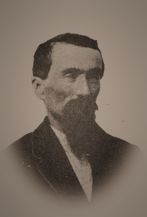
May 13 — Last night at two o’clock we received marching orders, and soon afterwards we were on the march through rain and thick darkness. We moved farther to our right and marched to within about two miles of Spottsylvania Court House, and in front of the enemy’s works. Some little sharpshooting along the lines to-day, with now and then a cannon shot mixed in, but no other fighting of any consequence. Our battery did no firing to-day. It rained all last night, the ground is very wet and soft, and the roads very muddy. We bivouacked to-night in front of the enemy’s works, with our guns in battery ready for action.
Three Years in the Confederate Horse Artillery — George Michael Neese.
May 12—This morning at two o’clock the cannon commenced booming in front, which was the ushering in of the preliminary performance and introduction of the bloody battle of Spottsylvania Court House. As the deep foreboding roar of artillery came rolling through the midnight darkness, it bore the thrilling message that another horrible slaughter was tapping at the door of the near future and that its bloody footsteps were already sounding on the threshold of the tragical arena. At daybreak we were ordered to the front to take part in the great death play that was then already fiercely inaugurated and howling with a hideous roar. Before we arrived on the field the battle had commenced in earnest, the musketry raging furiously, while roll after roll and volley after volley surged and raved along the lines with a deafening roar and fearful crash.
The artillery fire was not near so heavy as it was at Gettysburg, yet at some places along the lines the cannons boomed rapidly and fiercely and the screaming shell filled the trembling air with whizzing fragments and pinging slugs. The musketry was undoubtedly the heaviest that I have ever heard on any field, and it is utterly incomprehensible how men can face the storm of lead, and stand under such fire and live, as raged along the lines to-day. When we arrived on the field our battery was ordered to the extreme left of our battle line; we immediately proceeded to our assigned position and put our guns in battery in a good commanding position on a gently sloping hill, which also afforded us a fine view of the enemy’s line on their extreme right and the northwest portion of the battle-field. We were not engaged until this afternoon, when we opened fire on a Yankee battery of eight guns that was in position, in a good field fortification on the right of their battle line, and a little lower in elevation than our position. The Yankee gunners that fired on our battery certainly put in some fine work in the shooting business; nearly every shell they fired at us exploded either just in front of our guns or right over our heads, and sometimes their exploding shrapnel sowed the leaden slugs around us apparently as thick as hail.
After we were firing about an hour a shell from the Yankee battery exploded right in front of my gun, and I saw a good-sized fragment that was whizzing fearfully and searching for something to kill. It came right at me as though I was its sure game, but I quickly jumped across the trail of my gun in order to clear the path for the little whirling death machine that was after me and was ready to call me its own dear Rebel. It passed me with a shrill snappish ping, and with a thud it ripped up the ground just in rear of where I had been standing; if I had not seen it coming and quickly jumped out of its path it would have struck me square in front just below the breast, which would have undoubtedly labeled me for transportation to the silent city. But a miss is as good as a mile, and when the fragment that was courting familiarity had passed over me I jumped back to my place at the gun, and the very next shell I fired struck and exploded a limber chest in the Yankee battery; immediately after I fired I saw a dense telltale column of smoke shoot up in the air from the enemy’s position, and then I knew that my shell had done some ugly work among the ammunition boxes of our brethren in blue.
We had no way of ascertaining the extent of damage that the explosion scattered around, but it must have been considerable, as it silenced the Yankee battery for the remainder of the evening; if they were satisfied to wind up our little act in the great tragedy by ringing down the curtain for a little explosion I am sure that I had enough, and was willing and glad to quit.
After the firing ceased we held our position until nearly dusk, and when we left the field the Yankee battery was still in the breastwork from which it fired at us this afternoon — until we planted a young volcano among their ammunition chests.
During the battle I saw a Yankee shell explode in front of one of our batteries. The butt end of the shell struck one of the drivers in the breast and went through him; when it struck him he jumped up about a foot from the saddle, then fell to the ground stretched out in full length, and never struggled.
The battle-field of Spottsylvania Court House is undulating and diversified by hills and hollows, woods and fields, brushwood and thicket. It rained nearly all day, and sometimes when the rain poured down the hardest and almost in torrents the musketry was heaviest. It looked as if Heaven were trying to wash up the blood as fast as the civilized barbarians were spilling it.
The engagement was general along the whole line and the battle raged furiously all day. I have no idea what General Grant expected to accomplish to-day, but if he thought that he could break through General Lee’s line and slip to the citadel of Dixie by pounding on the front door with a sledge hammer he is a much disappointed and mistaken general this evening, for General Lee’s line is as impregnable this evening as it was this morning, if not more so.
We had but one man wounded in our battery in the fight to-day. This evening at dusk we withdrew from the field and moved to the rear about two miles, and bivouacked by the roadside.
May 11 — We were inoperative to-day, until late this evening, when we were ordered to the front, as the Yankees were advancing on our left. When we arrived at the front the enemy had already retired, and we returned to camp. Thunder-showers this evening.
May 10 — This morning the Spottsylvania Court House road was clear of Yanks. We moved out on the road and put our guns in battery near the same place where we were driven from yesterday. We remained there in position until midday, and sighted no game; then we moved round to the Louisa Court House road southwest of Spottsylvania Court House.
May 9 — The orderly sergeant and I bivouacked last night about two hundred yards from the company bivouac and in a secluded little nook of brushwood. At midnight the company received marching orders and moved away and left us, in our leafy chamber unfound, plunged in the profound and velvety depths of nature’s charmed restorer, where we unconsciously lingered under the dreamland trees until broad daylight.
When we awoke everything around was still, and quiet reigned supreme; the battery was gone, and we had no idea when it left or which way it went, and as we were not far from the Yankee line when we arrived yester eve we were not certain this morning at first thought but that the blue lines swept past us during the night. We hurriedly put ourselves in marching order and cautiously proceeded in the direction of Spottsylvania Court House, as men without a company searching for our command; after about a two hours’ hunt we found our battery at Shady Grove on the Spottsylvania Court House road, some four or five miles from where we bivouacked last night.
General Grant, who is in command of all the Yankee forces in the army of the Potomac, is getting out of the Wilderness by moving to his left and toward tide-water. His first forward march to Richmond through the Wilderness went up in death, defeat, and frustration, and the next move will be by the Wilderness, on toward the Rebel capital. But before he fights another week he will learn that he is not fooling with General Pemberton at Vicksburg. Our army is moving rapidly to the right, trying to keep up with General Grant’s flanking process and base-changing business. General A. P. Hill’s corps passed us at Shady Grove, marching rapidly toward Spottsylvania Court House. About two o’clock this afternoon some Yankee batteries commenced shelling some of General Lee’s wagon trains on the Spottsylvania Court House road about five miles northwest of the Court House. A whole corps of Yankee infantry was advancing toward the same point in the road at which their battery was firing. We were ordered there in double-quick time, and when we arrived at the point in the road that the enemy was shelling we went in battery and immediately opened a rapid fire on the Yankee battery; when we opened we were under the impression that there was nothing there but a battery, and perhaps a few cavalry raiders, but after we fired about forty shell I saw a column of infantry debouch from a wood on our left front, headed for our position and coming right at us. When they arrived at a point for good rifle range they threw out a heavy skirmish line and opened fire, and still came on with overwhelming numbers. We had no support whatever, but we stuck to our position until the Yankee infantry commenced pouring a heavy fire into us at close range; then we left in double-quick style amid a storm of Yankee bullets and shell. Just as we were limbering up to leave, a shell from one of the Yankee batteries exploded right over one of our teams, and the fragments screamed fearfully for a moment. One of our drivers was struck by a fragment and rolled off his horse, frightened and fully convinced that he was seriously wounded. He looked as white as a sheet, and I knew that he already felt the pangs of his terrible wound; but when he looked for blood and was searching for the gaping flesh he found nothing but a half-pound fragment of warm casting in his trousers pocket, which had lodged there from the exploded shell, and that was happily the whole extent of his serious wound. After we were driven from our position we moved back to Shady Grove and camped for the night.
May 8 — This morning we went back to the same position we left at dusk yesterday evening, but the Yankees seem to be getting very uneasy in the Wilderness and are trying to back out or flank out, and in their maneuvering to-day they flanked around our right and compelled us to abandon our position. Consequently we fell back and moved to our right too, in order to intercept and if possible rebut their flanking advance. We pierced their flank and had a spirited little engagement early in the day, but the enemy proved too strong for our force, as their cavalry advanced in conjunction with their ever present infantry, and we had nothing but cavalry and our battery. We retired about a mile and took a good commanding position at the Dobbins house, and awaited the approach of the huge wriggling war machine that was trying to extricate itself from the intricacies of the Wilderness by stealthily gliding around the bristling bayonets of General Lee’ infantry.
The enemy did not advance on our new position until late this evening, when they came with a very heavy line of infantry skirmishers in front; I fired about forty shell from my gun at the slowly and cautiously advancing line, which at last yielded to my fire and fell back, and soon after made a flank movement on our position. We held our ground until their sharpshooters advanced to within three hundred yards of our guns, and were still coming on; then I fired one charge of canister at their line, after which the battery was ordered to limber up and fall back. When we started back from our position the Yankee line halted and did not advance any farther this evening. I suppose that they were afraid of some hocus-pocus, spider, fly, and parlor business, and fell back. This evening at dusk we fell back a little distance from the Dobbins house and bivouacked. The whole country in our front is full of Yankees.
May 7 — The infantry armies have been quiet nearly all day, but the cavalry was fighting and skirmishing from early morn until dewy eve. Early this morning the Yankee sharpshooters charged to within a hundred yards of my gun and fired a volley at us, but did no harm. I fired a shell at them, which broke their line and retired them in disorder. We fell back then about half a mile, out of the brush and woods, to a better and open position; we remained in battery there all day, but the enemy did not show fight nor advance after we drove their sharpshooters back this morning.
Late this evening there was some heavy musketry on the right of General Longstreet’s line, just to the left of our battery. Our orders to leave bivouac and hasten to the front this morning at daylight were urgent and pressing, and we had no time to prepare or eat any breakfast, which greatly ruffled some of our drivers. When we neared the enemy’s line we awaited orders, and one of our drivers was still going through with the baby act about something to eat and having no breakfast. Just then General Stuart and staff came along rather on the reconnoissance order, and halted a moment in the road right where we were, and heard the gallant grumbling and childish murmuring of our hungry man, and the General rode up to him and through pure magnanimity gave our driver two biscuits out of his own haversack.
This evening at dusk we left our position and moved a little distance to the rear, and bivouacked.
May 6 — Very heavy musketry and some cannonading for about three hours this morning, in the direction of Chancellorsville, which was the opening chorus of a general battle that raged furiously all day along our lines. Our battery was engaged nearly all day, and had some very warm and dangerous work on hand just on the right of General Longstreet’s line. We fought cavalry and infantry, and were under the fire of a battalion of Yankee artillery for awhile, but held our position all day, and so did the Yanks in our immediate front. The fierce, sharp roar of deadly musketry filled our ears from morning till night, and a thick white cloud of battle smoke hung pall-like over the fields and woods all day along the battle lines. The smoke was so thick and dense sometimes during the day that it was impossible to discern anything fifty paces away, and at midday the smoke was so thick overhead that I could just make out to see the sun, and it looked like a vast ball of red fire hanging in a smoke-veiled sky. The country all along the lines, which is mostly timber land, was set on fire early in the day by the explosion of shell and heavy musketry; a thousand fires blazed and crackled on the bloody arena, which added new horrors and terrors to the ghastly scene spread out over the battle plain. A thousand new volumes of smoke rolled up toward the sky that was already draped with clouds of battle smoke. The hissing flames, the sharp, rattling, crashing roar of musketry, the deep bellowing of the artillery mingled with the yelling of charging, struggling, fighting war machines, the wailing moans of the wounded and the fainter groans of the dying, all loudly acclaimed the savagery of our boasted civilization and the enlightened barbarism of the nineteenth century. Even the midday sun refused to look with anything but a faint red glimmer on the tragical scene that was being enacted in the tangled underbrush where the lords of creation were struggling and slaughtering each other like wild beasts in a jungle.
We are bivouacked to-night just in rear of General Lee’s infantry. The night is dark, and the woods around us are all on fire; all the dead trees scattered through the woods are ablaze from bottom to top, and the fire has crept out on every branch, glowingly painting a fiery, weird scene on the curtain of night, while the lurid woods throws a glare of sickly yellow light on the smoky sky.
It is now ten o’clock at night and the dreadful sounds of battle that rolled along the lines all day are stilled at last by the hush of night.
May 5 — We were on the march all last night, moving in the direction of the Wilderness. I was so sleepy this morning just before day that I dozed and came very near falling off my horse. To-day about eleven o’clock we sighted the first new goods of the season in the way of live bluecoats; near the Wilderness we encountered a force of the enemy consisting of cavalry and artillery. They opened fire with their artillery and fired on our cavalry at first sight and right away, without wasting any time or opportunity, and were trying to do some ugly work from the start. We put two of our rifled guns in position and replied to their battery, but they had decidedly the advantage of us, both in position and the number of guns. We had only two guns engaged and the Yanks had eight, yet, as unequal as the first fierce conflict was, they did not budge us from our position with our two pieces. After fighting about an hour they ceased firing and we put in the last word and remained on the field an hour after the firing ceased; then we moved our battery to their left and flanked their position, thereby causing them to retire their guns and wholly abandon their first position. Undoubtedly the Yankee batteries did the best and most accurate firing to-day that I have seen or been around since the war; their shrapnel shot exploded all around and over us, and the everlasting ping and thud of slugs, balls, and fragments of shell filled the air with horrid screams for an hour, and the death-dealing mixture tore and raked up the sod all around us like a raging storm of iron hail. We had three men wounded, two horses killed, and several disabled.
From the way the shell howled closely around me today, if the Yanks keep on handing them around with the same familiarity and accuracy that they did this afternoon I am afraid that they will harvest me before I will be ripe, and gather me in before the season is over and the campaign ended.
The field that we were in was covered with dry broom-sedge about two feet high, and the cowardly Yanks, although they had the best position and eight pieces to our two, attempted to drive us from the field by setting the dry broom-sedge on fire by shooting some kind of a something of the firework family at us, which, from its appearance as it came flying slowly and emitting a thick volume of inky black smoke, and blazing with glaring red fire, looked like a little bunch of hell. It ignited the grass, which burnt rapidly all over the field and right around, and even under our guns, but we stuck to our position and kept up our fire on the Yankee battery.
Late this evening we had a spirited little fight on the banks of the Po, a sluggish little stream and one of the headwaters of the Mattapony; at first we repulsed the enemy and drove them across the Po and back on their infantry. Then and there they made a bold stand and successfully resisted our assault and further advance. We recrossed the little rivulet then and camped for the night. The whole country between here and the Rapidan seems to be full of Yankees, and I expect that there will be some hot work in the fighting business tomorrow. To-day’s operations transpired in the northwestern part of Spottsylvania County just in the edge of the Wilderness. We did our fighting to-day under the supervision of General Rosser and in conjunction with his brigade of cavalry. Our cavalry fought well and stubbornly this afternoon.
May 4 — I heard to-day that the Yankee army is crossing the Rapidan in great force, and that General Lee is on the march to meet it; if that is true, we will soon be in the middle of some bloody work. This evening at sunset we broke camp and are now marching to the front. Farewell, my peaceful cabin.


