May 3 — Our battalion of horse artillery was inspected to-day by General Stuart.
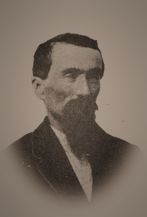
Three Years in the Confederate Horse Artillery — George Michael Neese.
May 2 — A violent thunder-storm passed over our camp this evening. The storm raged severely for about two hours; it blew down all our tents and shelters and uprooted several large trees right in camp, which in their fall killed two of our horses.
May 1 — I was in Gordonsville at church to-day. The Rev. Mr. Ewing, post chaplain, preached a fine and wholesome sermon from the eleventh chapter and seventeenth verse of Hebrews. He also preached in our camp this evening.
April 29 — I was on a spring ramble to-day on Peter’s Mountain, about three miles west of Gordonsville. The mountain is smooth, but steep; the greater part of it is arable and some portion of it under cultivation. Peter’s Mountain is a sugar-loaf knob rising from a range of hills or low mountains known as South Mountain; the range runs nearly parallel with the Blue Ridge, and is about twenty miles distant. The peak I was on far exceeds in elevation every other part of the whole range, and the crest of the peak, which is cleared and under cultivation, affords a grand and magnificent panoramic view of all the surrounding country. To the north, east, and south a broad expanse of undulating country stretches away to the dim distance, until the bending blue stoops down and kisses the verdant hills. A thousand fields are spread over the variegated and diversified sea of living green that was basking in the golden, genial sunshine of spring; here and there a dash of snowy spray is cast up by an orchard with a treasure of blooms in full array that gleam like dazzling islands of snow swimming in an emerald sea.
Five or six miles to the east the white tents of General Lee’s army looked like vast herds of roaming sheep taking their midday siesta on carpets of nature’s brightest and loveliest green. To the west the Blue Ridge lifts its bumpy and notched crest skyward, with its hollowy and ridged side studded with sunny fields and rural homes that hang like pictures on a crumpled, mossy wall. One hundred miles from where I stood, and in a southwest direction, I saw the Peaks of Otter, the highest points of the Blue Ridge, in Virginia. With graceful sweep and gentle curve they shoot their storm-swept crests far up into the blue realm, piercing the home of the clouds. The Peaks of Otter are in the northwestern part of Bedford County. There is a signal station on Peter’s Mountain and the red flag has been fluttering all afternoon, a sure indication that there will be some important movements on hand before many days roll by. I was at the station this afternoon; while I was there I saw some troops in the distance, marching in the northwestern part of Louisa County. I asked the signal man who they were, and he told me that it was General Longstreet’s corps coming up from the direction of Louisa Court House and moving toward Gordonsville.
April 26 — We had artillery target shooting to-day; it was the first time we ever had anything of the kind since the war.
April 22 — I took the train this morning at Staunton and arrived at Gordonsville at noon. In passing through the Blue Ridge tunnel to-day I perceptibly felt the difference in the climate between the west and east side of the mountain; the west side was considerably cooler.
This morning when I got on the train at Staunton I met a citizen, an old acquaintance from New Market, who remarked that if I had any money about my person or pockets I would better be careful and look out a little for pickpockets, as he had just been relieved of fifty dollars in a rather mysterious and unexplainable manner. My purse was very flat and emaciated indeed, but I pushed it down a little deeper in my pocket for future reference. However, its inherent vitality was very low and its powers nearly exhausted. I stepped from the train at Charlottesville to buy a pie, but found that my poor flat purse was gone, sure enough, and I got no pie. Some hocus-pocus and sleight-of-hand performer without my permission extracted it from my pocket between Waynesboro and Charlottesville; the performance must have taken place while the train passed through the tunnel. My purse contained two Confederate postage stamps, three dollars in Confederate currency, and three quarter dollars in silver. “‘Twas something, nothing; ’twas mine, ’tis his”; he robbed me of that which not enriches him, but made me too poor to buy a pie. It must be a depraved and despicable grade of rascality fortified in a big bunch of meanness that will rob a Confederate soldier in this year of 1864.
I arrived in camp this afternoon, two miles west of Gordonsville.
April 21— Took stage this morning at New Market and arrived in Staunton at sunset. When I got on the stage this morning I noticed a man on it wearing a Yankee uniform. He asked me whether I was going to Lee’s army; I told him that was my destination. He remarked then that there would be some hard fighting this spring and summer, as their side was making great preparations for an aggressive, vigorous, and an active campaign, by filling up their regiments with new recruits, and, if anything, were increasing the size of their armies. He was in good humor, and I saw that he was no prisoner. I asked him what he was doing here in Dixie, and where he was going. He said that he was very tired of war and that he knew that there would be a great deal of hard marching and hot fighting this year, and the easiest way out of it all would be to desert and come South, which he did; and was now on his way to the south side of the Virginia Central Railroad, where, he said, Yankee deserters are allowed to roam at will.
I put up for the night at the American Hotel, but just for lodging, as meals cost five dollars and my pocketbook is now struggling in the last stage of consumption, and I am almost certain that the consumption will be sure to win, especially if I would do any eating at this house, as one meal would clean me up on the currency question until next pay-day. This is a beautiful, bright, balmy, spring night. Luna, queen of the stars, is sailing in a cerulean sea full of diamond-like isles, and not a single speck of cloud or mist stains the azure dome. The roofs and the spires and the verdant hills that are piled up around Staunton all glow and shimmer in a silvery sea of moonlight. After nightfall I strolled through the principal streets, most of which as they approach the suburbs bend skyward as they mount the encircling hills.
I saw the lunatic asylum, institute for the blind, and the deaf and dumb asylum — all good substantial brick structures.
April 20 — I wish this cruel war were over, for my furlough is out and I will have to strike out once more for the tented field and be off for the war again. I left home this evening and came to New Market. These beautiful, bright, peaceful spring days of citizen life glided swiftly by like golden bubbles on the stream of time; they glowed and flashed and lo! they are gone.
April 6— At home now, and what next? Eat, sleep, and be merry,— who cares for war when I have a fresh furlough in my pocket?
April 5 — I took stage-coach in Staunton this morning at six o’clock and arrived in New Market at six this evening. It snowed very fast until noon to-day, and the snow is about four inches deep here at New Market.


