Following the American Civil War Sesquicentennial with day by day writings of the time, currently 1863.

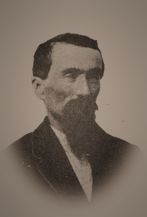
Three Years in the Confederate Horse Artillery — George Michael Neese.

October 16 — Rained nearly all last night, and we had not the least sign of a shelter. This morning we moved back about two miles, then halted to graze our horses near the Manassas Gap Railroad, about two miles west of the Junction, and we drew our rations from persimmon trees, as we have been doing for the last few days.

This evening at dusk some Yankee cavalry crossed Bull Run and drove in our pickets. On the strength of the alarm we were immediately formed in line and put our guns in battery ready for action; but soon after driving in our pickets the Yankees recrossed to their side of Bull Run again, which left everything quiet along the front.

We bivouacked where we were in position, about a mile west of Manassas Junction.

This evening while we were in line the rain just poured down and put out every spark of fire that we had a little in rear of our position, and we were in total darkness the remainder of the night, with not even fire enough to fry our persimmons.

October 15 — It was nearly noon to-day when we left our bivouac. We moved in the direction of Manassas and marched rapidly. At two o’clock we were on the broad and almost level plain of Manassas. The plain of Manassas proper is about five miles long and some three miles wide, with scarcely anything on it to show or tell that it is an inhabitated section of count try; here and there I saw a few old deserted dwellings on which Time is busily and successfully plying its destroying hand.

At a few places I noticed some earthworks and field fortifications that were constructed by General Beauregard’s forces in the summer of 1861. The works, too, are in the hands of the great destroyer, their faces being deeply seamed, — the work and ravage of passing rains and winter’s frost,— the parapets thickly overgrown with weeds. I saw the house in which General Beauregard had his headquarters during the summer of 1861. It is a brick structure with a little grove in front, situated on a small eminence or swell that rises from the surrounding plain, about a mile north of Manassas Junction.

If it is true that the spirit of man loves to linger around the spot where the earth-imprisoned soul was released from its fetters of clay, then the gray gauzelike October haze that hung over the plains of Manassas this afternoon may have been full of invisible flitting spirits hovering over the scene of their last footsteps on earth and watching their own sleeping dust that is so thickly strewn over the silent plain where they shuffled off their mortal coil.

We did not sight any Yankees to-day until late this afternoon, about a mile north of Manassas Junction; they were retreating toward Centreville. We pursued them until they crossed Bull Run at Blackburn’s Ford, and then and there they said by actions, which sometimes speak louder than words, “This far you may drive us, but no farther.” On the north side of Bull Run at Blackburn’s Ford a wooded hill or bluff-like ridge rises abruptly from the bank of the little stream, and the hill affords a first-class position for artillery, as it thoroughly commands all the adjacent fields on the south side of the run.

Notwithstanding the impregnableness of the enemy’s position our cavalry assailed it from the south side of Bull Run, with a heavy line of dismounted sharpshooters in advance; but we soon learned by striking experience, and plenty of it, that all efforts to dislodge the enemy with our small force, however discreetly they might have been made, would have proved perfectly futile, for when our line of sharpshooters got within rifle range of the enemy’s position a line of infantry opened fire from the underbrush along the north bank of the run, and it seems that the whole hillside was full of infantry hidden among the trees and bushes. When we first heard the infantry fire and saw the puffs of white smoke rising from the underbrush we put our guns in battery and fired a few shell into the hillside just to ascertain what was hidden along the verdant slope. We soon found out, for we stirred up a brisk and lively fire from a Yankee battery that was concealed in the thick brush about halfway up the hill, and from the way their guns thundered and their shell howled, they were heavier than common field pieces. I saw one shell plunge through a little clump of oak sprouts near my gun, and it mowed them down like a young tornado armed with a scythe, and judging from the way projectiles tore up the ground around us, and threw clods and gravel, their battery was hurling something at us about the size of a nail-keg, and regular ditch diggers.

The field we were on was perfectly level and our position was wholly and openly exposed to a raking fire of the enemy’s battery, which was strongly posted on a higher and more advantageous commanding situation. Consequently after we had fired about half an hour and found that the enemy intended to remain on the defensive, we withdrew our guns under fire and fell back toward Manassas Junction. We are bivouacked to-night near the old headquarters of General Beauregard, and wood of every description is so scarce here that we could not find enough for stakes to make hitching places for our horses.

The position we occupied to-day when we were firing on the Yankee battery near Blackburn’s Ford is on the same field where General Beauregard fought and repulsed the Yanks on Thursday evening, July 18, 1861, just a few days before the battle of Manassas. Today as we were nearing Blackburn’s Ford I saw a man’s foot lying, with sole up, in the middle of the road. I have no idea of how it got there, or whether it was severed from its owner by a shell or the surgeon’s knife. All I know about the foot is that it was fresh, and its owner kept his feet much cleaner than I do mine, for it was the cleanest foot that I have seen since the war began.

October 14 — This morning at daylight we heard heavy firing in front and not very far away. General Ewell’s forces passed our camp this morning just at daylight, going to the front at a double-quick whence came the thrilling sounds of actual war.

When we left camp this morning we turned off to the left of the Catlett Station road, and went to the Warrenton and Alexandria pike; just as we arrived at the pike General A. P. Hill’s troops were passing to the front. Then the ominous sound of booming cannon still came rolling from the east through the quiet morning air, and the deep growling thunder of the war dogs swept over the Fauquier hills and died away among the distant peaks of the Blue Ridge. We moved to New Baltimore, a small hamlet on the Warrenton pike, situated eleven miles below Warrenton. We halted there for our brigade, which arrived about two o’clock this afternoon, when we fell in with our cavalry and moved down the pike toward Manassas. We passed through Buckland, a small village of a few scattered houses, situated on Cub Run, in the eastern part of Fauquier County. We moved on the Warrenton pike as far as Gainesville, then turned to the right and marched toward Bristoe Station. It was then nearly dark and we were on the enemy’s right flank and about three miles from their main body. Some of General A. P. Hill’s forces attacked the Yankees late this evening at Bristoe Station. We heard heavy cannonading and a fierce roar of musketry in that direction this evening, but as yet have no tidings of the result. We are camped tonight in Prince William County, about three miles northwest of Bristoe. Bristoe is a station on the Orange and Alexandria Railroad, five miles south of Manassas. The firing we heard so early this morning was some of General Ewell’s battery and Rhodes’ division of infantry. They attacked the Yankees near Auburn Mills, in order to assist General Stuart and his cavalry to cut and force their way out through a column of Yankee infantry that was retreating during the night between Stuart’s cavalry and our army, and which had entirely surrounded our cavalry unknowingly. This morning at daybreak General Stuart, with his command, surprised the Yankee infantry and cut his way through their column so successfully that his loss is not worth mentioning. A section of our battery was in there too, and got out safely.

October 13 — Early this morning we moved to the Hazel River. There we bought corn and hay and fed our horses. We remained there until noon, then renewed our march toward Warrenton. We passed through the village of Jeffersonton, forded the Rappahannock at Warrenton Springs, came through Warrenton, and are camped to-night four miles east of Warrenton. The Yankees burnt the large hotel at Warrenton Springs and also destroyed the gas works. A great many of our army wagons passed us to-day while we halted on the Hazel. This afternoon we passed General Ewell’s infantry encamped just below Warrenton.

October 12— This morning General Stuart’s and Fitzhugh Lee’s cavalry started on a flank movement up the Rappahannock and around through Warrenton. The first section of our battery, with about two hundred cavalrymen of the Fifth Virginia Regiment under Colonel Rosser, were ordered to the Barbour house to serve and play as a sort of feint to detain, try, and deceive, and hold the Yankee cavalry in our front and on this side of the Rappahannock as long as possible, and until they get ready to look for General Stuart in their rear.

Our ruse business at the Barbour house played very well until about three o’clock this afternoon, when the Yanks discovered the hollowness of our pretensions and advanced on us in force and cleaned us off of the hill in short order and in double-quick style.

When they first came in range of our guns we fired some three or four rounds at them, but they meant business and refused to be checked by a few shell, but threw their heads down into the notch of stubborn determination and came on. We limbered up and left the hill in double-quick time and for about two miles we fell back about as fast as horse artillery can travel under extraordinary and emergent circumstances with a rear pressure under full steam.

After we had retired about two miles we unlimbered our guns and fired a few shell into a railroad cut through which the pursuing Yankee horsemen were approaching, but they saw how few men we had to oppose them and still refused to be checked by a few shell, but maneuveringly advanced on our position and compelled us to renew our retiring schedule, running about on the same time as we did before.

When we arrived within about two miles of Culpeper Court House in our precipitate retreat, we were reinforced by Colonel Young, of Georgia, with a regiment of cavalry and five pieces of artillery. Colonel Young is a doughty and courteous commander and a valiant and gallant fighter. When we arrived at his position he had his artillery in battery and his cavalry in line ready for action. As we were nearing his line, which was drawn up along the crest of a low ridge, we passed through a strong line of dismounted sharpshooters that were posted and rather concealed along a row of cedar bushes that extended across the field at right angles to the road, and about three hundred yards in advance of his artillery.

As we passed through the line of sharpshooters I heard some of the men exclaim: “Let the Yanks come; we are ready for them.” It was but a few moments after we passed the waiting line of riflemen until the Yankee cavalry that pursued us some five or six miles came in sight, and soon afterwards in range of the sharpshooters’ rifles, who opened a steady fire on the van of the approaching enemy. The fire at first was slow, but like the big drops of rain that skirmish for an approaching thunder-storm, merge into the incessant roar of the descending shower, so the slow fire of the sharpshooters soon changed into the roll of a young battle, with booming cannon on both sides. The enemy put one or two batteries in position and opened a rapid fire on our line, to which we quickly replied with seven guns, and for a while the artillery fire was fierce and the roar of the guns almost drowned the sharp crash of small arms. Colonel Young’s men fought well, and gallantly withstood the onslaught and repulsed our pursuers at last.

At dusk the Yankee fire began to slacken, and soon after ceased altogether, and the foe fell back toward the Rappahannock. We remained on the field in position about an hour after the firing ceased, and until everything in front had quieted down to peaceful silence; then we struck out for the Hazel River. We marched until way into the night. Camped to-night at Rickseyville, near the Hazel, about six miles north of Culpeper Court House.

October 11 — The Yankee picket lines along the north bank of the river stole silently away last night, like a ghost when it scents the morning air. Early this morning a brigade of Yankee cavalry crossed the Rapidan at Mitchell’s Ford and drove our pickets back a mile; then General Lomax’s brigade of cavalry and the first piece of our battery hurried to the rescue, and were soon engaged in a spirited fight. We opened fire on their cavalry with one gun, and after an hour’s fighting we drove the enemy back across the river. There they held a strong position, with two pieces of artillery in battery. We advanced our gun to within about a thousand yards of their battery and opened a rapid fire on their position. The Yankee battery had the advantage in position, as it was on higher ground than we, and their shell and shrapnel shot raked the sod and tore the ground around our gun; but at last they were compelled to abandon their position, both by our artillery fire and General Fitzhugh Lee’s cavalry, which had crossed the river and successfully charged and routed their cavalry support, which rendered their artillery position untenable, and the two Yankee guns struck out for the Rappahannock. After the enemy was dislodged from the banks of the Rapidan they commenced to retreat toward Brandy Station. Then we crossed the Rapidan at Mitchell’s Ford, pursued and fought the retiring foe all day, with cavalry and artillery.

The enemy at a few places retired slowly and fought stubbornly; nevertheless we drove them back ten or twelve miles to-day, sharpshooting and skirmishing nearly all the way. At Brandy Station they made a desperate effort to check and stay our advance, by making a bold stand with dismounted sharpshooters, artillery, and cavalry drawn up on a little elevation in a splendid line of battle. Like a tiger that is pursued too dangerously near its lair and at last turns in desperation on its pursuer and offers deadly combat, so the Yanks that we chased all day at last turned and attacked us with such determined vigor and dashing intrepidity that for a little while it was difficult to see or tell how the spirited little struggle would terminate, and in which camp the bird of victory would roost tonight. When our cavalry first assailed the Yankee line it stood firm and received the fire of our cavalry with undaunted firmness and courage, and very soon afterwards advanced with a bold front on our position. Our cavalry wavered under the vigorous onset and at last gave way in a sort of stampedy, mixed-up, conglomerate style. Our men were falling back rapidly before the Yankee fire, some of them mounted and leading horses, others were dismounted and trying to sharpshoot; but the Yanks still kept coming on in good order and firing as they came, which hastened the ripening of our disordered mixture into that which came very near proving to be a full-fledged stampede. At that critical juncture of affairs Captain Chew, who had gone toward the front, came hurriedly back to where our guns were halted, and said to me: “For God’s sake unlimber your gun quick, and fire; and rally this cavalry, or we are gone.” I had nothing to fire at, as the struggling mass of mixed-up cavalry was right in our front, in a low strip of woods not more than a hundred yards from our guns. However, I unlimbered my gun and fired a few rounds across some pasture fields on our left, where my shell could neither do any good nor harm. Our firing had the desired effect of rallying our cavalry, and the sound of my gun also quenched the ardor and partially checked the vehemency of the blue line in our front, which but a moment before was boldly moving toward an anticipated victory.

When the enemy’s line was checked, and while they paused for a moment in hesitation whether to hold their ground or advance and taste some Rebel canister, our cavalry rallied, took a long breath, assaulted the halting Yankee line, and drove it back whence it came. Just as the fierce conflict was subsiding at that point, it received a fresh impulse from another direction. General Kilpatrick, with a host of Yankee cavalry, came rushing down from the direction of Culpeper Court House, and rather in our rear, with General Stuart at his heels in hot pursuit, driving the Yankee column in whirlwind style toward the Rappahannock.

I saw General Kilpatrick’s troops pass over the fields on our left seeming to move in tolerable good order for a large body, but were traveling at a top speed, without making any endeavors to check or resist the pursuing Rebels that were yelling on their trail; and in order to favor the retreating true blue with timely assistance in keeping up their rapid pace before the flashing sabers of Stuart we fired a few shell into the flying column as it passed us.

Little below Brandy Station Kilpatrick’s command formed a junction with Buford’s, and both together made their last stand for the day. They formed their line along a low ridge and rising ground, with their horse artillery in a strong position on higher ground in rear of their cavalry. After a little reconnoitering and careful maneuvering General Stuart and General Fitzhugh Lee attacked the enemy in their new position. For a little while the fight was severe, and the crash of small arms crept out over the evening air with a similar fierceness and frightful roar of an infantry battle, and the deadly music was well interspersed with a deep hoarse growl of booming cannon on all sides. When our cavalry first attacked the enemy’s position the Yankee batteries opened a rapid fire from the crest of the ridge, to which we promptly replied with a fire of like vigor. When the fight was in full blow General Stuart came up to our battery and requested a rifled gun to follow him to the Barbour house on a prominent hill on the right of the Yankee line, which position afforded an almost enfilade fire on the enemy’s batteries. Consequently the first gun was detached, and we followed the feather to where the great and indomitable Stuart led. As soon as I saw the situation I at once perceived that the position, though a commanding one, was circumstantially hazardous in the extreme, from the fact that we had an enfilade fire with but one gun, on a four gun battery. The position was prominent, the range comparatively short, and an enfilade fire never fails to draw a redoubled fire from an enfiladed battery.

When we put our gun in position right near the Barbour house the Yankee battery was firing on our cavalry and artillery in its immediate front, and paid no attention to us; but when we opened fire the whole Yankee battery turned its fire on my one lonely gun, and before I could make my third shot a thunderbolt from a twelve-pound gun struck my piece and crushed one of the wheels to smithers, and slightly wounded two of my cannoneers. We had just loaded our gun and were ready to fire when the twelve-pound solid shot came crashing through a little house that stood near our position and struck the gun carriage, then whizzed past us at a fearful speed and unhealthily close. When I saw the debris of the little house, such as shivered weather boarding, pieces of window sash, and fractured glass flying at us, and very sensibly felt the concussion of the solid shot, I thought that the hill had exploded.

The Yankee battery fired some six or eight shots at our position after our gun was disabled, but they were wasting their ammunition on a dead gun, for the time being. Soon after the Yankee battery ceased firing at our hill our cavalry made a bold advance on the enemy’s whole line, and successfully charged and captured the battery that disabled my gun.

This last fight occurred just as the sun dipped behind the crest of the distant Blue Ridge, and by the time the twilight changed into the dusky shades of night the last sound of battle had died away and the Yankee cavalrymen were moving once more with their faces turned toward the friendly infantry camps along the banks of the Rappahannock.

We are camped to-night one mile south of Brandy Station.
October 10 — All quiet in front, except some picket firing this evening after dark, at Mitchell’s Ford, two miles below Raccoon.

October 9 — This evening our wagons were ordered to the rear and the battery to the front. We took three days’ rations in our haversacks and marched to Raccoon Ford on the Rapidan. When we arrived at the Ford we immediately put our guns in position in an earthwork which thoroughly commands the ford, and is only about two hundred yards from the river. Along here by Raccoon Ford the land on the south or Orange side of the Rapidan is much higher than it is on the north or Culpeper side, or, in other words, the country along the river on the Orange is high and hilly, while on the Culpeper side it is low and level. If the Yankees take a notion at any time to fight us here, we will have decidedly the advantage in position.

There are great many earthworks thrown up on the hills along the south side of the river, both above and below Raccoon Ford. The Yankees have a strong picket line posted along the north bank of the river, and we have a line of pickets strung along the south bank. To-day the pickets were friendly and talking to each other like brothers, and, I think, doing some trading, bartering tobacco for coffee, and exchanging newspapers; to-morrow they may be shooting at each other like savages, for such are the possible amenities and incongruities of intestine war.

On the opposite side of the river and in front of our position is a beautiful level plain about three miles long and a mile wide. Looking from our present standpoint across the fields of Culpeper, we can see an immense Yankee encampment about seven miles away in the direction of Culpeper Court House, the white tents shimmering in the sunshine like little pyramids of snow.

Raccoon Ford is about ten miles from Culpeper Court House due south. We sleep by our guns to-night, which are in battery ready for action.

October 4— We were ordered to move camp this morning. We got everything ready to move, hitched up our horses to the battery and when that was done and we were all ready for the word forward the camp moving order was countermanded, and we undid all our packing and hitching up, with the conclusion to stay here a while longer.

October 2 — Commenced raining this morning, and we had frequent and copious showers all day, and it is still raining this evening. Much rain in this particular section of country means roads deep with tough sticky mud.