September 30 — We had company inspection to-day.
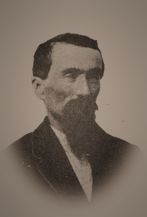
Three Years in the Confederate Horse Artillery — George Michael Neese.
September 23 — The raiders advanced to within six miles of us last night, then fell back toward the Robinson River.
We started in pursuit of the Yanks early this morning, but were unable to overtake their fast-retreating column, until late this evening, when our advance guard encountered their rear about five miles from the Robinson River. Our side gave chase and drove the whole concern across the Robinson, without much fighting or resistance. Our route to-day led us through a very rolling and hilly section of country, and we passed through nearly the whole length of Madison County.
Sometimes we passed over hills and through farms, and kept as near the trail of the retiring raiders as possible, which sometimes led us along little winding dells, and then plunged us in deep ravines thickly covered with dense undergrowth and copse-wood. At various places along the track of the retiring raiders I saw dug-up sweet potato patches, robbed gardens, and raided cornfields, which are all telling and striking evidences of the moral stamina, religious principles, and ethical sentiments that pervade the locality whence the raiders hail.
We crossed the Rapidan early in the day, some fifteen miles above Barnett’s Ford. After the Yanks retired behind the Robinson we struck out for Orange Court House, crossed the Rapidan at Barnett’s Ford, and arrived at Orange Court House at ten o’clock to-night. Camped two miles west of Orange Court House. We marched about fifty miles since we left camp this morning.
September 22 — Early this morning we were ordered to Barboursville, which is about ten miles southwest of Orange Court House. We hurriedly packed up all our kitchen goods and camp chattels and were on the march early in the day, following General Fitzhugh Lee’s cavalry. We passed through Orange Court House, came by Summerset, and at sundown we arrived at Barboursville.
All afternoon we heard artillery firing up the Rapidan. From all indications it seems that the Yankee cavalry is getting ready and ripe for a raid on Charlottesville or some other adjacent point on the Virginia Central Railroad, and we were ordered up here to Barboursville so as to be at a more convenient point from which to give the dear Yankee raiders a cordial and courteous welcome to Dixieland. When we arrived here this evening we put our battery in position near a church at the western edge of Barboursville, our guns bearing on the Standardsville road.
General Jones’ cavalry fought the Yankee raiders today at Liberty Mills, on the Rapidan, which, I think, checked the raiders somewhat and cracked the backbone of the contemplated raid. We are quartered to-night in a church, with our guns in position near the church doors.
September 18 — Rained nearly all last night, and to-day it poured down incessantly until ten o’clock, then the clouds rolled away, and for a while the sun shone from a bright midsummer-like sky; but it was too bright to last, for it soon again was curtained with dark, thick, angry-looking, piled-up thunder clouds that broke overhead in copious, drenching showers, accompanied with thunder and lightning. This evening we moved toward the Rapidan, and we are now camped on Mountain Run in Orange County, five miles from Raccoon Ford.
September 17 — Renewed our march early this morning and moved four miles northeast of Orange Court House, where the rest of our company was camped, then we marched down the old plank road in the direction of Fredericksburg. We moved as far as Verdiersville, where General Fitzhugh Lee’s command is camped, twelve miles from Orange Court House. An old-looking hotel and one dwelling house is all there is of Verdiersville. It is located in a rather poor-looking country, on the Fredericksburg and Orange plank road.
September 16 — To-day our battery was transferred to General Fitzhugh Lee’s division of cavalry, which is camped at present about twelve miles east of Orange Court House.
Late this evening we said farewell to our old brigade of cavalry and started to join our new command. We left the ford little before sunset, and marched to Barnett’s Ford on the Rapidan and camped for the night.
September 15 — Still guarding the ford on the Robinson.
September 14 — This morning at sunrise we forded the Robinson and put our guns in battery at a commanding position on the Madison side of the river, but we saw no enemy to-day except a few scouts on the hills about three miles away, on the Culpeper side of the river. We heard artillery firing this evening down the river in the direction of Rapidan Station. Bivouacked near the Robinson.
September 13 — This morning an hour before day we were roused from sleep by a blast from the bugle, and ordered to get ready to march at a minute’s notice, as the Yankees on our front manifested unerring signs of making a general advance in force. We hurriedly snatched a little breakfast, then packed up our all, and at daylight we moved Yankeeward with the battery, down toward Brandy Station. We went within a mile of Brandy and halted for fresh developments and further orders and remained there until about ten o’clock. Up to that time everything was as quiet and peaceful along the front as a sunbeam that kisses the cheek of a sleeping babe; in fact, a Sabbath calm and stillness had apparently settled down on the whole surrounding landscape. But as the storm king suddenly leaps from its mountain lair and sweeps across the bosom of a placid lake and rolls the glassy water into a thousand dashing waves, so the storm of battle broke the Sabbath calm and raged in roaring surges across the wavy fields of Culpeper.
A little after ten o’clock the Yanks made their first appearance, by debouching from a wood only about half a mile from our position. We quickly opened fire on them with two guns, to which they immediately replied with a brisk fire from a four-gun battery. That was the thundering introductory and overture to the first act in the opening scene of to-day’s real drama. The enemy advanced rapidly, with overwhelming numbers, and compelled us to abandon our first position in double-quick time, which we did, and fell back in the same manner. The broad rolling plain that spread out in our front was literally blue with Yanks, and we had comparatively very few forces to oppose the immense host that was advancing on us with flying banners. Yet we gave them the best and warmest that we had on hand, and fought them stubbornly nearly all day, obstinately disputing every inch of ground that they advanced over; however, they drove us about six miles.
Soon after the battle opened a small squad of Yankee horsemen appeared prominently on a hill within the range of our guns and in advance of the enemy’s line of fight. Captain Chew told me to try to scatter the little assembly that was congregated and boldly standing on the hilltop gazing intently toward Dixie.
I turned my gun on the little blue bunch and aimed it very carefully, and the first shell I fired exploded at the right place, and emptied at least one saddle. I saw the man fall, and the remainder of the squad suddenly disappeared from the hill and moved back to a healthier clime.
We held our position to-day just below Culpeper Court House until the dismounted sharpshooters advanced to within a hundred and fifty yards of us. They opened a hot fire on us, and the bullets sung and zipped around us like a swiftly moving colony of bees in a storm.
I saw three Yankees run across the field right in our front. They were running toward an old house that stood in the field about two hundred yards from our position. Just before they got to the house all three of them halted and fired right at the little squad of cannoneers around my gun. When I saw the three riflemen take aim at us a peculiar thrill of disquieting anxiety rushed all over me, as the chances were first class to receive a ticket to the silent city, and I was not quite ready for a journey of that strange and mysterious sort. The three men fired simultaneously. Two of the bullets whizzed harmlessly and unceremoniously past us without calling, but the third one struck one of my cannoneers — number three — in the ankle, making a very painful wound.
We were then shelling a body of cavalry that was moving around to our right flank, but when the line of dismounted sharpshooters in our front, backed by a body of cavalry, advanced on us, firing as they came, we turned our guns on them and opened a rapid fire with canister. I fired six rounds of canister, when we had to abandon our position and fall back double-quick to save ourselves from capture, for the enemy in our front was still pressing us, and their cavalry on our right flank were preparing to charge and cut us off. The Yankee cavalry fought well to-day; they meant business every time. However, they far outnumbered us, and they well knew it, and that alone bears with it a kind of intoxicating inspiration which makes men bold, and boldness in danger is the foundation element of bravery.
Near the middle of the day we drew near Culpeper Court House and the Yankees were still advancing and pressing us, and stubbornly refused to be checked. They had two or three batteries in commanding positions and were firing at everything they saw. One of our rifled pieces and one of Captain Moorman’s guns were in battery at the northern outskirts of Culpeper Court House, firing rapidly at the advancing cavalry. Eventually the guns drew the fire of the Yankee batteries, and for a while the artillery howled fiercely and the fight raged all along the line.
The Yankee gunners overshot our guns that were firing from the edge of town, and I saw the Yankee shell crashing through buildings and exploding all over and through the northern and eastern portion of town. I know that this was a wild and boisterous stirred-up Sunday that the citizens of Culpeper Court House will not forget for years to come. After a heavy artillery fire of about half an hour a body of blue cavalry charged the guns at edge of town and succeeded in capturing them. One gun, six men, and four horses of our battery were captured in the charge.
When the Yankee horsemen dashed on the guns they came firing their pistols, and some few had their sabers drawn. The fray soon became a mixed-up affair of firing pistols, flashing sabers, and excited men contending and wildly struggling like maddened demons in a furious melee for the mastery of the situation.
The first lieutenant of our company was emptying his pistol at the excited bluecoats when a Yankee officer shouted to his men to “shoot the damned Rebel officer,” but the Rebel officer deliberately emptied his pistol and came out without being touched by bullet or blade. While the spirited encounter was transpiring around the captured pieces the first section of our battery was hurriedly passing up the main street of Culpeper when a body of Yankee cavalry made a dashing charge at us through the street, and came very near being successful in gathering in another bunch of boarders for some of Uncle Sam’s magnificent boarding palaces, where they feast tamed and docile Rebels on oysters, beef a la mode, and fried eggs with ham. Nothing but good Rebel wind and first-class pluck for racing saved us from capture, for I heard a mighty clattering of sabers and scabbards, mingled with a din of rushing horses right close behind us, when we were running our best. The fight lasted till nearly night, and ended about three miles south of Culpeper Court House. We had two men of our company wounded in the fight, one mortally.
Late this evening the first section of our battery was detached and ordered to the Robinson River, with the Twelfth Virginia Cavalry, to guard the ford on the Orange Court House road. We arrived at the river at two o’clock to-night, and bivouacked near the ford.
September 12 — In camp. We had a heavy rain this afternoon, accompanied by thunder and lightning, and a severe storm which uprooted a large tree near my shelter, that came very near falling on me. It was so near that a change of a few feet in my direction would have been “Farewell to the Star Spangled Banner” for me sure enough. In gratitude for my narrow escape I went to prayer meeting this evening like a good boy.


