July 16 — In camp all day. Heard some heavy cannonading late this evening in the direction of Shepherdstown.
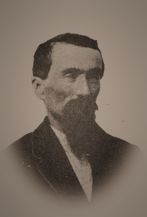
Three Years in the Confederate Horse Artillery — George Michael Neese.
July 15 — Early this morning we were ordered to Charlestown, as the Yankees were pressing our cavalry there yesterday evening, which caused an urgent demand for artillery and our presence. When we arrived at Charlestown our cavalry was there waiting for us. We immediately proceeded about a mile below town, on the Harper’s Ferry pike, and put our guns into position ready for fight. We were not in position very long before the Yankees advanced on us with cavalry and dismounted sharpshooters. Their line of sharpshooters advanced first and opened fire on us with long-ranged rifles, and kept up a lively fire for about ten minutes directed at my gun,— which I had ready for action, but reserved my -fire for bigger and more important game,— for at the same time the Yankee cavalry, which was about a mile away in our front, was preparing for a charge on our position. After they had formed their column to charge and were ready to go into active business I opened fire on them with my piece, and the first shell I fired exploded in their ranks and played regular scatteration with the blue-coated column that was prepared and ready to charge us. My shell completely stopped and broke up the show, their line of sharpshooters also ceased firing and fell back, and when our cavalry advanced the enemy retreated toward Harper’s Ferry. We remained in battery until nearly night, then moved back about four miles south of Charlestown on the Berryville pike, and camped.
July 14 — General Lee abandoned his position near Hagerstown yesterday evening or last night, and by daylight this morning the greater part of his forces were on the Dixie side of the Potomac. Some of the troops waded the river, which was deep and rising, but the greater part of the army crossed on a pontoon that was thrown across the river at Falling Waters, four miles below Williamsport.
We renewed our march this morning and moved toward Martinsburg. As we passed Falling Waters, where General Lee’s troops were crossing the river on a pontoon, some of our soldiers were throwing up breastworks around some batteries that were in position on a hill near the pontoon, which thoroughly commanded the bridge and its approach on the Maryland side.
We passed through Martinsburg to-day, and are camped this evening at Smithfield, in Jefferson County.
July 13 — We remained in camp until late this evening, when we were ordered to cross the Potomac. We forded the river at Williamsport. It was very deep fording, and the river was still rising from the recent heavy rains. The wagons of the whole army are ordered to the Virginia side of the river; they were crossing all last night and all day to-day. We crossed at dusk this evening, and the ford was then crowded with wagons. The water was then most too high for safe fording, as I saw some wagons wash down the river. We are camped to-night on the friendly hills of old Virginia, near Falling Waters, on the Martinsburg pike.
General Lee’s army is still in battle line near Hagerstown.
July 12 — We have no ammunition yet for our battery. General Lee’s army is still in line, with breastworks thrown up along the front. The Yankee army is in the immediate front of our line, and both sides have been skirmishing all day. It looks to me as if the Yanks are afraid to attack General Lee when he is prepared for their reception.
July 11 —In camp to-day. Weather hot. General Lee’s army is in line of battle about two miles from our camp, and near Hagerstown.
July 10 — The Yankees advanced again this morning on the National Road, and we moved about two miles below Funkstown and opened fire on their advancing cavalry. We did not hold our position very long, as the enemy had too many dismounted sharpshooters crawling up on us, and their long-range rifles rendered our position untenable for artillery, and we retired.
We fell back a mile and took another position. We were then only a mile below Funkstown. The Yankees advanced on us again, and we opened fire on them, and held our ground until we fired the very last round of ammunition we had; then we moved back across the Antietam. Just at that juncture of affairs a brigade of our infantry and several batteries came to our relief, and they kept up a lively skirmishing and sharpshooting with some cannonading until night. When the firing ceased at dusk both sides held the respective positions they had when the firing commenced.
In consequence of being entirely out of ammunition we were ordered to the rear. In moving to the rear we passed through Hagerstown, the county seat of Washington County. The town is situated in a section of beautiful country, on the National Road, sixty-five miles from Baltimore and six miles from the Potomac River; it contains some five or six thousand inhabitants. The buildings are mostly of brick, close together, well built and kept in good condition; the streets straight, run at right angles, and are almost level; the sidewalks are well paved with brick.
Camped between Hagerstown and Williamsport.
July 9 — We remained near Funkstown until nearly night. Everything was quiet along the front until about five o’clock this evening, when the Yankees advanced and drove back our cavalry, and we were ordered to the front to meet the advancing enemy. We marched about three miles below Funkstown and sighted him, put our battery in position and fired two rounds, which completely checked the advance. It was getting dark when we fired, and we remained in position until an hour after dark, then fell back and camped a mile below Funkstown.
July 7 — A great many Yankee prisoners passed us to-day, marching for Dixieland. About the middle of the day we were ordered to Williamsport, to have our horses shod. Camped to-night near Williamsport, on the Conicageague, a small stream that empties into the Potomac at Williamsport.
July 8 — Rain fell in torrents all last night. Early this morning found us on the march again. We went near Hagerstown, then moved across the fields to the National Road, then marched down toward Boonesboro. We passed through Funkstown, a small village on the National Road, two miles below Hagerstown; it is situated on the Antietam, and contains about six hundred inhabitants. At about eleven o’clock we encountered the Yanks near Boonesboro, and opened fire on them immediately and at first sight, and they promptly opened a battery on us and returned our fire with a business-like energy. For a while the cannonading was spirited and lively, which proved to be an introduction and preliminary remarks to a fight that lasted till nearly night. Soon after we opened fire the cavalry on both sides commenced sharpshooting and fighting and kept up a desultory fire all afternoon. We drove the enemy back slowly, from the time the fight commenced until nearly night, but they fought stubbornly all afternoon and contested every inch of ground we gained. Late this evening the Yankee cavalry was reinforced by infantry, and then they in turn drove us back about a mile, and to the same position we had when the fight commenced. Sometimes during the day the artillery fire was heavy for a small fight, for the enemy had ten pieces of artillery engaged and our side had about a like number in the fight.
Nightfall ended the fray, and we moved back near Funkstown and camped for the night. Boonesboro is eight miles from Hagerstown.
July 6 — This morning we started for Hagerstown, passing through Lighterstown, a small village six miles from our destination. We did not go the direct road to Hagerstown, as the Yanks held the town and were on the principal roads leading to it from the east and north, consequently we flanked, and moved on different by-roads east of town during the fore part of the day, through a rolling country and over some hilly roads.
Late this evening we first sighted the town, and the most interesting object that attracted our earliest attention was a body of blue cavalry, drawn up at the edge of town ready for business, and to give us a warm and lively reception. We unlimbered two of our rifled guns and opened fire on their cavalry, and soon after our cavalry charged into the southern suburbs of town and dislodged the enemy there.
Then we advanced our battery and flanked around the southern outskirts of town and moved to the Williamsport pike. Immediately after we arrived on the pike the Yankees placed a battery of Parrott guns in position in the Female Seminary yard on the outskirts of the town, and opened a rapid fire on us, to which we responded with our battery forthwith, and gave them the best fresh work that our establishment could supply at short notice. For awhile the artillery fire was severe, the range was short, and their ten-pound shrapnel whizzed fearfully and exploded all around us. The artillery duel was hot and lively, yet it was but a prelude to a more severe conflict that raged for several hours along the Williamsport pike, in which the cavalry and some infantry on both sides took a hand.
A body of the enemy’s cavalry — I do not know from whence it came — appeared in our rear and struck the pike between us and Williamsport, and for awhile we were between two fires. Just at dusk the fire of their dismounted sharpshooters in our front was heavy and severe. The bullets zipped around us as thick as hail. At the first volley my lead driver fell fatally wounded.
Night, fight, shell, and bullets at last settled the enemy in our front. Then we moved back just a little distance and quickly turned our guns on the cavalry in our rear and opened fire on them with a few rounds of canister and short-range shell. The Yankees soon wavered under our artillery fire and began to break and retire. We kept up a running fight for about four miles, and at last about ten o’clock to-night they were forced from the road in our rear, and retreated in the direction of Harper’s Ferry, which left the Williamsport road clear of Yanks. After the fight we moved back toward Hagerstown and bivouacked for the remainder of the night.
During the latter part of the fight we were so close to the Potomac that I saw the camp-fires blaze on the Virginia hills not far away, yet the Yanks were between us and the river. No doubt the cavalry we fought this evening and to-night were the same set of gentlemen that destroyed some of our wagons night before last, and were trying the same trick to-night, as a great many of our wagons are parked around Williamsport; but this time the raiders struck another sort of game quite different from defenseless teamsters, a few guards, and Company Q.
Night fighting is a perilous business and full of guesswork; ofttimes it is difficult to distinguish friend from foe in the darkness, and it is resorted to only in cases of extreme emergencies or pressing exigency. The artillery firing to-night was certainly beautiful and grand. The flash from the gun brilliantly illuminated all its immediate environments, and the burning fuses of the shell spun threads of sparkling fire in graceful curves across the somber face of night. The whole scene was a splendid display of dangerous fireworks.
The first position we fired from to-day on the Williamsport pike was right close to a small country house about a mile from Hagerstown. Before we commenced firing there was an old cow grazing quietly and leisurely in sweet contentment in front of the house, which was the only sign of life about the premises. The house was closed and apparently deserted.
The enemy was pressing us, and we opened a rapid fire, which abruptly broke the old cow’s quietude, imbued her with a frenzical war spirit that caused her to run wildly about the yard. Then an old man and an old lady came rushing out of the little house and ran after the cow, trying to drive her in a stable, and they had a lively and exciting race around the house, the cow in the lead and by far the best runner, the old woman next doing her very best on a short heat, and the old man brought up the rear, slow but sure.
After the race had been in progress some four or five minutes the enemy opened fire on us with twelve-pounders at close range, and the shell came shrieking through the evening air, exploding all around us in showers of whizzing fragments and pinging slugs. Yet like a heroine that old lady still pursued her cow amid the storm of shot and shell, perfectly heedless of the danger around her on every side. At last a shell exploded over her head, causing her to fall to the ground, and as she fell she screamed and cried, “Oh, God!” With that the old man gave up the chase and ungallantly left the field and struck a bee-line into the house, without even looking back to see what had happened. We all thought that the old lady was killed, but after she had laid on the ground a moment she jumped up and renewed the race after the cow, determined to succeed in her undertaking. Such bravery and cool courage as that old woman manifested is highly commendable and rarely found among the female sex in any land. No doubt to-day was the first time she ever heard a cannon fired, and certainly the first time that she ever was under an artillery fire hot enough for tried men. An army of such plucky women could be killed, but never conquered.


