Following the American Civil War Sesquicentennial with day by day writings of the time, currently 1863.

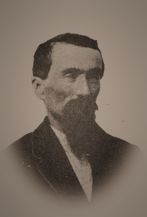
Three Years in the Confederate Horse Artillery — George Michael Neese.

July 5 — We were on the march nearly all last night, and most of the time we were mixed up in an ambulance train. Our march was very slow, and seemed more like a dead march than anything we have done in the marching business since the war. The surroundings were about as cheerful as a tomb.

The cannon we heard in the forepart of the night belonged to the Yanks, and they were shelling some of our wagon trains on top of the mountain. This morning just before day Colonel Thockmorton, commanding the Sixth Virginia Cavalry, came down the mountain with his regiment in a rather stirred-up condition, as if something wild and very dangerous had been seen in front. Captain Chew asked Colonel Thockmorton where he was going. He replied, “Down the mountain. A Yankee battery fired canister into the head of my command, and I am not going up there again until daylight.” Captain Chew then remarked, “Colonel, my battery was ordered up here to support your regiment, and if you go back, I will too.” Accordingly we went back down the mountain a short distance, fed our horses and waited for day. Immediately after daylight we renewed our march up the mountain, and when we arrived on top the Yankee destroyers had vanished from the scene of their last night’s destructive operations, and all was still and quiet on the mountain highlands. From all accounts and appearances the Yankee force that struck the wagon train on top of the mountain last night was considerable and overwhelming, as we had but few men to protect the train at that point in particular. It was not the train that we were guarding that was destroyed. The Yanks destroyed about ninety wagons, and they did their work well. Some of the wagons were chopped to pieces and others were burned. I saw the debris, such as skillets, frying pans, camp kettles, and all sorts of camp furniture scattered all along the road.

I made a little tour of inspection this morning where the Yankee raiders attacked the wagon train last night, merely to see whether I could find any evidence or trace of the resistance our few wagon train guards offered to the overwhelming force of Yankee cavalry that swept along the road. I found very few battle scars or marks on the trees and bushes, but behind a rock in a thick clump of trees lay one of our sharpshooters, still and silent in the bivouac of the dead, and no earthly reveille will ever wake him again. He was shot through the brain, and no doubt was killed by his adversary firing at the flash of the sharpshooter’s gun, which still lay by the dead body and pointed to the front.

After we were on the summit of the mountain about two hours we went down a mile on the Emmitsburg road on picket. We had about five hundred infantry of McLaw’s division with us for support. The infantrymen threw up breastworks along the front of our position. We remained on picket all day, and this evening we moved back a mile and camped at Monterey Springs on the summit of the Blue Ridge, sixteen miles east of Hagerstown. General Longstreet’s infantry came up the Emmitsburg road this evening.

July 4 — It seems that the great battle is over and from all appearances our forces intend to strike out for Dixie’s fair land. The last reverberations of the deep booming thunder of the artillery that shook the hills around Gettysburg have died away, and the thick sulphury folds of the battle cloud that hung like a canopy over the battle-scarred plain and hugged the bloody crest of Cemetery Hill had dissolved in the soft summer air before General Lee’s army unwound itself from its deadly coil, and like a huge and dangerous serpent glided slowly and defiantly away toward the Potomac.

As soon as the Federal commander was thoroughly convinced that the Confederate forces were withdrawing from his front, he dispatched his cavalry on missions of destruction, to harass our rear and if possible destroy the immense trains of commissary and ordnance stores that were on the road toward the Potomac, by the way of Hagerstown valley.

Vast squadrons of the enemy’s horsemen soon swarmed and hung along our track like hungry vultures, ceaselessly watching for vulnerable points to attack and to seize booty, to the great terror and consternation of quartermasters, clerks, servants, cooks, and teamsters.

The arduous and responsible duty devolving on the Confederate cavalry during the retreat was to guard and defend the retiring trains of wagons and ambulances against all inroads and attempts that the Federal cavalry were liable to make for their capture or destruction, and more especially to strenuously oppose and foil all efforts of the enemy to make any advantageous interposition between General Lee’s army and the Potomac.

At sunrise this morning we moved to Fairfield and remained there until General Ewell’s wagons and ambulances passed, and then we followed them as a rear guard. It was nearly night when the last ambulances passed Fairfield, and at about six o’clock this evening we took up our line of march and followed them, the great caravan moving on the Hagerstown road.

At dark we struck the foot of the Blue Ridge. The road was muddy and slippery, the night dark, rainy, dreary, and dismal. The train moved very slowly, with halts and starts all night. Every time an ambulance wheel struck a rock I heard the pitiful groans of the wounded. Now and then an ominous and inauspicious boom of a Yankee cannon came rolling through the thick darkness from the top of the mountain, and apparently on the road we were on, which unmistakably indicated that the enemy was seriously interfering with the movements of our wagon train.

To-day while we were at Fairfield a drenching thunder-shower passed over, and we went in a stable for shelter during the rain. While we were in there some of our boys played marbles for amusement. Eventually one of the marbles rolled through a crack in the floor, and in order to get it we raised one of the boards in the floor, and under there we found a large store-box full of good, clean, nice bed-clothes, sheets, blankets, counterpanes as white as snow, and beautiful quilts, all of which had been recently hidden from the supposed desecrating hands of prejudged thieving Rebels. We left everything in the box and reported our find to the family that owned the stable, and told them to move their goods to the house and fear no danger of being molested. The family seemed to be astonished at our find and utterly surprised into coyish silence to learn that their goods were safe even when discovered by the dreaded Rebels.

I am almost convinced that a strong sentiment prevails throughout the whole North that the Southern army is composed of thieves and robbers mixed with barbarians and savages, and this malignant spirit is instilled into the populace and encouraged by irresponsible, mean lying newspapers that are published by men who have never been south of Mason and Dixon’s line.

Just yesterday, after the little fight with the Yankee cavalry near Fairfield, a young lady came to me and asked whether our men would allow her to take care of a wounded man that was lying in the road near her father’s barn.

I told her to go and take care of as many wounded as she could find, and assured her that our men would not disturb her nor willingly interfere with her humane and laudable mission. I also told her that we did not come to Pennsylvania to make war on women.

July 3 — Last night an alarm reached camp that the Yankees were pressing General Imboden’s brigade of cavalry, which was about ten miles in our front. We were ordered to march at once, which was at about one o’clock last night. We marched down the Baltimore pike, and when we drew near where Imboden’s men were camped we learned that the report which reached us last night was false, as there were no enemy near General Imboden. His command was camped on the western slope of the Blue Ridge. We passed it and pressed on toward Gettysburg.

This morning just before day we passed through Fayetteville, a little village at the western foot of the Blue Ridge. As we passed through there were two men chopping down a large flagpole that stood in the center of the little town. We crossed the Blue Ridge and moved down the pike toward Gettysburg, as far as Cashtown, a small village eight miles from Gettysburg. We halted at Cashtown about two hours, cooked and ate our breakfast, and while we were eating our morning meal a furious battle was raging in the direction of Gettysburg, apparently some five or six miles distant. From the way the artillery howled and thundered the conflict must have been fierce, furious, and sanguinary. At one o’clock this afternoon we were ordered, with Jones’ Cavalry, to the right of our army. We moved round on a road that passes through a little village named Fairfield. At one point of the road from a high hill we had a distant view of the battle-field, yet we saw nothing but a vast bank of thick battle smoke, with thousands of shell exploding above the surface of the white, smoking sea. The sight was grand beyond description and awe-inspiring in the extreme. Our line looked to me from our point of observation to be about three miles long and enveloped in thick smoke, from which came a fearful roar and clash of musketry accompanied with a deep continuous roll of booming artillery, such as an American soldier never heard before on this continent. The artillery fire at one time was so heavy that the hills shook and the air trembled, and the deep thunder rolled through the sky in one incessant roar like as if the giants of war were hurling thunderbolts at each other in the clouds and rushing their war chariots across the trembling, sounding welkin. On our way we encountered the Sixth Regiment of United States regular cavalry on the road, between Cashtown and Fairfield.

The regiment had flanked around the right of our army and were already in the rear of General Lee’s line, and just ready to capture or destroy some of our wagon train when we met them. The enemy instantly perceived that they were checkmated in their undertaking, and commenced firing on us and our cavalry, instead of destroying wagons and frightening teamsters. We immediately put our guns in battery and opened on them, and our cavalry also opened with small arms, and for a while the conflict was fierce and hot. The old regulars fought stubbornly and well, but our cavalry completely frustrated their design, and almost demolished the regiment, killing and wounding many of them and capturing about two hundred prisoners.

After the fight we moved to Fairfield, a small village on the Cashtown road, and remained there till nearly night, when we moved a mile from Fairfield and camped for the night.

In the fight to-day we had our guns in position in a wheat field where the wheat was standing thick, and nearly as high as my head, and dead ripe. It looked like a shame to have war in such a field of wheat.

July 2 — Renewed our march this morning and moved toward Chambersburg, Penn. Early this morning we crossed the State line and passed into Franklin County, Pennsylvania.

The country south of Greencastle is pretty, the land fertile and well cultivated, and the barns look like churches. We passed through Greencastle, which is a beautiful clean town of about three thousand inhabitants, situated on the Chambersburg and Hagerstown Railroad, and in a rich and fertile country. The streets are wide and straight, the houses nearly all built of brick, and kept in good condition. I saw some beautiful, rosy-cheeked, bonny lassies on the street in Greencastle, but they looked as sour as a crab apple, frowns an inch wide and warranted pure vinegar playing over their lovely faces, like the shadow of a cloud that flits across the blushes of an opening rose. I wonder what made them look so frownful. We did not come here to harm nor molest the charming creatures, but we may hurt some of their relations if they get after us with guns.

The country between Greencastle and Chambersburg is a little rolling and rough. Chambersburg, the county seat of Franklin County, is situated in a beautiful country. The land around the town is under a state of careful and good cultivation. The little city contains about seven thousand inhabitants, and the buildings are nearly all brick. The Franklin House is a large and spacious hotel, built of brick, three stories high. The streets are wide, straight, and level, with good solid brick pavements on each side. Camped this evening on the Baltimore pike a mile from Chambersburg.

July 1 — We renewed our march this morning toward the United States, and we passed through Martinsburg and moved down the Williamsport pike. We forded the Potomac at Williamsport, then passed through the town and moved out on the Greencastle road about five miles and camped.

Our camp to-night is in Washington County, Maryland, and not very far from the Pennsylvania line. The country we passed through this evening along the Greencastle road is beautiful, the land fertile and the farming good.

June 30 — We renewed our march this morning on the Charlestown road. At Rippon we left the road and came by Summit Point and Smithfield. We struck the Winchester and Martinsburg pike at Bunker’s Hill, then moved toward Martinsburg. Camped this evening on the Winchester pike, two miles above Martinsburg. Rained nearly all day, and a few times during the day the clouds grew dark and lowering, and then the rain renewed the attack with redoubled vigor and came down in torrents. We took it all without making any resistance or returning the fire of the pelting storm.

June 29 — This morning we left Snickersville and crossed the Blue Ridge on the Berryville road. We forded the Shenandoah River early in the day, came through Berryville, and are camped this evening on the Charlestown pike four miles below Berryville. A heavy fog hung on the Blue Ridge this morning when we crossed.

June 24 — We are still at Snickersville. A squad of about forty dashing Yankees drove in our pickets today, five miles from Snickersville. It seems that driving in a few outer pickets satisfied the Yanks, as they retired again immediately after the performance of that great feat.

June 23 — This morning we marched to Union, which is about five miles in a northerly direction from Rector’s. We halted there some four hours and then moved to Snickersville. There is some beautiful land around Union and between Union and Snickersville. Camped in an orchard at Snickersville.

June 22 — The enemy that drove us so persistently yesterday fell back last night, and this morning we started in their pursuit. We moved toward Middleburg.

We marched down toward Upperville a mile, then waited in the road until about ten o’clock, when we advanced rapidly toward the retreating foe. We passed through Upperville and went as far as Middleburg. Near Middleburg we shelled a while with a Yankee battery, but they still kept falling back and we gave up the pursuit and moved back about four miles to Rector’s Crossroads and camped. Middleburg in Loudoun County is a beautiful little town, a row of locust trees on each side of Main Street extending from one end of town to the other.