Following the American Civil War Sesquicentennial with day by day writings of the time, currently 1863.

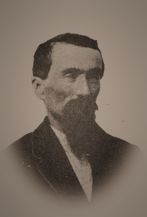
Three Years in the Confederate Horse Artillery — George Michael Neese.

June 21 — This Sabbath morning, instead of the peaceful tones of the church bells floating out on the quiet air, the deep harsh roar of booming cannon rolled over the hills and fields of Loudoun and proclaimed the opening of the butcher business for the day. The enemy advanced on us this morning from the direction of Middleburg, with cavalry and artillery. We fell back from Union and moved in the direction of Upperville, as the Yankees were advancing on the Upperville road too, with infantry, cavalry, and artillery. When we arrived within one mile of Upperville we encountered the enemy strongly posted on our right. Our cavalry made a bold and gallant charge on their position, but the Yanks received the charge stubbornly and did not give way in the least nor budge from their position, but in turn made a desperate charge on our cavalry, and soon after the fight became general all over the field. Sabers flashed all around us and the fire of small arms was raging all over the field and growing fiercer every minute.

It looked to me like as if the mixed-up men on both sides were charging in every direction, and at one time our battery came so near being captured that I thought we were goners. But as soon as the shock of the first charge had subsided and the cavalry unmixed themselves, we put our guns in battery and opened a rapid fire on the Yankee horsemen. Then their dismounted sharpshooters opened a heavy fire on us, and it seemed to me that the bullets flew at us from every direction, thick and fast.

The enemy drove us back slowly all day. Several times to-day I saw our shell plunge right in their advancing line, break their ranks, and check for a moment the oncoming host, but they quickly closed up and came at us again. They were certainly the bravest and boldest Yanks that ever fought us on any field. But I think that the cause of their prowess was more in their belief in strength of numbers than in the efficacy of cool courage, as they had a great many more men engaged than we had.

During the last part of the cavalry fight the Yankee infantry flanked round on our right and attempted to cut us off from Ashby’s Gap in the Blue Ridge. But we caught the gentlemen at their sly little game, put our guns in position and gave them a few drastic and effective doses of shell, which checked them completely and wound up the flanking business for the day.

While we were being driven back this afternoon, at one place the Yankee cavalry made a charge, and one of our guns had to go through a gap in a stone fence that was under the fire of a line of dismounted sharpshooters; but our gun dashed through at the top speed in horse artillery style, under the fire of the sharpshooters, which however was not very sure on a snap shot, as our boys came through the fence unscathed. After our gun passed the stone fence and got on a little rising swell in the next field it was whirled in position in the twinkling of an eye and we fired a few shell in quick succession into the line of cavalry that was still pressing on in hot pursuit. The shell broke their charge, and their line faltered, when our cavalry, which had kept up a running fight, made a bold stand, redoubled their fire and held the Yanks in check and saved our gun. We had one man of our company killed there. He was shot through the head by a sharpshooter.

It was nearly night when the fight ended, and we moved back to Paris, which is about a mile from where we did the last firing, and camped for the night.

Some of General Longstreet’s infantry came to our relief late this evening. However, they were not engaged in the fight, but were stationed on different slopes of the Blue Ridge commanding the Ashby Gap road.

Paris is a small village situated halfway up the eastern side of the Blue Ridge, and on the Ashby Gap road, on the north corner of Fauquier County.

June 20 — All quiet along the lines in front. Rained hard all day and we remained in the barn here at Union.

June 19 — We waited this morning until the brigade wagons came up and passed, then we moved to Snickersville. We remained at Snickersville but a little while, when we were ordered back toward Union, as the Yankee cavalry were advancing in that direction. We marched to Union without seeing any Yanks, but we heard artillery firing in the direction of Middleburg, where General Fitzhugh Lee was fighting the Yankee cavalry nearly all day. General Jones fought and drove back a body of Yankee cavalry near Union this morning.

It is raining hard now and the night is gloomy and dark; we are quartered in a barn right in Union. A little while after dark General Jones came into the barn and slept on the straw with us, just like a horse artilleryman.

From all indications the Yankee cavalry is closing in on us from two directions, and we will have some hot work to-morrow.

June 18 — We renewed our meandering march this morning through a hilly country, going to within four miles of Middleburg, in Loudoun County. We halted about six hours at Locust Grove, and while we were there the Yankee cavalry came to Middleburg, where our cavalry attacked and repulsed them.

We left Locust Grove late this evening and marched in the direction of Snickersville, passing through a little hamlet named Union. This evening we are camped at Bloomfield, a small hamlet in Loudoun County, three miles from Snickersville.

We had some heavy thunder-showers this evening, and it rained from four o’clock until nine. We were in it all, and took it with a soldier’s grace, because we could not do otherwise.

Very hot and dusty this morning, but this evening the road is muddy.

June 17 — We renewed our march this morning toward Warrenton. We forded the Rappahannock at Waterloo, at Warrenton turning and moving northward, and to-night we are camped near Salem, on the Manassas Gap Railroad. The country between Warrenton and Salem is rolling and hilly.

June 16 — This morning we were relieved from picket and started on a march with our old cavalry brigade. We moved in a westerly direction till we struck the Culpeper and Warrenton road, then moved on that road toward the Rappahannock. We marched until middle of the day, and then camped on Hazel River, eleven miles from Culpeper Court House. Weather hot and roads dusty.

June 15 — Still on picket at Brandy. All quiet in front along the Rappahannock. Weather clear and hot.

June 13 — This morning two regiments of Yankee cavalry crossed the Rappahannock at Beverly’s Ford and drove in our outer pickets. We were immediately ordered forward with our section of artillery, and went into battery on Fleetwood Heights at the very same position we held in the battle a few days ago. At first our two guns were the only ones on the field, but after we were in battery about an hour two batteries of Major Beckham’s battalion came on the field.

General Stuart and staff and General Hampton arrived on the field immediately after we went into position. Fleetwood is about two miles and a half from the Rappahannock. It seems that the Yanks did not venture very far inland this morning after they crossed to our side of the river.

We remained in position about two hours, when the enemy recrossed the river, and we moved back to our picket post at Brandy Station.

June 12 — Still on picket at Brandy Station.

June 11—Last night at midnight we were waked up and ordered to cook three days’ rations and hold ourselves in readiness for marching orders at any moment. But we remained in camp until this afternoon, then went on picket at Brandy Station with the first section of our battery, the remainder of the company moving camp one mile west of Brandy.