April 27 — This morning we started back, by the way of Franklin in Pendleton County, to our old camp at Harrisonburg. When we had proceeded about five miles on our way it was reported that a raiding party of Yankees was pursuing us. We halted in the road at a good position ready to go into action, but the report proved to be false, as there were no loose Yanks near. We marched on through a hilly and mountainous region, crossing Mill Creek four or five times during the day. Late this evening we struck the Franklin and Petersburg pike. Now camped on Mill Creek in Pendleton County.
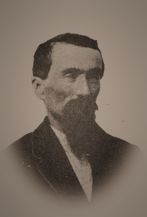
Three Years in the Confederate Horse Artillery — George Michael Neese.
April 26 — Moved camp to-day from the South Fork to the Petersburg grade, and are now camped about a mile southwest of Moorefield. I saw about eighty Yankee prisoners who had been captured by our cavalry yesterday in a fight at Greenland Gap, at the foot of the Alleghany Mountain. I saw also Colonel Dulaney, of the Seventh Cavalry. He was wounded in the arm yesterday at the Greenland Gap fight.
April 25 — I took three Yankee prisoners — that had been captured by our cavalry — to the guardhouse in Moorefield.
April 24 — Rained again nearly all day. The South Branch is past fording for artillery, and we, together with the Maryland Line of infantry and the Baltimore Light Artillery, remained near Moorefield while the cavalry all moved toward the Alleghanies.
April 23 — I slept in a little mountain barn last night. It rained nearly all night and a greater part of to-day. We renewed our march this morning toward Moorefield. Early in the day we passed Howard’s Lick, or more properly the Hardy White Sulphur spring, which is situated four miles from Lost River and at the eastern base of Branch Mountain. It is a beautiful spring, boxed with white marble slabs, and the water is as clear as the purest virgin crystal, and very sulphury. The surrounding mountain scenery is wild, grand, and magnificent; spurs of the Branch Mountain and long wooded ridges thickly clad with laurel and ferns rise around the spring and its neighborhood in every direction which bounds the view of the beholder. On one side not more than fifteen or twenty feet from the spring a steep bank rises almost perpendicularly, covered with mossy rocks and mountain fern, all darkly shaded by overhanging spruce and pine, foot-noted by the ever present shiny green of mountain laurel. About a hundred yards from the spring is an old hotel, weatherstained, gray with age, and embowered with giant oaks that have swayed their spreading branches in a thousand mountain storms, and no doubt often looked down on the stealthy Indian hunter as he silently kindled his camp-fire to prepare his frugal evening meal beneath their own sheltering canopy that caught the evening dew; and at early dawn heard the sharp twang of the bow-string as it sped the deadly arrow to the heart of unsuspecting game. A dark heavy fog hung on Branch Mountain all day, at some places so dense that we could not see fifty yards, and the fog looked like wool packed among the trees and shrubbery. After we had been some four or five hours in the damp, dense, cloud-like fog that hung around and hugged the rugged steeps, the rain ceased and the clouds partially broke away. We suddenly descended below the fog line on the western slope of the mountain, and the beautiful Moorefield Valley lay before us in all its smiling splendor, with its wheat fields, pasture lands, and grass fields all arrayed in different hues of living green. Gentle spring had already trailed her bright emerald robe along the grassy hillside and scattered the fragrant children of the sunshine along its balmy track. The South Branch and South Fork meandered with sweeping bends through the rain-cleaned landscape like bands of silver woven in a divers green carpet. Moorefield, almost in the center of the picture, looked in the evening glow like a bright jewel with an emerald setting. All of which was a delicious feast for eyes that have been befogged for four or five hours in the gloom of a wet, dripping mountain.
We forded the South Fork three times this evening; it is swollen considerably from the recent rains. The fords are deep and rough and the current so rapid that at one ford it swept some of us down stream. We marched till an hour after dark, then camped on South Fork, a mile and a half above Moorefield.
April 22— We renewed our march early this morning through Brock’s Gap. We crossed one of the main branches of the headwaters of the North Fork of the Shenandoah some six or eight times during the day. At one ford the water was deep and the current rapid. The water ran into our limber chests, but fortunately did no serious damage, as it only wet the butt end of the shell. We followed one of the incipient headstreams of the Little Shenandoah until it dwindled down to a little mountain rill, and then we crossed a little ridge and struck the headwaters of Lost River, which flows through a narrow mountain-hemmed valley along the southeastern edge of Hardy County. Camped this evening where the Mount Jackson and Moorefield road crosses Lost River, about twenty miles southeast of Moorefield and about twenty miles northwest of Mount Jackson.
April 21 — This forenoon we started on a big mountain raid to West Virginia, with General Jones’ cavalry brigade. We drew ten days’ rations of hard tack when we started, and I suppose we are to obtain our meat by legitimate foraging in the name of the Southern Confederacy.
We left the Valley pike two miles below Harrisonburg and moved in a northwesterly direction toward Brock’s Gap. Most of the country we passed through to-day is rolling and rough. We crossed Linvill’s Creek this afternoon. The land along this little stream is beautiful and of an excellent quality. Camped near Brock’s Gap.
April 18 — To-day we moved to our old last year’s camp, two miles below Harrisonburg.
April 17 — I saw the Maryland Line of infantry drill to-day. The men are well drilled and their regimental maneuvers were as regular and precise as clockwork.
April 15 — Commenced raining last night and rained all day, with a cold wind from the north. This morning a dispatch came from headquarters that the Yankees were advancing with a heavy force from the direction of Fredericksburg. We broke camp immediately after the dispatch was received and started our wagons up the Valley pike. We went one mile east of New Market on the Sperryville pike and put our battery in position ready for fight. The Sixth, Seventh, and Eleventh Regiments of Virginia Cavalry were there also, ready for the fray at the first appearance of anything in the shape of an enemy. The dispatch this morning about the Yankees advancing in heavy force was a big, heavy, false report. We remained in battery about two hours, saw no Yankees, then moved up the Valley pike to Mount Tabor Church, eight miles below Harrisonburg, and camped. It rained very hard all day and nearly everything we have is thoroughly saturated. There was not a dry stitch on me when we stopped to camp.


