May 8 — At midday our pickets reported that the Yankees were advancing up the pike — only cavalry, I suppose. We went in position with our guns on a hill east of the pike and south of North River. We had a first-class position, for it thoroughly commanded the ford and its approaches on the north side of the river. The Yankees did not advance any further than Harrisonburg. We remained in position till four o’clock, then returned to camp.
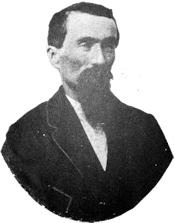
Three Years in the Confederate Horse Artillery — George Michael Neese.
May 6—This morning we renewed our march through a beautiful country. We struck the Valley pike one mile below Mount Sidney, then marched down the pike to North River, and camped on the south side of the river.
This camp is a half mile south of Mount Crawford, eight miles from Harrisonburg. I have not heard or seen anything of Jackson’s army since we left Conrad’s Store.
May 4 — Our camp being in the immediate vicinity of one of Virginia’s most beautiful curiosities, Weyer’s Cave, some eight or ten of our battery and some thirty or forty cavalrymen visited the caverns to-day. It certainly is the most beautiful hole in the ground I ever was in, and the environments on the outside are strikingly picturesque. Here nature was lavish in bestowing its wild charming beauties on the flower-bedecked wooded hillside, as well as its sparkling gems that glow and so profusely adorn the caverns inside, where the mystic goddess has been weaving her brightest jewels in silent gloom for thousands of years and is still at work putting delicate touches of lace-work as white as the virgin snow on every glowing ornament.
At four o’clock this evening we received marching orders, and renewed our march, turning westward toward the Valley pike. We forded South and Middle Rivers, both head streams of the Shenandoah. Camped this evening in a beautiful country a few miles east of Mount Sidney, a village in Augusta County, twelve miles north of Staunton.
May 3 — Remained in camp yesterday, but renewed our march this morning over the muddiest and worst road that I ever saw or dreamed of. So far, this has been a wet, rainy spring, and the roads in general are in a bad condition. Just two days ago Jackson’s trains passed over the road that we traveled on to-day, and when his trains pass over a road they generally succeed in knocking the bottom out, especially when the weather is wet.
Our road to-day hugged the base of the Blue Ridge nearly all the way, through a brushy stretch of country, with here and there low, wet swampy places. At some points the mud was too deep in the road to venture in, and we cut saplings and brush away with our pocket knives to make sort of a roadway around the bottomless mud holes.
I know that we pried our pieces and caissons out of mud holes a dozen times to-day, and at some places we made bridges with cordwood. It may seem incredible, but twice to-day I helped to pry out with fence rails a horse that was in mud up to its shoulders. I think these deep muddy places belong to the quagmire family, as it is the deepest and softest and blackest mud I ever saw. We marched and worked hard all day, and made only six miles.
This evening we are camped one mile above Port Republic, a small village situated at the confluence of North and South Rivers which form the Shenandoah.
May 1 — Rained hard all last night; we renewed our march this morning up the river over a very muddy and almost impassable road. In fact, at some places we had to go through the fields and meadows in consequence of the wretched condition of the road. We marched about nine miles to-day, and are camped this evening on the Shenandoah five miles below Port Republic.
April 30 — This morning at daylight we started out on picket. We went within ten miles of Harrisonburg, but saw no sign of Yankee game. We returned to camp a little after midday, then moved up the river two miles and camped. Some of the sentinels that were guarding at the bridge which crosses the Shenandoah at Conrad’s Store, had their guns set up, leaning carelessly against the side of the bridge, and when we crossed this morning the jar from the artillery threw them down, one of which was discharged when it fell, wounding three of the guards.
Jackson’s whole army is on the march up the river. Heaven only knows where he is bound for now. I know that ninety-nine out of a hundred of his men have no more idea of where they will turn up next than the buttons on their coats.
From here where we are camped this evening we can see the old camp that Jackson left to-day, and there are hundreds of camp-fires blazing there, which at first seemed a little puzzling, as Jackson has certainly gone up the river, and the camp-fires that I see right now are surely not spectral. But here comes a very satisfactory solution. Somebody whispers that General Ewell’s division crossed the Blue Ridge to-day from east Virginia, and his men are camped in the very same camp that Jackson’s men vacated this morning. Just a little piece of pure strategy fresh from under the little faded cap.
April 28 — This morning we, together with the Tenth, Thirty-Seventh and Twenty-Third Regiments of Virginia Infantry, went with a train of forage wagons as a guard to protect them from Yankee scouting parties that are prowling around searching for something to snatch. We went within a mile of McGaheysville, and remained there until the wagons returned.
I think that the Tenth Regiment of Virginia Infantry has just recently joined Jackson’s army, and has quite lately arrived from the Rappahannock. Today was the first time I saw it. It carries a large and splendid Virginia “Sic Semper Tyrannus” flag, the first one I have seen in the army.
April 26— To-day a party of Yanks almost succeeded in capturing a train of forage wagons that was gathering supplies in the neighborhood of McGaheysville, seven miles from Conrad’s Store, in the direction of Harrisonburg. But as usual some of Ashby’s ubiquitous watchdog cavalrymen were there, fought and drove the Yanks away and saved all the wagons, to the great delight of some scared teamsters.
April 19—We remained in camp till ten o’clock, then moved to Conrad’s Store on the Shenandoah River, seventeen miles east of Harrisonburg. Jackson’s troops are all camped here. This is the first time on this campaign that we have camped with or near Jackson’s infantry.
April 18 — This morning we went a little below Sparta, took a position, and waited for the advancing foe. About midday we saw a Yankee battery go in position on a hill west of the pike and about two miles distant from us. It was too far away for us to do any effective execution by firing on it, consequently we slowly retired from our position. Just after we started to retire a shell from the Yankee battery, nearly spent and almost as noiseless as a bird, flew over our heads and harmlessly dropped in a field, not more than thirty feet from us.
The rear guard duty we are doing now does not require us to fight the whole Yankee army, nor even their vanguard unless they press Jackson’s rear on his retreat, and as I have not seen a live sign of Jackson’s rear for a week, we allow the Yanks to advance almost undisputedly as long as they do it slowly and decently, without in any way interfering or intermeddling with Jackson’s movements.
After we left our first position we moved leisurely up the pike to Harrisonburg, which is sixty-seven miles from Winchester. There we turned east and moved down the Standardsville road five miles, where we are camped this evening.


