March 28 — Went on picket again at the same place we were yesterday. No Yanks in sight.
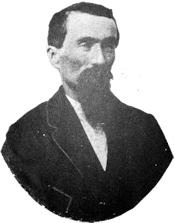
Three Years in the Confederate Horse Artillery — George Michael Neese.
March 27 — To-day we went on picket two miles below Woodstock. We had a little skirmish with the Yanks and exchanged a few shell with them. This evening we came back to the Court House, ate our supper, and then moved two miles south of town and camped in a woods on the east side of the pike.
March 26 — Moved back to the Court House again. The shell we fired at the carriage near Winchester on the evening of the 22 wounded General Shields.
March 25 — Moved to Taylortown, four miles south of Woodstock. Quartered in a house.
 March 24 — This morning at daylight we hear the deep boom of a cannon in the direction of Kernstown, which plainly indicated that the Yanks were out early Rebel hunting, shelling the road as they cautiously advanced, searching for ambuscades or masked batteries, of both of which they seem to be most awfully afraid, consequently their advance guard is never without a battery in close proximity to shell every suspicious thicket along the road that might hide a Rebel.
At about nine o’clock they came in sight. We moved about a mile south of Newtown, went in battery and fired on their vanguard. As usual, they had the indispensable battery in front and returned our fire forthwith. At this position we had a lively and stubborn artillery duel. We held our own until we saw that the Yankee army as a whole was advancing. Then we withdrew to the next hill and opened on them again, and so we skirmished with their artillery and devilled their advance from every hilltop until we arrived on the Shenandoah side of Cedar Creek. There we found Jackson’s infantry and wagon train in camp, but were preparing to move up the Valley. The Yanks charged one of our guns to-day, but found that the fire was a little too warmish and dangerous to accomplish the capture of a live Rebel gun. The Yanks have no relish for canister.
We took the same position at Cedar Creek that we had on the 18th, and the Yanks put their battery in the very same place that they had it in then, and judging from the accuracy of their fire and the precision with which their shell exploded just at the intended point and time, I am almost certain that it was the same battery that fought us before from that position. It was a very short time after we went in battery until the Yanks were ready to open fire on us. However, the opening fire of both batteries was simultaneous. The fire was severe. Their shell exploded all around us, and some of them too near to feel good or to be agreeable and consistent with a healthy body, sound limbs, and whole bones.
While we were firing, Jackson’s wagons and infantry, which were just in rear of our position, however not in sight of the enemy’s battery, moved out on the pike and started up the Valley. Then the Twenty-Seventh Virginia Infantry moved out and halted a few moments on the pike in our rear, and right in range of the Yankee battery that was firing on us. A shell that was directed at our guns oversped its intended mark and exploded in the regiment. It killed and wounded some five or six men. One man, a member of the Rockbridge Rifles, still lay in the road when we retired from our position. He had his leg cut nearly off above the knee, and his trousers, which had been ignited by the explosion of the shell, were slowly burning. I suppose his comrades were a little excited, or else perhaps had no way to take him along, and had left him in the critical condition that I found him. I extinguished the fire and lifted him out of the road and put him in a seemingly easy position against the fence. When I was about leaving him he handed me his rifle, with the remark, “Here, take my gun and don’t let the Yankees have it.”
True and sincere patriotism of such quality as that, manifested under such trying and painful circumstances, ought to merit the lasting commendation of a grateful country. He thought then, and so did I, that he would fall into the hands of the enemy, as we were rear guard, and there was nothing between his fence corner and the Yanks to prevent his capture. But I learned this evening that after I left him some one went back with an ambulance and brought him away. After Jackson’s men had all moved away and were out of sight we retired and fell back to Woodstock. Quartered in the Court House.
March 23 — This morning we ate breakfast at four o’clock, and daylight found us on the march for Kernstown. We arrived at Bartonsville by sunrise and remained there about two hours; then went within half a mile of Kernstown and halted. From there one gun went still a little farther on toward the town. Just a little south of town, and where the pike makes a little turn, stands a small brick house on the west side of the road. In front of that house our first gun went in position, and fired the first and opening shot of the battle of Kernstown.
The Federal artillery was in position on a range of hills northwest of the town and replied to our opening shot with a vim which at once bespoke that they meant business. In the meantime a body of sharpshooters and two pieces of artillery advanced on our position from the east side of town and a little to right of our front. When the sharpshooters opened on us with their long-range rifles, and the two pieces of artillery commenced firing on us, we abandoned our position and retired under fire. We fell back about half a mile.
The first shell they fired at us from the battery on our right was a twelve-pounder, and I saw it flying in its graceful curve through the air, coming directly toward the spot where I was standing. I watched it until it struck the ground about fifteen feet in front of me. I was so interested in the sky ball, in its harmless appearance, and surprised that a shell could be so plainly seen during its flight, that I for a moment forgot that danger lurked in the black speck that was descending to the earth before me like a schoolboy’s innocent plaything. It proved to have been a percussion shell, and when it struck the ground it exploded and scattered itself in every direction around me, and threw up dirt and gravel like a young volcano. Some of the gravel struck me on the arm. Then I left that place instantly, as I did not have any inclination whatever to watch any more shell just then, and my gun had already retired.
Soon after we fell back from our first position the cannonading became general. The Yankee batteries on the hills west of town opened fire on our cavalry, and one four-gun battery came up the pike and planted its guns east of the road and not far from where we fired the first shot this morning.
We opened fire on it when it entered the field, and it wheeled in battery under our fire. The Yanks were expeditious and lively in getting ready, and in a very few moments they briskly returned our fire with all four of their guns at close range. We had only three pieces — two near the pike and one about two hundred yards farther to the right, all on the east of the road.
The artillery fire now became terrific. Hundreds of shell went just over our heads, howling and shrieking in the air like demons on their way to deal death and destruction to Rebels. Some of their shell exploded over our heads and sowed their fragments and leaden hail in the sod around us. Others exploded close in our rear and thundered like batteries in the air where the furies of battle were fiendishly hissing the weird dirge of death and destruction. Just then I was ready to run without further notice.
Our twelve-pound howitzer shell exploded right among their guns, and eventually, unable to endure our fire any longer, the Yankee battery left the field. I was just about as glad as a raw recruit can possibly expect to be on a day like this, and under like circumstances, when I saw the Yankee battery limber up and leave the field. About midday Jackson’s troops began to arrive on the field. His infantry and artillery went to the left of our position and on the range of hills west of the pike. His men were not in first-class condition to take their places in line of battle, which they were required to do almost immediately after their arrival on the field, from the fact that they were weary and tired, and almost broken down with over-fatigue from hard marching. Since yesterday morning they marched from three miles south of Mount Jackson, which is about forty miles from Kernstown.
The hills west of Kernstown were blue with Yankee infantry. When Jackson began to form his line a regiment of the Yankee infantry double-quicked from Kernstown across the fields toward our left. They had a large and conspicuous flag. When Colonel Ashby saw it he came riding rapidly up to the battery and cried, “Fire on that flag.” In a moment we sent a shell through the center of the regiment. We fired at it some four or five times. About half of the regiment bowed humbly to the ground every time we fired, and to say that they double-quicked after we fired the first shell does not begin to express the movement of that regiment until it disappeared behind a low ridge.
It was a little after four o’clock when the principal battle between the infantry commenced in earnest. The musketry was fearful. One continued roll raged fiercely for two hours, with now and then a slight lull which for variety was broken with the deep thunder of artillery. When the musketry opened so suddenly along the line one of our boys, almost in despair, exclaimed: “My God, just listen to the musketry! There will be no fighting between these armies after to-day, for they will all be killed on both sides this evening.”
But it is utterly astonishing and wholly incomprehensible, especially to a tyro, how men standing in line, firing at each other incessantly for hours like they did to-day, can escape with so few killed and wounded, for when Jackson’s infantry emerged from the sulphurous bank of battle smoke that hung along the line the regiments appeared as complete as they were before the fight.
It was nearly dusk when the firing ceased, and Jackson gave up the field, repulsed but not vanquished, defeated but not routed nor demoralized, for his troops are camped for the night around Newtown, not more than three or four miles from the battle-field.
To-day was the first time that I experienced the realities of an actual battle-field, and am willing to admit that to see two armies in battle array is an imposing sight. The glittering flash of burnished arms, the numerous battle flags floating over the forming lines, the infantry marching with measured step in close order taking their places in the growing battle line, with here and there a group of artillery in position, is so inspiring as to almost fascinate even a timid freshman as he stands ready to take his place for the first time in the human shambles. The enchantment act transpired before the battle opened, but when the firing commenced and they began in earnest to pass the bullets, shot, and shell around promiscuously, the fascination and all its kindred suddenly took flight from me faster than forty suns can rout the most delicate morning mist. Mother, Home, Heaven are all sweet words, but the grandest sentence I ever heard from mortal lips was uttered this evening by Captain Chew when he said, “Boys, the battle is over.” We are camped this evening on the first hill south of Newtown.
March 22 — Yesterday evening we heard that the Yanks had nearly all left Winchester. This morning we started early en route down the Valley. Some of our boys were light-hearted and even merry, as they fully anticipated with the utmost confidence of entering Winchester this evening without any serious opposition or difficulty.
Between Middletown and Newtown we met a boy from Winchester, who told us that the Yanks all left town this morning; but that boy evidently lied, for we had very strong proof, and plenty of it, to that effect before night. About the middle of afternoon we sighted the southern end of Winchester. We saw a few tents and some few infantrymen strolling about, but apparently the town seemed to be evacuated by the enemy, sure enough. We advanced to within about a mile of town and put our guns in position, and fired a few rounds at the infantry that was scattered around the fields near town. After we fired a shell or two we saw a carriage or ambulance surrounded by a few horsemen come from town and drive on the field. Captain Chew said, “Give that carriage a shot; it may be carrying some important game.” We turned one gun on it, and our shell exploded near the vehicle, and it soon after disappeared from the field. Even after our firing, from all appearances, there were no forcible indications that there were many fighting Yanks close around, and we were almost certain that they had no artillery. But in war things are not as they seem, for at this juncture of affairs a few companies of Ashby’s Cavalry charged down the pike with the expectation and intention of going into Winchester. But just before they got to the edge of the town a regiment of Yankee infantry rose from behind a fence and fired a volley at them at close range; but fortunately the Yanks were excited to the buck fever heat, consequently too hasty with their aim and fire, and our cavalry came out without sustaining the least damage or injury.
After the cavalry came back we fired at the infantry, but in about twenty minutes after their infantry fired from behind the fence the Yanks put an eight-gun battery in position on a hill west of town, which thoroughly commanded our position and the pike.
They opened on us with their eight guns from the hill, and we had but two, and down on a level field much lower than their position, and exposed to their direct fire, which rendered our situation untenable, consequently we left forthwith and immediately.
Up to this time I never heard such thunder as those guns on that hill kept up until we passed out of range. The shell came thick and fast, exploding all around us, every fragment shrieking, “Hark from the tomb.” It was now about sunset, and we started back to Newtown, where we arrived about an hour after dark, and quartered in a church.
March 20 — This morning we went below Woodstock on picket, but saw no Yanks. This evening we are quartered in the Court House at Woodstock.
March 19 — Early this morning we moved to the top of Fisher’s Hill, two miles above Strasburg, put our battery in a good commanding position, and awaited the advance of the enemy. We did not have to wait long before their advance guard appeared over Hupp’s Hill, nearly a mile north of Strasburg. Close behind their advance guard came their artillery and infantry, with steady tread, in solid column, and in overwhelming numbers. We had nothing but one battery and Ashby’s regiment of cavalry to oppose the mighty host that was approaching with floating banners.
They marched in one body till they arrived in town. Then one column flanked out on their right and advanced up the railroad and the other one came up the pike. When the one on the pike came within range of our guns we opened fire on the head of the column, which checked, mixed, and muddled them, and they retired, not quite in as good dress parade order as they had advanced just a moment before. But in the meantime the column that came up the railroad was about flanking our position, and about a mile northeast of us they put an eight-gun battery in position at almost the same altitude as ours.
When they opened fire on us with eight guns,— and from the clear-cut whiz of the shell they were all rifled pieces at that,— with an infantry column advancing on our left and one in front,— eight rifled guns playing on two,— we quickly arrived at the conclusion that discretion being the better part of valor, we would retire without delay. We fell back about a mile and took another position. The enemy advanced their battery, and we opened on them again. They returned our fire, doubling the amount. We fell back to another position and opened again, and they also repeated their tactics, and so we kept on falling back, firing at them from every hilltop for six miles.
When we left our last position it was nearly night, and we came to Narrow Passage, three miles south of Woodstock, and camped for the night. The Yanks fell back to Strasburg, which is twelve miles from Woodstock.
At some of our positions to-day the cannonading was what a raw recruit considers severe and unwholesome. Their ten-pound Parrott shells exploded all around us and threw the fragments in every direction with a whiz and a ring that made music—of its kind— in the air.
Our cavalry burned three railroad bridges to-day — Tumbling Run, Tom’s Brook, and Narrow Passage.
March 18 — Everything was quiet in front until the middle of the afternoon. Then a report reached camp that the Yanks were advancing. We were ordered to pack up as quickly as possible and get ready for action. The enemy advanced rapidly, and we were ordered to Cedar Creek to oppose their onward march. We put our guns in position about half a mile from the creek on the west side of the pike, on a hill which commanded the bridge and its approaches.
The enemy advanced with artillery, cavalry, and infantry. When they came within a mile of our position we opened fire on them with our rifled guns. Their artillery wheeled four guns into battery immediately after we opened and returned our fire. Both sides thundered with a lively exchange for about twenty-five minutes. Then the battery ceased, either to change position or seek a more sheltered one, as the one they occupied was on the exposed face of the hill, and we had the range of their position, and perhaps we hurt somebody on their side of the creek.
When they ceased firing we held our position a few moments, when, in consequence of approaching night, we fell back to Strasburg, which is four miles from Cedar Creek and eighteen from Winchester. We quartered in a house on Main Street till midnight, when a report from the front reached us that the Yanks were advancing. We rolled up our blankets and had everything ready to march at the word “Forward.” We left the house and moved about two hundred yards south of town, and lay there on the roadside until day.
Our men burnt the Cedar Creek bridge to-day before we turned the creek over to the Yanks. The bridge was burning when we were firing on their battery.


