Following the American Civil War Sesquicentennial with day by day writings of the time, currently 1863.

February 6th.—Bright and frosty. As I supposed, the peace commissioners have returned from their fruitless errand. President Lincoln and Mr. Seward, it appears, had nothing to propose, and would listen to nothing but unconditional submission. The Congress of the United States has just passed, by a two-thirds vote, an amendment to the Constitution abolishing slavery.

Now the South will soon be fired up again, perhaps with a new impulse—and War will rage with greater fury than ever. Mr. Stephens will go into Georgia, and reanimate his people. Gen. Wise spoke at length for independence at the Capitol on Saturday night amidst applauding listeners, and Governor Smith speaks to-night.

Gen. Breckinridge is here and will take his seat to-morrow. Every effort will be made to popularize the cause again. Hon. Mr. Foote is at Washington, in prison.

Gen. Wise’s brigade has sent up resolutions consenting to gradual emancipation—but never to reunion with the North.

There is a more cheerful aspect on the countenances of the people in the streets. All hope of peace with independence is extinct—and valor alone is relied upon now for our salvation. Every one thinks the Confederacy will at once gather up its military strength and strike such blows as will astonish the world. There will be desperate conflicts!

Vice-President Stephens is in his seat to-day, and seems determined.

Mr. Hunter is rolling about industriously.

Gen.Lee writes that desertions are caused by the bad management of the Commissary Department, and that there are supplies enough in the country, if the proper means were used to procure them.

Gen. Taylor sends a telegram from Meridian, Miss., stating that he had ordered Stewart’s corps to Augusta, Ga., as Sherman’s movement rendered a victory necessary at once. The dispatch was to the President, and seems to be in response to one from him. So we may expect a battle immediately near Augusta, Ga. Beauregard should have some 20,000 men, besides Hardee’s 15,000—which ought to be enough for victory; and then good-by to Sherman!

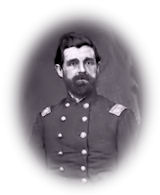
Colonel Lyon’s Letters.


Huntsville, Ala., Sun., Feb. 5, 1865.—I have not been more pleasantly situated since I have been in the army. I have just enough to do to prevent time from passing heavily, without being at all crowded. Then I have good quarters, a pleasant command, and business which suits me. The same doubt and uncertainty hang over our future movements that have kept me from sending for you. Colonel Doolittle, of the 18th Michigan, is making a strong effort to get his regiment in the 4th Army Corps. If he succeeds it may throw me in command of this post again, a position that is an unmitigated nuisance to any one, and which I am anxious to keep out of.

Sunday, 5th—The atmosphere is clear and it is getting quite warm. We remained in our rifle pits all day, but had to put up our shelter tents, for we actually suffered from the heat. All is quiet in front. We had company inspection this morning and dress parade in the evening. We drew two days’ rations to last ten days, but we have an abundance of forage. The boys brought in smoked bacon by the wagon load, also great quantities of corn meal, sweet potatoes, honey and other good things.

5th. Sunday. Spent the day in quarters reading Independent, Testament and a story. Windy.

Twelve miles south of Johnston’s Summit,

Augusta and Branchville Railroad,

February 5, 1865.

They call the stations on this road “turnouts.” Negroes are swarming into our camps. I never heard a negro use the word “buckra” until last night. One of the 97th Indiana was killed this morning while foraging close to camp. Our men killed two and captured four Johnnies, all dressed in our clothing. Only moved four miles to-day, and will probably lay here a few days as Sherman told Wood we were four days ahead of time, he having counted it would take that long to effect a crossing at Buford’s bridge.

February 5th.—Clear and cold. Our commissioners are back again! It is said Lincoln and Seward met them at Fortress Monroe, and they proceeded no further. No basis of negotiation but reconstruction could be listened to by the Federal authorities. How could it be otherwise, when their armies are marching without resistance from one triumph to another—while the government “allows” as many emissaries as choose to pass into the enemy’s country, with the most solemn assurances that the Union cause is spreading throughout the South with great rapidity—while the President is incapacitated both mentally and physically by disease, disaster, and an inflexible defiance of his opponents—and while Congress wastes its time in discussions on the adoption of a flag for future generations!

This fruitless mission, I apprehend, will be fraught with evil, unless the career of Sherman be checked; and in that event the Battle for Richmond, and Virginia, and the Confederacy, will occur within a few months—perhaps weeks. The sooner the better for us, as delay will only serve to organize the Union party sure to spring up; for many of the people are not only weary of the war, but they have no longer any faith in the President, his cabinet, Congress, the commissaries, quartermasters, enrolling officers, and most of the generals.

Judge Campbell was closeted for hours last night with Mr. Secretary Seddon at the department. I have not recently seen Mr. Hunter.

We have news from the Eastern Shore of Virginia. My wife’s aunt, Miss Sally Parsons, is dead—over 90 years of age. The slaves are free, but remain with their owners—on wages. The people are prosperous, getting fine prices for abundant crops. Only a few hundred Federal troops are in the two counties; but these, under the despotic orders of Butler, levy heavy “war contributions” from the unoffending farmers.

February 5th.—Arrived at home very unexpectedly to all, about 9 P. M. after having marched nine days and over a distance of about two hundred miles.

The weather was freezing cold during our two-hundred mile homeward march. The shoes I had drawn from Confederate States Government were so short I could not bear my feet in them, and so pressed down the vamps and tying the quarters over the instep, my feet, with very thin socks, were exposed on top of the shoe vamps. Result, my big toes were so frozen that soon the nails came off.

Remained at home until the 7th. Reported at Tunnel Hill; was sent to Chattanooga. Brother J. H. Magill came and got us set at liberty, Brother Tom and myself, by our taking the Amnesty Oath. Brother J. H. bought us a nice suit of clothes each and gave us government contract to put cord wood on Eastern Tennessee, Virginia and Georgia Railroad at Chickamauga Junction. So we went to work for the Government, and continued until 1st of July, when the job played out, and we returned home. During this time all the Rebel armies had surrendered, and all was quiet. In July I made a visit to relatives in East Tennessee. Since that time I have been at home. While in the army I marched 3,320 miles; and travelled on railroad trains, 2,280 miles; total, 5,600 miles.

R. M. Magill

Camp near Petersburg, February 4th, 1865.

Once more I find myself in camp, ready to act my humble part in the closing scenes of this great drama. I arrived at my journey’s end last evening; found the regiment where and as I left it; the men in good health and spirits.

I had the good fortune to meet my comrade, Charles Groesbeck, at the depot in Jackson. Our journey to Baltimore was pleasant as circumstances would admit; no accident, which is itself an accident.

At Baltimore our annoyances began. The bay had been closed for nearly a week. My furlough expired that night. Thursday morning I went to the Quartermaster to see if a boat was likely to leave. I learned the mail boat was to make an effort at 3:30 p. m. We were not alone; hundreds of soldiers were there on the same errand; some had been waiting over a week. There was a rush for transportation, and we were forced to leave our furloughs until noon, when they would be returned to us with our transportation papers. Noon came, and with it our furloughs— minus the others. There was a fix. We would not be allowed on board without it; to obtain it that day would be impossible. At the wharf we found a Government shipping agent, whose duty it is to furnish transportation for troops when ordered by the Quartermaster. He informed us that a Government vessel was to leave for Fort Monroe at 3:30, and, transportation or not, he would see us on board, and then we could take the mail for City Point. The time came, but no Government vessel, and the mail was about to leave. The bell rings; again it sounds out a warning peal; in five minutes she is off. Already they are preparing to haul in the planks. A hundred men in blue appeared, maddened by the unnecessary delay; gather around, threateningly. The temptation was irresistible; a charge was made; the guards were swept aside; we are on board. Put us off who can. The effort was not made.

We made slow progress until past Annapolis, stopping often for the ice boat to clear the way. Below Annapolis the Bay was clear of ice, and we made excellent time, reaching Fort Monroe at 8 o’clock next morning. Here another attempt was made to find out who had transportation and who had not.

Five guards were placed at the gangway, with bayonets fixed, and orders to let only one man pass at a time, while an officer stood by to examine our papers. The attempt was vain; again the guards were brushed aside; we rush on shore; make a “straight wake” for the Provost’s office, had our furloughs stamped, rushed again to the Quartermaster, where we succeeded in procuring transportation to City Point. From this time all went smoothly until we reached the Point at 5:30 Friday evening. Here we had our furloughs restamped and boarded a freight train for the front.

I found my comrades all right, and our little house in as good condition as when I left.

The Ninth Corps is under marching orders, and are turning over mules, wagons, etc.

God knows what the future has in store, but the memory of those few days spent with my loved family will ever be cherished as among the happiest of my life.

February 4.—While getting ready to go back to the hospital, my father came in overjoyed, and told me that my work was over, and that we are to have peace at last. Lincoln has agreed to receive peace commissioners, and three of our ablest men, Vice-president Stevens, Judge Campbell, and Senator Hunter, have gone on the mission.

Many think the northerners are going to war with France, and expect us to assist them, but I know that none of our people will be mad enough to do that; indeed, I am certain that they will not. Let the northern people fight their own battles; we will be neutral.

All seem much pleased with the selection which has been made in our commissioners. I hope Stevens is satisfied now that he has gone on the mission for which he has so long wished.

Saturday, 4th—We remained in line of battle all night, not being allowed to build any fires. This morning we moved out about two miles nearer the upper bridge, the rebels having left the vicinity during the night. We remained here, fortifying the bridge. Our teams and batteries came across the bridge this morning. General Mower’s division lost several men here at the bridge yesterday morning about the time that we were crossing below.[1]


[1] There was a concerted move by the Union army all along the line. —Ed.