Thursday, 16th.—Sick to-day. Yankees would not exchange papers to-day.

December 16th, 1864.—We have had company today, ladies from town to spend the day. I have listened to many a bit of gossip and heard some laughable incidents related. Life is a complex problem; it is like a kaleidoscope in its changing scenes. On one side all is gay and bright and on the other, sorrow and dark misery.
One of Father’s favorite texts is this: “Trust in the Lord and do good,” and it seems that is the only thing left for us to do. Father says I must remember that the Bible says there is a time for all things, a time to laugh and a time to weep and it is as much our duty to “rejoice with them that do rejoice” as it is “to weep with them that weep.” So I have tried to forget the poor sick Yankee and his sad death and take part in the fun these ladies are having.
There are to be two or three weddings; at least two engagements are in sight, if not yet une fait accompli. One couple were married last week and parted at the church door; he to go to Virginia and she to go home to wait for him.
Lieutenant So-and-So was suspected of casting soft glances at a certain charming young widow, who still wears her weeds, and eyebrows went up and voices were lowered to a whisper, as the tale was recited of a certain aged Romeo and Juliet who are, at present, amusing Tallahassee society. Well, the day is over and I will not deny that I have laughed as heartily as if there was no war, but it is only to lose sight of it for a little while.
Friday, 16th—Left this morning at 8 o’clock for King’s bridge over the Ogeechee river at a point fifteen miles from Savannah, where we again went into camp. All the torpedoes having been removed from the river, small boats can now come up to the bridge and land. Two boats came up with mail and some other articles. There were four tons of mail for the army. All is quiet along the line, but we have no rations yet. We still have plenty of rice with the hull on, but all the mortars upon the plantation have now been gathered together and the cavalry have put all the negroes of the plantation at work hulling rice.
Dec. 15, 1864.—It seems like folly to keep writing letters to you when they accumulate on my hands, yet they may be of some interest to you when you get them. When that will be I can not even guess. The blockade still continues, and except a very few vague and unreliable rumors we know nothing of what is transpiring north of us.
Our life here is almost perfect stagnation now— nothing of interest going on. I have moved the regiment to better ground and nearer my headquarters, and I spend part of each day there. Then I ride around and look at the fortifications, and visit the regiments of the brigade when the weather is pleasant, and thus manage to get through the day. Our fortifications are nearly complete, and Stevenson is very strong now. I apprehend no attack, however. This uncertainty is wearing.
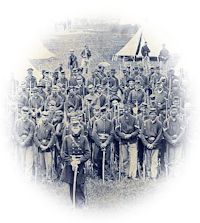
December 15th, 1864.
Another sweet messenger from home, dated December 4th. It seems to have been quite a long time on the way; ten days in a time of comparative quiet.
I do not know how it may be with those removed from these busy scenes of strife, but, with me, the mighty present swallows up the events of the past and almost obliterates them from memory. Movements which, in process of execution, claim all our attention and from which the grandest results are anticipated, become, when past, but as a “watch in the night.”
All eyes are now turned on Sherman, awaiting news of him in breathless suspense. At the same time movements are on foot here that will eventually compel the evacuation of Petersburg.
Unfavorable weather has caused a short delay, but the storm is over and our troops are on the march again. Meanwhile, I can wait, feeling that “the night is far spent and the dawn is at hand,” doing the little I can for my fellows and my country; ambitious only that I may be worthy the good opinion of my loving wife, so tenderly, confidingly expressed in this, her last letter. Courage, dear one; yet a little longer must we toil and struggle on. Our paths are now converging; they soon will meet, in blissful union; then, hand in hand, together will we pass down the declivity of life, purified and made better by these sore trials.
So we are to have another dinner—a Christmas dinner—prepared by the kind friends at home expressly for the Seventeenth Regiment, the whole to be superintended by Mr. Winegar, of Grass Lake. Mortimer has rejoined his regiment. I heard of the event last night, and early this morning started in quest of him. His regiment is in the inner line of works, about five miles from here, near a large fort called the Crater, from the manner in which it belches fire and smoke and iron missiles from its huge guns. I found him looking well, though a little thin, and was glad to see him, for had he not just returned from home—my home? Had he not seen and conversed with my loved ones, only a few days instead of years ago? And then, those little articles of comfort, direct from home; precious mementoes of a wife’s devotion and tender remembrance. Is it any wonder as I clasped his hand, my eyes were dim with the mists of pleasing memories?
I will not attempt to picture the pleasure I experienced as I looked on that on which my wife’s dear eyes had rested, watered, perhaps, with bitter tears; in handling that which was fashioned by her hands. And those towels! Soon as I returned I hung one beside the door of my little house. How homelike it did look! And then I washed me very carefully, lest I stain its snowy whiteness and dried me on her towel, as I used to do at home. Can I ever wear those stockings? For her dear sake I will, although it seems like sacrilege.
I could only spend two hours with Mortimer, but we made the best possible use of the time. During that time I heard more gossip than in the past two years.
He told everything “I said and they said,” with the variations; some agreeable, some otherwise. I asked him what he thought of our darling baby, Nell. “Oh, it’s quite a decent-looking young one, but no better than other folks’s.” He said: “Aunt Sene asked me if she wasn’t the handsomest grandchild they had, and I told her ‘No, Flora was.'” Then, fearing he had shocked my sensibilities, he apologized by saying: “Flora has got to be a darned purty girl; you never see anybody change as she has.”
I saw Billy Richardson. He says he can go on picket and fire his “hundred rounds” at nothing as well as anybody.

December 15th.—Cloudy and cool.
A dispatch from the West states that the enemy have made a heavy raid from Bean’s Station, Ky., cutting the railroad between Abingdon and Bristol, destroying government stores, engines, etc. Breckinridge and Vaughan, I suppose, have been ordered away. Dr. Morris, Telegraph Superintendent, wants to know of the Secretary if this news shall be allowed to go to the press.
The President is ill, some say very ill, but I saw indorsements with his own hand on the 13th (day before yesterday).
Our affairs seem in a bad train. But many have unlimited confidence in Gen. Beauregard, who commands in South Carolina and Georgia, and all repose implicit trust in Lee.
A writer in the Sentinel suggests that if we should be hard pressed, the States ought to repeal the old Declaration of Independence, and voluntarily revert to their original proprietors— England, France, and Spain, and by them be protected from the North, etc. Ill-timed and injurious publication!
A letter from G. N. Sanders, Montreal, Canada E., asks copies of orders (to be certified by Secretary of War) commanding the raid into Vermont, the burning, pillaging, etc., to save Lieut. Young’s life. I doubt if such written orders are in existence—but no matter.
It is said the enemy have captured Fort McAlister, Savannah Harbor.
Mr. Hunter is very solicitous about the President’s health—said to be an affection of the head; but the Vice-President has taken his seat in the Senate.
It was rumored yesterday that the President would surely die,— an idle rumor, perhaps. I hope it is not a disease of the brain, and incurable.
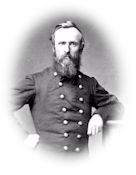
Thursday, 15. — Cold, a little sleet. This evening we get the first message from Sherman’s army. “So far all well,” says General Howard from camp five miles from Savannah. Rebel news is that a battle for the possession of Savannah was raging on the 12th. God protect the right!
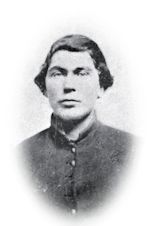
Fort Gillem, Thursday, Dec. 15. Much dissatisfaction was expressed this morning by the Company when —— entered upon the duties of orderly sergeant. This is doing great injustice to the other sergeants that were his superior in rank, and any of them better qualified, and would receive more respect from the boys, none of whom like ——. The privates of the volunteer army are men of judgment, and will use it in spite of red tape and military discipline. Would it not be much wiser then, to allow them to have a voice in choosing their officers? Certainly they would be easier controlled. First Sergeant Malish is quartermaster sergeant.
The day has been warm and mild but the mud not much improved. 14th Ohio Battery that were with us here marched at 4 A. M. As expected, heavy fighting has taken place to-day. Only artillery firing and skirmishing in the forenoon, but after dinner the heavy throbs of musketry mingled with the incessant roar of artillery. All the fighting has taken place on our left, near Forts Negley and Sigel about four miles off. And we laid around carelessly while our ears were filled with the terrible death notes of battle. So many times have we listened to it that they have almost ceased to quicken our pulse or awaken serious or earnest thoughts of the hundreds that are swept into eternity, at least of the many hearts that will bleed when the news of this battle reaches them, of the terrible suffering from ghastly wounds and bleeding limbs caused by it. Oh I cannot forget that war is terrible, and I cannot keep my mind from these saddening thoughts while these stern sounds fall upon my ear. Of the result we know nothing, but all accept success as the inevitable result. Before to-morrow morning we may be in the fight.
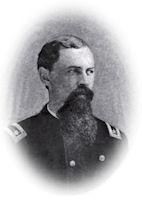
Before Savannah, December 15, 1864.
First mail goes in 15 minutes. Our 2d Division charged and took Fort McAlister, at sunset, the 13th—19 guns and 300 prisoners; lost 92 men killed and wounded. We will have Savannah, sure.
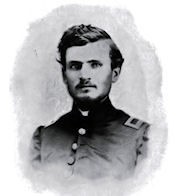
15th. Got horses shod. Cloudy. Saw F. again in my dreams. I wish I could be rid of this thought about such things. Could never live at home. Am better off here than I would be there.


