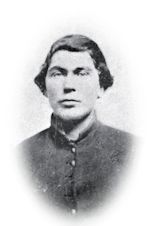
Fort Gillem, Sunday, Dec. 11. To-day was a terrible reminder of old Wisconsin to us. Last night was the coldest night I ever stood on guard. Did not suffer much though on post. Kept up a rapid motion. I could not sleep much, tent too cold, having to sleep on the ground. The day was no warmer. All hands lay close inside with roaring fires in the stoves. Detail sent out this afternoon after more horses. Returned with thirty-nine. We have now eighty-four, all we need, and may expect marching orders next. Evening spent cheerfully reading, with cedar wood plenty in stove. It is freezing very hard out of doors.

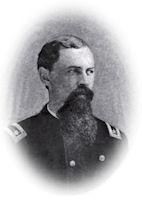
Before Savannah, December 11, 1864, 8 a.m.
Corse’s Division is just on our right. He woke me up this morning by firing a volley of eight 12-pounders, in real old Atlanta fashion. He was answered by three Rebel guns planted on the defenses of Savannah, across a field and swamp from us. We are in good range of them. Nine p.m.—Found this morning that the Rebels have a big swamp and lake between their position and ours. It is impossible to get at them there. Our corps was ordered to swing to the right. The Rebel battery had fair view and close range on any road we could take, so we had to wait until night, when ours and the 3d Division passed them without any trouble. We are now on a main road, straight and wide enough for three wagons, which we think leads to Pulaski. This is a country of awful swamps, with level flats, between which are rice fields, and most of them have three feet of water on them. Many think we are not going to make an effort for Savannah at present, but will open communication with the coast. It is as much as we can do to find dry land enough to camp on. We are not caring a cent what “Pap” does. It is quite cold again; to-night promises to be the coldest night of the winter.
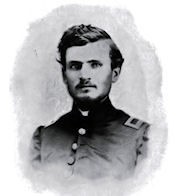
11th. Sunday. Snowed all last night. 6 inches of snow this morning. Wrote to Fred, C. G., Ella and home.
1st. Thursday. 2nd Ohio in rear. Kept along down North river. Passed through “Hanging Rock” Gap. Scenery grand. Camped at Capron Bridge in Lost River valley, 18 miles below Wardensville. On picket. Easy post.

Sunday, 11th—The Twentieth Corps relieved our corps this morning and we moved to the right about five miles, taking the position occupied by the Fifteenth Corps, which moved still farther around to the right. We went into camp about 4 o’clock, and the Eleventh Iowa was sent out on the skirmish line, where we have good works built by the Fifteenth Corps. Skirmishing is not very brisk because of the wide swamp between us and the rebels. We are still on two-fifths rations and there is nothing to forage.
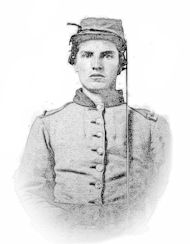
Sunday, 11th.—Wind blowing very cold from the north; two inches of snow and frozen over; slick as glass. Our line out in an open field; no timber near; cutting and hauling green elm wood. Our eyes nearly smoked out. “Go it slippers; boots are out ot fashion.” Some of the boys about bare-footed.
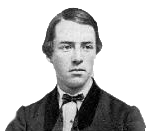
Saturday, December 10. — Reached a station about 15 miles from Charleston at 6 A.M. Got breakfast there through the influence of the conductor. Charge $500! Reached Charleston, where we were with a Colonel Hatch. He told us we were to go to the Pavilion Hotel, as it was doubtful if we could get to our boat on account of the fog. Were taken to the hotel. Colonel Hatch called the colonels in and gave us a drink of whiskey and made us a speech, etc. As the fog soon cleared up, we were sent down to the boat, a blockade-runner. Saw the effect of the shells on the city, which, by the way, is very old-fashioned looking. Almost every house in the lower portion has a shell-hole in it. Were taken out and transferred to our boat, the George Leary. Saw all the fortifications, etc. Day rainy and misty.
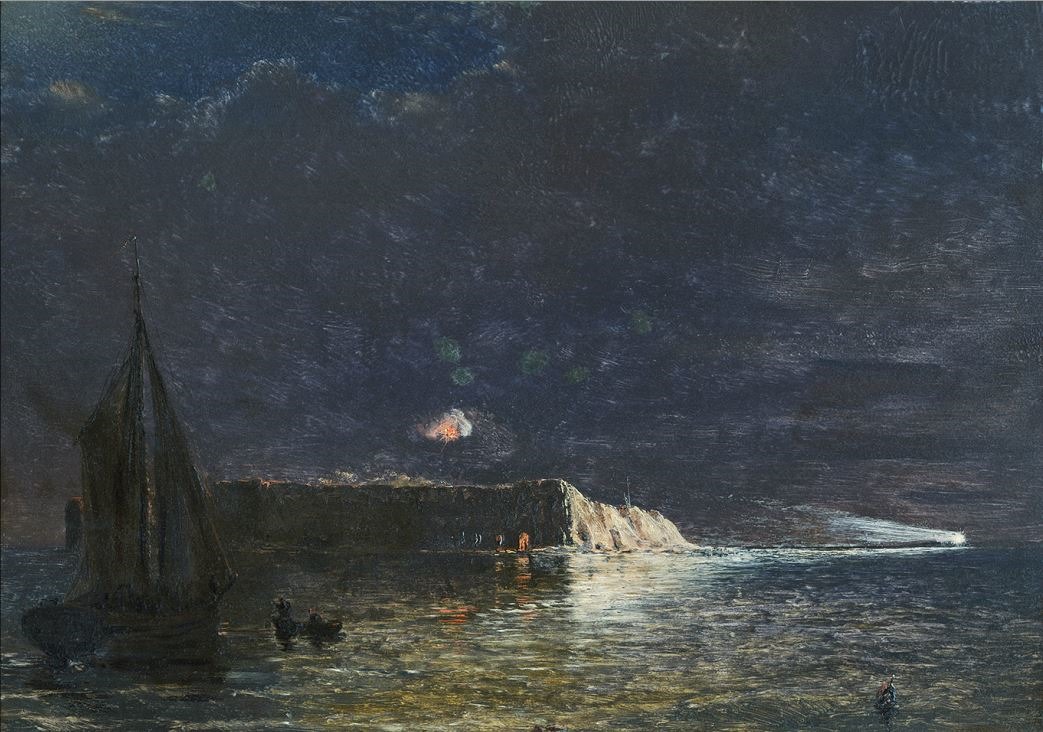
Painting by Conrad Wise Chapman.
“Shows calcium light thrown from Morris Island. Mail boat in the distance.” – Conrad Wise Chapman, 1898
December 10th.—Snowed two inches last night. Cloudy and damp this morning.
Guns were heard down the river last night at a late hour. Perhaps it was nothing more than shelling the enemy’s canal.
We have nothing yet authentic from Georgia; but many rumors of much fighting.
It is said Gen. Hampton has got in front of the enemy’s column at the Weldon Railroad, and is driving them back. Gen. Hill, it is presumed, is this side of them.
It is also reported that Gen. Longstreet is now (12 m.) attacking the enemy on this side of the river, and driving them. Distant guns can be heard southeast of us, and it may be true.
Major Cummings, Confederate States, Georgia, dispatches that the railroad between Atlanta and Chattanooga should be repaired immediately, to bring off supplies from Middle Tennessee. Gen. Bragg concurs.
The following was received from Gen. Bragg to-day, 11 A.M.:
“Augusta, December 10th, 1864.—The following dispatch is just received from Gen. Wheeler, twenty-seven miles from Savannah, 10 P.M., 8th December. Enemy are still moving toward Savannah, obstructing the road in the rear, and resisting warmly this morning. I cannot learn that any have crossed the Savannah River. I hear artillery firing, far in my front; do not know what it means: 14th corps and Kilpatrick’s cavalry on the river road; 15th on middle ground road; and 17th, and probably 20th, on Central Railroad.
“I think the force on the right bank of Ogeechee must be small.”
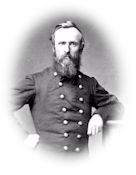
Saturday, December 10, 1864. — A cold day; deep snow (eight inches) on the ground. [I] am the centre of congratulations [on promotion to generalship] in the camp. General Duval and staff, Colonel Comly, etc., drink poor whiskey with me! A rational way of doing the joyful, but all we have!


