Following the American Civil War Sesquicentennial with day by day writings of the time, currently 1863.

December 7th.—Raining, and warm.

It is said several hundred of the prisoners taken by Rosser in the Valley escaped, on the way to Richmond. A relaxation of vigilance always follows success. How long can this war last?

Hon. Mr. Staples procured four and two months’ details yesterday for two rich farmers, Messrs. McGehee and Heard, both rosy-faced, robust men, and yet found for “light duty” by a medical board. Thus we go. The poor and weakly are kept in the trenches, to desert the first opportunity.

It is said a dispatch came from Bragg yesterday (I saw it not) stating that Wheeler and some infantry had a sharp battle with Sherman’s advance, near Millen, in which the latter suffered greatly. But reinforcements coming up, our forces fell back in order, disputing the way.

Tea is held at $100 per pound! Wood still $100 per cord.

I saw Gen. Rains to-day. He says he has over 2000 shell torpedoes planted along our lines around Richmond and Petersburg.

Col. Bayne reports the importation of 6400 packages salted meats, fish, coffee, preserved vegetables, from Nassau, Bermuda, and Halifax, since October 1st, 1864, in fourteen different steamers.

[On December 7 he was in the engagement called “Weldon Raid,” but he had stopped recording in his diary. Another soldier writes:

“Supposing that the campaign was ended and that we were now to have winter quarters, the men went to work with a will, and in four days had put up comfortable log huts, all supplied with fireplaces; but on the 6th of December orders were rec’d to march at daylight. The men suffered severely on this raid, many of them coming back over frozen ground without shoes. The distance marched was ninety-six miles.”—Ed.]

Fort Gillem, Wednesday, Dec. 7. Gunboats fired very briskly last night for a while. Washed my clothes this morning. 11 A. M. ordered to prepare to go after horses, eleven men from each platoon to draw eighty-four horses. But we could get only forty-five, being all there were, most of them very good ones. I rode a young colt to camp. Others will take care of them. Happily I am no driver now.

Having heard so much of the grand display of new scenery in the new theatre, Griff obtained permission for us to attend. Arrived there before the doors were open. The rush was very great, the street crowded clear across. When the doors opened I was borne on other legs than my own up two flights of stairs. Still the rush carried me on into the gallery which was soon filled to overflowing. Many failed to get admittance. Here we had to wait half an hour for the curtains to rise, which were filled by the most boisterous and rude demonstrations. I did not like it. But when the curtains arose all was silent. The play was the Naiad Queen, or Fairies under the Rhine, a meaningless piece, but the most brilliant and beautiful scenes I have ever seen. Dark grottos with their rocks and caverns inhabited by beautiful fairy-like creatures. Thunder and snaky lightning was wonderfully depicted. Water with boats gliding back and forth, by means of glass. Scenery was truly beautiful. Then came an army of Amazons. The best scene represented the region of bliss, with hollows and fountains, on which was thrown a dazzling light. This is the third time I have ever visited such scenes. I came to judge for myself, is it right or wrong? Although there are some things connected with these that are exceptional and unadvisable, still I consider it not only an innocent amusement, but instructive, much better for the morals of the young than the saloons, clubs, meetings, etc. Liquor and tobacco fumes are apt to be the chief claim. The only danger is that in the theater will be spent time, which ought to be spent elsewhere.

7th. Wednesday. On picket. Put up with Co. B. Charge of 3rd Batt. Pleasant time. Cold night. Excellent letters from Ella and Will. Heard reports of promotion.

Wright’s Bridge, Ogeechee River,

December 7, 1864.

We have not moved to-day. Sergt. N. Breed, of my company, who was shot through the right lung in the battle of November 22d, died to-day. He has been hauled in an ambulance ever since and improved all the time until the last two days. We were all sure that he would get well. There was no better soldier in the army. Every one liked him. Hear a little cannonading this p.m. a few miles down the river. Lieutenant Dorrance’s servant captured a beautiful coal black squirrel, with white nose and white ear tips. He is larger than any fox squirrel I ever saw.

Wednesday, 7th—It rained all forenoon today, but because of the sand our road did not get muddy. We started at 7 this morning and after stepping off fifteen miles by 4 o’clock, we went into camp for the night. Our regiment led the advance of our corps. The rebels blocked our road by felling trees at the entrance to every swamp, thus delaying our march, since there were a good many swamps to cross. We had to build four or five small bridges, and also had to do some corduroy work. The First Michigan Engineers in advance of us had charge of the work.

Wednesday, 7th.—This A. M., at 10 o’clock everybody ordered into the ditches, and skirmishers sent forward. Drove in pickets on the main line. W. F. White wounded in leg. Extremely cold.

Tuesday, December 6. — Lieutenant Belcher on. Men sent off to Florence. Day pleasant. Rumors of a fight with Sherman.

Tuesday, December 6. — Lieutenant Belcher on. Men sent off to Florence. Day pleasant. Rumors of a fight with Sherman.

Camp Russell Near Winchester, Virginia,

December 6, 1864.

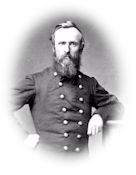
Dear Mother: — I received your cheerful letter on Sunday. It finds us in the best of spirits and so comfortably camped that we all would be glad to know that our winter quarters would be at this camp. We have the railroad finished to within eight miles; daily mails and telegraphic communication with the world. The men have built huts four feet high, eight or nine feet square, of logs, puncheons, and the like, banked up with earth and covered with their shelter blankets. My quarters are built of slabs and a wall tent. Tight and warm. We are in woods on a rolling piece of ground. It will be muddy but we are building walks of stone, logs, etc., so we can keep out of the dirt. — I have a mantel-piece, a table, one chair, one stool, an ammunition box, a trunk, and a bunk for furniture.

We get Harper’s Monthly and Weekly, the Atlantic, daily papers from Baltimore, New York, and Philadelphia. The Christian Commission send a great many religious books. I selected “Pilgrim’s Progress” from a large lot offered me to choose from a few days ago.

Our living is, ordinarily, bread (baker’s bread) and beef, and coffee and milk (we keep a few cows), or pork and beans and coffee. Occasionally we have oysters, lobsters, fish, canned fruits, and vegetables. The use of liquor is probably less than among the same class of people at home. All kinds of liquor can be got, but it is expensive and attended with some difficulty.

The chaplains now hold frequent religious meetings. Music we have more of and better than can be had anywhere except in the large cities. We have very fine horse-racing, much better managed than can be found anywhere out of the army. A number of ladies can be seen about the camps — officers’ wives, sisters, daughters, and the Union young ladies of Winchester. General Sheridan is particularly attentive to one of the latter. General Crook is a single man — fond of ladies, but very diffident. General Custer has a beautiful young wife, who is here with him.

I have just seen a case of wonderful recovery — such cases are common, but none more singular than this. Captain Williams of my command was shot by a Minie ball on the 24th of July in the center of the back of his neck, which passed out of the center of his chin, carrying away and shattering his jaw in front. He is now perfectly stout and sound (his voice good) and not disfigured at all. But he can chew nothing, eats only spoon victuals!

Dr. Webb is a great favorite. The most efficient surgeon on the battle-field in this army. He is complimented very highly in General Crook’s official report. He hates camp life, especially in bad weather, when he suffers from a throat disease.

My love to the household.

Affectionately, your son,

R.

Mrs. Sophia Hayes.