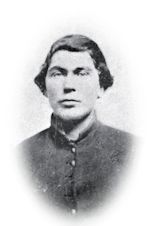
Nashville, Saturday, Nov. 19. I have no change to record in weather or otherwise. In the afternoon the guns were moved by the adjutant of the Brigade into proper intervals, bringing ours into a low, muddy ravine. Our quarters will have to go in the rear, but we await a pleasant day.

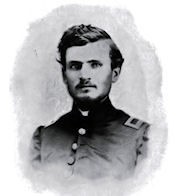
19th. Saturday. Officer of the day. “C” Co. on picket in rear of camp. Wrote to Uncle Branch.
November 19, 1864.
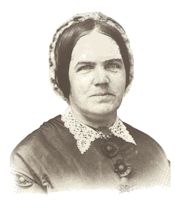
Slept in my clothes last night, as I heard that the Yankees went to neighbor Montgomery’s on Thursday night at one o’clock, searched his house, drank his wine, and took his money and valuables. As we were not disturbed, I walked after breakfast, with Sadai, up to Mr. Joe Perry’s, my nearest neighbor, where the Yankees were yesterday. Saw Mrs. Laura [Perry] in the road surrounded by her children, seeming to be looking for some one. She said she was looking for her husband, that old Mrs. Perry had just sent her word that the Yankees went to James Perry’s the night before, plundered his house, and drove off all his stock, and that she must drive hers into the old fields. Before we we were done talking, up came Joe and Jim Perry from their hiding-place. Jim was very much excited. Happening to turn and look behind, as we stood there, I saw some blue-coats coming down the hill. Jim immediately raised his gun, swearing he would kill them anyhow.
“No, don’t!” said I, and ran home as fast as I could, with Sadai.
I could hear them cry, “Halt! Halt!” and their guns went off in quick succession. Oh God, the time of trial has come!
A man passed on his way to Covington. I halloed to him, asking him if he did not know the Yankees were coming.
“No—are they?”
“Yes,” said I; “they are not three hundred yards from here.”
“Sure enough,” said he. “Well, I’ll not go. I don’t want them to get my horse.” And although within hearing of their guns, he would stop and look for them. Blissful ignorance! Not knowing, not hearing, he has not suffered the suspense, the fear, that I have for the past forty-eight hours. I walked to the gate. There they came filing up.
I hastened back to my frightened servants and told them that they had better hide, and then went back to the gate to claim protection and a guard. But like demons they rush in! My yards are full. To my smoke-house, my dairy, pantry, kitchen, and cellar, like famished wolves they come, breaking locks and whatever is in their way. The thousand pounds of meat in my smoke-house is gone in a twinkling, my flour, my meat, my lard, butter, eggs, pickles of various kinds—both in vinegar and brine—wine, jars, and jugs are all gone. My eighteen fat turkeys, my hens, chickens, and fowls, my young pigs, are shot down in my yard and hunted as if they were rebels themselves. Utterly powerless I ran out and appealed to the guard.
“I cannot help you, Madam; it is orders.”
As I stood there, from my lot I saw driven, first, old Dutch, my dear old buggy horse, who has carried my beloved husband so many miles, and who would so quietly wait at the block for him to mount and dismount, and who at last drew him to his grave; then came old Mary, my brood mare, who for years had been too old and stiff for work, with her three-year-old colt, my two-year-old mule, and her last little baby colt. There they go! There go my mules, my sheep, and, worse than all, my boys [slaves]!
Alas! little did I think while trying to save my house from plunder and fire that they were forcing my boys from home at the point of the bayonet. One, Newton, jumped into bed in his cabin, and declared himself sick. Another crawled under the floor,—a lame boy he was,—but they pulled him out, placed him on a horse, and drove him off. Mid, poor Mid! The last I saw of him, a man had him going around the garden, looking, as I thought, for my sheep, as he was my shepherd. Jack came crying to me, the big tears coursing down his cheeks, saying they were making him go. I said:
“Stay in my room.”
But a man followed in, cursing him and threatening to shoot him if he did not go; so poor Jack had to yield. James Arnold, in trying to escape from a back window, was captured and marched off. Henry, too, was taken; I know not how or when, but probably when he and Bob went after the mules. I had not believed they would force from their homes the poor, doomed negroes, but such has been the fact here, cursing them and saying that “Jeff Davis wanted to put them in his army, but that they should not fight for him, but for the Union.” No! Indeed no! They are not friends to the slave. We have never made the poor, cowardly negro fight, and it is strange, passing strange, that the all-powerful Yankee nation with the whole world to back them, their ports open, their armies filled with soldiers from all nations, should at last take the poor negro to help them out against this little Confederacy which was to have been brought back into the Union in sixty days’ time!
My poor boys! My poor boys! What unknown trials are before you! How you have clung to your mistress and assisted her in every way you knew.
Never have I corrected them; a word was sufficient. Never have they known want of any kind. Their parents are with me, and how sadly they lament the loss of their boys. Their cabins are rifled of every valuable, the soldiers swearing that their Sunday clothes were the white people’s, and that they never had money to get such things as they had. Poor Frank’s chest was broken open, his money and tobacco taken. He has always been a moneymaking and saving boy; not infrequently has his crop brought him five hundred dollars and more. All of his clothes and Rachel’s clothes, which dear Lou gave her before her death and which she had packed away, were stolen from her. Ovens, skillets, coffee-mills, of which we had three, coffee-pots—not one have I left. Sifters all gone!
Seeing that the soldiers could not be restrained, the guard ordered me to have their [of the negroes] remaining possessions brought into my house, which I did, and they all, poor things, huddled together in my room, fearing every movement that the house would be burned.
A Captain Webber from Illinois came into my house. Of him I claimed protection from the vandals who were forcing themselves into my room. He said that he knew my brother Orrington [the late Orrington Lunt, a well-known early settler of Chicago]. At that name I could not restrain my feelings, but, bursting into tears, implored him to see my brother and let him know my destitution. I saw nothing before me but starvation. He promised to do this, and comforted me with the assurance that my dwelling-house would not be burned, though my out-buildings might. Poor little Sadai went crying to him as to a friend and told him that they had taken her doll, Nancy. He begged her to come and see him, and he would give her a fine waxen one. [The doll was found later in the yard of a neighbor, where a soldier had thrown it, and was returned to the little girl. Her children later played with it, and it is now the plaything of her granddaughter.]
He felt for me, and I give him and several others the character of gentlemen. I don’t believe they would have molested women and children had they had their own way. He seemed surprised that I had not laid away in my house, flour and other provisions. I did not suppose I could secure them there, more than where I usually kept them, for in last summer’s raid houses were thoroughly searched. In parting with him, I parted as with a friend.
Sherman himself and a greater portion of his army passed my house that day. All day, as the sad moments rolled on, were they passing not only in front of my house, but from behind; they tore down my garden palings, made a road through my back-yard and lot field, driving their stock and riding through, tearing down my fences and desolating my home — wantonly doing it when there was no necessity for it.
Such a day, if I live to the age of Methuselah, may God spare me from ever seeing again!
As night drew its sable curtains around us, the heavens from every point were lit up with flames from burning buildings. Dinnerless and supperless as we were, it was nothing in comparison with the fear of being driven out homeless to the dreary woods. Nothing to eat! I could give my guard no supper, so he left us. I appealed to another, asking him if he had wife, mother, or sister, and how he should feel were they in my situation. A colonel from Vermont left me two men, but they were Dutch, and I could not understand one word they said.
My Heavenly Father alone saved me from the destructive fire. My carriage-house had in it eight bales of cotton, with my carriage, buggy, and harness. On top of the cotton were some carded cotton rolls, a hundred pounds or more. These were thrown out of the blanket in which they were, and a large twist of the rolls taken and set on fire, and thrown into the boat of my carriage, which was close up to the cotton bales. Thanks to my God, the cotton only burned over, and then went out. Shall I ever forget the deliverance?
To-night, when the greater part of the army had passed, it came up very windy and cold. My room was full, nearly, with the negroes and their bedding. They were afraid to go out, for my women could not step out of the door without an insult from the Yankee soldiers. They lay down on the floor; Sadai got down and under the same cover with Sally, while I sat up all night, watching every moment for the flames to burst out from some of my buildings. The two guards came into my room and laid themselves by my fire for the night. I could not close my eyes, but kept walking to and fro, watching the fires in the distance and dreading the approaching day, which, I feared, as they had not all passed, would be but a continuation of horrors.

Friday, November 18. —Received a letter from Hannah, dated October 23. Contained news of Colonel Amory’s death. Charlie had four letters. All came by way of Charleston. Also received a letter from Mr. Kidder in reference to my exchange. Several officers who escaped from the prison camp were brought in here last night. Among them was .Major Reynolds of the 14th New York Heavy Artillery. Gave us an interesting account of their adventures.
Springs, 40 miles from Macon,
November 18, 1864.
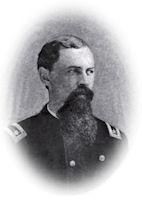
We got here at noon but will wait until to-morrow, I understand, for the 3d and 4th Divisions to lay a pontoon bridge across the Ocmulgee river. This has been a summer resort of some note. From 800 to 1,000 people congregate here. The spring is a little stream of water not larger than your finger, which runs from the rock at the rate of a gallon a minute. It is sulphur water with some other ingredient that gives it a very disagreeable ordor. This is quite a romantic place. Foraged some peach brandy, which was destroyed.
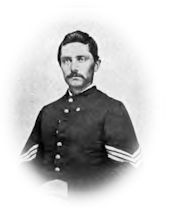
Friday, 18th—We were on the road by 8 o’clock and after marching ten miles, lay by until 10 p. m., when we were ordered to fall in again. After an hour’s march we came to the Ockmulgee river, which we crossed by pontoons at Ockmulgee Mills. The entire Seventeenth Corps came together again here and at 1 o’clock in the night we went into bivouac on the east side of the river. The Fifteenth Corps crossed the river by the same pontoon bridge. There is fine water power here and there are large mills. The country is very rough.
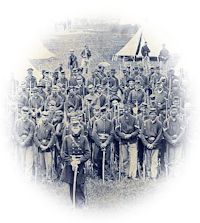
November 18th, 1864.
This has been one of the most pleasant days that ever visited this storm-swept world. So soft and balmy—I have not words to describe it; I have almost fallen in love with this Southern climate.
I confess to a feeling of dread when I think of the severity of our Northern winters. The coldest weather we have yet had was only sufficient to cause a light frost. And yet I actually suffered with cold before! had a fireplace in my house.
The house I built a few days ago was comfortable, but rather small. I could not build larger, for I had not the strength to draw the logs on my back. Fortune has been kind to me, as usual.
Today I moved into a large, new house, all complete. It happened in this wise. The regiment had been at work at the field hospital and for General Wilcox, which made it impossible to build their own houses without resorting to strategy. The day before yesterday a squad of men from our company was detailed, as usual, to cut logs for the General’s stables. On reaching the woods, Charlie Groesbeck and William Jones separated from the squad and went to work on their own account. By 11 o’clock their timber was cut; how to get it drawn was the next question. Luck favored them. A teamster came along looking for a load of brush that was to have been cut by— somebody. The boys told him they “guessed” they were the men, but the brush were not all cut. If he would draw a load of logs they had cut, the brush would be ready on his return. He consented to the arrangement, and the thing was done. The next day they built their house, and, when completed, invited me to share its comforts.
General Burnside has been here. He had hardly arrived before the air was filled with rumors, all looking to a removal from this department. One newspaper has it the Seventeenth is to be detached from the corps to guard prisoners at Elmira, New York.
I was the recipient of a handsome present last night —a portfolio bound in morocco. The donor is W. B. Jones, one of my tent mates.
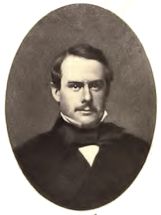
Charles Francis Adams, Jr., to his father
Quincy, November 18, 1864
The management of our finances now seems to me not only the greatest but the most inviting field for usefulness which this country affords. Are you acquainted with the present financial temper of the country? Do you know what the present condition of our finances is? My opinion is n’t worth much, but the subject is one which interests me and, as I have lots of time, I’ll write my impressions. In the first place, our people are now taxed to death, not for revenue, but for currency. A dollar represents fifty cents in goods. Bitter experience has taught them that it is better to pay an enormous tax for revenue and more for currency, than only heavy taxes for revenue and half their incomes for currency. I have one thousand dollars income. I could better pay $250 for revenue if a dollar was worth a hundred cents, than nothing at all with gold at 230. This an intelligent people begins to see. In other words a nation has at last learned that paper-money is not wealth and that, after a certain point, the best way to raise revenue is to put your hand in your pocket and pull out the coin. I want to see some bold, obstinate, common-sensed financier just follow out those principles and proceed to regulate our Treasury. If such a one would now take his stand and declare that he would have a dollar a dollar and not borrow another cent, but carry on the war by taxes and taxes only; that he would not ruin the nation by discounting its paper with 7.3 interest at sixty per cent off; that he might tax us half our incomes, but he would make the other half gold; that he would not borrow another dollar now except at par — such a man might now be forced out of office, but his day would come and the country would return to him sooner or later. I think he would carry it through now. They say we now raise $600,000,000 a year. If so, this in gold would carry on the war. The trouble is we pay it out in depreciated currency for every munition of war. Prices once broken down to gold rates, our present taxes apparently would suffice. I believe the country would cheerfully pay the sum necessary to take the Treasury out of the market as a borrower, and if we contracted no more loans the greenback currency would surely rise in value without another effort of the Government. We should indeed have to face a currency contraction and commercial crisis; but surely that would be better now than presently and amid the strain of war could most readily be met and overcome.
This last election has given me a new and almost unbounded faith in the faculty of a free and intelligent people to manage their own affairs. It was conducted with so much temper and moderation, the issues were so fully discussed and, on the successful side, so wholly without clap-trap and buncomb, it has convinced me that our people, to come to correct conclusions, need only full and able discussions, time to think and honest and clear thinkers to guide. The popular mind is now ripe for a correct solution of our financial questions. Up to within a short time people had a sort of blind belief in what Mill calls “currency juggles “; they thought that certain men could manufacture wealth out of printed paper; that national expenditure, credit and debt, in some mysterious way, differed from individual debt, credit and expenditure, and was subject to other and then unknown laws. A fearful expenditure and bitter experience have now made them expect some humbug in all that and to me it seems that they only need to have correct principles bluntly stated to redeem at once past blunders and present troubles. A year ago they were not ready for this and the man who had proposed it would have failed to convince. Now any man who does it will win everlasting honor.
The country begins to suspect that a nation no more than a man can submit to unlimited shaves on his paper and that after a certain point it is true economy to return to cash payments and that to do this you must spend only your income. The Government in this war has never had faith enough in the virtue and intelligence of the people. They have been afraid of their own measures and the people are to-day more willing to honor drafts and taxes than the Government is to impose them. The result has been most disastrous. To carry on this war we need not more than 400,000 men and $600,000,000 a year really furnished. By our timid system of drafts, with their quotas, and credits, and balances, and one year men and all that trash, and our ruinous system of loans and paper money, we have terrified the people by calling on them in one year for 1,000,000 men and we have made the war cost them $1,200,000,000, all because our rulers either don’t know how or dare not tell the truth.
I hope the Government now will come out fair and square and say: “This war costs now so much in men and so much in money as we now carry it on: as it might be carried on it would cost so much. Currency juggles and draft juggles are only swindles. Men and money are the sinews of war. Raised directly, they cost so much; raised indirectly, so much. All that cost in any case must come from you, but that difference is what you must pay if you want to cheat yourself into a pleasing idea that the cost does n’t come out of you but out of somebody else. These are the principles on which finances and military strength depend and three years demonstrate their truth. Now choose ye!” These things need to be brought before the people and the Cabinet should do it, for the President, we know, is not equal to it. What a superb thing it would be to have some man at the head of affairs who could now lead this people, in the midst of the trial and excitement of war, back to correct principles; leading them of their own free will, and simply by pointing out to them their errors as proven by results in their own recent experience.
November 18th.—Bright, calm, and pleasant.
All quiet below, save our bombardment of Dutch Gap Canal.
The Senate passed a resolution yesterday, calling on the President for a statement of the number of exemptions granted by the Governors. This will, perhaps, startle Governor Smith, of Virginia, who has already kept out of the army at least a thousand.
Perhaps it will hit Governor Brown, of Georgia, also; but Sherman will hit him hardest. He must call out all his fighting people now, or see his State ravaged with impunity.
Both Houses of Congress sit most of the time in secret session, no doubt concocting strong measures under the influence of the existing crisis. Good news only can throw open the doors, and restore the hilarity of the members. When not in session, they usually denounce the President; in session, they are wholly subservient to him.
Hon. R. L. Montague has written to the Secretary of War, on behalf of the entire Virginia delegation, requesting a suspension of the impressment of slaves until further legislation by Congress; what that legislation will be, the President might tell, if he would.
A dispatch from Gen. Wheeler, dated to-day, 12 miles from Forsyth, states that Sherman advances by the most direct route toward Macon, Ga.
My wife presented me to-day an excellent pocket-handkerchief, my old ones being honey-combed and unfit for another washing. Upon inquiry (since the cost of a single handkerchief is now $20), I ascertained it to be a portion of one of my linen shirts bought in London in 1846.
We have now 200 pounds of flour in the house; 1 bushel meal; 1 bushel sweet potatoes; 1 bushel Irish potatoes; 3 half pecks white beans; 4 pumpkins; 10 pounds beef; 2 pounds butter, and 3 pounds sugar, with salt, etc. This seems like moderate stores for a family of seven, but it is a larger supply than we ever had before, and will suffice for a month. At the market price, they would cost $620. Add to this 1½ loads coal and a quarter cord of wood—the first at $75, the last at $80—the total is $762.50. This sum in ordinary times, and in specie, would subsist my family twelve months.
18th. Friday. Nettleton returned. Letters from home. God bless the good friends. Commissions for boys. 1st Lt. for me. Letter from Roxena.


