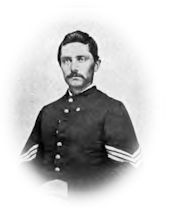
Saturday, 5th—We left our fires early this morning and marching toward Marietta, went into bivouac for the remainder of the day and night within five miles of the town. Captain Anderson of Company A, Eleventh Iowa, arrived from Iowa this evening with one hundred and fifty conscripts for our regiment to serve one year. They are a fine lot of men to be conscripts; however, only half of them were drafted, the others being substitutes, each receiving from $150 to $800.


November 5th.—Clear and cold.
Grant has attempted nothing this week, and it is probably too late for any demonstration to affect the election. I infer that the government is convinced President Lincoln will be re-elected, else some desperate effort would have been made in his behalf by his generals. Will he float on a sea of blood another four years? I doubt it. One side or the other must, I think, give up the contest. He can afford to break with the Abolitionists now. We cannot submit without the loss of everything.
It is thought Grant will continue to “swing to the left,” making a winter campaign on the coasts of North and South Carolina— mean time leaving Butler’s army here, always menacing Richmond.
Gen. Beauregard writes from Gadsden, Ala., October 24th, that his headquarters will be at Tuscumbia, Ala.; will get supplies from Corinth to Tuscumbia. Forrest has been ordered to report to Gen. Hood, in Middle Tennessee. The railroad iron between Corinth and Memphis will be taken to supply wants elsewhere. Gen. Dick Taylor is to guard communications, etc., has directed Gen. Cheatham to issue an address to the people of Tennessee, saying his and Gen. Forrest’s command have entered the State for its redemption, etc., and calling upon the people to aid in destroying the enemy’s communications, while the main army is between Atlanta and Chattanooga, when the purpose is to precipitate the whole army upon it, etc. Gen. B. doubts not he will soon be able to announce good tidings, etc. etc. This letter to Gen. Cooper is “submitted to the Secretary of War,” by whom it is “submitted for the information of the President,” and sent back by him—”Read and returned, 4th Nov. ’64.—J. D.”
Gen. B. was to leave that day to join Gen. Hood, in vicinity of Guntersville, on Tennessee River. Sherman’s army was between Dalton and Gadsden, 15 miles from Gadsden.
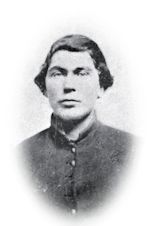
Etowah Bridge, Saturday, Nov. 5. A pleasant day once more. Camp somewhat astir this morning from the fact that Lieutenant Simpson read dispatch from Stolbrand last night directing him to go to Marietta and draw horses if possible to enable us to take the field, but it was again countermanded before any harm was done. He went to Allatoona in the afternoon to inspect their guns. Trains pass in plenty but no mail. Infantry turn over all their wagons but one to-day. Drew rations for those in hospital. It is to be broken up.
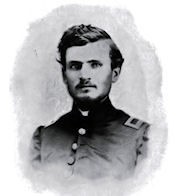
5th. Saturday. In camp all day. Straightened Q. M. accounts and turned over property to Lt. Dutton.
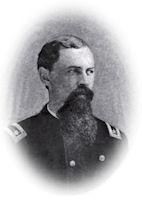
Powder Springs, November 4, 1864, 6 p.m.
Cold rain to-day. Made 15 miles. Country only fit for (?) Come through a long line of fine works the Rebels put up after they took up our railroad at Acworth. This about the last day of pork and potatoes; to-morrow will bring us to a country we have worn out.
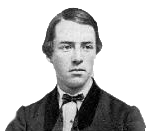
Friday, November 4. — Johnny Bull on as officer of the day. Cleared up during the night, but rained again during day. No war news.
Friday, 4th—Left Dallas this morning, marched ten miles, and went into camp near Lost mountain. I went out with a foraging party from our regiment. We brought in five head of cattle and seven hogs, and also some cane molasses and corn meal. We also searched for cabbage, but the negroes did not know what we meant; they said that they had never seen any such thing growing. We found very few citizens at home, mostly poor families at that; but the men were away in the rebel army.
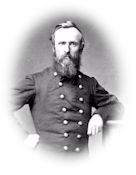
Camp Cedar Creek, Virginia, November 4, 1864.
My Dear Son: — This is your birthday — eleven years old today — almost a man. In less than eleven years more, everybody will call you a man, you will have a man’s work to do and will be expected to know as much as men know. But you are a good student and an industrious boy, and I have no fears of your being an ignorant or a lazy man.
I wish I could be with you today. I would buy you something that don’t cost much, for I mustn’t spend much now or I shan’t have anything left for that new little brother of yours. Besides, I would tell you about the battles. Uncle Joe has all the good stories now. He says up in Winchester the people work for the soldiers to make a living — they wash and mend and bake. The soldiers say they bake two kinds of pies, “pegged” and “sewed”! The difference is the “pegged” have no sugar in them.
One boy in the Twenty-third was shot in the face. The ball entered near his nose and passed over or through the cheekbone up towards the outer corner of his eye. The surgeon thought it was a small bullet and fearing it would injure his eye to probe for it, let it alone. He got along very well for three weeks, when they cut it out near his temple. They were astonished to find that it was an iron grape-shot over an inch in diameter — as large as one of your India-rubber balls! He is well and never did suffer much! . . .
There have been a good many changes in the Twenty-third and the First Brigade since you saw them last at Loup Creek. Captain McKinley is on General Crook’s staff. He has not been wounded, but every one admires him as one of the bravest and finest young officers in the army. He has had two or three horses shot under him. General Crook said his mess was starving for want of a good cook, so we let him have Frank. Frank is doing well there. Billy Crump has been so faithful that a short time ago he was given a furlough, and is now with his wife. He is coming back soon. Lieutenant Mather is on my staff as provost marshal. He is the only one you are acquainted with. . . .
The band is full; all of them safe and well. I hear them now playing for guard-mounting. We have many fine bands in this army, but none better than ours.
I have lost three horses killed or disabled since I saw you in July. I am now riding a “calico” horse lent to me by Captain Craig. My John horse is with me still, but he will never get fit to use again.
My orderly in the place of Carrington is Underhill of [the] Twenty-third, an excellent young man; you would like him better than Carrington.
Did I write your mother that I found my opera-glass again? It was lost at the battle of Fisher’s Hill. I got it about three weeks afterwards from a Thirty-fourth soldier who found it near the first cannon we captured.
It is getting very cold. We build a sort of fireplace in our tents and manage to be pretty comfortable. You and Webb would enjoy being in this camp. There is a great deal to see and always something going on.
You must learn to write me letters now. My love to all family, “Puds” and all.
Affectionately, your father,
R. B. Hayes.
Master S. B. Hayes [Birchard A. Hayes],
Chillicothe, Ohio.
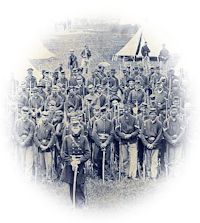
Peebles House, Va., November 4th, 1864.
We have had a few days of cold, stormy weather. It even snowed a little yesterday. We have built comfortable quarters, most of them with fireplaces. I have been so busy since our return, with muster rolls, monthly returns, etc., that I was compelled to postpone building until today. We have a very comfortable place, built of pine logs, six feet by seven on the inside. It is completed except “chunk and daubing,” which will occupy but a short time. About half of it is occupied by our bed. In one corner is our table, two by three feet square. The remaining comer is our sitting room. Our bed of poles is covered with a thick layer of “Virginia feathers.” Over these a rubber and one blanket, leaving one blanket and our overcoats to spread over us.
We may not remain here long to enjoy the fruits of our labor, but then, we may. Probably another attempt to move will not be made until after election. I will be heartily glad when that is over. I am sick, tired, disgusted with the whole arrangement. Popular election, indeed! It is all humbug. The very name is a lie and a cheat. Mr. Winegar, of Grass Lake, has arrived as commissioner to receive the votes of Michigan regiments. The McCIellan vote will be quite strong in this regiment unless something can be done to counteract it. The French recruits will all vote that way, and they comprise nearly one-half the regiment.
“Fall in for mail,” is the cry of our Postmaster. Not expecting as much pleasure as another letter would give me, I continued to write, listening, all the time, to hear whose names were called. Can it be? Yes, my name is called. Another dear letter. Oh, my sweet wife, would to God I could fold you in my arms and pillow your weary head upon my bosom, its rightful resting place.
All Michigan men in hospitals who want furloughs get them. I have no idea this campaign will end until Richmond is taken and Lee’s army is destroyed. Grant has fought all summer “on these lines,” and will continue the fight all winter if not successful. But the time is close at hand when military operations must, of necessity, be suspended. Furloughs will then be given, and I will avail myself of the first opportunity.

Henry Adams, private secretary of the US Minister to the UK, to his brother, Charles.
London, November 4, 1864
Seldom even among the many rapid changes that my letters have recorded during the last few years, has there been one so great as that which has occurred in my feelings since my last letter. That was written under the effects produced by Reuter’s telegram that “the Democrats had carried Pennsylvania by a large majority which the soldiers’ vote could not overcome,” and that “Maryland had rejected the anti-slavery constitution.” Of Indiana and Ohio nothing was said. The few returns from Pennsylvania we had received were not calculated to refute this statement, and as a necessary consequence the prospect looked more alarming than I ever described it in my letter. You, of course, the danger passed, and breathing an atmosphere of sympathy, may consider my alarm to have been unnecessary and absurd. As for me I look back upon the crisis as I would on a hair-breadth escape from a horrible accident, or from sudden ruin. It seemed then so close, if not inevitable, that the sense of relief is enormous. . . .
But the great thing is that we have now gained time. The result at any rate is now clear. From certain articles in the rebel papers I infer that Lee’s army, especially Early’s command, is no longer what it was, and does not fight as it used. I do not quite understand Sheridan’s success on any other ground. In fact the wonder is that demoralisation has not long ago set in over the whole South. Some day or other it must come, or human nature change. . . .


