Following the American Civil War Sesquicentennial with day by day writings of the time, currently 1863.

Nov. 4th. Went down to Div. Hospital; took Jerry’s rifle. His furlough was a surprise.

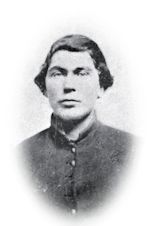
[Jerry was very ill and Leverett and the colonel succeeded in getting him a furlough. It was made out giving him leave to go home to vote. He was bugler of the regiment and only sixteen years old! He got through the journey as far as the train from New York to Boston. There he entered the car so weak he could hardly stand. The car was crowded; but he was made to feel how little the people of the North realized the hardship of the soldiers’ lives, for they pushed by him as a vagabond and he sank exhausted on the floor in the corner of the car and could not keep back the tears.—Ed.]

November 4th.—Rained all night; glimpses of the sun between the running clouds this morning. Windy, and likely to be cold.

Our iron-clad “Albemarle” was blown up by a handful of the enemy at Plymouth—surprising the water pickets (all asleep). The manner of the loss of the town, and of the counties east of it, is not known yet; but everything was foretold by Mr. Burgyson to the cabinet, then devoting their attention to the problem how to violate the Constitution, and put into the trenches some fifty delicate clerks, that their places might be filled by some of their own special favorites. Mr. George Davis, Attorney-General, the instrument selected to rend the Constitution, or rather to remove the obstacles out of the way, is from North Carolina; and this blow has fallen upon his own State!

We learn that gold is rising rapidly in the North, which may be significant of President Lincoln’s re-election next week.

We get no news from our armies except through the Northern papers—not reliable just now.

Gov. Allen, of Louisiana, writes a furious letter to the Secretary of War, who ordered the disbandment of the State Battalion. He says the order is a personal offense to him and an insult to his State (he is a native Virginian), and he will resent it and resist it to the last extremity. He gives notice that the 3d battalion has been ordered back from the east side of the Mississippi River. The battalion disbanded numbered but 150 men! A little business—like losing one-fourth of North Carolina, to put out of office fifty clerks, whose tenure, by the Constitution, is for life!

Etowah Bridge, Friday, Nov. 4. Sergeant Sweet returned to the Battery this morning and resumed his duties as orderly. Weather continues very cold and disagreeable. All we can do is to keep warm. All the loose stores belonging to the Company boxed up to-day. The remainder of the Division is making preparations for a severe campaign, only two wagons to a regiment. We may be lucky in being counted out after all. It is expected that the columns will move through the Confederacy and emerge on the other side, and rest on the Atlantic coast. I would like to be with them. The sights and satisfaction would amply repay the fatigue and hardships.

4th. Friday. Went out with forage detail over in Little North Valley.

Etowah Bridge, Thursday, Nov. 3. Another very cold raw, day. 12th Battery took six more horses. Lieutenant Jenawein detailed on duty with the 12th Battery. Boxes made to pack up the harness.

Friday, 4th.—Four or five Yankees floated down river last night, and undertook to cut pontoon loose, but were captured before doing any damage. Remained about Florence until 21st, having some little skirmishing, digging ditches here and there, and marching hither and thither.

Five miles northwest of Villa Rica, Ga.,

Novembebr 3, 1864, 6 p.m.

Forty-eight hours’ rain without a stop and a good prospect for as much more. We left Van Wirt and Dallas to the left, and by 16 miles hard marching have got near enough over this barren ridge, I think, to find a few marks of civilization. Rumor says we are going to Atlanta to relieve the 20th Corps, and will then be paid. Passed to-day a one-horse wagon, a large ox in the shafts and four women in the wagon dressed for a party.

Thursday, November 3. — Rain-storm continued, making it cold and gloomy. Wrote Mother. Nothing new. This evening during the storm the officers upstairs had a plank run out from the window on to the roof of the adjoining house. It remained there an hour and a half before the sentry discovered it. He fired five or six times at it. The officers were luckily afraid to try it. Sergeant White was on as officer of the day.

Thursday, 3d—Still raining. Our march today covered sixteen miles and the troops are very much fatigued. We camped for the night in Dallas, Georgia, one division, the Fourth, going into vacant houses and buildings in the town. The citizens all left the place upon our approach. There had been a cotton mill here, but it was closed down last summer when the Yankees were besieging Atlanta.

Colonel Lyon’s Letters.


Nov. 3, 1864.—To give you an idea of the way business runs with me, I will give you my experiences after tea Sunday evening. I sat down in my room thinking that everything was quiet and promising myself a comfortable night’s sleep, when a messenger galloped up with a dispatch saying that the rebels had opened with a battery on our troops at Whitesburg, which you know is in my command. I immediately went down to post headquarters, sent couriers to Whitesburg with orders, and was making other dispositions to prevent the enemy from crossing the Tennessee river there, when a man rushed into the office pale and almost breathless, announcing that the rebels were near the city on the New Market road in heavy force, and that they were burning every combustible thing as they advanced. Looking in that direction, sure enough the flames of several burning buildings corroborated the story.

I immediately strengthened my picket lines and sent out scouts to ascertain what was there, gave directions for the disposition of public property, assigned their positions to what few troops I had, went to the fort and made the necessary arrangements there, and returned to headquarters to await further developments.

In due time the scouts returned with the information that the force was only a raiding party of guerillas and citizens, who had burned some houses occupied by colored people connected with the contraband camp here—and the excitement was over. But all of this took from one until two o’clock in the morning. In the meantime I received information that two gunboats had arrived at Whitesburg, so I went to bed feeling easy. There were no further demonstrations there.

The next evening (Monday) I felt sure that all was quiet; when just as I was leaving the office to go to bed, a dispatch from the commanding officer at Larkinsville came, saying that he was attacked. It turned out to be nothing serious, but to find out that, and to make preparations to meet it should it prove serious, took half the night.

Tuesday night we were moving some troops and had to wait for trains, so the Adjutant remained up all night and I got a good, undisturbed night’s rest. Last night for the first time since the rebel army approached us we both slept all night. Yet, for all this, I keep perfectly well. How long our quiet will last I can not even guess. Hood moved down the river from Decatur, but I have no idea where he is. We have had reports that he crossed the Tennessee river to the north side of Florence, but these reports are not reliable.

Large numbers of troops have gone forward to Decatur and Athens within the last three days, and I feel quite confident that the tide of war has rolled by us once more without striking us. The General has given me more troops here on the river and on the railroad, and I am feeling quite stout. The non-veterans will leave in about a week for Nashville to be mustered out.