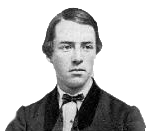
Monday, October 10. — Three officers were brought in last night who escaped from the depot. There are now 1400 officers at the stockade, some two miles from here. We are now kept locked up all the time, I suppose from fear of an outbreak. Gave the letter I was going to send by Lieutenant Ware to one of the hospital stewards who is going to Richmond to-morrow, to be exchanged, with the sick and wounded. Doctor examined several sick to-day and sent them off to be exchanged. Captain McChesney was sent to the hospital to-day. Heard that our privates were dying at the rate of 100 per day at Charleston, of yellow fever.

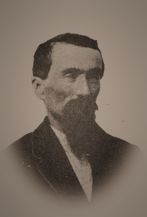
October 10 — Rations seem to be scarce in Uncle Sam’s domain, especially on his army front. We got no supper yesterday evening, and rations were so slim and slow this morning that I breakfasted on a little green pumpkin that I found in the field close to where I slept; I sliced it up and roasted the slices by the campfire. It was delicious and no mean filling for an empty stomach. This forenoon the Twenty-Second New York Cavalry turned us over into the care of the Third New Jersey Cavalry. Soon after the new guard took charge of us we were put on the move down Tom’s Brook to the Valley pike, then down the pike, through Strasburg, and this evening we are at General Sheridan’s headquarters, at Belle Grove, a large stone house in Frederick County, situated between Cedar Creek and Middletown, and a little distance west of the Valley pike. At Strasburg we were counted and turned over to a new guard, detailed from the First Regiment of Rhode Island Infantry, to march us to General Sheridan’s headquarters; then that guard turned us over to the Twenty-Sixth Massachusetts Infantry, doing guard duty around headquarters. We passed through a great many camps to-day along Tom’s Brook and the Valley pike, between Tom’s Brook and Fisher’s Hill. The whole country seems to be full of infantry.
10th. Monday. Lay in camp at Tom’s Brook. Letter from Minnie. Wrote home. Captured property sent to Strasburg.
October 10th.—A white frost; first frost of the season. All quiet below.
Gen. W. M. Gardner (in Gen. Winder’s place) reports that of the exempts and citizens taken from the streets to the front, last week, a majority have deserted This proves that even a despotic military act cannot be committed with impunity.
Gen. Beauregard telegraphs from Opeleka, Ala., that he has arranged matters satisfactorily between Gov. Brown of Georgia and Gen. Cobb, regarding exempts and State militia.
The President directs the Secretary to ascertain if this has been done in accordance with law and the interests of the service.
Gen. R. Taylor telegraphs that Gen. E. K. Smith has proclaimed pardon to deserters, from trans-Mississippi Department, after he had arrested most of them and sent them to their regiments, and now he recommends that no more troops be brought over the river or they will be sure to desert. The President directs the Secretary to correspond with Gen. Smith on the subject. Gen. Taylor is the President’s kinsman—by his first marriage.
Gen. Beauregard left Opeleka on the 7th inst. for Hood’s army, so in a few days we may expect a battle.
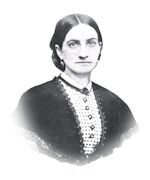
October 9.—Mr. Alexander Nixon died last night. He was a member of the Third Mississippi Regiment. He died perfectly happy, and intended to have joined the Methodist Church if he had lived till today. Mrs. W. was very attentive to him. She intends writing to his wife. His death is the only one we have had here, except that of a man who died the night of the fire. His father being with him, I took no pains to learn his name.
We have few dishes, knives, forks, or spoons, which annoys me not a little. We have two officers who eat with knives and forks which they have made themselves, out of wood. The last time I was at Macon I tried to procure some of those articles, but my efforts were fruitless.
Sunday, 9th.—Passed Cave Springs, 2 P. M. Camped for the night one mile from Quinn’s Ferry, twelve miles below Rome.
Etowah Bridge, Sunday, Oct. 9. It is the Sabbath day, but one cannot realize it in the busy whirl of duty. Came off guard at 7 A. M. All the rest of the day worked very hard with all the rest. Everything else is neglected. The day being decidedly cool, a big job was accomplished. Never did men work more cheerfully. Buglers, corporals and sergeants down to mule drivers turn out of their own free will and work.
Some hopes were entertained that we would receive mail tonight, but none came. Played a game of chess by candle light, and now I will retire to my hard but inviting couch.

Sunday, 9th—We were routed early this morning and left for Big Shanty, and arriving there in the afternoon went into bivouac. The Fifteenth and Seventeenth Army Corps were sent here to put the railroad track in repair. The rebels tore up about nine miles of track, burning the ties and twisting the rails. The engineers have to get out new ties and large details of our men are put to work cutting down trees and hewing the ties. It is reported that the rebels are going to the North.
Two miles north of Kenesaw Mountain,
October 9, 1864.
About 5 o’clock last night, just when we should have been relieved, we heard the “General” sounded through the camp, and in half an hour more the “Assembly.” The corps started toward Marietta, and in another half hour we assembled, and in charge of the division officer of the day followed as rear guard of the train.
At 12 p.m., after a cold, tiresome march, the train corraled, and we built fires and turned in beside them for the balance of the night, right at the northeast base of Kenesaw Mountain. This a.m. found the brigade two miles further north. The Rebel Army was here three days ago and tore up the railroad all along here. They are now near Van Wirt. If they go north across the Etawah, we will probably follow. Their present position menances the whole line of road from Rome to the Chattahoochie crossing.
Sunday, October 9. — Felt a great repugnance to fighting another battle last night; all right this morning. Our cavalry flogged the Rebels handsomely today. Took nine pieces of artillery and many prisoners and train. Captain H. J. Farnsworth. a quartermaster, reported to my division.


