
Monday, 8th—We started at 7 a. m., and while passing through Petersburg by platoons, were reviewed by General Ord, in command at Petersburg. The Fifteenth Corps had to pass through the city in our rear. We crossed the Appomattox river at 9 a. m. and went into bivouac six miles out from Petersburg, making a march of only eight miles for the day. Petersburg is a lively place; business is going on regularly. The people are at work repairing the damages done by the war, and are even erecting new buildings. It is a fine city with beautiful country around, although badly cut up with fortifications. The town was strongly fortified.

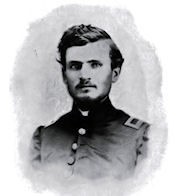
8th. Left on the 8 A. M. train. Reached Columbus at 2 P. M. Went up to Capitol and ascertained that Nettleton had been commissioned Col. and Seward’s commission revoked. Wrote home and to Uncle Albert. Rained. Looked around the city a little.
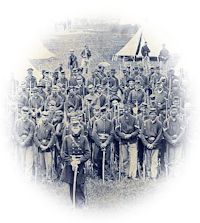
May 8th. 1865.
Two weeks today we arrived in sight of Washington, from our year’s campaign, crowned, this time, with victory. Why the impatience with which I await my discharge? I wonder, am I homesick, at this late day, just on the point of going home?
I certainly am not well; it is equally true I can think of naught but home. But, I am better than when I came; therefore I will write it down—impatience.
There are rumors of grand reviews, triumphal processions, and all the rest of it; and our flag, too, must have all the various battles in which we were engaged inscribed upon it. And officers are in no hurry to lay aside their trappings. Why should they be? It clothes them with authority which, lain aside, they never more can wear.
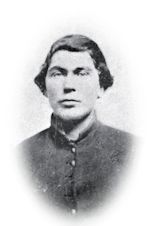
Chattanooga, Monday, May 8. The cooling rain drops have been falling in a refreshing shower all day. Have done my guard duty once more. How many more times must I go on before I will be relieved from this machine life? Will my mind ever be allowed to dictate the movements of the body again? I hope so. I have received an interesting letter from my old bunk mate, Evie. Have written him two full sheets in return.
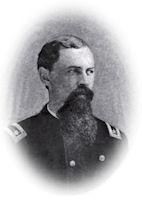
Petersburg, Va., May 7, 1865.
Twenty miles to-day, and the longest kind of miles. Had some bad road in the morning. We struck the Weldon railroad two or three miles below Ream’s Station, where the 6th Corps was whipped last June, and came right up to the city. Saw hardly any signs of fighting the whole way. Ours and the Rebel works where we came through are fully two and one half miles apart, and the skirmish line further from each other than we ever had ours when we pretended to be near the enemy. I think the whole army is up. Part of it got here last night. We lie here tomorrow. The 17th A. C. goes on to Richmond.
Chattanooga, Sunday, May 7. A very hot day, still dusty. Had the usual morning inspection. Grazed in the afternoon. Camp more quiet than it has been for some days. Wrote a letter to John and Hannah. Mounted guard at retreat, as corporal this time again, Hayes sick. Pound nice patch of ripe strawberries to-day.
Sunday, 7th—Started at the usual time and marched eighteen miles today. We bivouacked in some old camps which our men had built during the siege of Petersburg, within two miles of town. I rode all the way today with the wagon train. A part of the Fifteenth Corps came in ahead of the Seventeenth Corps, but our corps beat the Fifteenth into Petersburg after all their running to beat us. The two generals in command of the Fifteenth and Seventeenth Army Corps started out, after crossing the Roanoke river, to see which corps could reach Petersburg first. So while one brigade of the Fifteenth Corps came into Petersburg first, the entire Seventeenth Corps arrived in town ahead of the Fifteenth.
Light house Point, James River, Va.,
Sunday, May 7, 1865.
Dear Sister L.:—
The regiment moved a short distance the morning after my arrival, but far enough to break up everything, and with the expectation of remaining there some time we began preparing camp for permanent quarters, and I drew and issued a larger amount of clothing than I had ever issued at one time before. This and my share in fixing camp occupied my time and I had just got through and began to think of writing some letters when marching orders came. We moved early on Wednesday morning, passing through Petersburg, and were detained in town (the trains were) a long time by the passing of the Fifth Corps on its way home. I sat on my horse and watched them pass and it was one of the happiest days I’ve seen in the army.
I saw Colonel Rogers of the Eighty-third first in the morning. He told me they were coming and after a while I met in the street Milo, my old chum, who is still carrying the mail, and by and by the regiment came along. I should never have known it for the same regiment. Not a dozen of the old men who were in the ranks when I left remained, but there were a few and that few greeted me joyfully. The old “Charlie” I used to ride was at headquarters yet, and not killed, as I heard.
They would not believe they had started for home, but knew they were going to Richmond, and now they know they are going home, marching overland to Washington, over the roads they have marched before so many weary days.
My faith was too weak when I left you to believe the rebellion could so utterly collapse in one short month. Sherman’s army has started for home. They are to march to Washington via Petersburg and Richmond. Two corps were left in North Carolina and two of the Army of the James are left here, the Twenty-fourth at Richmond and the Twenty-fifth Corps here. There are rumors already looking to the final disposition of the colored troops that I expected to be made. They will not be discharged till Congress has made some provision to incorporate a portion of them into the regular army. The men are to be re-enlisted, those who choose to do so, and the officers are to pass a far more rigid examination and receive commissions in the regular army. There are to be no more “U. S. C. T.” but “U. S. A.” Twenty-four regiments of two thousand men each are to be organized—so says General Casey.
Well, we may say the war is over—”this cruel war is over.” The joy of the nation is tempered by its grief at the base assassination of the President, but we can console ourselves by the thought that he had accomplished his work. His murderer is also dead, and Jeff Davis, the instigator of the fearful deed, is fleeing from the wrath to come— proclaimed an outlaw and $100,000 offered for his head.
From home I have bad news. Mother has been sick some time and Father is afloat again. It is too sad to think of, but its frequent recurrence has made it seem almost a thing of course. The saddest part of all is that his trouble in the church was caused by copperheads who hated his war preaching. My indignation at that has no bounds. I cannot say I am astonished. A copperhead is fit for any meanness this side of hell. If there is a hell they are on the road to it and the sooner they arrive at their journey’s end the better it will suit me. They had better leave or turn strong war men before that old Army of the Potomac gets north, for, my word for it, those old veterans I saw marching through Petersburg the other day will not listen quietly to any of their balderdash. I can listen with a quiet smile to the sad story of a rebel soldier who has fought bravely through the war for a bad cause and acknowledges himself beaten. That is punishment enough for him, but for the villain at home too cowardly to fight for the cause he helped with his tongue and influence, I have only infinite scorn and loathing. I curse him from the bottom of my heart. Earth is too good for him and hell is full of just such men.
Well, my sheet is full and I must close. Write to me soon—same address.
7th. Went to Sunday School with Fred and C. G. in Prof. Penfield’s class. A stranger from Natchez spoke. Went to church with Aunt Rhodilla, and Melissa. After service Charlie and I walked up R. R. Pleasant time. Have seen a good many friends today.
Washington, May 7, 1865.
Dear Mother: — . . . The President impresses me more favorably than I anticipated. He strikes one as a capable and sincere man — patriotic and with a great deal of experience as a public man.
The great armies are getting back from the South to this city in great numbers. Grant and Sheridan are here. Sherman is soon coming. All think the war at an end. . . .
Affectionately, your son,
R.
Mrs. Sophia Hayes.


