Following the American Civil War Sesquicentennial with day by day writings of the time, currently 1863.

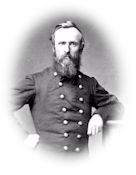
Washington, May 7, 1865.

Dear Uncle: — I am spending a few days very pleasantly here. I have had two talks with the President. He strikes me favorably.

The great armies are gathering here. Grant is here; also Sheridan. Sherman is expected soon. I am waiting a little while to see how the cat will jump. June early is still my time for leaving — possibly sooner. I return to New Creek in a few days.

Sincerely,

R. B. Hayes.

S. Birchard.

[May is full of stories of Confederate soldiers bitterly returning to their homes, and of apprehension of the Yankee troops encamped in the neighborhood.]

May 7,1865.

Sunday evening. Had company every day last week, paroled soldiers returning to their homes. Last night a Mr. and Mrs. Adams, refugees from Alberta, who have been spending the time in Eatonton, called to stay all night. I felt as though I could not take them in. I had purposely kept in the back part of the house all the evening with my blinds down and door locked, to keep from being troubled by soldiers, and had just gone into my room with a light, when some one knocked at the door, and wanted shelter for himself and family. I could not turn away women and children, so I took them in. Found them very pleasant people. They had Government wagons along, and he had them guarded all night. I fear there was something in them which had been surrendered, and belonged to the United States, but he assured me that with the exception of the mules and wagon, all belonged to himself. He said that he left Jeff Davis at Washington in this State, on Thursday morning last. His enemies are in close pursuit of him, offering a hundred thousand reward to his captors.

May 14, 1865.

Mr. Knowles, our circuit preacher, came. I like him. We agree upon a good many contested topics. He loves the old flag as well as myself and would be glad to see it floating where it ever has.

I had a long conversation with my man Elbert to-day about freedom, and told him I was perfectly willing, but wanted direction. He says the Yankees told Major Lee’s servants they were all free, but they had better remain where they were until it was all settled, as it would be in a month’s time. We heard so many conflicting rumors we know not what to do, but are willing to carry out the orders when we know them.

May 29, 1865.

Dr. Williams, from Social Circle, came this morning to trade me a horse. He tells me the people below are freeing their servants and allowing those to stay with them that will go on with their work and obey as usual. What I shall do with mine is a question that troubles me day and night. It is my last thought at night and the first in the morning. I told them several days ago they were free to do as they liked. But it is my duty to make some provisions for them. I thank God that they are freed, and yet what can I do with them? They are old and young, not profitable to hire. What provision can I make?

[The last two entries of the year 1865, however, supply the journal with the much-to-be-desired happy ending]:

December 24, 1865.

It has been many months since I wrote in this journal, and many things of interest have occurred. But above all I give thanks to God for His goodness in preserving my life and so much of my property for me. My freedmen have been with me and have worked for one-sixth of my crop.

This is a very rainy, unpleasant day. How many poor freedmen are suffering! Thousands of them must be exposed to the pitiless rain! Oh, that everybody would do right, and there would not be so much suffering in the world! Sadai and I are all alone in the house. We have been reading, talking, and thus spending the hours until she went to bed, that I might play Santa Claus. Her stocking hangs invitingly in the corner. Happy child and childhood, that can be so easily made content!

December 25, 1865.

Sadai woke very early and crept out of bed to her stocking. Seeing it well filled she soon had a light and eight little negroes around her, gazing upon the treasures. Everything opened that could be divided was shared with them. ‘T is the last Christmas, probably, that we shall be together, freedmen! Now you will, I trust, have your own homes, and be joyful under your own vine and fig tree, with none to molest or make afraid.

THE END

May 7.—Anna and I wore our new poke bonnets to church this morning and thought we looked quite “scrumptious,” but Grandmother said after we got home, if she had realized how unbecoming they were to us and to the house of the Lord, she could not have countenanced them enough to have sat in the same pew. However, she tried to agree with Dr. Daggett in his text, “It is good for us to be here.” It was the first time in a month that he had not preached about the affairs of the Nation.

In the afternoon the Sacrament was administered and Rev. A. D. Eddy, D. D., who was pastor from 1823 to 1835, was present and officiated. Deacon Castle and Deacon Hayes passed the communion. Dr. Eddy concluded the services with some personal memories. He said that forty-two years ago last November, he presided upon a similar occasion for the first time in his life and it was in this very church. He is now the only surviving male member who was present that day, but there are six women living, and Grandmother is one of the six.

The Monthly Concert of Prayer for Missions was held in the chapel in the evening. Dr. Daggett told us that the collection taken for missions during the past year amounted to $500. He commended us and said it was the largest sum raised in one year for this purpose in the twenty years of his pastorate. Dr. Eddy then said that in contrast he would tell us that the collection for missions the first year he was here, amounted to $5, and that he was advised to touch very lightly upon the subject in his appeals as it was not a popular theme with the majority of the people. One member, he said, annexed three ciphers to his name when asked to subscribe to a missionary document which was circulated, and another man replied thus to an appeal for aid in evangelizing a portion of Asia: “If you want to send a missionary to Jerusalem, Yates county, I will contribute, but not a cent to go to the other side of the world.”

Rev. C. H. A. Buckley was present also and gave an interesting talk. By way of illustration, he said he knew a small boy who had been earning twenty five cents a week for the heathen by giving up eating butter. The other day he seemed to think that his generosity, as well as his self-denial, had reached the utmost limit and exclaimed as he sat at the table, “I think the heathen have had gospel enough, please pass the butter.”

May 7 — The Rev. Mr. McCulloch of Baltimore preached here in prison to-day. Text, third chapter of John and eighteenth verse.

Sunday, May 7.—This is one of the gloomiest days I have spent since the war. The enemy have offered a reward of one hundred thousand dollars for the apprehension of our president. There are also rewards offered for many others of our leading men.

I do hope and pray that Davis will get off. I am so afraid that some of our men will be tempted to betray him for the love of gain. If they should, it will be no more than others have done before them. Wallace was betrayed by one of his own countrymen; Charles I likewise. Some of our people are condemning Davis’s administration. I have even heard him called a despot. If his detractors could see themselves in the proper light, perhaps they would hear a voice whispering, “He that is without sin, let him cast the first stone.”

If Davis has committed errors, they have been, as even those who condemn him say, errors of judgment, for a truer patriot never lived. Can his defamers say the same?

Davis did not bring on secession, but accepted it, like many others, as the issue of a people’s decision, and did what he felt was his duty when he found the rights of his country imperiled.


“War, war to the knife, be enthralled or ye die,

Was the echo that woke in his land!

But it was not his voice that promoted the cry,

Nor his madness that kindled the brand.

He raised not his arm, he defied not his foes,

While a leaf of the olive remained;

Till, goaded by insult, his spirit arose

Like a long baited lion unchained.”


The reward is offered on the plea that he was accessory to the murder of Lincoln, but we all know that not even the enemy believe that. They only make this a plea so as to capture him, should he get to a foreign country. The placards, when put up here, were immediately torn down by some of the citizens.

Since my arrival here I have been told that some time after the armistice a report was brought to town that a large army of the enemy were advancing on it. The citizens, forming themselves in a body, went and met them some few miles from the town, and informed them of the armistice. Instead of the enemy remaining where they were, they marched right in.

The general commanding this army, and indeed nearly all of the officers and men, made a boast, which, I think, were it known, would be scorned and condemned by their own people, as well as by us. They said, had it not been for the armistice, Newnan would have been laid in ashes; and the General had some half-dozen ladies’ names written down, whom he intended making examples of, by punishing most ignominiously, in revenge for some ill-natured remarks they had made to the prisoners who were captured near here last year. I believe one of the ladies committed the unpardonable sin of refusing some of them apples and water. She was a refugee, and had lost her all by some of these men, so it was not much wonder if she was embittered against them. Another cause of complaint was, that a man, or some men, living a few miles from here, had hunted some of them with blood-hounds, and I know that this is false. I am certain these are all their wrongs, unless I add Generals Roddy and Wheeler having the daring to rout the whole command who came here with the kind intentions then, so we thought, of laying Newnan in ashes, before the terrible wrongs, I have just narrated had been committed.

I visited the wounded prisoners, and they all spoke highly of their treatment. I was told of one lady, Mrs. Dr. ——, who, when the well prisoners passed her house, abused them. Some of us were shocked to think she could so far forget herself, as a lady and a Christian, to insult the helpless. But when we remembered that this lady and her children had been left in the world without shelter or food— these vandals having robbed her and set fire to her house, she being compelled to stand by, looking helplessly on the destruction, without even the liberty of remonstrating—when we thought of this, we concluded that perhaps, had we been like treated, we might have done the same.

Have the northern people really become such arbiters of all things, that every woman who makes use of the only weapon she has, when wronged beyond human endurance, is to be punished with degradation worse than that which even Haynau visited on the unhappy Hungarians; and for this terrible offense is a whole town to be laid in ashes? I believe, notwithstanding all the woe and inhumanity perpetrated on our unfortunate people by the enemy, that there is still manhood enough among them to condemn this officer to whom they have intrusted their honor.

Those things may do in barbarous lands, but they ill become the boasted descendants of the great and good men who were the followers of the immortal Washington.

This general kept his men in the place till many a lady’s wardrobe was lessened, and many a little trinket stolen. Mrs. Myers gave me a description of one band who came to her house. They took every thing they could carry away. After they left she sat down in despair, where a door hid her, when in walked a Dutchman, who commenced turning over what few things had been left in her drawers and trunks. Seeing her, he said, “Madam, they have treated you very badly.” He meant himself, for nothing was left for him. She answered, “Yes; what do you want?” He begged her for some clothes, saying he was badly in want of them. She told him she had none, or else he should have them, for his politeness in asking.
May 7th, 1865.—Aunt Margaret has been busily making her preparations for going home and yesterday she received notice that General Fish would evacuate her premises on the 10th of May. So she is leaving us tomorrow. Most of the servants she brought with her are going back in the same wagons they came in but some are not willing to leave Florida.

Cousin Jim and Mr. Horton will take charge of the train and Uncle Arvah is going as far as Tennessee, in company with them, as he may be able to help her with the military authorities at Nashville. This is the last night they will be in Florida. We spent last night with them at Goodwood and they sleep here tonight for this is ten miles on their journey. Captain Oliver is going along, too. John Branch is going. He will make his home in Nashville. As, yet he has no plans for work of any kind. We Southern people will have to take the matter of employment into serious consideration, for the war has left us stripped of everything but land.

Left bank of Stony Creek, Va., 20 miles from
Pittsburg,

May 6, 1865.

About 20 good miles to-day. No sign of war yet. Have not had a very good road to-day. Crossed the Nottaway river this morning. Small affair. During Kautz and Wilson’s disastrous raid last summer they threw their last piece of artillery into the Nottaway from the bridge on which we crossed. One of the officers says he noticed bullet marks on trees that indicated a pretty sharp skirmish having taken place where we stopped for dinner. We are fairly on classic ground. I hear that the 17th A. C. lost a number of men yesterday by a bridge falling.

Chattanooga, Saturday, May 6. No rain yet to settle the dust, which has been flying in blinding clouds all day, very hot and sultry. Policed camp and stables this afternoon instead of drill. “What is the news” is yet the cry, and stray bits of rumors are caught and devoured with avidity.

Saturday, 6th—We started at 5 a. m. and soon struck the Boydton plank road, which was quite good except at places, where it was a poor makeshift of a road. We marched twenty-five miles and went into bivouac for the night. I was sick all day and in order to keep up with the command I had to have the doctor order my knapsack and accouterments carried for me. Weather fine.

6th. Newhall friends went yesterday. Has been a very stormy, dreary day. Called at Dr. Steele’s. Visited with Aunt Rhodilla and Alonzo. Read some. Got Mrs. Charles’ writings. “Cotta Family,” “Early Dawn” and “Kitty Trevellyn’s Diary.” Also coarse Testament for mother.