Chattanooga, Thursday, March 16. Rained furiously last night and blew a hurricane. Several of the tents blown down to-day. I was detailed to go to the hills (I ought not to have volunteered to go yesterday) with three men to load three post teams with logs. Road very wet and muddy, and when we got there we were hardly able to lift the logs, as we were very small men. Coming back, upset one wagon in a puddle many feet deep. Another wagon broke the tongue and we left it. Reached camp 2 P. M. very hungry and very dirty. Some of the reserve batteries have marching orders to report at Washington.

March 16th.—Clouds and sunshine; warm. Splendid rainbow last evening.
We have nothing new in the papers from any quarter. Sheridan’s position is not known yet, though it must be within a short distance of the city. There was no battle yesterday. Sheridan reports the killing of Commodore Hollins, and says it was done because he attempted to escape at Gordonsville.
Sherman’s march through South Carolina is reported to have been cruel and devastating. Fire and the sword did their worst.
Congress, the House of Representatives rather, yesterday passed a bill suspending the privilege of the writ of habeas corpus. The Senate will concur probably. Also the President’s suggestion amending the Conscript act has been passed. The President has the reins now, and Congress will be more obedient; but can they save this city? Advertisements for recruiting negro troops are in the papers this morning.
It is rumored that Sheridan has crossed the Chickahominy and got off without hinderance. If this be so, Gen. Lee will be criticised.
One P.M. It is ascertained that Sheridan has withdrawn to the York River, and abandoned any attempt on Richmond.
And it is supposed by high military authority that but for the providential freshet, Sheridan would have succeeded in crossing the James River, and cutting the Danville Railroad, which would have deprived Lee’s army of supplies. The freshet rendered his pontoon bridge too short, etc. This may be claimed as a direct interposition of Providence, at a time when we were fasting, praying, etc., in accordance with the recommendation of the government.
Thursday, 16th—We had a thunderstorm yesterday at 2 p. m. and today we had an all-day rain. We marched twelve miles in the mud, our division taking the lead. Our regiment crossed the South river after dark, on the stringers of the bridge, the rebels having burned a part of the bridge. The engineers have to lay the pontoons for the artillery and teams to cross. The country is very poor and forage is scarce.
16th. Up at 4. No breakfast. Haversack empty for two days. Rained last night and this morning. Warm as in June. Our Div. in advance. Got into camp at 4 P. M. at Mangohick. Easton’s Batt. and 50 men from 1st Batt. on a scout to Hanovertown Ferry. Boys had a hard time to get forage and rations. 30 or 40 miles from the White House.
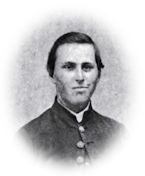
March 16th. Routed out very early this morning. Soon in line and on the march, taking the road on to Harper’s Ferry. A great surprise to us when informed we go by train. Soon loaded into box cars, during a cold rain. A few miles out on the road the train came to a stop. Detained by the breaking down of a bridge. Cold and very uncomfortable in the cars. On the road all day. Arrived at Martinsburg just before dark. Relieved the 95th Ohio Regiment, taking their camp on the Winchester Pike, near the home of Mrs. Shults, my wash-woman, a fine old German lady. Detailed for picket duty tonight, soon after our arrival.

During the first of March Captain Kingman was home on leave of absence. Before leaving for the South he came to Racine to call upon me. I was expecting a passport in every letter, and was ready to start for the South any day that it should come. I decided to go South with Captain Kingman, for I felt that I could go as far South as Nashville, and thought that if I could go no further Mr. Lyon could no doubt come to Nashville to see me.
I left for the South on the 13th of March, with Captain Kingman and Minerva. We left Chicago at 9 p. m., on the 16th, riding all night. We reached Cairo at 8 o’clock the next evening, just in time to take the boat. The packet Armada was just ready to start, so we went on board immediately, considering ourselves very fortunate, for there were some ladies there who had been waiting three days for the boat.
Mrs. Lyon’s Diary.
March 15, 1865.—The boat is tied up to a tree on the Cumberland river. The wind is so high they dare not run for fear of running into the woods, for the banks are all under water. The river has not been so high in fifteen years. The water is up to the chamber windows of all the houses along the shore. Yesterday one of the houses was floating in the river and some men took a boat and went out to it. They found in it the bodies of a man and woman and five children. I presume we shall hear of more such cases. We have seen a number of horses and cattle floating down the river, all dead.
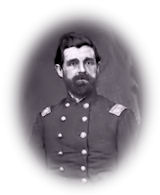
Colonel Lyon’s Letters.
Huntsville, Ala., Wed., March 15, 1865. We are still here, but expect to get off on Friday or Saturday. I have been relieved of all of my commands, but the regiment is not yet relieved. We expect the troops tomorrow to take our place. It will be some new regiment.
The 46th Wisconsin, Colonel Lovell, of Kenosha, passed here yesterday for Athens. Colonel Ginty’s regiment, I hear, is at Tullahoma. The movement of the 4th Corps is progressing. One advantage in going to the field is that my expenses will be less. I have to keep up a General’s headquarters with a Colonel’s pay.
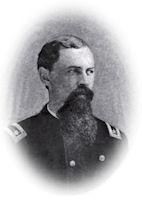
Left bank, Cape Fear River, Opposite Fayetteville,
March 15, 1865.
Everything valuable to the Rebels has been destroyed, and we are about ready to push on to Goldsboro. Fayetteville is about a 3,000 town, nearly all on one street. There was a very fine United States Arsenal burned here, some 20 good buildings, all of which are “gone up.” The rest of the town is old as the hills. We lay on the river bank expecting to cross all last night, and finally reached the bivouac three quarters of a mile from the river just as the troops on this side were sounding the reveille. This is the 21st river we have pontooned since leaving Scottsboro, May 1st, ’64. It is more like the Tennessee than any other stream we have crossed. We send from here all the negroes and white refugees who have been following us, also a large train to Wilmington for supplies. The number of negroes is estimated at 15,000. Nearly all the population of this town will go inside our lines. It has rained all day and seems abominably gloomy. Makes me wish for letters from home. Last night while we were standing around fires by the river, some scoundrel went up to a negro not 75 yards from us, and with one whack of a bowie knife, cut the contraband’s head one third off, killing him.
At Goldsboro, we are promised a short rest. If it were not that the wagons are so nearly worn out that they must be thoroughly repaired, I don’t believe we would get it. Well, time passes more swiftly in campaigning than in camp. Most of the army are moved out.
Chattanooga, Wednesday, March 15. A little rain last night. Health very good. David E. and myself volunteered to go out to the hills to load logs for a change. Took our dinner along so as to reload the teams in the afternoon. We crossed the first ridge where the Army of the Cumberland once won immortal fame. Had to lift hard on the logs and then we had to wait for the return of the teams. We wandered over the hills and came to a house filled with children. Could not tell what they lived on. Borrowed a cup and ate our dinner by a pretty little brook. Long ago I would have called it romantic, but romance has long ago “played out.”
General Thomas inspected the camp and post yesterday. Today he has gone to Knoxville. 4th Army Corps is passing on railroad. This is his only veteran force, but recruits are coming thick and heavy.
Wednesday, 15th—We were on the move at 7 a. m. and marched ten miles today. Went into bivouac near the Black river. The section of the country through which we passed today is almost one continuous swamp and heavily timbered. There is a small farm now and then. The corps took different roads and so we all got into bivouac earlier. Our division, the Fourth, had the center. When the road was wide enough the infantry would march at one side, allowing the artillery and teams to occupy the roadway. This made it equal to a double column, and we could move faster and save time.


