March 2d.—Raining. No well-authenticated news; but by many it is believed Staunton is in the hands of the enemy, and Lynchburg menaced. Nevertheless, the government is sending a portion of the archives and stores to Lynchburg!
The clergymen are at work begging supplies for the soldiers; and they say the holding of Richmond and the success of the cause depend upon the success of their efforts, the government being null! A large per cent. of these preachers is of Northern birth—and some of them may possibly betray the cause if they deem it desperate. This is the history of such men in the South so far. But the President trusts them, and we must trust the President.
Hon. Wm. C. Rives has resigned his seat in Congress. Alleged causes, ill health and great age—over 70. The Negro bill still hangs fire in Congress.
Roger A. Pryor is to be exchanged. He was the guest of Forney in Washington, and had interviews with President Lincoln.
The government is impressing horses in the streets, to collect the tobacco preparatory for its destruction in the event of the city falling into the hands of the enemy. This fact is already known in the North and published in the papers there. A pretty passport and police system, truly!
I saw a paper to-day from Mr. Benjamin, saying it had been determined, in the event of burning the tobacco, to exempt that belonging to other governments—French and Austrian; but that belonging to foreign subjects is not to be spared. This he says is with the concurrence of the British Government. Tobacco is being moved from the city with all possible expedition.
Cumberland, Maryland, March 2, 1865.
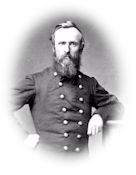
Dear Hastings: — Glad to get yours of the 27th and to find you are sound on the question of promotion. There is some clanger that your absence over sixty days may in the War Office induce your discharge, but the chances are that it will not be known. I want you to get the new title at least. The commander of a scow on the canal is called captain, but colonel is the best sounding title I know of.
Yes, General Crook’s capture is a great loss, as well as an especial calamity to all serving in this command. General Hancock takes the Department of West Virginia and General (brevet major) Carroll formerly of the Eighth Ohio, the District of Cumberland.
General Sheridan, with an immense force of cavalry, is on a raid towards Gordonsville or Charlottesville, or somewhere — probably to distract the attention of Lee. We are all in suspense as to Sherman and Grant. I look forward to the capture of Richmond as my discharge from service. . . .
A great many staff officers are in a state of mind about these days; also divers brigadier-generals “of whom I am not which.” Webster is often quoted — “Where am I to go?” — in a very despondent way. General Lightburn, Colonel Comly, and Captain Sweet are running an examining board as usual, much to the disgust of the Thirteenth. Mrs. Comly is here with a fine boy. The colonel makes a pretty fair “nuss.” — My regards to your sister.
Sincerely,
R. B. Hayes.
Captain Russell Hastings,
Willoughby, Ohio.
Cumberland, Maryland, March 2, 1865.
Dear Uncle: — It is a rainy, dismal day. General Hancock is in command of this Department. Sheridan has collected all his cavalry, and it is on a big raid to cut and slash the railroads west of Richmond, or to capture Gordonsville, or something of the sort. I doubt whether we see any more battles. I shall consider myself discharged as soon as my four years are up and Richmond taken. I shall be surprised if the latter does not occur first.
Great preparations are making for the inauguration. If nothing disastrous happens to our armies, it will be the greatest thing of the sort that ever has been witnessed in the country. Write often.
Sincerely,
R. B. Hayes.
S. Birchard.
March 2nd, 1865.—This is a sad day for all of us, dear Mother feels it most of all. When she was a child she had her little pony, “Winnie Wiggin”, to ride to school, and after that she always had a horse which was all her own. Grandpa loved fine horses and mother did, too. When mother married, she knew she was marrying a young doctor, who had his way to make in the world but he found he could provide her with all she needed. For five years now, she has been driving, to her especial carriage, a fine pair of glossy bays, “Tom” and “Charley.” These horses are the joy of Jordan’s life and he spends much time in brushing and currying his beautiful pets. At the beginning of the war there were horses a plenty for the army, but, as time wore on more and more were needed and all we had were given up to the Confederacy; that is, all but Mother’s carriage horses. We were spending the day at Live Oak and Jordan had brought the carriage to the door to carry us home, when Mr. Elkins came riding up and ordered the horses taken from the carriage. Jordan asked if he could not be allowed to take his mistress home? To this Mr. Elkins agreed but told him to have the horses ready for him at nine o’clock next morning.
They are gone now and of course it is right for our country to have them, but Mother will miss them very much. Since the other horses were impressed we have had Jordan to carry us to town twice a week for our music and French lessons, tomorrow is the day, I wonder if we can go? Father says we can have a pair of mules, that is if a gentle pair can be found.
Left Bank Lynch’s Creek, March 1, 1865.
We have finally got across this deuced creek. It has delayed us fully four days, more than any three rivers did before. Our division train is yet to cross and may not get over in 24 hours. We are getting hungry for the first time, having foraged the country out for 15 miles around. The 4th division started to-day on the Cheraw road. Prisoners taken to-day report that Wilmington was being evacuated when Schofield with the 23d Corps, dropped in and took the town and a brigade of prisoners. I wish he’d organize an expedition and bring us some late papers. Everybody is speculating on a big time with the enemy crossing the Great Pedee, but I don’t believe they will trouble us as much as this confounded creek has.
Chattanooga, Wednesday, March 1. Cloudy and looks like rain, but we moved camp and by night we were all fixed. Our pleasant camp commands a splendid view of the Tennessee River both above and below, which is now very high. It used to be occupied by general hospital. Teams out all day again.
Wednesday, 1st—March came in with an all-day drizzling rain. We remained in bivouac all day. Large foraging parties were sent out, but did not succeed in getting anything, not even enough for the teams and the men that went out. The country is very thinly settled and the people here can hardly raise enough to live on. The soil is very sandy and the country is very heavily timbered, the trees being mostly pitch pine. There are some large turpentine camps about here.
1st. Wednesday. By mistake up before daylight. Brigade in rear of column. Did not move out till 9 A. M. Advance captured the two bridges between Harrisburg and Staunton. Several prisoners captured. Camped six miles from Staunton. Wagons captured.
March 1st. Since the last date we have been visited by a cold rain, hard wind, hail, snow, mud. Very disagreeable weather for army life, but it must all be endured by soldiers. On picket duty. Corporal in charge of the outpost, about one half of a mile from the reserve quarters. On duty twenty-four hours from 3 P. M. We like the change from 9 A. M., the old custom.
March 1st.—Cloudy, cold, and dismal. We have no news, except from the North, whence we learn Lieut. Beall, one of our Canada raiders, has been hung; that some little cotton and turpentine were burnt at Wilmington; and that the enemy’s columns are approaching us from all directions. They say the rebellion will be crushed very soon, and really seem to have speedy and accurate information from Richmond not only of all movements of our army, but of the intentions of the government. They say Lynchburg and East Tennessee now occupy the mind of Gen. Lee; and they know every disposition of our forces from day to day sooner than our own people! What imbecile stolidity! Will we thus blunder on to the end?
Congress has passed an act organizing the artillery force of Lee’s army—submitted by Gen. Pendleton (Episcopal clergyman), who writes the Secretary that Col. Pemberton (Northern man and once lieutenant-general) is making efforts to induce the President to withhold his approval of the bill, which he deprecates and resents, as the bill is sanctioned by the judgment of Gen. Lee. From this letter I learn we have 330 guns and 90 mortars under Lee; enough to make a great noise yet!
Lieut.-Gen. Grant has directed Col. Mulford, Agent of Exchange, to say that some 200 prisoners escaped from us, when taken to Wilmington for exchange, and now in his lines, will be held as paroled, and credited in the general exchange. Moreover, all prisoners in transitu for any point of exchange, falling into their hands, will be held as paroled, and exchanged. He states also that all prisoners held by the United States, whether in close confinement, in irons, or under sentence, are to be exchanged. Surely Gen. Grant is trying to please us in this matter. Yet Lieut. Beall was executed!