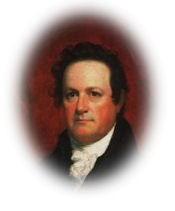
Mike Goad — A major part of my approach to the war is to present observations made in letters, journals, and diaries by people living the war and its impacts. My hope is that this will often result in our being able to “see” the progress of events from a variety of perspectives.
In most instances, I will be including all of what was included in the published versions of their writings, no matter how mundane. Some will have entries for almost every day while, with others, there will be long lapses without writing.
I have a large number of posts already scheduled for future publication in “Daily Observations from The Civil War,” including material from the following writers:
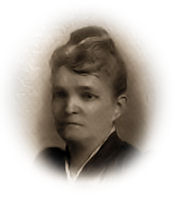
Dora Richards Miller, "War Diary of a Union Woman in the South"
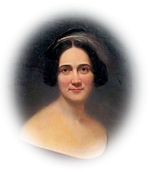
Mary Boykin Chesnut, "A Diary From Dixie"
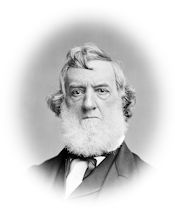
Lincoln Administration Secretary of the Navy, Gideon Wells, "Diary of Gideon Welles"
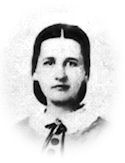
Susan Bradford Eppes, "Through Some Eventful Years"
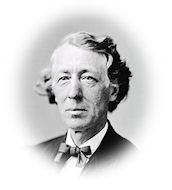
Horatio King, Postmaster General at the end of the Buchanan administration
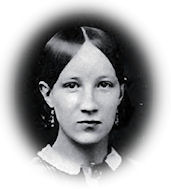
Catherine Cowles Richards, "Village Life in America 1852 - 1872"
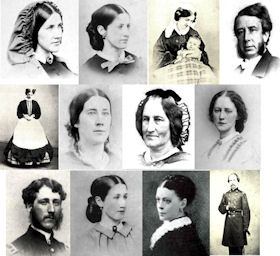
The Woolseys of New York, "Letters of a Family During the War for the Union"
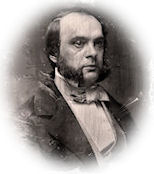
DNC Chairman August Belmont, "A Few Letters and Speeches of the Late Civil War"
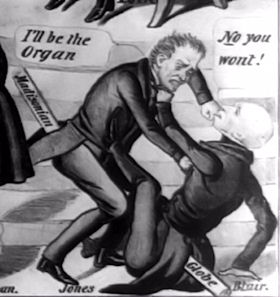
John Beuchamp Jones, "A Rebel War Clerk's Diaray at the Confederate States Capital." (Image is from 1845 political cartoon)
Executive Office, Columbia, S. C,
November 29, 1860.
Mr. Wm. Henry Trescot.
Dear Sir: Although South Carolina is determined to secede from the Federal Union very soon after her Convention meets, yet the desire of her constituted authorities is, not to do anything that will bring on a collision before the ordinance of secession has been passed and notice has been given to the President of the fact; and not then, unless compelled to do so by the refusal of the President to recognize our right to secede, by attempting to interfere with our exports or imports, or by refusal to surrender the forts and arsenals in our limits. I have found great difficulty in restraining the people of Charleston from seizing the forts, and have only been able to restrain them by the assurance that no additional troops would be sent to the forts, or any munitions of war. Everything is now quiet, and will remain so until the ordinance is passed, if no more soldiers or munitions of war are sent on. That is to say, I will use my utmost efforts to effect that object, and believe I will succeed; but the Legislature and myself would be powerless to prevent a collision if a single soldier or another gun or ammunition is sent on to be placed in the forts. If President Buchanan takes a course different from the one indicated and sends on a reinforcement, the responsibility will rest on him of lighting the torch of discord, which will only be quenched in blood. I am under a pledge to sanction resistance, and to use all the military power of the State to prevent any increase of troops in these garrisons, and had to make the pledge to restrain the people, who are restive, and hope no necessity will arise to compel me to redeem the pledge. I write to you knowing that, while you will be faithful to the Government of the United States as long as you hold office under it, yet you are also a South Carolinian, and would desire, by all means, to avoid the needless shedding of blood. If you think there is no impropriety in showing this letter to the President you are at liberty to do so, for I do not wish him to be mistaken and act in such a way as to bring upon the country a bloody war, without the most imperious necessity.
Very truly yours,
Wm. H. Gist.

_____
The Genesis of the Civil War: The Story of Sumter, 1860-1861; Samuel Wylie Crawford; C. L. Webster & Company, 1887; p. 31.