Following the American Civil War Sesquicentennial with day by day writings of the time, currently 1863.

September 2011

MONDAY, SEPTEMBER 16, 1861.

Today went with Doct David to the Smithsonian and to the Washington Monument. Called at the U.S. Treasury, saw Genl Spinner (the Treasurer). He told me that $800,000 pr day was now paid out or the average was that. Julia got a boquet from the Prests Garden for the Dr to take home to his wife. He left on the 21/2 train. I went with him to the Depot. We all like the Dr very much, never saw much of him before. Capt Meeks spent and hour with us this evening, left for his camp 1/2 past 9 o’clk.

______

The three diary manuscript volumes, Washington during the Civil War: The Diary of Horatio Nelson Taft, 1861-1865, are available online at The Library of  Congress.

Fairfax C. H., September 16, 1861.

I did not write my regular Sunday letter to you on yesterday. As usual, after breakfast I left the camp on duty, and did not return until dinner, when, very tired, I slept a couple of hours. Very soon I got orders to leave again for a ride of thirteen miles, and did not get back until bedtime. This morning we all left for our new encampment, where all are comfortably quartered.

I received your letter of 9th inst. a few days since. Indeed, Love, the perusal of your letters gives me more pleasure than I ever received from any other source. Should I not be happy to know there is some one in the world who loves me so well and looks with such deep interest to my fate? To be with you again is the wish which lies nearest my heart. But the duty to which my life is now devoted must be met without shrinking. Before the war is done many, I fear, must fall, and I may be one of the number. If so, I am resigned to my fate, and I bequeath to you our dear little boys in the full assurance that you will give to my country in them true and useful citizens. I wish, Love, the prospect were brighter, but indeed I see no hope of a speedy end of this bloody contest.

SEPTEMBER 16TH.—Mr. Benjamin’s hitherto perennial smile faded almost away as he realized the fact that he was now the most important member of the cabinet. He well knew how arduous the duties were; but then he was robust in health, and capable of any amount of labor.

It seems, after all, that Mr. Benjamin is only acting Secretary of War, until the President can fix upon another. Can that be the reason his smile has faded almost away? But the President will appoint him. Mr. Benjamin will please him; he knows how to do it.

Norfolk, September 16, 1861.

We are still here at Norfolk and now in camp for we don’t know how long. We got tents the day after the date of my last, and splendid ones they are. They are full 10 feet high and 15 feet across. They each accommodate about 15 men. Since we have been here we have been out scouting three times. The first time we were down the river about five miles. That was the time our gunboats had the fight with the “Yankee” and the land batteries. Two days afterward a body of the enemy’s cavalry came up almost to our camp, and after dinner we were sent out to look them up. We were scooting along through a thick wood when one of our cavalry men came back half scared out of his wits (we had about 20 of the cavalry ahead acting as scouts) and reported a whole mess of men just over a rise of ground ahead of us. Our company was in the van, and the column came into line on us and our cavalry tried to draw the enemy back on our position, but Mr. Enemy “drawed” the other way and again we missed our little fight. Last Saturday we started out again at noon and went down the river 10 miles where we thought sure we’d find secesh, but he had again left. We had 2,000 men this time and 6 pieces of artillery. We had stopped to rest when a cloud of dust was observed rising on our side of the river about four miles from us. Some of the boys had glasses with them and made out the cause to be a body of cavalry. Our right was marched a few hundred yards to the front and placed in line of battle with the left at the river bank and our right extending along an edge of woods and fronting a cornfield and open pass between it and the river. A splendid place (for our side) for a fight. Our gunboat then started down the river, fired at and dispersed one body they saw and then slipped a few shells into Columbus and returned. We were within four or five miles of Columbus where there are (our colonel says) 26,000 troops, and on ground where the secesh were encamped but lately with 16 pieces of artillery. We started back at dusk and got home about 10 o’clock; some of the boys pretty tired. I stand these little trips like a horse and would rather go every day than lay around camp. Yesterday (Sunday) the “Yankee” came up and shelled the woods where we were the day before. She tried to throw some shells into our camp but they didn’t reach us by a mile and a half. One of our gunboats has to lay here all the time or the “Yankee” would make us skedaddle out of this on double quick. Don’t talk about furloughs. They are played out. A dispatch came this last week to Colonel Oglesby that his wife was dying. He went up to Cairo but General McClernand showed him an order from McClellan, vetoing furloughs, no matter for what. So the colonel had to return here. I’d like very much to go home but I’ll enjoy it all the more when this business is finished. The 17th is encamped just opposite us on Island No. 1, but we can’t get to see them. Our boys are in good spirits. Sid. and Sam and Theo. are now all right. Milo Farewell thinks he has the dumb ague. Fred Norcott is sick in Cairo. Charley Cooper is also sick I have heard. I am all right. My office is sergeant, two grades below private. Our company goes out on picket to-night.

September 16.—An expedition from Hatteras Inlet, under the command of Lieutenants Maxwell and Eastman, of the steamer Pawnee, visited Ocracoke Inlet and destroyed Fort Oregon, a fine fortification at that place. The expedition was entirely successful.—(Doc. 51.)

—The gunboat Conestoga captured the steamers V. R. Stephenson and Gazelle, on the Cumberland River, Ky. The Stephenson had fifty tons of iron aboard. The Gazelle was without a cargo.—Louisville Journal, September 19.

—Ship Island, near the mouth of the Mississippi River, was evacuated by the rebels and immediately taken possession of by the National forces.—(Doc. 52.)

—Major French, the commanding officer at Key West, published the following important order; its promulgation caused a vast amount of commotion among the secessionists:

Headquarters U. S. Troops

Key West Florida, September 16, 1861

I. Within ten days from this date all male citizens of the Island of Key West who have taken the oath of allegiance will send their names to these head-quarters to be registered.

II. Within thirty days from this date all the citizens of this island are required to take the oath of allegiance to the United States.

III. At the termination of sixty days all citizens of this island who have failed or refused to take the oath of allegiance to the United States will be removed from Key West. This will also apply to their families and the families of these who have left the island to join the Confederate States.

Wm. H. French,

Brevet-Major U. S. A., Commanding.

—The Washington Grays, Forty-seventh regiment N. Y. S. V., commanded by Colonel Henry Moore, left East New York for the seat of war.—N. Y. Times, September 17.

—There was an interesting ceremony at General Smith’s camp near Washington, this afternoon. Some days ago, General McClellan gave directions that the flags of the Seventy-ninth should be restored to the regiment. This afternoon the regiment marched to the parade-ground of the brigade, for the purpose of receiving the banners, which were escorted to the field by the Third Vermont regiment. The two regiments being drawn up in line, facing each other, the colors were saluted, and then transferred from the Vermont to the Highland regiment. On transferring the banners, General Smith thus addressed them:

Soldiers of the Seventy-ninth: By direction of the Major-General commanding, I restore to your custody the banners of the regiment. Since you have been under my command yon have earned them. I hope that when any opportunity offers you will prove yourselves worthy of them.

The Seventy-ninth then saluted the colors, and a salvo of artillery from Captain Mott’s battery of thirty-two pounders also greeted them. After these ceremonies the troops were reviewed by General Smith, the two regiments warmly cheering each other as they marched from the field.—N. Y. Times, September 17.

—Governor Hicks of Maryland issued his proclamation exhorting the observance of the last Thursday in this month, as appointed by the President of the United States, as a day of fasting, humiliation, and prayer. — Baltimore American, September 18.

—General Price commenced an attack on the intrenchments at Lexington, Mo., commanded by Colonel Mulligan, this morning. The fight lasted all day, and was very severe. General Price assaulted the works, and was repulsed with severe loss.—N. Y. Herald, September 20.

—The Forty-sixth regiment of Pennsylvania Volunteers, Colonel Knipe, left Harrisburg for the seat of war, being the first instalment of the last requisition on Governor Curtin. The regimental colors were presented by Governor Curtin.

The Second Buffalo regiment, under command of Colonel D. D. Bidwell, left for New York.

The Forty-third regiment N. Y. S. V., under the command of Colonel Francis L. Vinton, left Albany to-night for the scat of war. They are a fine body of men, fully equipped and armed. —N. Y. Times, September 17.

—The Provost-marshal’s Police seized over two hundred muskets and a lot of ammunition, to-day, which were found buried in the establishment of Messrs. Egerton & Keys, on North street, at Baltimore, Md. The guns are of Harper’s Ferry manufacture. The Police also seized a lot of muskets at the armory of the Independent Greys, on North High street.—Baltimore American, September 17.

—The Fremont Rifle regiment N. Y. S. V., under the command of Colonel Rudolph Rosa, left their encampment at Turtle Bay Brewery, New York, for the seat of war on the Potomac. —N. Y. Times, September 18.
Sunday, 15th—This morning I went to church and Sunday School once more.

Post image for “General Albert Sidney Johnston assumed command of this department…”–Richard R. Hancock, Second Tennessee Cavalry.

Sunday, 15th.— The battalion1 passed on through Knoxville and encamped about one mile and a half east of town, at Camp Cummings.

On the above date General Albert Sidney Johnston assumed command of this department (No. 2), which embraced the States of Tennessee and Arkansas and that part of Mississippi west of the New Orleans, Jackson and Great Northern and Central Railroad; also the military operations in Kentucky, Missouri, Kansas, and the Indian country immediately west of Missouri and Arkansas, by issuing the following order from department headquarters, at Nashville, Tennessee:

By virtue of special orders, No. 149, of September 10, 1861, from the Adjutant and Inspector General’s office at Richmond, the undersigned assumes command of the military department thereby created.

A. S. Johnston, General

Brigadier-General F. K. Zollicoffer had been in command of the District of East Tennessee since about the first of August, with headquarters at Knoxville.

His brigade was now composed of nine regiments of infantry and four battalions of cavalry….

Churchwell’s Regiment, as well as other portions of Zollicoffer’s Brigade, was totally unarmed. Only a part of his brigade was now at Knoxville, for on the 16th instant Zollicoffer writes thus to A. S. Johnston;

There are probably by this time four regiments at Cumberland Ford [Kentucky] and a fifth at the gap fifteen miles this side. A sixth will probably be moved up by the 21st or 22d.

________

1 As J. J. Odom and I were on the puny list, we stopped to rest and take dinner with a Frenchman, within four miles of Knoxville. The family were great “Rebs,” so it seemed to be with pleasure that they did all they could to make us comfortable.

It so happened that our host was a preacher. Some other French families who lived in the neighborhood had collected there to hear him preach. As some of them did not understand English, he preached in French. I “heard but did not understand ” a single word of that sermon. We had a splendid dinner, and we had now been soldiering long enough to appreciate a good dinner. Among other nice things, a glass of wine of their own make was served to each.

Odom and I went to camp late that afternoon.

SUNDAY 15

A hot day. M. 86. Went to ch[urch] in the morning with Julia & one of the boys and heard Dr Smith, church well filled. Wife went in the afternoon. Chas & Sallie were up to dine with us. Walked with Dr D. & Chas up to Camp Cameron to see the “Anderson Zouaves.” Saw Capt Lafata of the Co of the French Zouaves. He is an Italian. Came down to tea and went over to Camp Anderson to hear the music of the “Regulars” Band, it was fine.

______

The three diary manuscript volumes, Washington during the Civil War: The Diary of Horatio Nelson Taft, 1861-1865, are available online at The Library of  Congress.

Abby Howland Woolsey

Lenox, Sept. 15, 1861.

Charley talks of going down to-morrow to be inspected and mustered into State service with the regiment—the Home-Guard. He thinks his fine for non-attendance will about equal his railroad fare down and up. He is to stay over night and will see Mary at Astoria.

Birch River, Eighteen Miles North
of Summersville, Sunday, September 15, 1861.

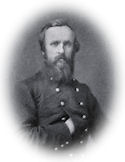
Dearest: — We are as happy and care-for-nothing [a] set of fellows here today as you could find anywhere. I have now for a while an independent command of four companies, Twenty-third, Captain Moore, Captain Lovejoy, Woodward, and Drake, two companies of the Thirtieth and a squadron of the Chicago Dragoons. We are now about thirty miles from the battlefield, heading off (if there are any, which I doubt), reinforcements for the enemy. The men are jolly, the anxieties of the battle all forgotten. We seem to be in most prosperous circumstances. I shall rejoin the main army in three or four days.

You have heard about the fight. It was a very noisy but not dangerous affair. . . . Where I was a few balls whistled forty or fifty feet over our heads. The next day, however, with Captain Drake’s company I got into a little skirmish with an outpost and could see that the captain and myself were actually aimed at, the balls flying near enough but hurting nobody. The battle scared and routed the enemy prodigiously. . . .

I hardly think we will [shall] have another serious fight. Possibly, Wise and Floyd and Lee may unite and stiffen up the Rebel back in this quarter. If so we shall fight them. But if not encouraged by some success near Washington, they are pretty well flattened out in this region. We shall be busy with them for a few weeks, but as I remarked, unless we meet with some serious disaster near Washington, they will not, I think, have heart enough to make a stiff battle.

My “Webby,” tell the boys, pricked up his ears and pranced when he heard the cannon and volleys of musketry. He is in excellent condition.

Dr. Joe and McCurdy were very busy with the sick and wounded during and after the battle. Our troops who were taken from Colonel Tyler and retaken by us say they were very well treated by the enemy. McCurdy is now with me. Colonel Scammon couldn’t spare Joe.

The last week has been the most stirring we have had during the war. If in all quarters things go on as well as here we shall end the war sometime. The captured letters show that Governor Floyd’s army were getting tired of the business.

Did I tell you General Benham gave me an awful bowie knife and General Rosecrans a trunk out of the enemy’s spoil? The last much needed.

Well, dearest, this is one of the bright days in this work. I am prepared for all sorts of days. There will be dark ones of course, but I suspect there is a gradual improvement which will continue with occasional drawbacks until we are finally successful. Love and kisses for all. Good-bye, darling.

Affectionately,

R. B. Hayes

P. S. — Captain McMullen who was wounded is well enough for another battle. Since writing in comes a mail carrier out on this road and your letter of the 5th and postage stamps is in his budget. So I put a stamp on it and if I had another envelope would direct it again.

Tell Webb that my pretty horse is the original Camp Chase “Webby,” the finest horse in the regiment. I tried one or two others, but Webb plucked up and beats them all.

Glad, very, you are at home and happy. We are here happy, too. This is all Cincinnati nearly — this army. Yes, Joe, is a great favorite with the colonel and with all. The colonel leans upon [him] entirely. He is really surgeon of the brigade and should Colonel Scammon be a brigadier, Dr. Joe will become his brigade surgeon permanently. All glad to get letters. I love you so much. Good-bye.

Affectionately,

R.

Mrs. Hayes.