15th.—I am alone to-night, and tired enough to lie and sleep for twenty-four hours, did not the scenes around call up associations which banish repose, and yet invite it. In the deep, deep woods, in a deep, deeper valley, with a mountain rising high on either side of me, and the semi-roaring babble of a large mountain brook, leaping over stones and precipices just in front of my lonely tent; the night speaks of the wildness of nature, and carries back my imagination to the times when the red man revelled here in the luxury of his mountain hunt. The song of the catydid talks to me of the rural home of my childhood, while the scream of the screech-owl right over my head awakens mingled feelings of aboriginal wildness, and of the ruins of civilization. The night is still, and over the mountain comes the strain of vocal music, with the accompaniment of a martial band, from more than a mile away, where with a regiment of Vermonters our chaplain is holding religious exercises, and “Dundee’s sacred strain,” mellowed by the distance, is in harmony with all around me. These are my nearest settled neighbors to-night, and so far away that I am outside of all their guards, yet near enough to hear the “Halt! who comes there?” of the picket, as he hails the rock, loosened from above, as it comes rushing down the mountain side. The tattoo of the night drums, too, as it comes rumbling over the mountains, and calls the soldier to his hard, but welcomed bed, awakens in the reflecting mind sad stories of the passions of men; of happy homes, deserted; of families, once united, now separated, perhaps forever; of the once freeman, to whom the dungeon now denies all hope of liberty again; of a country, once a unit, which held the world at bay, now an object of the ridicule or pity of nations which but a few short months before trembled at her power; of reflections which, I fear, must convince that “war is the normal condition of man.” There were threats of an attack on us yesterday and to-day. My hospital was in an exposed position, and my sick must be moved. At dark I commenced moving to a more secure place; selected this beautiful ravine ; got my tents here, but not deeming it best to disturb the sick by moving them in the night, am here alone to take care of my tents and stores. And how beautifully the moon sheds its reflections over this quiet little valley, and brightens, as with myriads of diamonds, the ripplings of the little mountain streams! How deliciously sweet the fresh odor of the clean grass, untainted by the stench of the camp. But hark! I hear at this moment, from Fort Corcoran, “the three guns,” a signal of approaching danger, and in another moment the “long roll” may summon us to scenes of trouble. I am still stubborn in the belief that the enemy is only making a feint, and that we shall have no fight here. The long roll does not call me. The “three guns” must have made a false alarm, and so I will retire and “bid the world good-night.”
September 2011

SEPTEMBER 15TH.—And, just as I expected, Mr. Benjamin is to be Mr. Walker’s successor. Col. Bledsoe is back again ; and it devolved on me to inform Major Tyler that the old chief of the bureau was now the new chief. Of course he resigned the seals of office with the grace and courtesy of which he is so capable. And then he informed me (in confidence) that the Secretary had resigned, and would be appointed a brigadier-general in the army of the Southwest; and that he would accompany him as his adjutant-general.
September 15th, 1861.—All the troops are not sent to Virginia, the Dixie Yeomen have been incorporated into the Fifth Florida Regiment and they have gone to Palatka to be drilled. So far the troops, which have been sent had been drilling for some time and were considered fit for service but these fresh companies have to learn.
Brother Junius went to Palatka, and we miss him very much but it is not like he was going away off. Palatka is so much nearer than Virginia, and then, too, they are fighting in Virginia. I must tell you my Diary what happened to Buddy. (I forgot, Mother says I must call him Cousin William.) But this is what happened. He has been practising medicine in this county for twelve years and everybody loves and trusts him. When the men composing the Dixie Yeomen came forward to be sworn into the Confederate service, first one man and then another, until nearly all had spoken, said he could not take the oath nor sign the Roster unless Doctor William Bradford would consent to resign and stay at home. Some of these men grew quite eloquent about it. They said they could not leave their wives and children unless the doctor would stay with them. “I should be obliged to desert,” said one man, “if Doctor Bill was not in call, when my home folks got sick.” So after much discussion he consented to resign. I know his mother rejoices in this for she has consumption and is never well. His young wife and baby need him, too, but then so many wives and babies have to suffer. This is a great compliment to our doctor and Father and Mother are delighted. He is their adopted son, you know. They love him as if he was their very own and no brother could be dearer to me.

September 15.—The British brig Mystery, of St. Johns, N. B., was seized by the Surveyor of the port of New York, to-day, under suspicion of having run the blockade at Georgetown, S. C. Letters of instruction and the charter party, found on board, clearly show that there was a plan to land a cargo of ice at that rebel port, but the Consular certificate at Havana proves that the Mystery entered the latter port on the 7th of August, with the identical cargo of ice, and two days afterward cleared for Matanzas, where she received a cargo of sugar, and then sailed for the North, coming into the port of New York.—N. Y. Times, September 17.
—The Second regiment, of Kansas Volunteers, arrived at Leavenworth, from Holla, Mo. —Ohio Statesman, September 21.
—Col. F. P. Blair, Jr., was ordered by the Provost-marshal, at St. Louis, Mo., to report himself under arrest on the general charge of using disrespectful language when alluding to superior officers.—Louisville Journal, Sept. 17.
—About three o’clock this afternoon a force of five hundred rebels attacked a portion of the troops under Col. Geary, stationed about three miles above Harper’s Ferry, on the Potomac. Col. Geary commanded in person, and the fight lasted about three hours. The enemy were driven from every house and breastwork, and no less than seventy-five of them are reported, as killed and wounded. The National loss is one killed and a few slightly wounded. The troops behaved like veterans. Companies B, D, and I, of the Twenty-eighth Pennsylvania regiment, and two companies of the Thirteenth Massachusetts, were engaged in the conflict. During the fight a rebel was seen taking aim at Col. Geary, when the colonel grasped a rifle from a soldier and shot him on the spot.—(Doc. 50.)
—The Thirty-ninth Ohio, Colonel Groesbeck; Third Iowa, Lieutenant-Colonel Scott; Sixteenth Illinois, Colonel Smith, with a force of the Missouri State Militia and Iowa State troops, under Colonels Craynon and Edwards; three hundred regulars and irregular cavalry and six pieces of artillery, under Captain Madison, left St. Joseph and Chillicothe, Mo., in two columns for Lexington, to-day, on their way to reinforce Colonel Mulligan.—N. Y. Herald, September 20.
—This morning the Abbé McMaster, proprietor and editor of the Freeman’s Appeal, a peace organ of New York city, was arrested by the United States Marshal, Mr. Murray, and sent to Fort Lafayette, on a charge of treasonable matter contained in his paper.—N. Y. Herald, September 17.
Saturday, 14th—We had company drill this morning, and some five or six new men enrolled. I went home in the afternoon.
Saturday, 14th.— In the saddle early, we again took up the line of march eastward. Passing through Wartburg, we soon arrived at Camp Schuyler, where we found the other two companies, A and D. They had been sent to this camp from Huntsville, the 25th of August. These two companies, having been previously notified to be ready to move, now fell in, and the whole battalion continued moving eastward.
We camped for the night in Anderson County, within twenty-two miles of Knoxville.
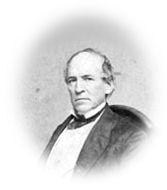
SATURDAY 14
Weather fine & bright but a little too hot. M. 82. Have been at the Pat office part of the day. Had an interview with the Comr and a long talk with him, and a pretty plain talk. But of all the mean business in the world, the most humiliating to a proud and independant man is dancing attendance upon and asking favors from those in power. Dr David got in this evening from the other side of the River. I was at the National an hour or so, also called at Willards. City quiet.

______
The three diary manuscript volumes, Washington during the Civil War: The Diary of Horatio Nelson Taft, 1861-1865, are available online at The Library of Congress.
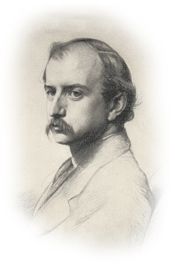
London, September 14, 1861
Your last letter containing principally suggestions on the cotton matter, reached me this week. Also a bundle of newspapers. At present I am busy in another direction, so that I can’t yet take up the subject you recommend, but when my immediate bubbles have burst, or have expanded brilliantly, I mean to see what I can do here. Yet I confess I do not promise myself much from the effort. The main principles which you aim at demonstrating, that the American monopoly of cotton is in fact a curse both to America and to Great Britain, and its destruction might be made the cause of infinite blessings to the whole range of countries under the torrid zone, this principle is and has always been an axiom here. It needs no proof, for the cotton-merchants themselves are the most earnest in asserting it. The real difficulty with regard to cotton does not lie there. It is never the hope of a future good, however great, that actuates people, when they have immediate evils such as this want of cotton will produce right before their eyes. Nor should I answer any real question by proving that in two years the world will be infinitely benefitted by our war, when what they alone ask is whether meanwhile England will not be ruined. My own belief is that she will be ruined. This next winter will, I fear, be a dreadful one in this country in any case, nor will it be bettered if they make war on us. It is not as if the cotton manufacture alone suffered, but the tariff and the war have between them cut off the whole American trade, export and import, and the consequence has been a very bad season, with a prospect of frightful pressure in the winter. Whole counties will have to be supported by subscription.
This is my idea of the real cotton problem in this country. I have no doubt that the suffering interests will make a violent push to solve it by urging the Government to attack our blockade. But that is merely the last struggle of a drowning man. The Government will not do it, I think, and most Englishmen speak of the idea as preposterous. If they did, it would only complicate matters still more and I doubt whether even then they got their cotton. The winter over, the new era will dawn on us; that cursed monopoly will be broken and with it the whole power of the South; the slave-trade will then be ended and slavery with it, for the negro will be of no use; and we may expect sunnier days and renewed prosperity. This is the only view that I could advocate, and this, a generally acknowledged truth, is at best but small comfort to a starving people.
Meanwhile we are getting on in these parts. Lord Russell has just answered the Chief’s Note, by refusing to dismiss Bunch; acknowledging that he acted under instructions; justifying the step as one which implied nothing and in which even pirates might be admitted to join (i.e. the neutral flag matter); accepting the responsibility for its acts and the consequences; but at the same time declaring that the Ministry has no present intention of recognizing the Southerners, or of leaving their old position.
Of course Seward will revoke Bunch’s exequatur, but that need make no trouble. But it is by no means so clear what also may result from this. By a pure accident it was discovered that the British Government were secretly entering into connections with the insurgents, and they are now compelled to acknowledge that they have really been acting behind our backs. This is no pleasant acknowledgment to make, for evidently secrecy was their object, and the implication is direct against their good faith. They feel that they have been found out, and this for an Englishman is anything but pleasant. The affair will hardly end here.
I have been lately hunting up the newspapers. The other day I called on the editors of the Spectator and had a long talk with them. I mean to call on or write to Hughes, the Tom Brown man, who has vigorously taken our side. The Star too we are in with. Miss Martineau writes for the News and she is an invalid, not to be seen. I may very likely myself turn up some of these days in the lists. . . .
SEPTEMBER 14TH.—Some of Mr. Walker’s clerks must know that he intends giving up the seals of office soon, for they are engaged day and night, and all night, copying the entire letter-book, which is itself but a copy of the letters I and others have written, with Mr. Walker’s name appended to them. Long may they be a monument of his epistolary administrative ability, and profound statesmanship!
Birch River, Between Summersville and
Sutton, Virginia, September 14, 1861.
Dear Uncle : — I have no time to write letters. We are getting on finely. Our battle on the 10th at Gauley River, you have no doubt heard all about. Nothing but night prevented our getting Floyd and his whole army. As it was, we entirely demoralized them; got all their camp equipage even to their swords, flag, and trunks (one of the best of which the general gave me). I had an important and laborious part assigned me. An independent command of four companies to be the extreme left of our attacking column. We worked down and up a steep rocky mountain covered with a laurel thicket. I got close enough just at dark to get two men wounded and four others struck in their garments.
This is not a dangerous business; after tremendous firing of cannon and musketry, we lost only thirteen killed, about fifteen badly wounded and fifty or sixty slightly wounded. The enemy are no match for us in fair fighting. They feel it and so do our men. We marched rapidly seventeen miles, reaching their vicinity at 2:30 or 3 P. M. We immediately were formed and went at them. They were evidently appalled. I think not many were killed. Governor Floyd was wounded slightly.
On yesterday morning I was sent on a circuitous march to head off parties hastening to join Wise or Floyd. Four companies of my regiment, two companies of Colonel Ewing’s, and a squadron of Chicago cavalry are under my command. We marched up Gauley River to Hughes Ferry. There we were fired on by a lot of guerrillas concealed in rocks. It was more dangerous than the battle. Three of us who were mounted and in advance were decidedly objects of attention, but fortunately none were hit. We chased them off, getting only one.
I am now here relieving a small party of our folks who are entrenched and who have been in constant dread of an attack. We are without tents and expect to return to the battle-ground in six days.
In the battle only one commissioned officer was killed, Colonel Lowe. One acquaintance of yours, Stephen McGroarty, an Irish Democratic orator, formerly of Toledo, now of Cincinnati (a captain), was shot through the body, but kept on his feet until the fight was stopped by the darkness. He will recover. One of my comforts is that my horse has come out in better plight than ever. I think he never looked so well and spirited as he did today as we marched over Birch Mountain.
If no disaster overtakes us at Washington, we shall soon see signs of yielding by the South. The letters, diaries, etc., etc., found in Floyd’s trunks and desks, show that their situation is desperate. Thousands are in their army who are heartily sick of the whole business.
We retook a large part of the plunder taken from Colonel Tyler as well as prisoners. The prisoners had been well treated, very. The young men in Floyd’s army of the upper class are kind-hearted, good-natured fellows, who are [as] unfit as possible for the business they are in. They have courage but no endurance, enterprise, or energy. The lower class are cowardly, cunning, and lazy. The height of their ambition is to shoot a Yankee from some place of safety.
My regards to all. Send this to Mother and Lucy.
Sincerely,
R. B. Hayes.
P. S. — The enclosed picture of a lieutenant in the army we routed is for Laura.
S. Birchard.


