
JANUARY 18TH.—Gen. L. P. Walker, the first Secretary of War, is assigned to duty in the Southwest under Gen. Bragg. How can he obey the orders of one who was so recently under his command? I think it probable he will resign again before the end of the campaign.
January 2012
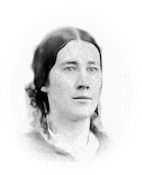
Mrs. Thomas Gibbons, mentioned in the following letters, was one of the distinguished Hopper family of “Friends”— strong abolitionists and managers of what was called the “underground railroad.” Through their efforts many wretched hunted colored people were landed safely in Canada. Mrs. Gibbons was busy in the war from the beginning, and all her life long, with serene determination, waged her own war against evil wherever she encountered it.

J. C. called here yesterday bringing Mrs. Thomas Gibbons to see us. She told me much that was interesting, and disgusting too, about her experience at Fall’s Church; the brutality of the regimental surgeon, etc. She and her daughter go on again the 24th of this month, and unless they hear something to the contrary will go to the same regiment, the 23d New York Volunteers. She had thought of writing to Georgy; wished I would do so, and see if she could learn from any of the assistant-surgeons, at the office, from the Commission, or from the army officers, where she would be most needed. They want to go where people are least liable to help, and where there is most to do. We are to have some towels, little books, etc., ready for her. . . . Mrs. Gibbons said that Horace Greeley was greatly distressed at the course of the Tribune; he was sick at her house three weeks with brain fever, this autumn, the result of disappointment, etc., etc., in the paper.
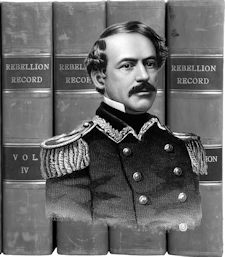
January 18.—John Tyler died at Richmond, Va., in his seventy-second year, having been born in 1790. He was a native of Charles City County, Va. On reaching his majority, he was elected to the Legislature of that State, and five years subsequently to the House of Representatives. In 1836, he was chosen Governor; but served only a year and a half, having been sent to the United States Senate to fill a vacancy. This spring-tide of promotion continued until 18-10, when he received the nomination for Vice-President from the Whig party. The death of General Harrison opened the White House to Mr. Tyler, soon after which, by turning his back upon the party which had placed him in power, he added a new term to the political vocabulary.
The great events of his administration were the vetoing of the United States Bank Bill, and the making of preparations for admitting Texas—a measure which was brought about shortly after his retirement, in 1845. Since that date Mr. Tyler lived on his plantation, near the village of Hampton, Va. The commotions of last winter brought him out of obscurity, when he acted the part of a peace-maker for some time, previous to his allying himself with the rebel faction.—N. Y. Commercial, January 21.
—Captain- Phelps, with the gunboat Conestoga, made a reconnoissance, from Cairo, Ill., up the Tennessee River to-day, and shelled a point just below Fort Henry, where a masked battery was supposed to be, but did not succeed in drawing its fire.
—Captains Murdock and Webster returned to Cairo last night, from an expedition to Bloomfield, Mo. It was a complete success. They captured forty of the rebels, among them one lieutenant-colonel, two surgeons, one adjutant and three captains.

Friday, January 17, 1862. — Froze last night to harden mud; cold and clear this morning; warm and bright all day. We feel rather lonely — so many gone. One regiment departed.
We hear of the resignation of Cameron and Welles. What does this mean? I think we must gain by it. I hope such men as Holt and Stanton will take their places. If so, the Nation will not lose by the change.
Read Nat Turner’s insurrection of 1831. I suspect there will be few such movements while the war continues. The negroes expect the North to set them free, and see no need of risking their lives to gain what will be given them by others. When they discover their mistake and despair of other aid, then troubles may come.

17th. Reached the eastern bank of the Mississippi, unable to cross on account of ice.
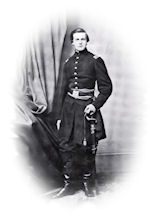
Hall’s Hill, Fairfax County, I’a.,
Friday eve., Jan. 17, 1862.
Dear Sister L.:—
“The long and weary months pass by” and still we camp in old Camp Porter, or, as it was called before our new tents were up, Camp Leslie.
For several days the weather has been so stormy that we have had but little drill. We have had some two inches of snow and then rain and sleet, making everything so slippery that it stopped all military operations.
You will ask what we have busied ourselves about. In the daytime we sit round the tents, reading, telling stories, grumbling about the rations, discussing the prospects of marching, cursing the English about the Mason and Slidell affair, expressing a willingness to devote our lives to humbling that proud nation, and talking of this, that and the other. Those whose tastes incline them that way are playing with the “spotted papers,” but you will be glad to know that not one game of cards has been played in our tent since I lived in it or in the old one, either, and more than that, I have not played a game since I’ve been in the U. S. service. I don’t know as I am principled against it so much, but I don’t know how to play and don’t care to learn. I spend much time in writing. The boys laugh at me for writing so many letters, but I think it is as good a way of spending time as many others.
I have thought I would send you a present. Nothing less than my French comb. It is a singular thing, according to our notions, but I have no doubt it is a good one. Its value is nothing, however, except that which attaches to it as a soldier’s comb and all the way from France. I don’t know but some young ladies might consider it an insult for a young man to send them a fine comb. You can feel just as you please about it.
The individual, if there be any one in the army more thought of than any other, the one so long waited for by the boys with emaciated portemonnaies, has arrived. We were called to sign the pay-roll about 4 p. m. yesterday, and by midnight seven companies were paid and the rest of us by 9 o’clock this morning. That is rather quick work I call it.
I little thought when I crossed the Long Bridge last September that I would be so long here with no chance of meeting the enemy. But so it is. It seems to us very slow business, this crushing out the rebellion. I do not know but our leaders know best, but it seems to us very dull business, waiting for the rebels to be conquered by kindness. Our President is altogether too tender-hearted, too much afraid of touching the rebels in their tender spot— their niggers. General Sherman, whom he has sent to South Carolina, is such another bugaboo. He has done nothing except to land there. If Jim Lane had been sent there with permission to whip them the best he could, he would have had South Carolina used up by this time, Charleston and Savannah in our possession and a good foothold for our forces. But no, it would not do to go to work so. This is not a war against slavery, but for the Union. We must preserve the Union, but not touch slavery. Away with such nonsense, I say, and the soldiers all say so. Give us a haul-in-sweep of their niggers, their houses, towns, and everything, only conquer them quickly.

Friday, 17th—Warm and pleasant. Nothing of importance. Some of the boys are quite sick from the effects of vaccination, though on some of them it did not work. Mine worked fine, and some of the boys took virus from my arm and vaccinated themselves. The surgeon vaccinated a few of the boys as many as four or five times before it took.
Friday 17th
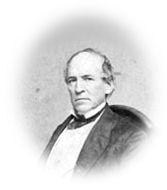
Nothing new today. Soft moderate weather, the crossings all slush. Very muddy everywhere off the sidewalk. No particular war news. The financial affairs of the Nation look better. The 150,000,000 Tax Bill has passed both Houses of Congress which is a basis upon which loans can be made as it makes the interest sure. G. D. Prentice was writing in our room an hour or two today, he is quite a sober looking man. I went on to 7th St with “Bud” and got him a pair [of] Rubbers. Ha[ve] spent the evening at home. “Holly” has a bad cold, the rest of us in pretty good health but all fearing the small pox. Julia has been re-vaccinated, the rest of us will be.
______
The three diary manuscript volumes, Washington during the Civil War: The Diary of Horatio Nelson Taft, 1861-1865, are available online at The Library of Congress.
“Empire City,” Off Port Royal
Friday, January, 1862
We are just making harbor on the fifth day out, after a decidedly rough and long passage. We ought to have got in yesterday, but missed the harbor and for the last twenty-four hours have been cruising up and down the coast, in a northeaster, between Tybee island and Charleston light, and will barely get in today. The voyage has been very severe on our horses which look most decidedly used up, and a fair average of men have been down and could fully describe the pleasures of seasickness — as also could most of the officers, including myself, who passed the second day out on my back, but since then have picked up sufficiently to be on my feed, drink, and smoke, and round while my bed is made. We have left the winter fairly behind us and now in a couple of days we shall settle down at Beaufort, but what to do, the Lord only knows. . . .
You set up for a philosopher. You write letters à la Horace Walpole; you talk of loafing round Europe; you pretend to have seen life. Such twaddle makes me feel like a giant Warrington talking to an infant Pendennis. You “tired of this life”! You more and more “callous and indifferent about your own fortunes!” Pray how old are you and what has been your career? You graduate and pass two years in Europe, and witness by good luck a revolution. You come home and fall upon great historic events and have better chances than any young man to witness and become acquainted with them. You go abroad while great questions are agitated in a position to know all about them. Fortune has done nothing but favor you and yet you are “tired of this life.” You are beaten back everywhere before you are twenty-four, and finally writing philosophical letters you grumble at the strange madness of the times and have n’t even faith in God and the spirit of your age. What do you mean by thinking, much less writing such stuff? “No longer any chance left of settled lives and Christian careers!” Do you suppose the world is coming to an end now? Had n’t you better thank God that your lot is cast in great times? How am I throwing myself away? Is n’t a century’s work of my ancestors worth a struggle to preserve? Am I likely to do so much that it won’t do for me to risk my precious life in this great struggle? Come — no more of this. Don’t get into this vein again, or if you do, keep it to yourself. . . . We shall come out all right and if we don’t, the world will. Excuse me if I have been rough, but it will do you good. . . .
We are just taking a pilot on board off Hilton Head and in a few hours we shall sully the soil of Carolina. Ah, would n’t I like to ride into Charleston! I don’t know when you will hear from me again, but perhaps my letters will come as regularly as ever. We shall be very busy and hard at work for some time and may soon see service. I well know how eagerly the news from Port Royal will be wished for in the breakfast room of the Legation at London. Meanwhile I am very well and in very good spirits and look forward to having a very pleasant time, though very monotonous and so keep the parents easy. . . .
We have just arrived at Hilton Head and come to anchor. We are going up to Beaufort tomorrow. Weather delicious and all well….
Jan. 17. The great storm has at last subsided and the sun once more shines out. All the bands are out playing, everything is putting on a more cheerful appearance, and we can now look around and see the result of the storm. Boats and vessels are ashore all around us, in a partially wrecked or damaged condition. The upper works of our boat are little better than a wreck, from the bowsprits of schooners and catheads of other craft that have fouled with us. Our accommodations are rather limited as is also the fare, but by practicing forbearance and great good nature, the harmony is as perfect as could be expected. A tug is alongside with rations, so at last the long fast is broken. I think the boys will not be over nice about their dinners when they get them. I have sometimes thought I could relish a dinner from that soup I saw at the park barracks. Our dinner today was served about 1 p. m.; bill of fare, pea soup and coffee. I have always persuaded myself that I didn’t like pea soup and wouldn’t eat it, but today I changed my mind and thought I never ate anything that tasted quite so good as pea soup. I voted it a great luxury.


