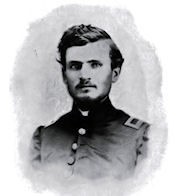
15th. Squared up with Farmer and Thayer. First Battalion of our regiment moved for Fort Leavenworth at ten A. M. Roads very slippery. Passed through Leavenworth City after crossing on the ice.
February 2012
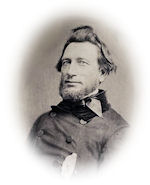
15th.—What a week of news, opening on us with intelligence of the capture of Fort Henry, with its list of high-bred prisoners. Scarcely had the sound of the cheers and the hurrahs died away, when Burnside startled us with an artillery discharge of news. To-day, whilst we were brushing out our “hollering organs” with alum swabs, when the startling intelligence from Fort Donelson, the most glorious of which is the capture of the arch-traitor, Floyd; and what a disappointment that not a throat in our whole Division can shout “Hang him!” loud enough for Floyd to hear it. Hold on for awhile; send us no more such news at present. As this poor old “grand-mother” of armies is to do no fighting, wait at least till the throats of our soldiers so far recover that they can do the shouting over victories in which they are denied the privilege of participating. We have lain still here till we have grown into old fogyism—gone to seed. So little advance, so little progress have we made, within the memory of any here, that should Methuselah offer us to-day a shake of his hand, we should wonder whether it was yesterday or a week ago that we parted from him, so little has been the change here since his advent, and so much would he look like all around him.
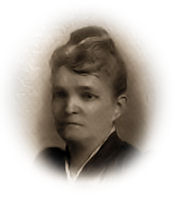
Feb. 15, 1862. (Village of X.)—We reached Arkansas Landing at nightfall. Mr. Y., the planter who owns the landing, took us right up to his residence. He ushered me into a large room where a couple of candles gave a dim light, and close to them, and sewing as if on a race with time, sat Mrs. Y. and a little negro girl, who was so black and sat so stiff and straight she looked like an ebony image. This was a large plantation; the Y.’s knew H. very well, and were very kind and cordial in their welcome and congratulations. Mrs. Y. apologized for continuing her work; the war had pushed them this year in getting the negroes clothed, and she had to sew by dim candles, as they could obtain no more oil. She asked if there were any new fashions in New Orleans.
Next morning we drove over to our home in this village. It is the county-seat, and was, till now, a good place for the practice of H.’s profession. It lies on the edge of a lovely lake. The adjacent planters count their slaves by the hundreds. Some of them live with a good deal of magnificence, using service of plate, having smoking-rooms for the gentlemen built off the house, and entertaining with great hospitality. The Baptists, Episcopalians, and Methodists hold services on alternate Sundays in the court-house. All the planters and many others, near the lake shore, keep a boat at their landing, and a raft for crossing vehicles and horses. It seemed very piquant at first, this taking our boat to go visiting, and on moonlight nights it was charming. The woods around are lovelier than those in Louisiana, though one misses the moaning of the pines. There is fine fishing and hunting, but these cotton estates are not so pleasant to visit as sugar plantations.
But nothing else has been so delightful as, one morning, my first sight of snow and a wonderful, new, white world.

______
Note: To protect Mrs. Miller’s job as a teacher in New Orleans, the diary was published anonymously, edited by G. W. Cable, names were changed and initials were often used instead of full names — and even the initials differed from the real person’s initials.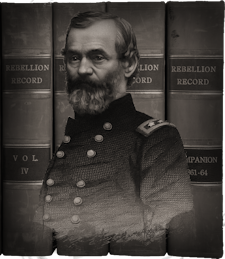
February 15.—The National batteries at Venus Point, on the Savannah River, were attacked at three o’clock this afternoon, by four rebel gunboats, with a view of effecting a passage from Fort Pulaski for the rebel steamers then at that place. After an engagement of one hour the rebels were driven off; the flag-officer’s boat being disabled and taken in tow and the steamer that attempted the passage of the river returning to Fort Pulaski. The guns were manned by the Third Rhode Island detachment, under Capt. Gould, and effectively worked. There was no loss on the National side.—Brig-Gen. Viele’s Report.
—The Ninth battery of Rhode Island Artillery, under the command of Lieut. Wightman, passed through New-York, en route for Port Royal, S. C.—N. Y. Times, February 16.
—The President, through the Secretaries of War and the Navy, returned thanks to Brig.-Gen. Burnside and Flag-Officer Goldsborough, and to Brig.-Gen. Grant and Flag-Officer Foote, and the land and naval forces under their respective commands, for their gallant achievements in the capture of Fort Henry and at Roanoke Island.
—Bowling Green, Ky., was evacuated this morning by the rebels, and occupied by the National army under command of Brig.-Gen. D. C. Buell. The National troops reached Big Barren River, opposite the city, about two o’clock this afternoon, having accomplished a difficult march of forty miles in twenty-eight hours and a half. They found the bridge across the river destroyed. Col. Turchin’s brigade crossed on a flat-boat, the artillery, under command of Captain Loomis firing shell across the river, which caused a hasty evacuation by the rebels.—(Doc. 45.)
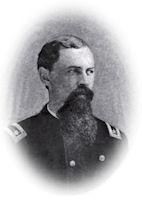
Cape Girardeau, Mo., February 14, 1862.
Sam arrived here to-night and brought me everything I could wish for except my watch. Jem Harper from Company K is home on furlough and we expect him now shortly, also Benton Spencer. If you could manage to send the watch by one of them I would be much obliged. I cannot well get along without one now. You seem to be very happy about my getting away from the Point. Rather more so than I am myself. If I had stayed there I would have been with a fair chance to fight—to fight soldiers. Here there are no forces to fight but a few hundred bushwhackers that will lie by the roadside in the swamp, and I believe they would murder Jesus Christ if they thought he was a Union man. We failed in doing what we wanted to the last trip, but I believe we’ll get even with them yet. I’d hate mightily to get killed by such a pack of murderers, but that isn’t my business. If U. B. and father have experienced such trips as we have, I’ll bet I beat them in one thing—enjoying them. I always feel better out that way than in camp. The 11th Missouri is still with us and the 17th has gone to Tennessee. The colonel, Ross, picked out 50 or 60 of his most worthless men and put them on the gunboats. There are some hopes that our regiment will be ordered to Kentucky soon or to Wheaton, Mo., for there is a regiment of Missourians here forming that will be sufficient to guard this vicinity. This place if not entirely secession is very strongly southernly righteous. I am getting acquainted with the female population slowly, not very, and one family of three girls tell me they are positively the only unconditional Union women in town. But the others show nothing of the cold shoulder to us. They are all very friendly and sociable. Quite a number of beautiful girls here. The aristocracy here are all Catholic. Funny, isn’t it? Frenchy.
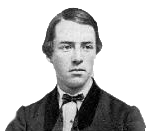
Friday February 14. — St. Valentine’s Day, I believe. Nary val. for the “poor soldier.” Such is life. The day was a beautiful one, and reminded one of spring. Towards evening, however, it began to grow cold and chilly. A large force under General [George W.] Morell made a reconnoissance beyond Vienna, and as far as Hunter’s Mill. No enemy was seen except a few pickets. It was made because intelligence was brought that a regiment of cavalry had been seen around there for a day or two.
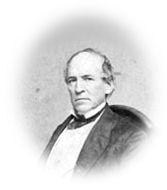
Friday Feb 14th
Nothing of note has occured today in the City. Arrests are made of Secessionists almost every day and many more might be made with propriety. The roads are getting better and exciting news is expected all the time from almost every point of the Compass. Went down on to the Ave this evening. “Holly” went with me. We were at Willards and the “National,” bot the papers, home at 8 o’clk. The north side of the Ave is crowded like Broadway, N.Y.
______
The three diary manuscript volumes, Washington during the Civil War: The Diary of Horatio Nelson Taft, 1861-1865, are available online at The Library of Congress.
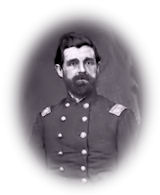
To Mrs. Lyon
Mound City, Feb. 14, 1862.—Here we are, separated from the regiment for reserve duty again. We are to guard a large amount of ammunition. The hospital here contains from 600 to 700 patients, with accommodations for 1,000. Bartlett and I were all through it yesterday. Saw the men that were scalded on the Essex. They are an awful sight.
We are now almost discouraged about getting into the field. I hate this reserve duty.
Friday, 14th—This is Valentine’s Day and some of the boys are having a great time sending out valentines to the girls in this locality; others are sending valentines to their old home sweethearts.

London, February 14, 1862
Good morrow, ‘t is St. Valentine’s day
All in the morning betime.
And I a maid at your window
To be your Valentine.

Hail, noble lieutenant! I have received your letter written on board ship, and I am with you. Now that you are at work, if you see or do anything or hear something that will make a good letter to be published, send it to me and I think I can promise that it shall see the light. Thus you can do double work, and if you write well, perhaps you can get double pay. I shall exercise my discretion as to omissions. .. .
You find fault with my desponding tone of mind. So do I. But the evil is one that probably lies where I can’t get at it. I’ve disappointed myself, and experience the curious sensation of discovering myself to be a humbug. How is this possible? Do you understand how, without a double personality, I can feel that I am a failure? One would think that the I which could feel that, must be a different ego from the I of which it is felt.
You are so fortunate as to be able to forget self-contemplation in action, I suppose; but with me, my most efficient channels of action are now cut off, and I am busy in creating new ones, which is a matter that demands much time and even then may not meet with success.
Politically there is no news here. We shall be allowed to fight our battle out, I think; at least for some time yet. Parliament has met and the speeches have been very favorable to neutrality. I think our work here is past its crisis. The insurgents will receive no aid from Europe, and so far are beaten. Our victory is won on this side the water. On your side I hope it will soon be so too. . . . John Bright is my favorite Englishman. He is very pleasant, cheerful and courageous and much more sanguine than I have usually been. . . .


