14th. Very busy making out requisitions and settling the wood account.
February 2012
February 17.—Glorious news from the war to-day. Fort Donelson is taken with 1,500 rebels. The right and the North will surely triumph!
February 14.—The Ninety-third regiment of New-York Volunteers, (Morgan Rifles,) under the command of Colonel John T. Crocker, left Albany for the scene of active service. The regiment embraces three companies from Washington county, two from Warren, one from Essex, one from Saratoga, Fulton and Hamilton, one from Oneida and Albany, one from Alleghany, and one from Rensselaer. There are five full companies of sharpshooters, and a large proportion of the other companies are good shots. Colonel Crocker is a lawyer by profession, and a native of Cambridge, Washington county. He was for a long time Colonel of the Thirtieth regiment N.Y.S.M.
—In the British House of Lords, in reply to a question from the Earl of Stanhope concerning the stone blockade at Charleston, S. C, Earl Russell spoke as follows, declaring his approval of that measure:
“He said the government had no official information on this subject subsequent to that which had already been laid on the table of the House. However, the sinking of vessels at the mouth of a harbor was an operation of so much importance that he could not but believe that the reports which had appeared must have some foundation. He was happy to hear the noble Earl’s protest against the permanent destruction of any harbor. Considering that these were commercial harbors, and that in time of peace, when there was severe weather, vessels of all nations, even these not ultimately destined for them, ran there to find refuge, to destroy them was undoubtedly an act of barbarity. The noble Earl would have seen that the reply of the American Government was that these stone vessels were intended to be an obstruction in the channel to aid the blockade, but that they were not intended for the permanent destruction of the harbors. In conversing with the American Minister at this Court, that was the view which he took. He said that the permanent destruction of Charleston harbor was impossible; that the two rivers which formed the harbor would be sure to make a channel, and that it was impossible, even if it had been intended, to effect the permanent destruction of the harbor. That, he said, however, was not the intention. The intention was only to make a temporary obstruction, and when peace was restored that obstruction would be removed. That, he believed, was the view taken by the American government. There had been some communication between Her Majesty’s government and that of France on this subject, with regard to which the government of the Emperor took the same view as that of Her Majesty. But whether France has made any official representation on the matter to the Federal Government he was not able to say.”— London Times, February 15.
—Edwin M. Stanton, United States Secretary of War, issued an order releasing all political prisoners held in confinement, on condition that they would take an oath not to aid the rebellion, or in any way attempt to injure the Federal Government. The President also granted an amnesty to such persons for all past offences.
—General Lander made a forced reconnoissance last night and to-day, and, with four hundred cavalry, broke up the rebel nest at Blooming Gap, Va., taking seventeen commissioned officers, fifty-eight privates, and killing thirteen others, with the loss of only two men and six horses.—Colonel Carroll, of the Fifth or Eighth Ohio regiment, made a very daring reconnoissance to Unger’s Store, in Va.—General Dunning arrived at New-Creek from Moorefield, Va., at which place he captured two hundred and twenty-five beef-cattle, and dispersed the guerrillas there, with the loss of two of his men wounded. —(Doc. 36.)
—The iron-clad steam gunboat Mystic was launched at the town in Connecticut from which she takes her name. Her extreme length over all is two hundred feet, and her armor, which extends two feet below the water-line, is composed of longitudinal iron bars three and a quarter inches thick, showing four inches face, and bolted every six inches with three-quarter inch bolts. Her rig is that of a brigantine.—N. Y. Times, February 16.
—Hamilton Fish and Bishop Ames returned to Washington to-day, and made report to the Government of their mission to relieve Union prisoners in the South. They repaired to Fortress Monroe, and made known their commission to the Confederate authorities at Norfolk, by whom the matter was referred to Richmond. A reply came refusing to the Commissioners admission to the Confederate territory, but expressing readiness to negotiate for the general exchange of prisoners. The Commissioners opened negotiation, which resulted in perfect success. An equal exchange was agreed on, but the Confederates had three hundred more prisoners than the National Government; with commendable magnanimity, they proposed to release these also on parole, if the Government would agree to release three hundred of their men that may next fall into its hands.
—Three rebel schooners and one sloop, all heavily laden with rice, lying at anchor in Bull’s Bay, S. C, were destroyed by an expedition under command of Acting Volunteer Lieutenant Edward Conroy.—(Doc. 42.)
—A skirmish took place near Flat Lick Ford, on the Cumberland River, Ky., between two companies of cavalry under command of Col. Munday, and two companies of sharp-shooters from the Forty-ninth Indiana, and some rebel pickets, which were prowling around the Ford. The fight took place near some rebel batteries, and resulted in a rebel loss of four killed, four wounded, and three taken prisoners. The National troops met with no disaster.—Louisville Journal.
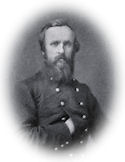
Delaware, February 14, 1862. Friday morning.
Dearest Lucy : — I reached here last night. Mother, Mrs. Wasson, and Sophia, all well and happy. Old Delaware is gone; the bright new town is an improvement on the old.
Snow deep, winter come again. Old times come up to me — Sister Fanny and I trudging down to the tanyard with our little basket after kindling. All strange; you are Sister Fanny to me now, dearest.
I go to Fremont this evening. Mother sends love, Write to her. Love to all.
Affectionately,
R.
Mrs. Hayes.
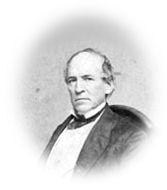
Thursday Feb 13th 1862
A bright pleasant day. No particular news, but many rumors of fighting West. I have been in the office, am there every day filling out Patents or Deeds & recording them. Julia has Miss Hartly and two of the Miss Middletons here tonight. I have been down to the National. Called at Chas on my return from the Ave –. Mr Hartly called for Mat[ty] at 1/2 past 9. Willie coughs a good deal. Bud & Holly went to the Capitol today.
______
The three diary manuscript volumes, Washington during the Civil War: The Diary of Horatio Nelson Taft, 1861-1865, are available online at The Library of Congress.
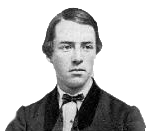
Thursday, February 13. — Judge Washburn and lady came out here to-day, and met with a very kind reception from the general and staff. They took lunch here, and seemed to enjoy themselves very much. Generals Martindale and Butterfield[1] were present, and also Judge Davis of New York. We had quite a jolly time. Saw Dr. Prince of the 22d Massachusetts this evening. Sent a valentine to Edith.[2]
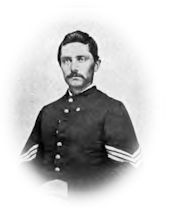
Thursday, 13th—It snowed some today, and we all stayed close in our quarters, as the weather was so disagreeable. It is a very cold night.
13th. Wrote to Fannie and received a letter from her— dear girl!
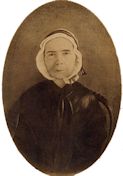
13th.—Donelson is holding out bravely. I shudder to think of the loss of life.
Notwithstanding the rain this morning, I renewed my pursuit after lodgings. With over-shoes, cloak and umbrella, I defied the storm, and went over to Grace Street, to an old friend who sometimes takes boarders. Her house was full, but with much interest she entered into my feelings, and advised me to go to Mr. L., who, his large school having declined, was filling his rooms with boarders. His wife was the daughter of a friend, and might find a nook for us. I thought of the “Hare and many friends,” and bent my steps through the storm to the desired haven. To my surprise, Mrs. L. said we could get a room; it is small, but comfortable, the terms suit our limited means, and we will go as soon as they let us know that they are ready for us.
We have just been drawn to the window by sad strains of martial music. The bodies of Captains Wise and Coles were brought by the cars, under special escort. The military met them, and in the dark, cold night, it was melancholy to see the procession by lamplight, as it passed slowly down the street. Captain Wise has been carried to the Capitol, and Captain Coles to the Central Depot, thence to be carried to-morrow to the family burying-ground at Enniscorthy, in Albemarle County. Thus are the bright, glorious young men of the Confederacy passing away. Can their places be supplied in the army? In the hearts and homes of families there must ever be a bleeding blank.
February 13.
I have nothing more than the usual “all right” to tell you, but you must always have that. We ought to congratulate each other on the good news from Roanoke Island and Tennessee, which quite thrilled us all yesterday. We were out at Will Winthrop’s camp when the boys cried the “Star” and the victory, and we heard the particulars first from Mrs. Captain Rodgers, who came here directly from Mrs. General McClellan’s. Mrs. McClellan described to her, her husband’s delight when the news came. He flung his arms over his head, and, fairly radiant with glee, pronounced himself the happiest man in Washington, “and the General, you know,” his wife says, “is such a quiet man usually. I have seldom seen him more excited.” . . .
We managed to get out to Will Winthrop’s camp yesterday without an upset, but (so Mother thought) at the peril of our lives! What will she say to the Virginia roads on the way to your camp? She is overwhelmed with pity for the poor men and officers. When we left, Will tramped some distance through the mud to show us a better way out, and we were immensely entertained at his manifesting his tongue in his cheek (behind Mother’s back) when he found the road worse than he thought, remarking, “Why! this is quite a godsend. I had no idea of finding such a good highway.”
. . . This morning George Carr has been out on horseback to take Will some cake and candy from Mother, to make up for a well meant but bad cake we took him when we went ourselves.
. . . We hear New York is overflowing with cheers and jubilees for the victories, and in Philadelphia the celebration was the best of all, for they took steps at once to raise a fund for the orphans of the soldiers killed in that battle and to found a “Soldiers’ Home” for all maimed and helpless volunteers when the war is over.


