10th. Thursday. The First Battalion of the Second Cavalry (four companies) left at ten A. M. for Carthage, Mo. Issued to them ten days’ rations. Reported that we shall leave in a few days for some point forty or fifty miles east.
April 2012
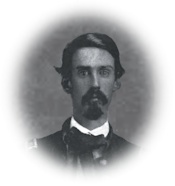
Beaufort, S. C. April 10th, 1862.
My dear Mother:
I was glad to get your photograph, as it does not look, as did the other one you sent me, as though you were the last inhabitant without a friend left in the world. This one is a thousand times more agreeable, though I have to make allowances for those very extraordinary expressions which play about your mouth, when photographically tortured.
The bombardment of Pulaski has begun to-day. Full accounts, I hope, of the “fall” will be taken North by the steamer bearing this. We can hear the guns booming in the distance, but our Brigade, with the exception of the 8th Michigan Regiment, is condemned to remain at Beaufort. So I shall see nothing, but hope soon to hear the fort is ours, and, indeed, so secretly, yet so securely have preparations been made, that we can hardly fail of success. It is dangerous though to make predictions, so often have I read similar sentences in “Secesh” letters written just previous to a defeat.
The atmosphere is most delightful to-day. I wish you could breathe such balmy, though invigorating air. It is hard to realize that it soon will change to an atmosphere deleterious in character.
It is strange to think how ordinary dangers lose all terror in these war-times. I have been almost constantly exposed to smallpox, yet never have so much as thought of the matter further than to assure myself that the vaccination was all right. It is wonderful too how perfect a safeguard vaccination is. Although smallpox has been so prevalent, it has been wholly confined to the negroes and young children, and a few backwoodsmen, to whom modern safeguards were not accessible, or who had neglected the common precaution. I think there has not been a case among our vaccinated soldiers. It is quite a relief to feel that this is so.
I am glad to hear of all my friends wheeling so enthusiastically into the service of their country. As far as I can ascertain, the position of an Allotment Commissioner is one that requires an earnest determination to do something, to tempt any one to accept it, and yet it is really a philanthropic act to perform its purposes.
I wish Charley Johnson would come down here. I would give him the best reception I know how, and this is a pleasant season to visit Beaufort. You ask for my photograph, dear mother, and I meant long since to have gratified you, having had myself taken alone, in company with the Staff, and on horseback with the Staff—in a variety of positions, you see, to suit everyone. But I know not how it is that I have never been able to get a copy since they were first struck off, although we have had promises enough that they will soon be ready. I intended to surprise you, but despairing of success, I write the matter that you may not think I have not tried to gratify your wishes.
I am suffering great torments from the sand-flies which abound. These are the peskiest little creatures you ever saw, completely forbidding sleep on a warm night, and defying such flimsy obstruction as mosquito bars.
I wrote Sam Elliott a few days ago. Wm. Elliott has returned looking well, and disgusted with leaves of absence. He is really about the most efficient man in the Brigade. His education has given him great habits of self-reliance, which are invaluable in his profession. Give my love to Mrs. Walter Phelps, and tell her I expect she will send me a photograph of that precious baby of hers. Capital idea photographs are!
Love to all my dear friends.
Affec’y.,
Will.

April 10.—This morning we were informed that we could go to Corinth, as the order did not apply to us. With joy we hailed the news! It was still raining, but we did not mind that. When we reached the depot, Mrs. Ogden informed me that Miss Booth was sick—too much so to leave this morning. As we left Mobile together, I felt it my duty to remain with her.
I met at the depot Dr. Anderson of Mobile; and was quite amused at a remark which he made to some ladies who were telling him how badly Dr. Caldwell had acted, in not permitting us to visit his hospital. In his usual humorous manner, he said, “What can be expected from an old bachelor, who did not appreciate the ladies enough to marry one?” He also said that he did not think any hospital could get along without ladies. So we have one doctor on our side.
I rode in a carriage with Rev. Mr. Clute, the Episcopal minister of the place, to Mrs. Henderson’s, where Miss Booth was staying. Mrs. H. was glad to see me. She is a very intelligent lady, and quite handsome. Her sister, Mrs. Young, living with her, is a highly accomplished musician—plays upon the harp and piano beautifully. She sang some very fine Scotch songs for me. We had a long talk about Scotland. They are of Scotch descent. I felt quite proud of the manner in which they spoke of that land of heroes. It is my native land; and although raised in this, and never personally having known any other, I will not forget the country of my forefathers—the land of Wallace and Walter Scott. I have always found that the southern people speak in praise of it, and the noble deeds for which it is famed, and more now than ever, as we are undergoing the same ordeal through which she so nobly passed in her great struggle for independence: all trust that we may show a like spirit, and meet with like success. The husbands of both these ladies are in the army.
This is a very wealthy portion of Mississippi, and food of all kinds seems to be plentiful. At Mrs. Haughton’s we had sweet potatoes as a substitute for coffee, and it was very nice. Mrs. H. informed us that she did not intend to use any other kind while the war lasted.
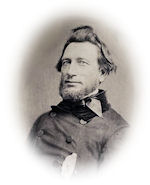 10th.—Fell back to-day about a mile and a half out of reach of enemy’s shells. Patience and endurance of everything, without expression of thought, can scarcely be considered a virtue, even in a military subordinate. The Western Army is all activity and execution. No. 10 taken, Beauregard whipped on his own ground, all our armies accomplishing glorious deeds, except this poor old thing of the Potomac, called an army: Nearly a year has been spent by us in squatting around in sight of the enemy, rushing forward to-day, till within fighting distance, to-morrow falling back, as if afraid that some one might get shot. Here we have been for five days in sight of the enemy we came to capture or destroy, and this morning, because they threw a few shells into our camp, we are falling back! We are within twenty miles of one of our principal military stores and depots, with our men and animals starving. My ambulance horses-have not had a mouthful of any thing to eat for nearly three days, and to-day they are expected to draw the heavy ambulances over the worst roads I ever saw. Yes, here we are, in a “cul de sac,” the rivers on either side of us held by the enemy, the ground in front blockaded by them, and their pickets jeeringly calling across the little creek to know whether we are not most ready to fight. Who is to blame? Many of us begin to question the ability of General McClellan.
If we can get forage and rations here, I think we must make some kind of a fight before we get away. How much of a fight, I cannot tell. It is surprising how man is modified by habit. During the late skirmishes, we who are not engaged, sat in our tents, smoking, singing, jesting with as much indifference as we would sit by our fires at home and listen to the falling of the axeman’s blows. True, we sometimes notice the sounds of a report heavier than usual, and “wonder how many that shell did for.” Would such indifference have overtaken us, if we had been kept engaged in the ordinary duties of an army? I verily believe not. It is the offspring of a kind of desperation. We came to effect something. We have been disappointed, and are growing careless of consequences. Nor are the moral habits of the men less changed. Stealing is becoming a pastime with them, and is scarcely looked on as a crime.
General McClellan’s command has dwindled down to three corps d’armee, and I regret to say that the opinion is beginning to be held by many, that he is not competent to the command of even this force.
No mail now for ten days. This is very hard; harder even than to sleep out and go hungry. Even now our families may be suffering, dying, and we have no means of knowing it. Well, in time of war this is necessary, and perhaps it is all for the best. God controls and directs.
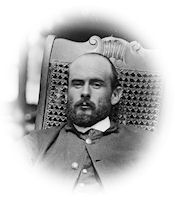 Hilton Head, S.C., August 10, 1862
Affairs here are as dull as dull can be. We have had a little excitement about your old friend the Fingal, which has turned up in Savannah harbor as an ironclad of much force, but that seems to be dying out now, though I can’t help thinking that we shall some day hear from her when we least expect or desire to.
General Hunter’s negro regiment was disbanded yesterday and now they have all dispersed to their old homes. Its breaking up was hailed here with great joy, for our troops have become more anti-negro than I could have imagined. But, for myself, I could not help feeling a strong regret at seeing the red-legged darkies march off; for, though I have long known that the experiment was a failure, yet it was the failure of another effort at the education of these poor people and it was the acknowledgment of another of those blunders which have distinguished all and every our experiments on slavery throughout this war. When did an educated people ever bungle so in the management of a great issue! I feel sick and almost discouraged at what I see and hear. What God made plain we have mixed up into inextricable confusion. We have had declarations of emancipation ingeniously framed so as not to free a slave and yet to thoroughly concentrate and inflame our enemy. We have wrangled over arming the slaves before the slaves showed any disposition to use the arms, and when we have never had in our lives 5000 of them who could bear arms. Why could not fanatics be silent and let Providence work for awhile. The slaves would have moved when the day came and could have been made useful in a thousand ways. As it is, we are Hamlet’s ape, who broke his neck to try conclusions….
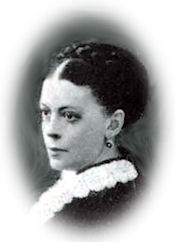
Sarah Woolsey to Georgeanna.
New Haven, April.
I spent one delightful day in New York with Jane at the New England rooms, where everything is nicely prepared for 300 men. The superintendent has time during intervals to rush down stairs and compose puffs on Jane, which he publishes in the newspapers next morning! The day we went down, we had the luck to fall upon the first wounded soldier of the season, and, though he was not very sick, Jane went to work in the most approved way, and you should have seen her with her bonnet off, her camel’s-hair shawl swung gracefully from her shoulders and a great pocketed white apron on, making tea over a spirit-lamp and enjoying it all so thoroughly. The Newbern hero was fed with sardines and oysters and all sorts of good things, and face and hands washed by Jane’s little paws so nicely. . . . Don’t say anything when you write home, for Jane is rather huffy when we talk too much about it, since her appearance in the public prints. Did you see the letter from a soldier in the hospital, describing Jane, and using the celebrated sentence which, as she says, leaves no doubt as to the identity: “I dare not mention her name, but she is beautiful.”
April 10.—In the rebel Senate at Richmond, Va., a bill was passed authorizing the issue of five millions of Treasury-notes of the denomination of one dollar and two dollars.—A joint resolution from the House, expressing the thanks of Congress to the patriotic women of the country for their contributions to the army, was concurred in.
The House of Representatives adopted resolutions of thanks to Gen. Sibley, his officers and men, for the victory in New-Mexico, and to the officers and men of the Patrick Henry, Jamestown, Teazer, and other vessels engaged in the naval battle at Hampton Roads, for their gallantry on the occasion.
Bills regulating the fees of Clerks, Marshals, and District-Attorneys, were passed. The maximum annual salary of District-Attorneys was fixed at five thousand dollars. The report of Capt. Buchanan of the naval battle at Hampton Roads was received, and two thousand five hundred copies of it ordered to be printed. Being a very lengthy document, its publication was necessarily deferred to a future day.—Richmond Whig, April 11.
—President Lincoln issued a proclamation recommending the people of the United States, on the next day of worship occurring after its reception, to give thanks to Almighty God for the recent victories, and to implore spiritual consolation for those who have been brought into affliction by the casualties and calamities of sedition and civil war.— (Doc. 127.)
—Edwin M. Stanton, Secretary of War of the United States, issued the following orders this day to the Military Supervisor of Telegraphs: “You are directed to stop all telegraphic communications to the Philadelphia Inquirer, until satisfactory proof is furnished to this department that the recent publication respecting operations by the army at Yorktown were duly authorized.
You will proceed to Fortress Monroe and make arrangements to enforce the orders of this department.
Ordered—That all applications for passes by newspaper editors or correspondents be referred to Col. Edwards S. Sanford, Military Supervisor of Telegraphs, etc., and be subject to such rules and regulations as may be prescribed by this department.”
The editor of the Philadelphia Inquirer states that the despatch deemed objectionable by the Secretary of War was countersigned by General Wool on the letter itself, and on the envelope, and feels confident of making a satisfactory explanation to the Government Meanwhile the editor requests that the order of Secretary Stanton be withheld from publication, or, if published, to be accompanied by this note of explanation.
—A Reception was given this evening, at the Academy of Music in New-York City, to the heroes of the frigates Cumberland and Congress, destroyed by the Merrimac in Hampton Roads. The Academy was crowded in every available part, and the most enthusiastic greeting was given to the men-o’-war’s men. Pelatiah Perit presided, and speeches were made by Professor Hitchcock, William M. Evarts, George Bancroft, and William E. Dodge. Descriptions of the fight and songs were given by the crew.—(Doc. 128.)
—Resolutions were unanimously adopted in both branches of the Massachusetts Legislature to-day, in furtherance of the suggestions of the Secretary of War, inviting the citizens of the Commonwealth to join, on Sunday next, in a general Te Deum in honor of the recent victories, and congratulating the Western States upon the valiant deeds of their soldiers in the Valley of the Mississippi.
Gov. Andrew ordered a salute of one hundred guns to be fired to-morrow, at noon, in honor of the recent victories.—Boston Courier, April 11.
—The police of St Louis, Mo., broke up an extensive counterfeiting establishment in that city, and seized about twenty-five thousand dollars in counterfeit United States Treasury Notes. —St. Louis News, April 11.
—Two fine batteries of rifled guns were this day found in the woods near the Mississippi river, below Island Number Ten.—Cincinnati Commercial, April 12.
—Humphrey Marshall, whose head-quarters were at Lebanon, Russell Co., Va., called out the militia of Russell, Washington, Scott, Wise, and Lee, to drive back the National troops threatening to advance by way of Pound Gap.—New York World.

9th.—Our victory at Shiloh complete, but General Albert Sydney Johnston was killed. The nation mourns him as one of our most accomplished officers. He fell while commanding in the thickest of the fight. It is an overwhelming loss to the Western army, and to the whole country. Beauregard pursued the enemy, but their General (Grant) having been reinforced very largely, our army had to retreat to Corinth, which they did in good order. This was done by order of General Johnston, should Buell reinforce Grant. They are now at Corinth, awaiting an attack from the combined forces. Van Dorn reinforced Beauregard. We are anxiously awaiting the result.
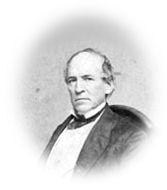 Wednesday April 9th 1862
It has stormed all day, rain, sleet and snow falling incessantly. News today of a great Battle West. Beauregard defeated and Island No 10 taken with all the land Batteries. Our armies everywhere victorious, more prisoners, guns, and munitions than our troops know what to do with. The City is in wild excitement over the news. A Salute of 100 guns ordered by the Sec’y of War. The great “Anaconda” is drawing in his coils tighter and tighter around the rebels. They have behaved most cowardly in every instance where they did not have the advantage in numbers or position. The proud “Southerners” had better strike the word chivalry from their vocabulary. I think they are a race of bombaster cowards and events are proveing it every day. We have had one Bull Run. They have a “Bully Run” every time they meet our troops.
______
The three diary manuscript volumes, Washington during the Civil War: The Diary of Horatio Nelson Taft, 1861-1865, are available online at The Library of Congress.

APRIL 9TH.—There are several young officers who have sheathed the sword, and propose to draw the pen in the civil service.
To-day I asked of the department a month’s respite from labor, and obtained it. But I remained in the city, and watched closely, still hoping I might serve the cause, or at least prevent more injury to it, from the wicked facility hitherto enjoyed by spies to leave the country.


