Following the American Civil War Sesquicentennial with day by day writings of the time, currently 1863.

April 2012

April 9, 1862. Wednesday. — Rain; cooler than yesterday. Company B sent off to effect a crossing over Piney. Ten refugees from Monroe [County], escaping [Governor] Letcher’s draft, just in. A crossing over Piney effected. Captain Haven, with [Companies] G and K, reported to have fifteen prisoners and twenty-five horses. Kept back by the high water. P. M. Cold and windy, but still raining. Have read “Jack Hinton” these two gloomy days with Avery.

How pleased I am to hear from Lucy that Birtie has been a good scholar; that at the school exhibition he was called up to speak and spoke Logan’s speech very well. . . .

Captain Drake returned tonight. Sent my money by the paymaster to my wife. He reports that the Thirtieth Regiment is under marching orders for this point; that the Thirty-fourth is at Fayetteville, and that a cavalry regiment, the Second Virginia, is to form part of our brigade.

9th. Went out with a detail of woodchoppers. Had a good time. Boys caught a rabbit and cooked it—all ate a morsel. Went and saw squad of Indians—savage looking enough.

9th.—Rained hard all day. But little done to-day. 6th Maine regiment went out in afternoon, got one man mortally wounded in a little skirmish. Roads so bad that I fear we shall have to fall back to-morrow.

Wednesday, 9th—Fifteen hundred more of our troops arrived. We are still burying the dead. It rained again today. The ground is so thoroughly soaked that it is difficult to dig the graves deep enough and keep out the water. We bury our dead by companies, all of one company in one grave, and if only one of a company is killed, the body is placed in a grave by itself. The bodies of the rebels’ dead are placed side by side in long graves. The carcasses of horses are removed by burning them.

April 9.—I have been to the cars. Saw Mr. John Maguire, a member of Ketchum’s Battery. He is wounded. The company has had one man killed— John Ashby—who fell fighting at his post, and some seven or eight wounded.

The Twenty-first Alabama Regiment suffered pretty badly. I have letters for two of its members. One of these, Charles Farrow, I am told, is a prisoner; the other, John Ortella, a native of Italy, is killed. Poor fellow! I saw a letter written by him a few weeks since to a friend, in which he requested her to pray for him, as he had not time to pray for himself.

Mrs. Walker, one of the ladies who came with us from Mobile, has heard that one of her sons is badly wounded, and a prisoner. Dr. Walkely is on the train, and has with him the dead body of his only son, a member of the same regiment. He left Mobile with us a volunteer surgeon, little dreaming the fate of his boy! I spoke to him, but his lip quivered so with emotion that he could not answer me.

The train was filled with wounded. All told terrible tales of the scenes in Corinth, which only served to make us more miserable. We have had a frightful battle. It was fought on the 6th and 7th inst. The first day our army drove the enemy back near the Tennessee River, within range of their gunboats. On the second they were heavily reinforced, and we retired. Nearly every state in the Confederacy is draped in mourning for the loss of their loved ones, and the whole country has to weep over the death of the good and great general, Albert Sidney Johnson, who was in command. His loss is a sad one. His place can not be easily filled. I have been told that it was his death that caused the last day’s failure. He had planned the battle, and there is no doubt that, had he lived, he would have succeeded in executing it successfully. He has died the death of a soldier and conqueror, battling for the right. He is doubly a martyr, as he had not only the bullets of the enemy to contend with, but the shafts of envy which were hurled at his fair fame by his own countrymen. They say that he was wounded while recklessly exposing himself. But, ere his noble spirit took its flight, he had the proud satisfaction of seeing the enemy driven back in dismay and confusion. May his soul rest in peace! It has gone where it will be judged, not as man judges, but by the heart alone. Let his faults lie with him in the grave; be it our duty to do honor to his many virtues.

General Gladden of Louisiana is mortally wounded; Colonel Blythe of Mississippi is killed. Mobile has to mourn the loss of some of her bravest and best— Major Armstead, young Maguire, Anderson, Marshall, Spear, Burns, Cummins, Herpin, Ledyard, and others, are names never to be forgotten.


“O, for the death of those

     Who for their country die;

Sink on her bosom to repose,

     And triumph where they lie!

How beautiful in death

     The Warrior’s corse appears;

Embalmed by fond Affection’s breath.

     And bathed in Woman’s tears!

Their loveliest native earth

     Enshrines the fallen brave;

In the dear land that gave them birth,

     They find their tranquil grave.”

I spoke to John Maguire, and reminded him of that day, one year ago, when he participated in one of the finest displays of which the city of Mobile boasts—the Firemen’s Anniversary.[1]

A number of ladies have come from Natchez, Miss., to join us. They have also been cared for by the good people of the place.

After we returned to Mrs. Haughton’s, I was quite amused in listening to her granddaughter’s account of a visit which they had just made to the hospital. It seems that the surgeons entertain great prejudice against admitting ladies into the hospital in the capacity of nurses. The surgeon in charge, Dr. Caldwell, has carried this so far that he will not even allow the ladies of the place to visit his patients. These young ladies went over with some milk and bouquets, and were not permitted to present them in person to the patients, but had to give them to the doctor. So they told him they knew the reason; he wanted all the good things for himself. The doctors, one and all, are getting terrible characters from the ladies; even good Dr. Nott of Mobile is not spared. I only wish that the doctors would let us try and see what we can do! Have we not noble examples of what our women have done? For instance, Mrs. Hopkins, in Virginia, and, I have no doubt, many others. Is the noble example of Miss Nightingale to pass for nothing? I trust not. What one woman has done, another may do. We need not aspire to be Miss Nightingales, or Mrs. Hopkinses; still we can contribute our “two mites.”

We have with us two very excellent ladies—Mrs. Hunter and her daughter— refugees from Missouri. They were in a hospital at Nashville when the city was taken possession of by the enemy, and have been relating their experience, which is very interesting.


[1] The 9th of April is the anniversary of the organisation of the fire department. Two of the companies, the Creole and Neptune, date their origin from 1819. This department has for its members men of the highest standing. On this anniversary, the engines are decked most gorgeously, and dressed with flowers. One year ago to-day the companies vied with each other in their efforts to make the finest display. The whole department exhibited more energy than was its wont. The war spirit had just been aroused on account of the north holding, as a right, what we deemed our own—Fort Sumter— and our people, awakened as if from a lethargy, determined to throw heart and soul into the contest.
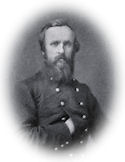
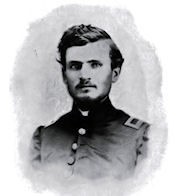
April 9th. Captain Fiske returned to-day from sick leave, and resumed his duties of adjutant general. The general, in relieving me, complimented me gracefully on the performance of my duties, and told me not to forget to call upon him. I returned to the regiment, and resumed the duties of regimental adjutant. Neither Seth nor I much relished the change, but made the best of it.

This day the army was supplied, or at least our division, with shelter tents, the tent d’abri, of the French soldier, which is the greatest boon thus far granted the enlisted men. It is so very important, and necessary to health as well as comfort, that I wonder we have not had them sooner. Up to this time, the only shelter from the elements the men have had was such as pine or cedar branches afforded, and in consequence of the great amount of rain that has fallen they have all had a hard time of it, many giving way, and going back to the hospitals. Now they will always have their tents with them, ready for immediate use. They are simply small pieces of canvas seven feet by five, made to button together, every man carrying one piece. The operation of spreading them for use is very simple; you take two sticks cut with crotches about three feet long, stick them into the ground, seven feet apart, and upon these lay a light ridge pole, then two men button their pieces together, throw it over the ridge pole, pull it tight and fasten it down to the ground with pegs, little loops being made in the shelter tent for that purpose, and the tent is complete. When this is done, spread a rubber blanket over the ground, carefully turning up the edges against the sides of the tent to keep the water out in case of rain; make up the bed of blankets with knapsacks for pillows, and you may then creep in, and sleep as comfortably and securely, in ordinary weather, as in a full sized tent. When the march is resumed, the piece of tent is folded with the blankets, and all the rest abandoned.

We received orders still further reducing officers’ baggage, Regimental, field, and staff are not to have any wagons, but must put up with pack horses; brigade headquarters get one wagon only, which will make General French wink worse than ever. The trains have been and still are much too large, and the order is important, and will add to the efficiency of the army. At present it takes about a third of the army to look out for wagon trains, and they monopolize the roads completely.

Over ten thousand men are at work building corduroy roads, the native roads being utterly impassable for artillery or wagons. They seem to be in many places nothing but quicksand, and the wagons go down almost out of sight; the country is flat and without drainage, so the water stands in small lakes sometimes over a foot deep. These corduroy roads are substantial, but beastly things to ride over, the horses frequently getting their hoofs caught between the poles. Fatigue duty at present is about all the army has to do. The first duty I did with the regiment was to detail the bulk of it to work on the docks at Cheesman’s Bay, which are already in such shape that vessels can land troops upon them, and by working night and day we hope to have them ready for horses and stores by to-morrow. I rode down to the dock in the evening to see how matters stood, and found the bay covered with almost every variety of vessel and transport under the sun. At least a dozen bands were playing, and our deserted sand beds and quiet waters of a day or two ago transformed into the bustle and confusion of an immense commercial port.

We hear to-day that the rebels have taken position at Yorktown, and are fortifying a line across the peninsula upon the identical ground once occupied by Cornwallis and the British Army in 1781, and our first duty will be the siege of Yorktown; and this is why so much dock building and corduroy road work is being done, as Ship Point is to be the base of supplies during the siege. We also got the glorious news of the battle of Corinth, and capture of Island No. 15, which put us in fine spirits, and made us anxious to deal a blow in this quarter. We are just beginning to hammer the confederacy now with our new weapons, and I think the country will not be disappointed in the result.

Eliza’s lovely home at Fishkill was all this time shut up and desolate, but the grounds were in the hands of their neighbor, Mr. Henry W. Sargent, who kindly undertook the work Joe had to give up for the war. He planted the place, selecting trees and superintending the work day after day. The little rise in the lawn north of the house he named Mars Hill, and there Mr. Thomson, the farmer-in-charge, set up a flag-pole and kept the colors flying, though the house stood empty.

Caroline Carson Woolsey to Eliza.

April 9th.

Dear Eliza: We have made our little visit to the W’s at Fishkill, and the first thing after dinner drove over to your place. . . . Every one says it is very much improved, and the trees that are being set out are very fine ones and add to the general air of elegance.. . . I must tell you how beautiful too your greenhouses looked, lots of flowers and very beautiful ones, and two large boxes have come down this week for Mother, and been arranged in rustic baskets, etc., and make us look very popular to the seven usual evening callers; last night they were admired by Messrs. Beekman, Shepherd, Goddard, Denny, Bronson, Frothingham and Dorus W., and each gentleman tried to look conscious to the others, while I looked so to all. . . . Returning from Fishkill we found Sarah Woolsey here, and she is now sitting on the sofa reading the news. Uncle Edward has just gone, and Jane and Hatty are off at the hospital. Abby is very down in her mind about the Merrimac, and thanks fortune (secretly) there is always something to be melancholy over. . . .

Sarah drove out one morning to see Aunt E., who entertained her with abusing Abby for her political opinions! She said the Tribune was not a paper for Christian people, particularly females, to take, and that as long ago as Rutgers Place times Uncle E. had warned us against it. “I read it myself, it is true,” she said, “but then the curious eye and ear must be satisfied!” Capital reason for doing what a Christian “female” should not do!

April 9.—Brigadier-Gen. Doubleday, in command of the military defences of the Potomac, issued a circular to the regiments in his brigade, forbidding the commanders from delivering up negroes, unless the claimants show authority from him.—N. Y. Evening Post, April 10.

—At Poughkeepsie, New-York, this day, all the bells of the city were rung and cannon fired, amidst great rejoicing, on account of the recent victories of the National troops.—Albany Statesman, April 10.

—This evening, Col. Wright, of the Sixth Missouri cavalry, returned to Cassville, Mo., having made a successful expedition with four companies of his command, through the south-west corner of the State. All jayhawking bands in that locality were dispersed. Several skirmishes took place, which resulted in the death of several prominent rebels. One hundred and twenty-five prisoners were captured, all of whom, except the leaders and twenty-five intractable ones, were released on taking the oath of allegiance. A number of horses were captured, together with one hundred and twenty-two head of cattle, three hundred and twenty-seven bushels of wheat, and four thousand five hundred pounds of bacon. All rebel gangs not captured were driven by Col. Wright down to Standwaith, a point on the line of the Indian territory, twenty-five miles below Neosho.—Missouri Democrat, April 12.

—Throughout the loyal States, large sums of money were raised for the relief of the wounded at the battle of Pittsburgh Landing, and tenders of surgical aid were made from various portions of the States.—National Intelligencer, April 11.

—A skirmish occurred at Whitemarsh Island, near Savannah, Ga., between some companies of the Thirteenth Georgia regiment and a Michigan regiment, resulting in the repulse of the latter, with the loss of about twenty. The confederates’ loss in killed and missing was five; slightly wounded, seven.—Savannah News, April 16.

—The Conscription Bill passed the rebel Congress this day.—Richmond Despatch, April 10. —(Doc. 123.)

—Governor Andrew Johnson, at Nashville, Tennessee, issued a proclamation, declaring vacant the offices of mayor, and most of the city councilmen, who refused to take the oath of allegiance to the United States, and appointed other persons to serve pro tempore, until a new election could be held by the people.—Nashville Banner, April 9.

—Jacksonville, Florida, was evacuated by the National troops this day. General Wright, the commander of the National forces, took possession of the schooners Anna C. Leverett and Magnum Bonum, belonging to private individuals, and the Government schooner James G. Still and steamers Cosmopolitan and Belvidere, and embarked fifteen hundred troops, with all their stores, two sections of Ransom’s battery, with fifty or sixty horses, thirty guns captured along the river from the rebels, and about one hundred loyal families, with such of their effects as could be readily brought away when the fleet set sail.—(Doc. 124.)

—Secretary of War Stanton issued an order that the chaplains of every regiment in the armies of the United States shall, on the first Sunday after the receipt of the order, give thanks to the Almighty for the great victories recently achieved by our armies, and invoking the continuance of his aid; and also tendering the thanks and congratulations of the department to Major-General Malleck for the signal ability and success that have distinguished all the military operations of his department, and to the army under his command for their spirit and courage, and to Generals Curtis, Sigel, Grant, Buell, and Pope, and the soldiers under their command, for their gallant and meritorious services.

The Secretary of the Navy sent a congratulatory despatch to Commodore Foote, tendering him and the officers and men under his command the thanks of the department for his recent brilliant success.

—General Prentiss and two thousand three hundred and eighty-six Union prisoners passed through Memphis, Tenn., this day. The men were in good spirits, and kindly treated by the inhabitants, particularly the Irish and German women. The citizens contented themselves with waving handkerchiefs and looking the interest which they dared not openly express. Gen. Prentiss made a Union speech to his men, and the citizens cheered him. The Provost-Marshal, L. D. McKissock, bade him remain silent Prentiss told him he had four to one more friends in Memphis than he, (McKissock,) and said to the citizens: “Keep quiet for a few weeks, and you will have an opportunity to cheer the old flag to your heart’s content.” The Union soldiers sang the Star-Spangled Banner, Red, White and Blue, Happy Land of Canaan, and Old John Brown, as they were starting on the cars for Tuscaloosa, Ala.—New-York Tribune, May 2.

Written from the Sea islands of South Carolina.

Tuesday, April 8, 1862.
On Board The Oriental.

[Diary]

The stewardess is a character. She is a very light mulatto, — tall, thin, very talkative, and frank in the expression of her face. She says that passengers get frightened at very slight rolling and ask the officers of the boat whether there is danger, “and you can’t get them to give a straight answer to such questions — ‘t ain’t in the nature of them. They goes in for excitement, so they tells the ladies that it’s the worst time they ever knowed, don’t know whether the boat will live through the night or not, — and then the ladies is scared.”

I now find our own vessels are beginning to arrive, so that my alarms on that account (coal) are dispelled, and, so soon as the vessels can coal and get in their stores and munitions of war, we shall be ready to proceed up the river.

Yesterday was a day of rejoicing to me. We got the Pensacola over the bar, after two weeks’ work. Now we are all right. The ships are getting in the articles taken out to lighten them. The General spent last evening with me, and returned to Ship Island this morning. . . .

I am anxiously looking for the fall of Columbus, and something from Burnside. I see that Pennock was in the fight at Island No. Ten, and the Benton was severely handled. I hope the place will be ours before you read this—and a good many other places.