
Tuesday, 20th—Things are a little more quiet today, the cannonading not being so brisk, although the skirmishers are keeping up a lively firing all along the line.
May 2012
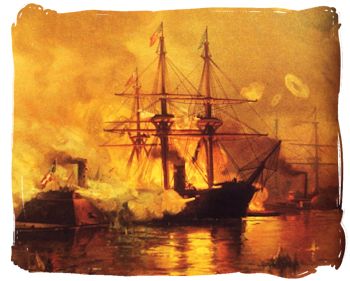
May 20th. The quartermaster was buried ashore this morning, after which we got under way and proceeded up some thirty miles, where we found the river again divided by an island, and the Brooklyn, Richmond and Iroquois having preceded us and taken the wrong channel, the two former ones had run aground. We lay by till morning, in the meantime sounding; the Brooklyn soon got off.
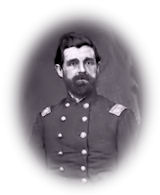
To Mrs. Lyon.
Farmington, Miss., Tuesday a. m., May 20, 1862.— On Saturday, just at night, our whole force advanced about three miles to this place. We are about a mile south of our battle ground of the 9th inst. We bivouacked that night in line of battle and the next morning went to work and entrenched ourselves. This is done by digging ditches sufficiently wide for two ranks, and deep enough so that the men when standing can just see to shoot over the embankment of dirt from the trench which is thrown up on the outside. When the men sit down they are completely out of sight below the surface, and perfectly safe unless a ball or shell happens to fall directly in the trench. The artillery is posted directly behind us and shoots over our heads.
Behind our regiment are ten field pieces, one twelve-pound howitzer for shell, four ten-pound Parrott guns and five six-pound brass pieces. Then immediately on our left is a battery of four thirty-two-pound Parrott siege guns; and this is a specimen of our defenses through the whole line stretching miles away to the north.
We are waiting here now for the rebels to attack us, as our position is very strong. We are on an elevation, with a broad plateau of cleared fields before us which they must cross before they can reach us. There is constant firing of pickets and some cannonading up the line every day at different points. I hear the big guns talking now a few miles north of us. If they do not attack us here we shall soon move up still nearer to them and fortify another line. At the longest I think the struggle will be over here in the course of two weeks, perhaps sooner. We do not doubt our ability to defeat them. I feel calm in view of the approaching contest. My greatest solicitude is for the brave boys that I lead to battle; but they, and all of us, are engaged in a righteous cause and are in the hands of Him ‘Who doeth all things well.’ Now, be brave and hopeful. You will hear of the great battle many days before you know my fate, as I can not telegraph to you. I will write as quickly as I can. I am in perfect health.

20th. Tuesday. Nettleton and Stewart went to Leavenworth. Rained.
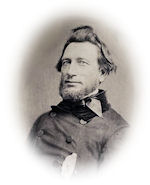
20th.—Army moves at 7 this A. M. In the P. M., in obedience to the order of yesterday, I returned to White House, where I was received with the gratifying remark of the Medical Director, that when he needed the interference of my General in his hospital, he would let him know it. Tomorrow I shall return to my regiment, and hope to be permitted to remain with it.
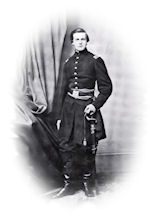
White House, Va.,
May 20, 1862.
Dear Father:—
There are long rows of “quarters,” log huts with no windows but holes in the walls and only a mud floor. The slaves were mostly born on the plantation, and, though many had been sold south, but few had been brought on. One old “Uncle Tom,” over sixty years old, had worn his strength out in sight of the house—had never been five miles away. One man told me he was owned over on the State road six miles away. He married a woman on this plantation, had been married eight years and had six children. The only time he had ever been allowed to visit his wife was to come on Saturday night after dark and be back to his work in the field by daylight on Monday morning. He was a good looking, intelligent man and gave me much information about the modes of cultivation, the crops, etc., and about negro life in the system of slavery. He could hardly believe or realize that he and his family could never be slaves again. He said “if he was sartin of it, he would stay where he had always lived.” He could find “right smart to do,” and felt very confident he could support his family. There were all sorts of darkies there, stalwart field hands, and old wornout men, laughing, careless “Topsies” carrying buckets of water on their heads, strong-limbed boys, and little toddlers running round with nothing to cover their ebony but a nether garment that looked as though it had been in contact with their master’s character. They all appeared very healthy, except the very old men and women.
Well, if I don’t stop running on so I shall have no time to answer any questions. About that Zouave cap, it is dark blue, and, of course, it has no front, that’s Zouave style. The Duryea Zouaves wear a red cap, conical, with a white roll around it, and a very heavy, long tassel of yellow worsted, blue jacket (some like our three months’), red pants, very baggy, and yellow leggings. They are a dashing set of fellows.
I am very glad if the money I sent was of use. We expect another two months’ pay in Richmond.
I saw Conway Ayres at White House. His regiment was to be mustered out of service in a few days, but he said he should not go home till we got to Richmond.
We have lately got a suit of government uniforms and the Zouaves are played out.
General Porter is raised to the command of a corps and the division is now Morell’s division.
I hope you will reply as promptly as I have, and that our letters will be received a little more quickly hereafter.
 Headquarters 5th Provisional Corps,
Camp 5 miles from White House, May 20, 1862.
Dear Father, — General Porter has been placed in command of a corps which consists of his old division now commanded by General Morell, and Sykes’s brigade of Regulars. It is called a provisional corps, I imagine, because it is of McClellan’s making, and is not firmly established. It will, however, be a permanent thing, I suppose. We moved yesterday from our camp at White House to this place, called from the name of the railroad station, Tunstall. The White House farm belongs to a man named “Rooney” Lee,’ who was in ’58, and was in College with me about two years. He left some six months before his class graduated, to enter the army, and at the breaking out of the Rebellion he left our army and joined the rebels. While in College he was a “fast man,” like most Southerners, and was quite popular with his classmates. He little thought then that his wheat fields would be trodden down by a hostile army from the North, many of whom were his classmates.
I started for the camp the day after you went, and reached there safely the same day. I am quite well now, and shall be able to stand the march to Richmond.
We shall start again to-morrow and move on. I don’t know how far we shall go.
The country around here is quite pretty. The trees clothed in their new leaves look fresh and beautiful, and the aspect of the country itself, varied by thickly wooded hills, and fertile plains, presents a very agreeable view to the eye. The bridges over all the small streams and brooks are all burned, so that fast marching is difficult, as we have to wait for the bridges to be repaired before our wagon trains can move.
I meet John Hayden quite often now, he being attached to Sykes’s brigade. It is quite a pleasure to me to see any of my classmates out here, and especially Hayden, who is one of my best friends. He is attached to Captain Edwards’s battery.
The water here is very disagreeable to me, for it is strongly impregnated with sulphur, which I do not like at all. It comes especially hard to me, who do not like tea and coffee, and who am obliged to make water my sole beverage.
I hear that Colonel Lee is very anxious to be made military governor of Richmond. I wish they would gratify him, and place him in that position. How mad it would make some of the Richmond people, and what a triumph it would be for him.
How did you and Mother spend your time after you left me, and did you enjoy the end of your journey as much as the beginning? . . .
Opinions vary as to whether we shall have a fight or not before reaching Richmond. My opinion is that we shall have a fight, although our corps may be held in the reserve. . . .
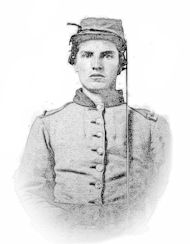
Tuesday May 20th.—Marched to Jacksboro to-day; camped for the night in apple orchard; some of the biggest apple trees I ever saw; one was eleven feet in circumference. Bushwhackers killed a man near here a few days ago.
(Note: picture is of an unidentified Confederate soldier.)
Reasoning.
May 20. Lying around here in the woods, hearing no sound but the moaning of the wind through the tree tops, is rather dull business. There is nothing in it that inspires any lofty, rapturous thought, and yet it inspires thought, and already one of Mr. Bogey’s sheep has fallen a victim to thoughts inspired by the soughing of the wind through this dark forest shutting out the day; I reckon it will not be necessary to say anything to Mr. Bogey about it, as he is a loyal man, and, as the lawyers say, the presumption is he would be more than glad to contribute a mutton in suppression of this unholy rebellion.
The Pine Forests.
The woods here abound in timber of the finest description, many of the trees attaining a height of more than 100 feet. It is seldom one is seen of more than two feet in diameter at its base, tapering but slightly and without limbs for a distance of from 60 to 80 feet. I have seen some that would square fifteen inches, 80 feet from the stump. These are the turpentine trees, and the pitch, or turpentine as it is called, is obtained by cutting a wide, deep box at the base of the tree capable of holding two or three quarts of the pitch. From each corner of the box the bark is stripped off, coming to a point about three feet above the box. This is done when the tree is first boxed. The next year about three feet more of the bark is removed, coming to a point as before. This process goes on until the tree is blazed for a distance of 20 or more feet, and can be done on the east, south and west sides of the trees. The tree will run pitch quite a number of years before it dies, and is then called lightwood, and is either split up into rails or converted into tar. The pitch that runs into the boxes is dipped out into barrels, and is called dip or virgin turpentine, while that which adheres to the tree is scraped off and is called scrape, and is less valuable than the dip. The pitch is barreled up and sold to the distillers. Tar is obtained by cutting the lightwood into lengths of about eight feet and split fine a tunnel-shaped hole is dug in the ground, with the center about three feet deep, and from the center a drain runs to a barrel or vat sunk low enough in the ground to receive the tar as it runs from the kiln. The wood is packed in this hole with the ends to the center, keeping the center lowest; when all the wood required for the kiln is piled up, the sides and top are plastered over with clay, and the fire kindled on top. The fire smouldering down through the pile, tries out the tar, which settling to the bottom, runs out into the vat, and is then barreled. A kiln will run from ten to twenty barrels according to size.
 “Spaulding,” May 20.
Dear Mother, — It is so uncertain whether you receive any of my letters (I receive none of yours) that I write to-day by the “Daniel Webster,” though I have but little to say. The “Webster” and the “Elm City” came up the river yesterday. We were invited to tea on board of the former, and were much pleased to find how we are missed. Dr. Grymes is still in charge of her, and Mrs. Trotter reigns over the women’s department with great success. Mrs. Strong, Miss Whetten, and Miss Gardiner returned on the “Elm City.” The “Webster” came up in perfect order, ready to ship her men as soon as her cargo was discharged. She is now loading, and sails for Boston this afternoon. We ourselves remain here. Mr. Olmsted is anxious to keep his “staff” at the heels of the army. I like this much better myself. It is more interesting, and the work, though harder, is more satisfactory in every way. The weather is delightful. At present we are idle,—kept so, I am told, in reserve for the expected battle. The “Elm City” is to remain here as a receiving-ship; this vessel (the “Spaulding”) and the “Daniel Webster” are to be used as ocean-transports, and chiefly for sick men; the “Knickerbocker ” and the “Daniel Webster No. 2” as river-transports for wounded men, — “surgical cases,” as they are called. The former make the sea-passage to New York, Boston, or Philadelphia; the latter run to Washington or Fortress Monroe. These five ships can transport about two thousand men a week. Mr. Olmsted is struggling, with probable success, to bring the Medical Department to establish a large receiving-camp-hospital for the lesser cases that ought not to go North. Meantime the “Elm City” is to be used as a receiving-ship for them pro tem.


