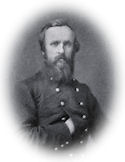
Same Camp, Thursday, May 15, 1862. — Cloudy and threatening rain. Several warm showers during the day. Firing between pickets constantly going on two or three miles down the river. We send out two or three companies and a howitzer or six-pounder to bang away, wasting ammunition. If the enemy is enterprising he will capture some of these parties and perhaps a cannon.
May 2012
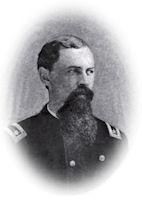
Still in Camp near Corinth, Miss., May 15, 1862.
It seems to me that we are a long time in bringing this “muss a la probable” to a focus. What under the sun our Halleck is waiting for we can’t guess. One hour’s march will commence the struggle now and you don’t know how anxious we are for that little trip. Buell and Thomas have both thrown up long lines of earthworks to fall back behind if repulsed, I suppose. We have nothing of that kind in our division. We have all been under marching orders since morning, and Assistant Secretary of War Scott told the colonel last night that the battle would commence to-day—but he lied. Talk is to-night again that Corinth is evacuated. The main body of our army moved up within three miles to-day. My battalion has been out since daylight this morning, but we have been lying at ease near Pope’s headquarters all day waiting for orders. I came back to camp to stay to-night because I had no blanket with me and there was no possibility of any more before morning. Have a sore foot now. My confounded horse fell down with me in a creek the other day, threw me out on the bank in a bunch of blackberry bushes and then crawled out over me, stepped on my foot in the melee by way of showing sympathy, I suppose. It don’t hurt my appetite any and hasn’t put me off duty.
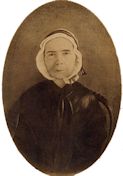
15th.—It is now ascertained beyond doubt that my nephew, W. B. N., reported “missing,” at Williamsburg, is a prisoner in the enemy’s hands. We are very anxious for his exchange, but there seems some difficulty in effecting it. His father, accompanied by Colonel Robertson, of the Fourth Virginia Cavalry, called to see the President a few nights ago, hoping to do something for him. The President had just returned from a long ride to inspect the fortifications. In answer to their card, he desired to see the gentlemen in his study, where he was reclining on a sofa, apparently much fatigued, while Mrs. Davis sat at a table engaged in some fine needle-work. The President immediately arose and received the gentlemen most courteously, introducing them to Mrs. D. Colonel R. stated the object of the visit, saying that Captain N. was one of the very best officers of his rank in the army, and that his services were almost indispensable to his regiment, and urged the President to use every effort to procure his exchange. His father seconded the request with the warmth natural to a parent under such circumstances. The President seemed deeply interested in the subject, and regretted that nothing could then be done, as there was a difficulty pending between the belligerents on the subject of exchange; as soon as that difficulty was removed he would, with pleasure, do all in his power to procure the exchange. Mrs. Davis listened with much interest to the conversation, and her feelings became warmly interested. She said that her husband was a father, and would feel deep sympathy; but if, in the pressure of public business, the subject should pass from his mind, she would certainly remind him of it. She made a very favourable impression on the minds of these gentlemen, who had never seen her before, by her ease” of manner, agreeable conversation, and the kindness of heart which she manifested. After a most pleasant interview of an hour, the visitors arose to take leave, but Mrs. Davis invited them with so much cordiality to remain to take a cup of tea with them, which, she said, was then coming up, that they could not decline. The servant brought in the tea-tray, accompanied by some light refreshment. Mrs. D. poured out the tea for the company of four. The scene reminded them of the unpretending and genial hospitality daily witnessed in the families of Virginia.
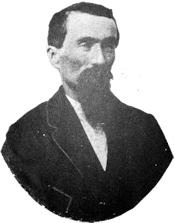
May 15 — We left camp this morning and moved down the Valley eighteen miles to Lacey Springs, nine miles below Harrisonburg. Quartered in a barn.

Thursday, 15th—We were expecting to be attacked today by the rebels making a charge on our front line and were ordered to fall in with two days’ rations in our haversacks. We marched out about a mile, and forming a line of battle, remained there till dark—about six hours—when we moved toward the right wing and up to camp. The entire right wing of the army has moved around farther to the right.
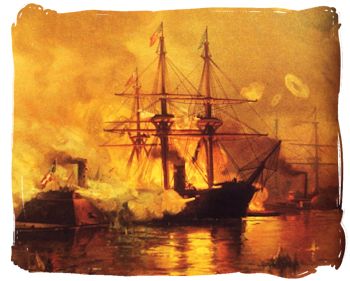
May 15th. Was spent in exertions to get our ship afloat. A gunboat was dispatched for a lighter, and we commenced discharging our battery on board a gunboat, and shell on board a steamer, also coal into a lighter.

15th. Thursday. Archie and I cooked a respectable meal. Took our ease until five P. M. Then we marched again. Reached East Drywood at midnight. Capt. Stanhope and Lt. Rush were ahead and were chased by thirty jay hawkers. Column halted. I went on with the advance two or three miles, no sign of any men.
15th.—A raw unpleasant day. Hard rain, with east wind. We do not march, and in consequence of the heavy rain we may be compelled to remain here several days. The enemy is in force on the Chickahominy, and the two armies are gathering their hosts within ten or fifteen miles of each other, probably for a final struggle. The crisis approaches, and how the army pants for the time when they are to try conclusions! It was much worn out by the long delay at Camp Griffin. The detention at Warwick Creek was by no means refreshing, and now they naturally feel that every day’s delay is irksome.
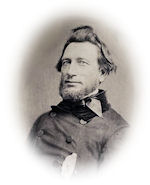
John Mackie (Wikipedia)
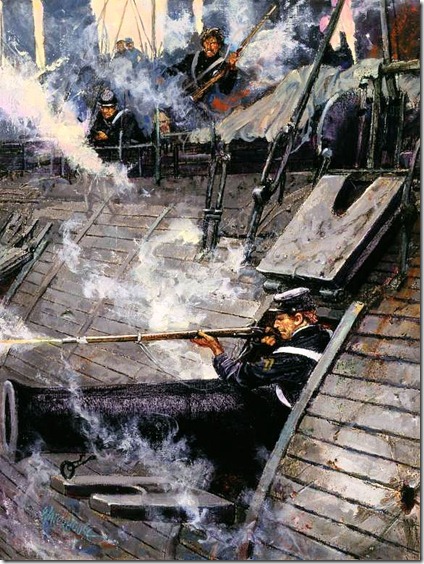
Mackie enlisted in the Marine Corps from New York on August 23, 1861. By 1862, he held the rank of Corporal and was serving on the ironclad warship USS Galena (1862). On May 15, 1862, a five-ship Union Navy squadron, including the Galena, steamed up the James River to test the defenses of the Confederate capital, Richmond, Virginia. After reaching a bend in the river upstream of Dutch Gap, the squadron encountered submerged obstacles and heavy fire from Fort Darling, atop Drewry’s Bluff. The fort’s artillery batteries inflicted severe damage on the Galena and forced the Union squadron to turn back. During the battle (which would come to be known as the Battle of Drewry’s Bluff), most of Galena’s naval gun crew was killed or wounded. Mackie led a group of Marines who took over operation of the guns for the remainder of the battle.
Mackie later received a Medal of Honor.
 May 15th. At eleven o’clock last night, after all had turned in, and most of us were asleep, an orderly routed me out with written orders to have breakfast, and be ready to march at four o’clock in the morning. I ordered reveille at 2 A. M., and at that hour the regiment turned out and prepared breakfast; we had plenty of time, and so took it leisurely, forming on the color line, in full marching order, just at four o’clock. The brigade did not move until five o’clock, but after once started, did some fine work, never halting till twelve noon, and then only for an hour. We fell in again, continuing the march till four P. M., then filed off into a dense pine woods, and bivouacked for the night. The first part of the day’s march was capital, the weather fine, and the road hard and dry, but about two o’clock in the afternoon, it commenced raining, and at the time we went into bivouac, it poured down in torrents. It is a singular coincidence that when active operations begin, it invariably rains; on the advance to Manassas; the day after landing at Yorktown, and on the day we commenced the pursuit of the rebels to Williamsburg; not to mention the memorable retreat after the battle of Bull Run. If there were any kind of roads in this country, it would not matter so much, but they are all clay, and the center of the road is universally the lowest part of it, in consequence, an hour’s rain makes them impassable for artillery or wagons, and laborious and difficult for infantry. We are a mile from Cumberland Landing, on the Pamunkey, and within two miles of the enemy, who are concentrated and awaiting our approach. After a supper of hard tack and coffee, the men turned in, pretty well exhausted by the march and bad roads; headquarters followed suit, and by nine o’clock all were asleep.


