Friday, 22d—No news of importance. The rebels are not making any attacks on us, but they keep us busy watching them.
August 2012
22nd. Friday. Slept rather late. F. Brooks back, looking very sleek. Went to the river and washed myself thoroughly. Changed my clothes and rested as well as possible. The command came in. Boys seem hardy, though the trip has been tough. All the boys are exasperated that they did not catch the enemy. News that Fremont is to have command here, good. We to go home. Wrote a middling long letter to Fannie Andrews. Wrote while Brownell read in “Woman in White.” Boys issued rations for five days. Naturally lazed a while myself.
Friday, 22d.—Heavy skirmishing on our right; some think there is about to be a general engagement.
August 22—Sam Oppenheim, of the 44th North Carolina Regiment, an old comrade of the 1st North Carolina Regiment, came to see me. He is stationed on the other side of the city.
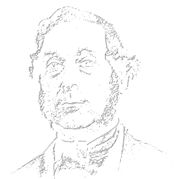
AUGUST 22D.—Saw Vice-President Stephens to-day, as cordial and enthusiastic as ever.
August 22d. Reveille at daybreak. Immediately after breakfast rations were issued, and the column stretched out en route for Newport News; the heat was oppressive, but the troops marched well; traveled over a very interesting country, with immense fields of corn, tall and beautiful, which undulated in the breeze like the waves of the ocean after a storm. The column halted six miles northwest of the town, well tired out, with a good day’s march.
August 22.—Rear-Admiral George Campbell Read, Governor of the Naval Asylum at Philadelphia, died in that city this day.—General Michael Corcoran arrived at New-York City, and met with a most enthusiastic reception.
—The Seventeenth regiment of Maine volunteers, commanded by Col. Thomas A. Roberts, passed through New-York City en route for the seat of war.—Two bridges on the Marietta and Cincinnati Railroad, east of Loveland, Ohio, were burned, it was supposed, by rebel sympathizers.
—To-day, and the preceding two days, a series of skirmishes occurred near Crab Orchard, Ky., between the Ninth Pennsylvania cavalry, under the command of Gen. Green Clay Smith, and a rebel cavalry regiment, under Col. Scott, resulting in the defeat and retreat of the latter on each occasion.
—A force of Gen. Stuart’s rebel cavalry made a dash at Catlett’s Station, Va., and destroyed or carried off a great quantity of sutler’s and other stores, sacked the hospital, captured Gen. Pope’s wagons with all his papers, etc., and then proceeded towards Warrenton.—(Doc. 188.)
—President Lincoln, in response to a letter written by Horace Greeley, stated that his paramount object was the restoration of the Union, and not the safety or destruction of slavery. If he could save the Union without freeing the slaves, he would do it; if he could save it by freeing all the slaves, he would do it; and if he could save it by freeing a portion and leaving others alone, he would do that.—See Supplement.
—The One Hundred and Seventeenth regiment, New-York volunteers, Col. W. R. Pease, left Camp Huntington, near Rome, at noon to-day for the seat of war. This was Oneida County’s first regiment under the new call, and her fourth for the war.
—The day before yesterday, and to-day, Fort Ridgely, Minn., was attacked by a large body of Indians, who, on each occasion, were repulsed by the garrison, of whom three were killed and thirteen wounded.—(Doc. 189.)
—This morning, at five o’clock, the rebels opened fire from their batteries along the whole line of the army on the Rappahannock. The Union army on the opposite bank of the river promptly replied, and the cannonade was kept up, with short intermissions, all day. The principal attack was on the Union centre, occupied by General McDowell’s army corps. At about nine A.M., the cannonading having almost ceased, Gen. Sigel ordered Gen. Schurz to ford the river with a brigade of his division, and reconnoitre the enemy’s position on the opposite side. When about a mile from the river, Gen. Schurz discovered the rebels, who, after receiving a volley or two, precipitately retreated, in the hope of drawing the Unionists into an ambush. This failed. General Schurz took up his position, and in turn was attacked by the rebels in force. A fierce battle ensued, which lasted until six P.M., when, the Unionists not being sufficiently strong to hold the advanced position, retired to the north bank of the river, and joined the main body of the army. —(Doc. 104.)
August 21 — This morning we went down the railroad and had a very spirited and warmish fight with a Yankee battery. They had the advantage of us both in the number of pieces and position, but we stuck to our position for a while, under a hot and well directed fire, and for about forty minutes gave them in return the best work we could furnish at short notice, then cried enough and withdrew under fire.
After the fight we moved up to the Hazel River, crossed it and went nearly to the Rappahannock, then moved back a little distance and camped near the Hazel River.
At dusk this evening we heard heavy cannonading and some musketry down the Rappahannock. The whole country around here seems to be full of Yankees. We will tree some of them before long; perhaps tomorrow.
August 21st.
Miriam and mother are going to Baton Rouge in a few hours, to see if anything can be saved from the general wreck. From the reports of the removal of the Penitentiary machinery, State Library, Washington Statue, etc., we presume that that part of the town yet standing is to be burnt like the rest. I think, though, that mother has delayed too long. However, I dreamed last night that we had saved a great deal, in trunks; and my dreams sometimes come true. Waking with that impression, I was surprised, a few hours after, to hear mother’s sudden determination. But I also dreamed I was about to marry a Federal officer! That was in consequence of having answered the question, whether I would do so, with an emphatic “Yes! if I loved him,” which will probably ruin my reputation as a patriot in this parish. Bah! I am no bigot! — or fool either. . . .
21st.—Camped last night in sight of Big Bethel, and left this morning at 5 o’clock. After a brisk march of four hours, we reached Hampton, (12 miles.) As we reached the summit of a ridge and the Roads, and the shipping two miles off suddenly burst upon the view, how intensely did I realize the feeling of a scarred leader in a ten year’s war, when, on his return he caught the first glimpse of his native land—
…
“Italiam, primus conolamat Achates.”


