19th. Tuesday. Breakfasted at Johnstown. As usual boys went for chickens, corn and anything to eat. People have felt our march through their country. Report came that the enemy were at Osceola, 30 miles southeast. Continued our march Osceolaward. Stopped two or three miles from Johnstown and fed mules and ourselves—three hours. Moved on. Report came that Cloud’s advance was fighting with rear guard of the enemy. One man killed on the prairie, just buried. Changed our course towards Stubbleville. Reached that place in the morning, sunrise. In the afternoon my horse troubled me so getting away that I got on bareback. Got a saddle and rode all night. Very sleepy. Slept on my horse. Major Miner fell from his horse. Pat Collopy fell twice. It was almost impossible for the rear guard to get the sleeping ones awake and along.
August 2012
Headquarters Stevens’s Div.
9th Army Corps,
Fredericksburg, Aug. 19th, 1862.
My dearest Mother:
Here we are, occupying a fine house in the pleasant town of Fredericksburg, with the thermometer standing ever so high in the shade among a people whose glances are at zero in the hottest of this summer sunshine. I have seen nothing like this before, except in the single City of Venice., where the feeling is so intense toward the German soldiery. Yet it is not strange when one thinks that there are few left beside women. The men are away fighting in the pride of sons of the Old Dominion, and many a family here is clad in sombre colors for the loss of dear friends who have lost their lives at the hands of “Yankee Invaders.” So a military occupation of a disaffected town is less pleasant than the tented field. We will not remain a great while, though. We are now on the eve of great events. God only knows what the morrow has in store for us. I cannot say where I may be when I next write, but continue to direct to Stevens’ Division, 9th Army Corps, and the letters will reach me. I am sick at heart in some respects, and utterly weary of the miserable cant and whining of our Northern press. It is time that we assumed a manlier tone. We have heard enough of rebel atrocities, masked batteries, guerillas, and other lying humbugs. Pope’s orders are the last unabatable nuisance. Are we alone virtuous, and the enemy demons? Let us look at these highly praised orders of Pope which are to strike a death-blow at rebellion. We are henceforth to live on the enemy’s country, and to this, as a stern military necessity, I say “Amen!” But, mother, do you know what the much applauded practice means? It means to take the little ewe-lamb — the only property of the laborer — it means to force from the widow the cow which is her only source of sustenance. It means that the poor, and the weak, and the helpless are at the mercy of the strong — and God help them! This I say is bad enough, but when papers like the _____, with devilish pertinacity, talk of ill-judged lenity to rebels and call for vigorous measures, it makes every feeling revolt. We want vigorous measures badly enough to save us in these evil times, but not the measures the _____ urges. The last thing needed in our army is the relaxing of the bands of discipline. And yet our Press is urging our soldiers everywhere to help themselves to rebel property, and, instead of making our army a glorious means of maintaining liberty, would dissolve it into a wretched band of marauders, murderers, and thieves. If property is to be taken, let the Government take it. That is well — but I would have the man shot who would without authority steal so much as a fence rail, though it were to make the fire to cook his food. I would have no Blenkers and Sigels with their thieving hordes, but a great invincible army like Cromwell’s, trusting in God and marching on to victory.
Well, Mother, it is late. I am thankful we are under a commander who is a noble, high-minded, chivalrous man. Honor to Burnside! He is as generous as he is brave! Honor to my own dear commander, too, who has a heart to pity as well as the nerve to strike.
Kisses and love in liberal doses, prescribed in liberal doses to his absent loving friends,
By your most Affec.
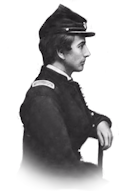
Dr. Lusk.
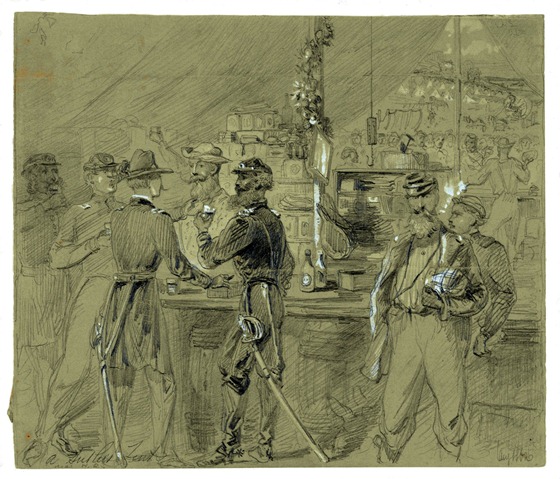
Library of Congress image.
Detailed sketch of the interior of a sutler’s tent, with several full-length portraits of unidentified officers drinking at a bar in the foreground, drawn in August 1862, byArthur Lumley.
AUGUST 19TH.—Day and night our troops are marching; they are now beyond the right wing of Pope, and will soon be accumulated there in such numbers as to defy the combined forces of Pope, Burnside, and McClellan!
“Went into bivouac early in the afternoon and remained all night.” –Diary of Josiah Marshall Favill.
August 19th. By 7 A. M. we were in, line, tents struck, wagons loaded, and commenced the march in first-class condition. The country improves the further we go, and to-day’s eight miles march was through a paradise, compared to the region of Manassas and the Chickahominy. Went into bivouac early in the afternoon and remained all night. There are plenty of excellent springs about this country, in addition to numerous other good things, and the campaigning reminds me all the time of Charles O’Malley’s experience in the Spanish peninsula.
August 19.—The steamer Swallow was burned by the rebels, at a point on the Mississippi River, twenty-five miles below Memphis, Tenn.—A skirmish took place near Rienzi, Miss.
— The following order was issued from the War Department at Washington:
The Department of the Ohio, hereby created, will be composed of the States of Ohio, Michigan, Indiana, Illinois, Missouri, and Kentucky, East of the Tennessee River, and including Cumberland Gap, and the troops operating in its vicinity. Major-General H. G. Wright is assigned to the command of the Department of Ohio.
— A large and enthusiastic war meeting was held in Brooklyn, N. Y. A series of patriotic resolutions were adopted, and speeches made by Generals Crooke, Walbridge, Sickles and Spinola, Admiral Paulding, Rev. Dr. Cox, and others.
—A force of Union cavalry from New-Madrid, Mo., under the command of Captain Frank Moore, while on an expedition to Charleston, attacked a rebel camp on White Oak Ridge, near Hickman, killing four and taking nineteen of the rebels prisoners, including three captains. They also captured twenty-seven horses and about one hundred stand of arms. Captain Moore and one private were wounded.
— The Board of Supervisors of Rensselaer County, N. Y., assembled at Troy, appropriated seventy-five thousand dollars as bounty money, to be paid to volunteers enlisting into the army under the call of the President.
— The Sioux Indians destroyed the United States Agencies at Yellow Medicine and Red Wood, and partially destroyed New-Ulm, Minn., killing and brutally mutilating more than a hundred persons, men, women, and children.
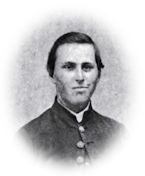
August 18th. Monday. Regiment mustered into the United States service, William G. Ely, Colonel, having been promoted from Lieutenant-Colonel of the 6th Connecticut Regiment. A resident of Norwich. The remaining days in camp brought many visitors and peddlers. Those were sad and very exciting days while we were preparing for the life of a soldier. The weather hot and dry in camp.
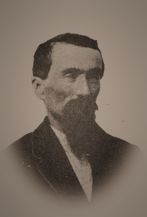
August 18 — Last night we had our blankets to sleep under again, which was the first time since the night of the 7th. To-day we moved a mile southeast from town, to cook three days’ rations. This evening Captain Chew paraded the company and issued haversacks, in which we were ordered to put three days’ rations immediately, and were also ordered to load all our household effects on our wagons, so that if an alarm or order should break in on us during the night we could be ready to march in thirty minutes.
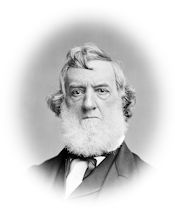
August 18, Monday. Had a call to-day from an old schoolmate at Cheshire, now a chaplain in the army, Joseph H. Nichols. Invited and had him to tea with me and talked over school-boy days. It is thirty-five years or over since we have met, though not unfrequently in the same place.
Sent Commodore Wilkes a dispatch to hold his ground and await events. Will send him specific orders when developments justify. He is a troublesome officer in many respects, unpopular in the Navy and never on good terms with the Department, yet I have thus far got along with him very well, though in constant apprehension that he will commit some rash act. He is ambitious, self-conceited, and self-willed. The withdrawal of the army from before Richmond disconcerts him, and to make his mark he may do some indiscreet, rash, and indefensible act. But I trust not. He has abilities but not sound judgment, and is not always subordinate, though he is himself severe and exacting towards his subordinates.
Had a letter from Fox at Portsmouth. Says there are traitors even there. It will be necessary that the Government should be felt as a power before this Rebellion can be suppressed. The armored boats, to which he was to give some attention, are progressing as well as can be expected. . . .
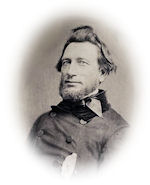
18th.—Left camp this morning at 6 o’clock, on the Williamsburg road, and at 12 to 1, passed in retreat over the scenes of our first hard fight, where my regiment, by its firm and unyielding bravery, won the promise that it “should have Williamsburg inscribed on its banner;” a promise richly merited but never fulfilled.
When passing through Williamsburg I, in company with Surgeon Frank H. Hamilton, stepped aside to take a stroll through the halls and rooms of old William and Mary, the oldest college, I believe, except Yale, on this continent. There still stood the students’ desks and seats, at which Virgil and Ovid and Horace had kindled whatever spark they possessed of poetic fire, and Livy had evoked many a curse at his dry detail. There were the black-boards on which the mysteries of Euclid were solved into the unwavering language of distance and of measure, and there was the old chapel, with the benches still in situ, from which for more than a century, hopeful youths had sat and listened to prayers for their usefulness and prosperity, whilst they laid plans of mischief against the supplicators for their good. But the places of the Professors were now filled with the inevitable Commissary and his aids, with their barrels and their boxes, whilst the benches of the students were crowded with clamors for their bacon, beef and beans. I mused for awhile over thoughts of the learned men who had passed forever from these ancient halls, and of the influences they have left behind them.
.
“Their heads may sodden in the sun,
Their limbs be strung to city gates and walls;
But still their spirits walk Abroad.”
.
They certainly do not walk here. The sight would be too painful for sensitive and sensible spirits to bear. But these thoughts were dissipated as I looked again on the places where for the first time any number of our regiment had met death on the battle field, and on which it won laurels which shall be green forever!
At 2 o’clock we encamped on the east bank of King’s Creek, a small stream about three miles from Williamsburg, on the banks of which repose the bodies of thousands of the Federal army—of those brave men, who, flushed with hope and patriotic enthusiasm, rushed boldly to the contest, and were permitted to be swept away by hundreds, unsupported by commanders, who, with their hosts unengaged, stood calmly watching the slaughter.


