AUGUST 5TH.—The enemy have postponed drafting, that compulsory mode of getting men being unpopular, until after the October elections. I hope Lee will make the most of his time, and annihilate their drilled and seasoned troops. He can put more fighting men in Virginia than the enemy, during the next two months. “Now’s the day, and now’s the hour!”
August 2012
August 5th. At midnight last night the troops were ordered to fall in and be ready to march. We concluded this was a sure thing and packed up everything, waited on the color line almost two hours, and were then dismissed, and turned in again. Early in the morning heard artillery firing in the direction Hooker had gone yesterday. About nine o’clock it became very heavy, gradually receding, so we concluded the reconnoissance was pushing well forward. This is the first time a reconnoissance has been made since the second day of our arrival, and the enemy’s position is wholly unknown to us. It does seem as though the newspaper people find out more about the enemy than the general staff and War Department combined. During the day, the wounded returning from Hooker’s command, reported him several miles beyond Malvern Hill, meeting with little opposition. Early in the day, Major Potter went to work, and towards evening finished paying off the regiment. There were no drills or parade of any kind, on account of the paymaster. Weather intensely hot and sultry.
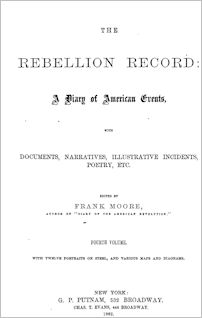
August 5.—Recruiting for the old and new regiments under the call of President Lincoln for three hundred thousand men was carried on with the greatest success throughout the North, the citizens of every loyal State vieing with each other in their endeavor to support the Government—The War Department ordered, that the use of the telegraph-lines being required for military purposes, all persons actually employed in constructing and operating telegraph-lines at the date of the order calling for three hundred thousand men, be exempt from military duty so long as they remain in such service.
—The battle of Baton Rouge, La., was fought this day between a large force of rebels under the command of Gen. John C. Breckinridge and the Union forces under Brig.-Gen. Thomas Williams. The rebels made the attack at daylight, when a severe engagement ensued, and the National troops were driven from their position; soon after, however, they rallied and compelled the rebels to retreat, leaving their dead and wounded on the field.—(Doc. 91.)
—A fight took place at Malvern Hill, Va., between a reconnoitring force of Union troops under the command of Gen. Hooker, and a body of rebels stationed on the hill. The fight lasted for nearly two hours, when the rebels retired, taking with them their field-pieces, and leaving the Nationals in possession of the position.—(Doc. 171.)
August 5.—The papers of last night brought us no news, except that our troops are firing upon the enemy’s gun-boats near Coggin’s Point. The result not known. A battle between Jackson and Pope still imminent. Major Bailey made a brilliant cavalry raid a few days since upon the enemy in Nicholas County, in which he took the command of a lieutenant-colonel prisoners, burnt their stores, and brought off many horses, mules, and arms. Morgan continues his successful raids in the West. The enemy has abandoned the siege of Vicksburg for the time.
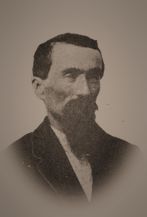
August 4; — Renewed our march. We passed Ivy Depot, a station on the Central Railroad, seven miles from Charlottesville. We passed through Charlottesville, the county seat of Albermarle. It is a considerable town. It has one street that has the appearance of something like a small piece of city dropped there among the foothills of the Blue Ridge. Nearly a mile west of town on a beautiful eminence is situated the University of Virginia, one of the most renowned institutions of learning in the South. Two miles southeast of town is Monticello, a conical shaped hill of considerable altitude. Right on the apex of the cone is a large brick house, where Thomas Jefferson lived and died.
There are some six or eight large hospitals in Charlottesville, for Confederate sick and wounded.
We halted in town about half an hour, then renewed our march toward Gordonsville in Orange County, and about a mile east of Charlottesville we crossed the Rivanna River. Camped near Keswick Depot on the Central Railroad, about eight miles from Charlottesville.
faces out of time 012


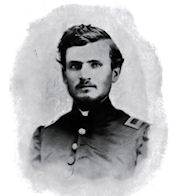
Library of Congress image: Unidentified young soldier in Confederate infantry uniform, possibly drummer boy, donated to the Library of Congress 2012 by Tom Liljenquist; Liljenquist Family Collection of Civil War Photographs.
BOOK III
Westover,
Monday, August 4th, 1862.
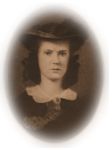
Here we are at Dr. Nolan’s plantation, with Baton Rouge lying just seven miles from us to the east. We can surely hear the cannon from here. They are all so kind to us that I ought to be contented; but still I wish I was once more at home. I suppose it is very unreasonable in me, but I cannot help it. I miss my old desk very much; it is so awkward to write on my knee that I cannot get used to it. Mine is a nice little room upstairs, detached from all the rest, for it is formed by a large dormer window looking to the north, from which I have seen a large number of guerrillas passing and repassing in their rough costumes, constantly. I enjoy the fresh air, and all that, but pleasant as it is, I wish I was at home and all the fuss was over. Virginia Nolan and Miriam are already equipped in their riding costumes, so I must lay this down and get ready to join them in a scamper across the fields. How delighted I will be to get on a horse again.
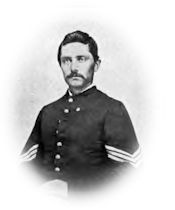
Monday, 4th—I slipped out today between two guards and going up the river about a mile to a bakery near a mill, I bought a dozen apple pies. I returned safely to camp and sold the pies to some of the boys for double what I paid for them. Orders are very strict against absence from camp, for it is reported that a large force of the rebels is in this locality, and they may charge upon our camp any time.
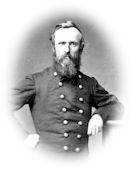
[August] 4, 1862. Monday. — Company I, Greenwood muskets, fired at target one hundred yards. Best string, thirty-seven inches (4 shots); the muskets not so accurate for short ranges as the Enfields; not so well sighted. Possibly the men are somewhat afraid of them is one reason. I keep the men busy to prevent rusting. This target practice seems to interest them very much.
4th. Monday. “General” blew at 7 A. M. Struck tents and moved to our first camping ground when we entered Fort Scott from Kansas City. I went ahead with Major Miner to lay out camp. Q. M. issued clothing. Drew boots and shirt. Helped get things ready for supper. In the evening Major P., Major M. and Adj. Weeks got news of the fight in the Indian Territory. Standwaite prisoner, another notable killed. 400 proved traitors, having come into camp and given up and then turning on our men. 300 of them killed. Sergt. Major was taken sick suddenly, probably sunstruck. Bill drunk and quarrelsome. Adj. Weeks in tent.


